10 Interesting Facts About Cat Claws & Their Anatomy (Vet-Reviewed)


In this article
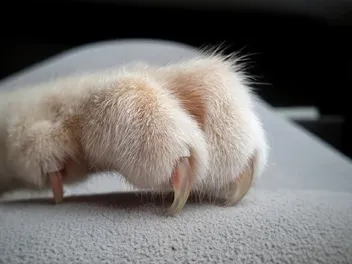
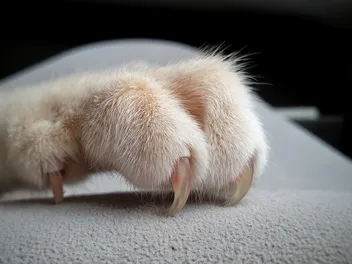
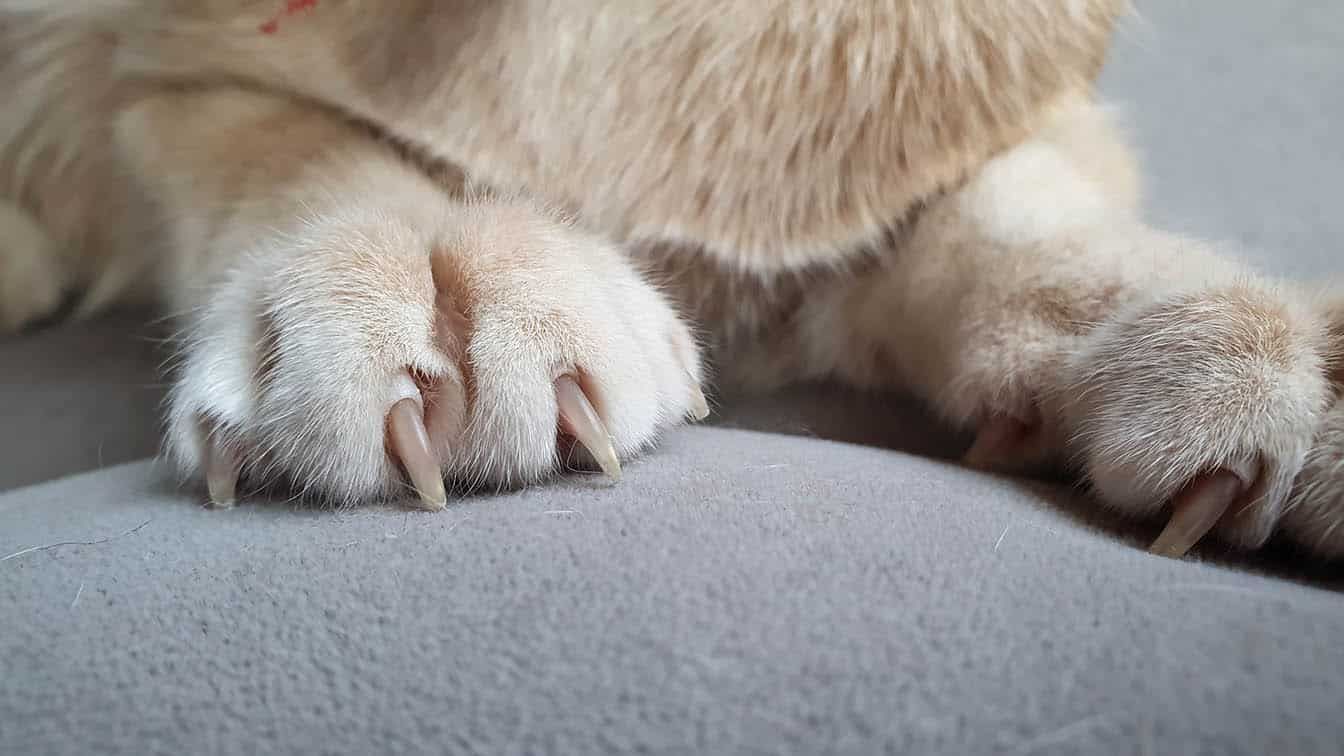
One thing we all know for certain about our cat’s claws is that they can be sharp! But those claws have much more going on than you might expect and are actually incredibly interesting.
If you’ve been curious about your cat’s tiny daggers, you’ve come to the right article. We have 10 facts about those sharp little claws, so please keep reading!

The 10 Interesting Facts About Cat Claws & Their Anatomy
1. The Front Claws Are Sharper Than Their Hind Claws
A cat’s front claws are typically sharper than the ones on their hind paws. Their front claws are used to grab prey or help them climb vertical surfaces.
The hind claws are more for propelling them forward, jumping, and bunny kicking.
2. Cats Have 18 Claws Unless They Are Polydactyl
The average cat has five toes and claws on their front paws and four on their back paws, giving them a total of 18 toes and claws. But there are cats out there that are polydactyl (which is Greek for “many digits”). They have more toes/claws on their paws than the average cat. Due to their unique appearance, they are affectionately known as “mitten” cats and “Hemingway” cats after the famous author, who loved polydactyl cats.
The cat with the most toes was Jake from Canada, who had 28! He had seven toes and claws on each paw 1.

3. Cat Claws Are Made of Keratin
Just like human nails and hair, cat claws are made of keratin. The keratin on the outside of the nail eventually dies off, and a claw sheath is shed to reveal the new nail underneath.
4. Cats Can Choose Which Claws Can Be Extended
Cats can extend their claws in just one paw or all of them at the same time. If you gently squeeze the top and bottom of your cat’s claws, you can extend them. This is how you can trim your cat’s claws.
5. Their Claws Are Curved
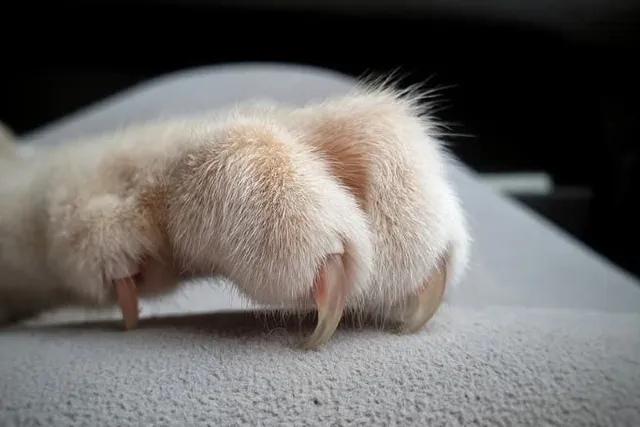
Cats’ claws are curved for a good reason. The shape helps cats hold onto prey and is also effective for climbing.
However, the curved design can also be a problem, as cats can get their claws caught and tangled quite easily, potentially resulting in an injury. Especially in older cats, overlong claws can curve round and stick into their pads. This is partly why trimming their nails is essential.

6. Cats Have Dewclaws
The dewclaw is a proximal claw and is on the inside of their front paws. These claws don’t touch the ground while the cat is walking, but they can help with climbing and holding onto prey.
7. The Claws Continuously Grow
The cat’s claws grow continuously throughout their lifetime. Outdoor cats wear them down by walking on different terrains and scratching. This is one reason they like to scratch on scratching posts (or your favorite chair). Scratching their front claws enables the external layers to shed, resulting in sharper nails underneath. As cats get older they often don’t wear their nails down as fast and so need more frequent nail trims. Cats usually bite their hind claws and pull off the sheaths.
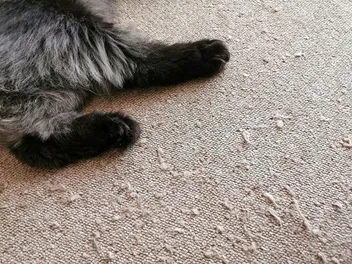
So, if you see what looks like a claw on the floor, there’s usually no need to worry, as this is just the outer husk of the nail (claw sheath).
8. The Claws Are Attached to the Bone
The claws are directly attached to the last bone of a cat’s toe, so when a cat is declawed, they essentially lose the tips of their “fingers.” This puts the cat at a considerable disadvantage, as they lose the ability to defend themselves or climb, they can have trouble walking because they are off balance, and can suffer from chronic pain.

9. Cat Claws Are Versatile
Claws provide the cat with myriad functions and advantages!
They help with:
10. The Claws Are Retractable
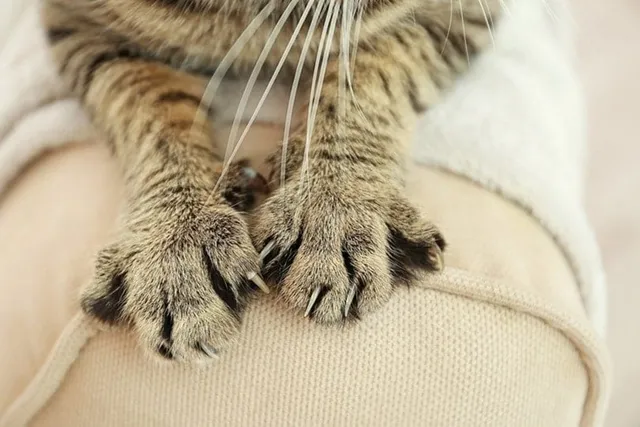
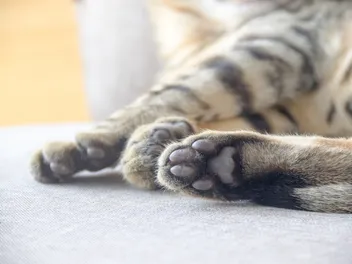
When cats are relaxed, their claws are retracted and sheathed. This helps keep the nails from getting worn down when they don’t need them. They can instantly extend their claws when they are most needed.
Did you know that kittens are born with non-retractable claws and can’t retract them until they are about 4 weeks old?


Alternatives to Declawing
Many countries and cities around the world have made or are making the declawing procedure illegal, which is in the best interests of our cats. There are a few steps that you can take to ensure that your cat won’t claw up your furniture.
Set Up Scratching Posts
If your cat has a scratching post, they will be less likely to scratch your furniture. It can help if you have multiple surfaces and posts for them to use. Place a post near the furniture that they tend to scratch the most. Invest in a few other posts, and put them in the areas where your cat hangs out.
Scratching posts can be vertical or horizontal, so figure out how your cat likes to scratch, and try different materials like sisal rope, carpet, and cardboard. The scratching posts must be stable; if they wobble, your cat will head back to the furniture. They must also be long enough for your cat to stretch out fully while scratching.
To get your cat to use the scratching posts, give them treats, catnip, and praise!
We're quite fond of cardboard as a material in cat scratchers, which is why we love the Hepper Hi-Lo Cat Scratcher. Encased within a well-constructed, modern birch plywood frame, this scratcher is designed with both cats and their owners in mind. It offers three versatile configurations to keep your feline friend active and entertained while enticing them to fulfill their natural scratching instincts (and away from scratching things they shouldn't). For more details, click here!
At Catster, we’ve admired Hepper for many years, and decided to take a controlling ownership interest, so that we could benefit from the outstanding designs of this cool cat company!
Make Your Furniture Unappealing
While setting up the scratching posts, you’ll need to take steps to make your furniture unappealing for your cat. You can put on a plastic cover, and if that bothers you, just consider it temporary until your cat is happily scratching the posts.
You can also put double-sided tape on the areas where your cat scratches the most. Felines hate sticky things on their paws, so this is a good and inexpensive deterrent.
You can pick up your cat if they are planning a good scratching session on your chair and place them next to the scratching post. Give them a bunch of praise and a treat if they scratch where they’re supposed to.
Nail Caps
Plastic nail caps are available which are glued in place on each claw. They come in white and transparent as well as more outrageous colors that will make your cat look like they are wearing nail polish! They can prevent damage from sharp cat nails to your home.
These are not without downsides, they can be difficult to put on and often come off quickly. They require regular monitoring and reapplication and many cats find them very annoying which can cause stress and anxiety. They should never be used on cats that go outside. If you are considering using them it’s best to speak to your vet to help you decide if they are the right option for your pet.
Trim the Nails Regularly
Keeping the tips of your cat's nails trimmed will help prevent them from getting caught in carpets and furniture. You’ll need to stay on top of this every 3 weeks or so depending on the age and activity levels of your cat.
If your cat tends to be grumpy during nail trims, you might need to take them to a groomer. Some groomers make house calls just for nail trims, so check what you have available in your area.

- Complete Set - These cat nail clippers include both a large and small pair, meaning it works well as a kitten claw trimmer when they're a small kitty, and then before you know it, as a cat nail cutter
- Razor Sharp Stainless Steel - The most comfortable cat nail clippers for indoor cats provide a fast and clean cut. And for rough residuals remaining, the free cat nail file included can smooth it all.
- Safety First - With a safety nail guard and locking spring, you can make sure every grooming cut is stress free for you, and pain free for your purry pal
Keeping your cat's paws healthy starts with keeping their nails trimmed. A great set of clippers like the Hepper Cat Nail Clipper Set can help you safely and easily do this at home. This set includes two sizes of clippers with stainless steel blades, built-in safety guards, and comfortable handles, along with a nail file and a storage pouch. Get ready for easy nail trimming!
At Catster, we’ve admired Hepper for many years and decided to take a controlling ownership interest so that we could benefit from the outstanding designs of this cool cat company!
Conclusion
Cat claws are an essential part of the cat, and when you see how much they help them, that’s no wonder! They need those tiny daggers to scratch that itch, climb a tree, or most importantly, defend themselves.
With the right plan and by following these tips, you can encourage your cat to use the scratching post and not your furniture. This way, everyone is happy!
Featured Image Credit: RJ22, Shutterstock
Expert cat care, straight to your inbox
News, insights, and useful advice, delivered to you.

No spam — unsubscribe anytime.
By signing up, you agree to our Terms & Conditions and Privacy & Cookies Policy.
How useful was this post?
Click a star to rate. You can leave written feedback afterwards. (We read all feedback.)
Kathryn was a librarian in a previous lifetime and is currently a pet writer. When she was a child, she hoped to work in ZOOs or with wildlife in some way, thanks to her all-consuming love for animals. Sadly, she's not strong in the sciences, so she fills her days with researching and writing about all kinds of animals and spends time playing with her adorable but very naughty tabby cat, Bella. Kathryn is hoping to add to her family in the near future – maybe another cat and a dog.