5 Different Cat Personality Types: Understand Your Feline (Vet Reviewed)


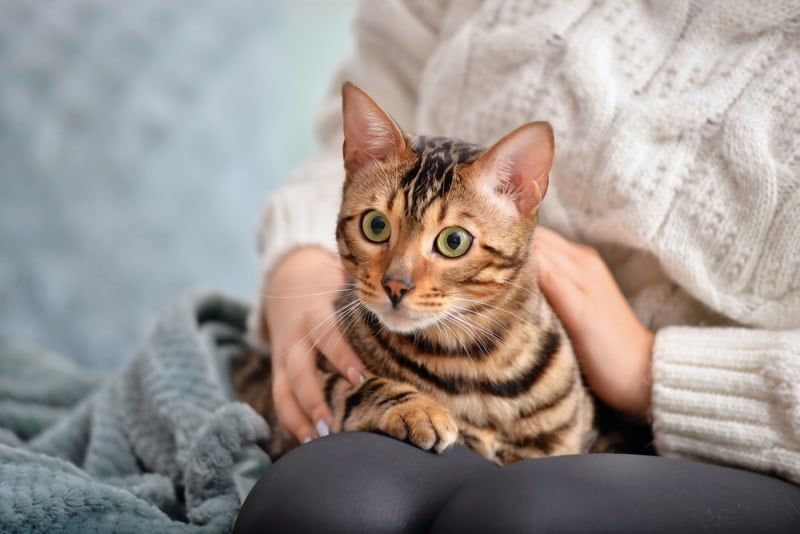
Cats are mysterious, enigmatic creatures that do what they want to do on their own terms. It’s hard for us to imagine putting them in a box (unless it’s a literal cardboard box, of course) based on their personality. However, after several studies, researchers have determined that most cats generally have one of five personality types, called the “Feline Five.” Read on to learn more about this model to see if you can work out which one suits your kitty best.

How the Personality Types Were Determined
Although not much research has been done on feline personality traits, scientists developed a questionnaire for cats using 52 personality characteristics.1 This survey was based on the research done on personalities in other animals, including Scottish wildcats and chimpanzees, and adjustments were made for pet cats.2
Respondents (cat owners) were asked about their pet’s intelligence, playfulness, and boldness. They had to rate their pet’s characteristics on a seven-point rating scale, from “not at all” to “very much so.” Over 2,800 cats from Australia and New Zealand were rated, and the researchers then developed the five major personality traits for cats, also known as the Feline Five. These are neuroticism, extraversion, dominance, impulsiveness, and agreeableness.
One interesting finding in the research on cat personality is just how similar our feline family members are to us. Psychologists often use a five-factor model known as the Big Five when exploring human personality, and the traits are neuroticism, extraversion, openness to experience, conscientiousness, and agreeableness.
Let’s delve a little deeper into each of the feline traits and see which are similar to those found in humans.

The 5 Cat Personality Types
1. Neuroticism or Shyness
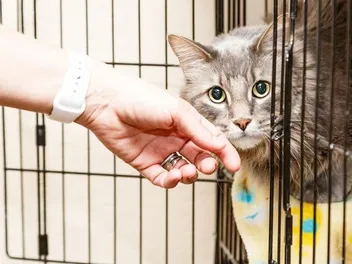
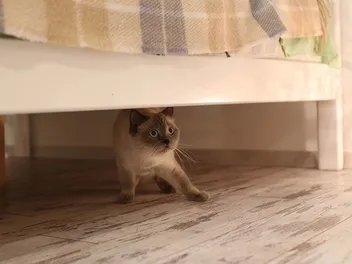
Cats scoring high in neuroticism are often anxious, shy, stressed, and fearful of other cats and humans. They will benefit from a home with plenty of good hiding spots. Owners of cats scoring high in this trait may also wish to explore the potential reason(s) that their cats feel this way. There may be environmental or social factors impacting the animal's behavior, such as not getting along with another cat in the household or neighborhood.
Cats with lower neuroticism scores are calmer and more trusting, while still being bold and independent. They are generally well-adjusted to their environment.
This personality trait is similar to neuroticism in people. Humans scoring high in that trait may experience mood swings, anxiety, and irritability. Those with low scores are more stable and emotionally resilient.

2. Agreeableness or Outgoingness
Cats scoring high in agreeableness are gentle, easygoing, happy, affectionate, and friendly to people. They tend to thrive in environments with plenty of toys, mental stimulation, and human interaction and are more easily adaptable to different circumstances. These cats do well with owners who set aside time daily to play with them.
Those with lower scores are not that common unless they are suffering from a health issue or showing signs of aging or pain. Felines with sudden changes in behavior should always be examined by a veterinarian, who can rule out medical conditions as causes.
The human equivalent for outgoingness on the Big Five scale is also agreeableness. Humans scoring high tend to be talkative, popular, considerate, helpful, and liked by others. Those with lower scores prefer solitude and don’t have as much energy in social settings.
3. Dominance
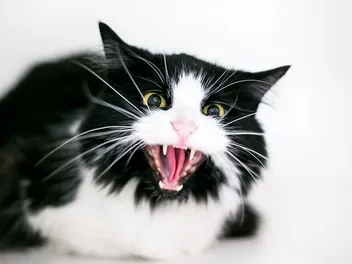
Cats scoring high in dominance can be bullies, compete for resources, and show aggression toward other cats. They often fare better in a single-pet household, as they struggle with being around other animals.
Those with lower scores are easygoing and often adjust well to living in a multi-pet household.
There is no human equivalent for dominance on the human Big 5 personality scale.

4. Impulsiveness
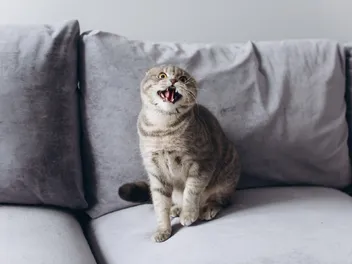
Cats scoring high in spontaneity are prone to impulsivity, fearlessness, and erraticism. They may be reacting to something stressful in their environment, but they may respond differently to the same situation on different occasions. This can happen to cats that haven’t yet learned to adapt to certain living circumstances. They may have anxiety and high energy.
Those with lower scores are more constrained and predictable. They are well-adjusted to their environment and may thrive on routine.
There is no direct human equivalent for spontaneity on the human Big 5 personality scale.
5. Extraversion
Cats scoring high in extraversion exhibit personality traits of being active, vigilant, curious, inquisitive, and smart, adjusting well to new people, animals, and situations.
Those with lower scores may be more solitary and clumsy or behave in an aimless manner, which can indicate an underlying health issue. They could also be poorly socialized. If being withdrawn, clumsy, or confused is out of character for your kitty, it could be a sign that your pet is ill, in pain, or frustrated.
The human equivalent on the Big Five scale is also extraversion. People with a high score for this trait are prosocial, like being the center of attention, and are more inclined to start conversations and meet new people. Those with lower scores prefer solitude and avoid busy social situations.

How the Test Can Help You as a Cat Owner
Cats are more multifaceted than we give them credit for. Society often considers cats aloof and fiercely independent, but this isn’t always true. Cats are complicated creatures, but knowing more about them and their personalities can help you be a better owner. You can take a quiz like the survey used to determine the Feline Five here. Although this quiz is not identical to the survey, it will give you a great idea of your cat’s leading personality traits. You can then use the results to alter your home and cat-parenting ideologies to better suit your kitty and their unique personality traits.
For example, if your kitty scores high in extraversion, you should focus on providing plenty of mentally challenging and externally oriented activities in your home. They’ll benefit from an environment rife with toys and physical and mental enrichment.
Final Thoughts
Cats may be enigmatic in many ways, but they give plenty of subtle (and not so subtle) hints into their personality if you pay close enough attention. Taking the personality test here is a great start to learning more about what makes your furry family member tick.
Sources
Featured Image Credit: Pixel-Shot, Shutterstock
Expert cat care, straight to your inbox
News, insights, and useful advice, delivered to you.

No spam — unsubscribe anytime.
By signing up, you agree to our Terms & Conditions and Privacy & Cookies Policy.
How useful was this post?
Click a star to rate. You can leave written feedback afterwards. (We read all feedback.)
For Chantelle, writing and animals are the two driving forces in her life. Growing up on the Canadian prairies surrounded by pets, she now shares her home with five cats, two guinea pigs, and a bearded dragon. Chantelle, her husband, and their child pride themselves on being dedicated pet parent, even spending a fortune on wall-mounted cat shelves to provide their cats with an indoor jungle gym. When she's not snuggling with her cats or photographing their humorous moments, Chantelle is exploring the Rocky Mountains, rewatching her favorite Netflix series, and reading up on various random subjects.