My Cat Is Addicted to Treats, What Can I Do? (Vet Answer)
In this article
It is no secret that cats love treats. The pet treat industry is a big one, and the manufacturers sure know what they are doing when it comes to making tempting morsels for felines to eat. Treats for cats are designed to be highly palatable, so it is no surprise that cats are often left wanting more.
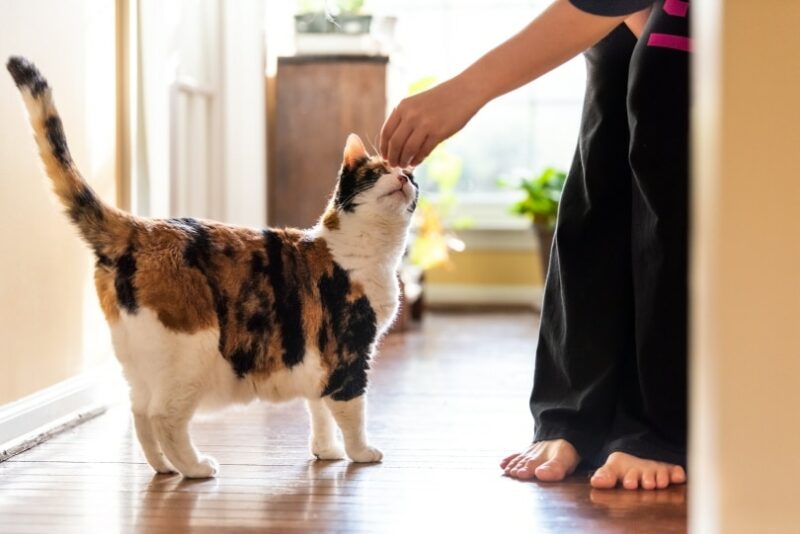
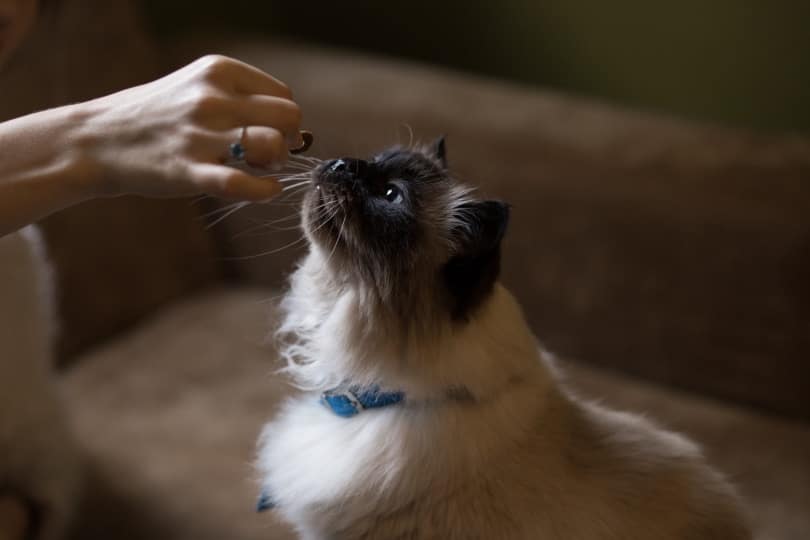
Once cats get a taste for the good stuff, they may start begging for another treat or getting excited at the time of day that you usually feed them their treat. Some owners may notice that their cats have developed an unhealthy obsession with treats and are showing signs similar to those of addiction.
If you think that your cat is addicted to treats, this problem needs addressing as soon as possible because their health may be at risk. Read on to find out how to break the habit.

How Do I Know If My Cat Is Addicted to Treats?
Your cat will display certain classic signs if they have addictive tendencies toward treats. Signs of addiction you may witness at home can include:
- Incessant meowing increasing in volume
- Begging/pestering for treats
- Impatient when being given treats
- Overexcited when the treat bag comes out
- Aggressive behavior toward other pets when treats come out
- Stealing treats/trying to break into treat bags
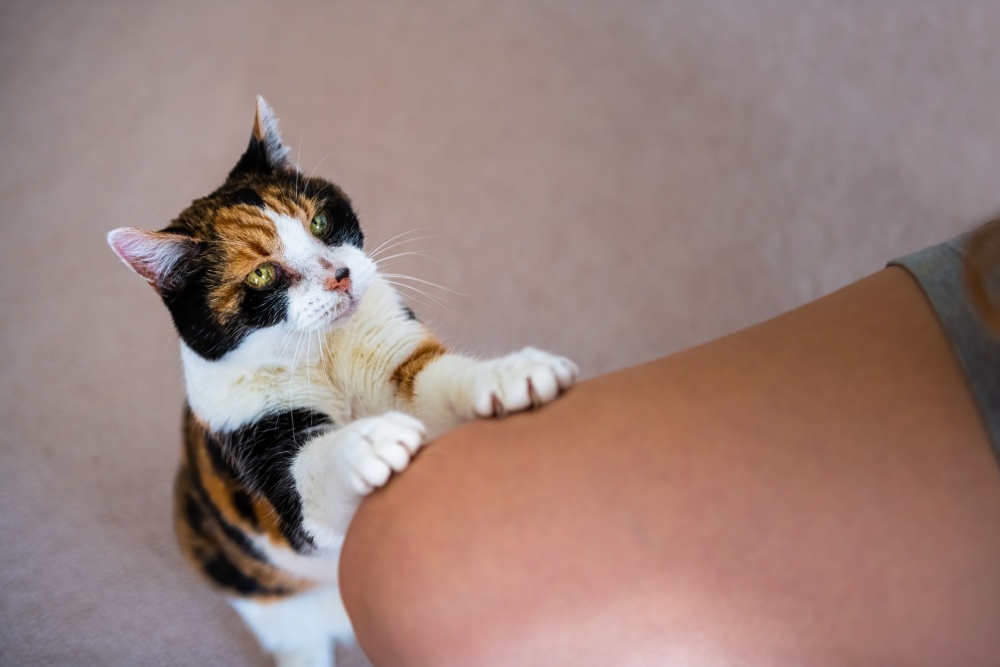
- Jumping on countertops to get access to treats

Why Are Too Many Treats Bad?
The problem with your cat being addicted to treats is that no matter how many you give them, they will always want more. Giving your cat too many treats is bad for them. Not only are you reinforcing the bad behavior by rewarding them for begging or pestering, but you could also be damaging their health.
Treats tend to be very high in calories, and if cats eat too many of them, they will gain weight and eventually become obese. They can also fill up on treats and then refuse to eat their normal cat food. This would be the equivalent of us eating donuts all day and not eating a balanced diet with all the correct nutrients. So, your cat may be depriving themselves of the correct nutrition by filling up on unhealthy treats.
Cats that are overweight are at a higher risk of developing certain health problems, such as:
- Diabetes
- Cancer
- High blood pressure
- Heart disease
- Osteoarthritis and degenerative joint diseases
- Increase in urinary tract infections
- Bladder stones
- Skin and coat problems
Obese cats are also more likely to experience complications while under general anesthetic. Cats that are overweight and stop eating suddenly are at risk of developing a condition that affects the liver, called hepatic lipidosis.
The 7 Ways to Help Your Cat
If you think that your cat is addicted to treats, the worst thing you can do is to give them treats when they start begging for them. It may seem like the easiest option to give in, especially if they start getting aggressive with you or other animals in the household. In the long run, the best thing to do is to not give in and to stand your ground. If you do pander to them, you are essentially rewarding negative or unwanted behavior.
1. Reinforcement of Good Behavior
Once they have this in their heads, it is very difficult to persuade them otherwise. Start by only ever giving treats when your cat is displaying good behavior. This way, you are positively reinforcing the behavior you want to see more of.
2. Treat Dispensers
A useful tactic to try and break this cycle is by taking yourself out of the equation. An automated feeder will allow your cat to be fed a restricted number of treats at regular intervals. They can be programmed to only dispense one or two treats a couple of times a day. If your cat learns that they get treats from the feeder and not from you, they will eventually stop pestering you, and they will only ever receive a set amount from the automated feeder.
Treat toys are another option. There are some toys available that dispense treats only when your cat plays with them. They have the bonus of providing an exciting enrichment activity and a good source of mental stimulation. The cat may also burn off some extra calories from getting all those treats.

3. Toys
On the subject of toys, adding positive attention and interaction in the form of playtime can work wonders for treat addicts. Often, cats will pester for treats simply because they are bored. If they are sat around all day and their only interaction with you is when you feed them, they will associate you with food. This can lead to them pestering you for food every time they see you. If you start to play with them, they will be burning calories and doing something positive for themselves that doesn't involve eating treats. There are lots of different toys you can buy that will entice your cat to play with you, and they will love the attention too.
4. Treat Variation
A different tactic is to switch up the treats you give your cat. Changing the treat may cause your cat to lose interest in treat time, as it is not the same any longer. If you have been feeding them shop-bought treats, you can start to give healthier treats to your cat, such as small, dried bits of meat or fish. This will be higher in protein and will keep your cat fuller for longer, so they are less likely to pester for more. If your cat is fed exclusively with wet food, you can try feeding them bits of dry kibble as their treat. The different taste and texture can be very appealing. This may not stop your cat from being addicted to treats, but in the short term, it means they will be getting a more nutritious option.

5. Training
Clicker training can be a useful way of training your cat to receive a different form of positive feedback. You can use a clicker to reduce the number of treats you are using (or eliminate the use of treats) by offering a different method of positive reinforcement. This can be a lengthy process, though, and will require patience.
6. No More Treats
Some cats are so insistent on getting those treats that the best option is to remove them altogether. This is necessary in some cases, as treats may be dangerous for your cat—for example, if they have developed diabetes or if they are morbidly obese. This can be tough on all parties involved. No one wants to see their cat upset, but sometimes it is necessary to be cruel to be kind.
A softer option would be to gradually wean your cat off the treats by slowly reducing the number of treats and the frequency that they are given. Be sure to only give treats when your cat is displaying positive behavior, so they don't pick up bad habits.

7. Catnip
Catnip is an herb that some cats react to positively. When your cat rubs themselves on the herb, a chemical compound called nepetalactone is released. It is not fully understood why this happens, but cats respond to it as they would other pheromones. Catnip only has an effect on some cats, not all of them. If your cat does react to it, it could be a welcome distraction from treats and fewer calories too.
Ensure that all family members in your household are on board with the plan. You need to make sure that everyone adopts the same tactics with your cat so they don't just start pestering someone else to get their treat hit.
Conclusion
All cat owners want their cats to be happy. Treating them as we would treat ourselves can start as a nice way to bond with our furry friends. However, very quickly, this can turn into a bad habit and eventually an addiction. There is no harm in giving treats in moderation to your cat. The problem arises when your cat doesn't know when to stop and the situation gets out of control. It can be difficult for both owners and cats to break the cycle, and it will require lots of willpower, as it is a big commitment.
Once you have decided which method you are going to use from this list, you need to be consistent and firm, and eventually, even the most stubborn of cats will learn to adjust to your regime.
Make sure that you choose healthy treat options whenever possible. If you need more advice about what is appropriate for your cat, your vet will be happy to advise you.
See also:
Sources
Featured Image Credit: Andriy Blokhin, Shutterstock

Expert cat care, straight to your inbox
Vet-reviewed advice, behavior tips, and the best of Catster. Free, and you can unsubscribe anytime.
By signing up, you agree to our Terms & Conditions and Privacy & Cookies Policy.
Dr. Emma Chandley, BVM MRCVS (Veterinarian)
Dr. Emma is an experienced vet who is happy to share her expertise and knowledge about cats with readers. Her passion is surgery but she will happily talk about anything animal-related. Dr. Chandley graduated from The Royal Vet College and since then she has worked in general practice in Great Britain. Dr Chandley has completed a postgraduate certificate in Small Animal Surgery and has also gained Advanced Practitioner status in the same discipline. She enjoys developing her skills in animal behavior, nutrition, and clinical pathology as well.
Join the conversation
Ask a question, share your story, or send private feedback.