Can Cats Be Service Animals? Vet-Approved Guide


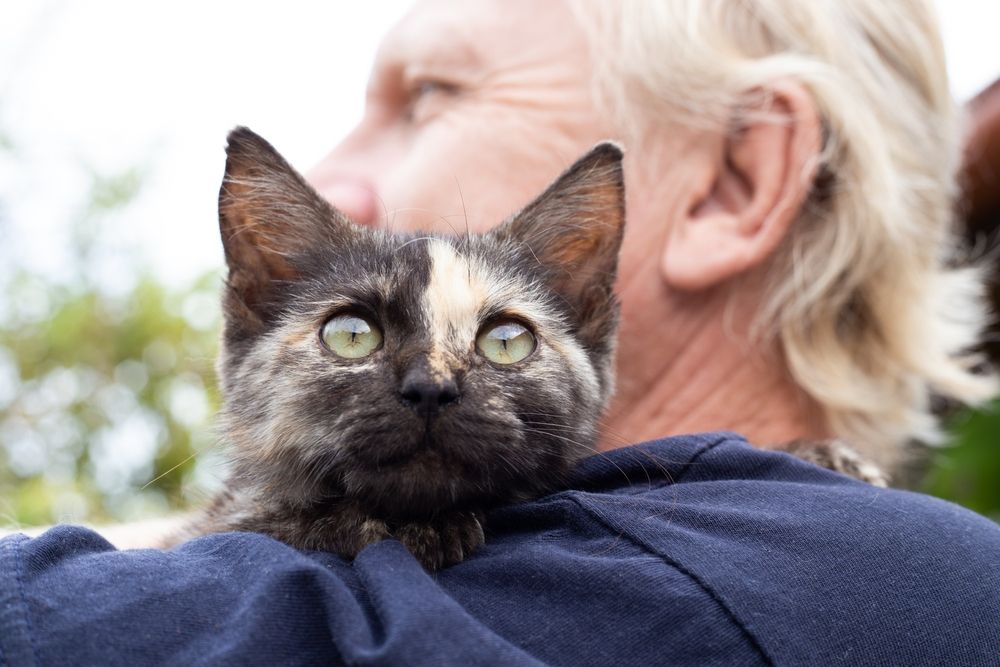
If you want a rewarding relationship with a pet, own a cat. Cats are beloved for their emotional support, love, therapy, and of course, keeping rats at bay. Well, kitties can be many wonderful things except one—a service animal.
No doubt, many cat owners have questioned whether cats can be legitimate service animals. But how do we define service animals? Can your feline friend be helpful after all? Sadly, according to the Americans with Disabilities Act, cats cannot be service animals. Keep reading and discover why.
In this article

Can Cats Be Service Animals?
Please Note
Dogs are the most common service animals, of course. According to the Americans with Disabilities Act, cats cannot be service animals—meaning that even if you train a feline, it cannot legally function as a service animal at the moment.
That’s not to say that kitties can’t make a meaningful impact in human lives. Although the law does not acknowledge cats as service animals, cats can function as therapy and comfort or emotional support animals for humans. The Fair Housing Act in the US allows for cats and other non-service animals to be considered as emotional support animals in your home.

Understanding the Difference Between Service Animals, Emotional Support Animals, and Therapy Pets
Since there are fine legal distinctions about what constitutes therapy, service, and emotional support pets, it would be imperative that you understand the differences.
1. Emotional Support Animals
Also known as comfort animals, emotional support pet refers to a pet that directly provides companionship, love, security, and emotional support to its owner. These pets live with their humans and help them cope with anxiety, depression, mental instability, or PTSD.
Emotional support animals do not undergo or require specialized training. Prospective owners get assurance and relief from emotional instability symptoms just by the pet’s physical presence.
However, you can only keep or fly with a comfort animal after a mental health practitioner determines that your condition warrants such a pet. You must also have an accompanying letter from your therapist to ascertain why you need an emotional support pet.
According to the Americans with Disabilities Act, only owners with designated emotional support animals can live in houses or fly with their pets despite the no-pets policy.
2. Therapy Animals
Therapy animals work hand in hand with physicians and therapists in guided therapy sessions to offer mental support and emotional relief to humans. These pets do not live with the people they assist. Instead, they visit them in public places like nursing homes, schools, and hospitals.
These pets are working animals owned by volunteer organizations or individuals. They don’t undergo training; therapists conduct rigorous evaluations before giving pet owners certifications that designate the pets as therapy-worthy animals. These animals have to be safe, calm, and fit to help with therapeutic services.

3. Service Animals
According to the Americans with Disabilities Act, service pets are animals that have undergone training to perform tasks for individuals with disabilities during medical crises or in situations that result from their owner’s medical conditions.
Service animals can help with pulling wheelchairs, reaching for medication, offering assistance during seizures, or calling for emergency services during a crisis. Better still, a service pet usually helps as a guide for the visually impaired.
These animals require specialized training to assist with their owner's specific medical condition. They can also accompany their owners in public places as long as they are gentle and well-behaved.
However, the law does not recognize cats as service animals because they are less trainable than other service animals. Today, the only designated service pets in the US are dogs and miniature horses.
How to Make a Cat an Emotional Support Animal
Cats can’t be service pets, but they can be comfort animals and therapy cats. The felines’ abilities to make a human connection and know when humans require extra love make them suitable for comfort and therapy.
Here is how they can qualify:
Step 1: Ensure Legality
If you or your family member has a mental condition that you think an emotional support pet can alleviate, find legal documentation approving your mental disability. The law allows psychologists, therapists, psychiatrists, and licensed mental health practitioners to issue certificates to deserving parties.
You can visit these professionals in person or see them online for evaluations before determining and certifying that you have an emotional condition. Certified issues range from PTSD, bipolar, and autism to any other psychiatric disorder.

Step 2: Get Documentation
Your therapist or healthcare provider should write a letter that recommends that you need a comfort animal after certifying your case. The letter states your condition and why they think you'll benefit from a comfort pet.
Step 3: Submit Documentation
Unfortunately, many housing authorities and airlines have a no-pet policy. These establishments can only allow you to keep or travel with a pet if you have an official certification that the animal should accompany you.
Since the therapist’s letter is the official documentation, you’ll need to submit it to commercial airlines, housing institutions, and hotels as proof that you can keep the pet with you.
Only two state laws, Air Carrier Access Act (ACA) and the Fair Housing Act (FHA), cushion emotional support animals.
These laws protect comfort animals and exempt pet owners from pet fees and other regulations that housing companies, businesses, and airlines subject pet parents to.

How to Make Your Cat a Therapy Pet
Please Note
1. Socialize Your Cat
Does your cat give you emotional support? If yes, your cat can be a valuable therapy tool.
For this reason, start by allowing it to interact with crowds as much as possible. Your feline friend must acclimatize with their future role to prepare them for endless interactions with new faces.
2. Book a Home Observation and Assessment
Although your kitty does not require special training for their new role, they require an evaluation and observation by qualified personnel to determine if they can work as a therapy animal. The personnel tests a cat’s behavioral skills and the owner’s relation with the animal.
3. Book Group Observation and Assessment
After the individual assessment, the law requires that a cat passes three supervised observations in a registered facility. This step allows the practitioners to observe and assess the cat’s behavior and performance as therapy animals in larger groups.

4. Register Your Cat
If your cat passed all the legal tests and requirements, you can go ahead and submit an application asking your cat to be registered as a therapy animal. You’ll only start offering therapy services after approval from relevant stakeholders.
Therapy pets should be:
Unlike service and emotional support animals, housing, airlines, public businesses do not accord therapy animals special treatment since such animals can only operate in particular settings. It means cat parents are not entitled to take these animals whenever they please.
Summary: Can Cats Be Service Animals
If only cats could be service animals too! Perhaps, they can become so in the future since a few have proved to be functional through special training. Until then, share the comfort and emotional support your kitty gives you with other people in therapy institutions.
The best thing you can do is research the breed your cat is because some cat breeds are better at offering support than others.
See also:
Featured Image Credit: Natalia Kokhanova, Shutterstock
Expert cat care, straight to your inbox
News, insights, and useful advice, delivered to you.

No spam — unsubscribe anytime.
By signing up, you agree to our Terms & Conditions and Privacy & Cookies Policy.
How useful was this post?
Click a star to rate. You can leave written feedback afterwards. (We read all feedback.)
Christian started writing for a local newspaper as a teenager, and he's been involved in the publishing industry for most of his adult life. Combining his love of writing with a passion for animals, he is currently the Director of Editorial at Pangolia and the Editor-in-Chief at Catster.
Christian lives in the Philippines with his wife, son, and four rescue cats: Trixie, Chloe, Sparky, and Chopper.