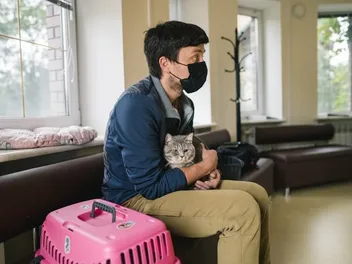
How to Get Your Cat Certified as a Therapy Cat: Vet Reviewed Training & Certification Steps



Science has proven that the presence of animals is extremely healthy for people, thanks to their ability to reduce stress, loneliness, and other negative feelings. Therapy cats are a way that people can experience the positive effects of the presence of a cat, oftentimes in situations like being in the hospital or living in a nursing home. Have you found yourself searching “how to make my cat a therapy cat” on the Internet? After all, you can’t simply walk into a random place with your cat and declare them a therapy cat. Is there a therapy cat certification or therapy cat training they need to go through?

The 4 Steps on How to Get a Therapy Cat
1. Learn Everything You Can
There are a lot of misconceptions surrounding therapy animals, emotional support animals, and service animals. Before you get any further, it’s extremely important for you to understand that certifying your cat as a therapy cat does not make them a service animal. Therapy animals are not protected by the Americans with Disabilities Act, so you cannot expect to be able to take your cat everywhere, no matter how well-trained they are.1 Educate yourself on what it means for your cat to be a therapy cat.

2. Honestly Evaluate Your Cat
It’s essential that you take an honest inventory of your cat’s temperament before you try to move forward with making them a therapy cat. A therapy cat cannot have any tendencies for showing aggression toward people or animals, and if your cat is nervous or shy, they aren’t an ideal candidate.
There are also rules that apply to therapy animals for the safety of the people they may be exposed to, like that therapy cats cannot eat a raw diet due to the risk of foodborne illness being spread to immunocompromised people.2 They also have to be up to date with vaccinations.
Is being a therapy cat something that your cat might actually enjoy? Is your cat comfortable with change and new situations? Are they willing to learn to walk on a harness and leash? These are all important questions to ask.
3. Reach Out and Apply to Training Programs
There are multiple certification and training programs throughout the country. A quick Internet search should help you find locations near you. Keep in mind that you are looking for a therapy animal certification and training program, not a program to “certify” a service animal. These services are a scam and should not be trusted.
Most organizations will have you start by filling out a questionnaire to help them quickly determine if your cat may be a suitable candidate to become a therapy cat. Once they’ve reviewed your questionnaire, you can expect to get in touch with the organization.
Every organization has its own process because there is not a nationally recognized process for training and certification of a therapy animal. Some organizations may offer training programs in person, while others may simply offer online training courses. Talk to multiple organizations to find the one that has a program that is most suitable for you and your cat.
Be prepared to go through multiple types of tests to evaluate your cat’s temperament and reaction to unusual and scary situations. If your cat is not able to tolerate situations that most cats may find frightening, then they aren’t going to be a suitable therapy cat. Your cat should be able to be around hospital equipment, strange people, and new sounds and scents without panicking.

4. Outreach to Potential Visit Locations
Once you’ve gone through the process to have your cat certified and trained to be a therapy cat, you still can’t simply show up places. Start calling around to locations in your area that might be of interest for you and your cat to visit. Hospitals, nursing homes, prisons, and schools are all places that often welcome therapy animals. You should be prepared to provide them with your cat’s credentials, as well as their most recent vaccine records.
In Conclusion
Having a therapy cat can be extremely rewarding, and for cats that are highly social and comfortable with change, this can be a wonderful job for them. It takes a special cat to be a therapy cat, though, and many cats don’t make the cut. Be honest with yourself about your cat’s preferences and temperament before getting too far into the process of trying to get them certified.
Sources
Featured Image Credit: Anastasija Kru, Shutterstock
Expert cat care, straight to your inbox
News, insights, and useful advice, delivered to you.

No spam — unsubscribe anytime.
By signing up, you agree to our Terms & Conditions and Privacy & Cookies Policy.
How useful was this post?
Click a star to rate. You can leave written feedback afterwards. (We read all feedback.)
Brooke Billingsley, a former veterinary assistant for nine years, became a nurse in 2013. She lives in Arkansas with her boyfriend of five years, surrounded by her beloved pets: three dogs, two cats, five fish, and two snails. Brooke has a soft spot for special needs animals, caring for a three-legged senior dog and a widely known cat with acromegaly and cerebellar hypoplasia. She has developed a keen interest in fish keeping and is always learning how to provide the best environment for her aquatic pets. In addition to her passion for animals, Brooke enjoys gardening and maintains a vegetable garden during the summer. She stays active with yoga and received her 200-hour yoga teacher certification in 2020. Brooke also hosts a podcast that delves into folklore and myth, dedicating her spare time to research and writing. She embraces the philosophy that every day is an opportunity for learning and growth, continually working to acquire new skills and knowledge.