Is Scented Litter Safe for Cats? Vet-Reviewed Facts & FAQ


Several online sources suggest that scented litter is bad for cats. It’s alleged to cause recurrent urinary tract infections (UTIs) due to irritation caused by fragrances added to mask the smell of cat pee. Others argue that scented litter should be avoided because chemical fragrances irritate sensitive feline noses. But there's no denying the intense pungency of cat urine, and keeping smells contained plays a critical role in maintaining a pleasant environment for you and your cat.
Sure, scented litter provides a quick and easy way to keep unpleasant litter smells under control, but is it safe for your cat? It depends! While scented products are usually safe, they trigger respiratory difficulties in some pets. Other cats find the fragrances associated with these products so overwhelming that they won't use a litter box filled with scented litter. Read on for a quick run-down on the most important things to know about scented cat litter.

Types of Litter
There are three types of litter: clay, crystal, and biodegradable/flushable. Clay litter is more convenient and affordable, but crystal products are ideal for kitties that dislike the texture of clay litter. Biodegradable/flushable options leave a smaller carbon footprint than other types but are expensive. Below you'll find more information about the benefits and drawbacks of each of these products.

Scented or Unscented?
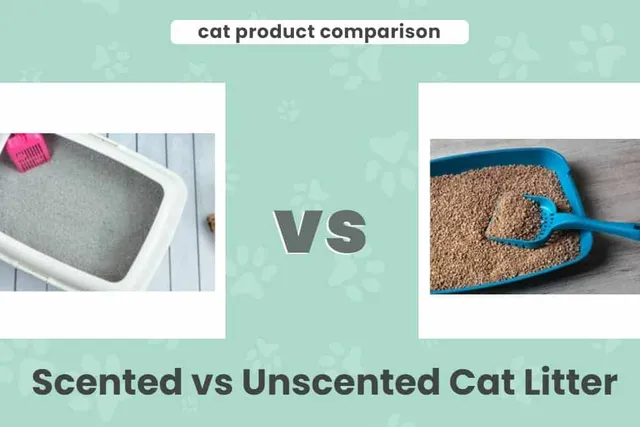
All three types of litter are available in scented and unscented options, so you'll also need to decide which best suits your and your pet’s needs. Scented products mask the smell of cat urine with fragrances. These products often cover odors more effectively than unscented options.
Many cat owners find that scented litter provides the most bang for the buck regarding odor control. And with better odor control comes the ability to place your cat's litter box just about anywhere in your home. There are several fragrances to choose from, making it relatively easy to find a product with a pleasing or at least tolerable fragrance.
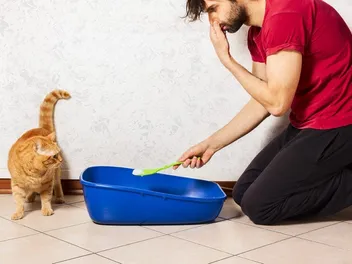
Some cats, however, don't do well with scented litter since they can trigger allergic reactions and breathing difficulties. Cats that are sensitive to the chemicals in scented litter often sneeze and have watery eyes. Some people find the fragrances added to these products overwhelming, causing headaches and allergic reactions. Others simply find the fragrances difficult to be around.
Unscented litter is simply litter that doesn't feature any added fragrance to cover the smell of your cat's waste. Some unscented litters come fortified with natural odor neutralizers such as baking soda and activated charcoal to help keep things smelling clean. Many cat owners find unscented litters featuring natural odor neutralizers highly effective when it comes to trapping odors.
If you're not interested in a scented product but still want a little something to put the kibosh on that stinky cat urine odor, litter additives offer a great option. Just sprinkle a bit in your cat's box to give unscented litter a boost in the odor-trapping department. Alternatively, you can mix a bit of baking soda into your cat's litter for cheap, easy, and effective litter odor control.
Clay Litter
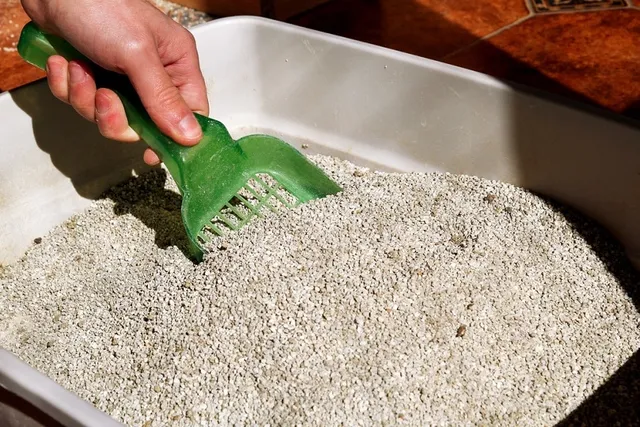
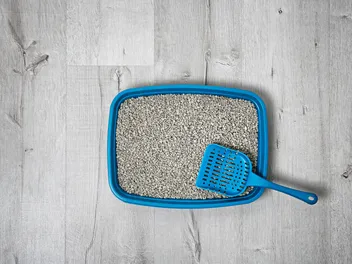
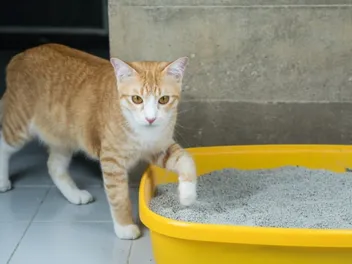
Clumping and non-clumping litter primarily consist of super-absorbent bentonite clay. It traps urine in easy-to-scoop clumps that make litter cleaning easy and fast. Non-clumping clay absorbs odors but does not form tight clumps, but clumping clay absorbs the ammonia smell associated with cat urine and dries out the fecal matter. Litter boxes with clay products should be scooped once a day.
Many owners top the litter off just a bit every day to keep things fresh for longer. Clumping litter should be totally replaced at least once a month. These products produce dust that can trigger human and feline respiratory difficulties, and cats are notorious for tracking the dust and debris associated with these products throughout the house. Clumping choices provide effective odor control and a convenient way to prevent the build-up of urine in your cat's litter box.
Crystal Litter
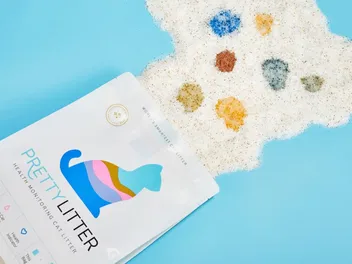
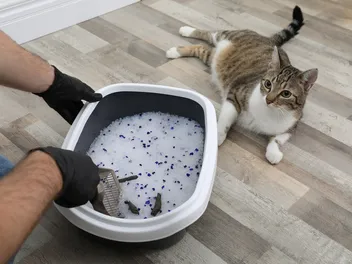
Crystal options don’t clump; you only have to scoop out the feces to prevent foul odors. The urine becomes embedded in the crystals and does not require daily scooping. Many products contain crystals that change color when saturated to indicate when it's time to replace the litter.
Crystal choices produce less dust than clumping products, and they're ideal for people and pets with allergies or respiratory conditions. Less dust also means less tracking, less cleaning, and more hygienic conditions in your home.
Crystal litters are often lighter, requiring less volume to deliver the same results. Neither crystal nor clumping options are biodegradable; both ultimately end up as landfill waste.
You can sometimes save a few dollars with crystal litter since it often lasts longer and costs less than biodegradable/flushable products.

Biodegradable/Flushable
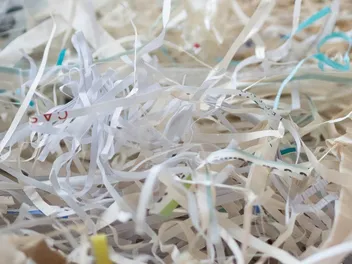
Flushable options provide environmentally conscious pet owners with a way to take care of their pets while being kind to the earth. These biodegradable products won't add to your local landfill. They’re made from various materials, including recycled newspapers, dried tofu, and corn.
Remember that cat litter should never be flushed down the toilet, even if you're using a product marketed as "flushable.” Flushable products can cause problems for septic systems, and some modern low-flow toilets don't produce enough water pressure to dispose of cat litter adequately. If cat waste gets into the human water supply, it can cause significant health problems, as feline feces contain parasites such as Toxoplasmosis that can cause birth defects in humans. Flushable options are usually a bit more expensive than clay and crystal options.

Conclusion
Scented litter is generally okay for cats. It's designed to be perfectly safe, although some suggest that these products should be avoided to prevent the development of UTIs. Scented products do a great job minimizing the intensity of litter smells, but some cats find the fragrances in the products too strong, leading them to explore alternate places to pee.
Scented litter can cause upper respiratory problems in some cats, and some people find the fragrances added to these products overwhelming. Unscented litters often contain natural odor-neutralizing agents such as baking soda or activated charcoal, both of which do a solid job absorbing odors.
See also:
Sources
https://www.armandhammer.com/articles/unscented-vs-scented-litter
https://www.petmd.com/cat/conditions/urinary/utis-cats-urinary-tract-infections-cats
https://www.catster.com/guides/scented-vs-unscented-cat-litter/
https://www.petmd.com/cat/centers/litter/evr_ct_clumping-versus-non-clumping-cat-litter
https://theconversation.com/ive-always-wondered-can-i-flush-cat-poo-down-the-toilet-159340
https://www.armandhammer.com/articles/unscented-vs-scented-litter
https://www.petmd.com/cat/conditions/urinary/utis-cats-urinary-tract-infections-cats
https://www.catster.com/guides/scented-vs-unscented-cat-litter/
https://www.petmd.com/cat/centers/litter/evr_ct_clumping-versus-non-clumping-cat-litter
https://theconversation.com/ive-always-wondered-can-i-flush-cat-poo-down-the-toilet-159340
Featured Image Credit: jamesjoong, Shutterstock
Expert cat care, straight to your inbox
News, insights, and useful advice, delivered to you.

No spam — unsubscribe anytime.
By signing up, you agree to our Terms & Conditions and Privacy & Cookies Policy.
How useful was this post?
Click a star to rate. You can leave written feedback afterwards. (We read all feedback.)
Lorre Luther is a writer who is firmly convinced that cats are smarter than humans. She left her law career in the United States and moved to the Netherlands to follow her dream of becoming a writer. Lorre currently lives in Rotterdam, she enjoys traveling and greatly appreciates the beauty of nature. Lorre has a spot for animals and admires the intelligence of cats.