Can Cats Sense Anxiety & Depression? Vet-Approved Science & Info


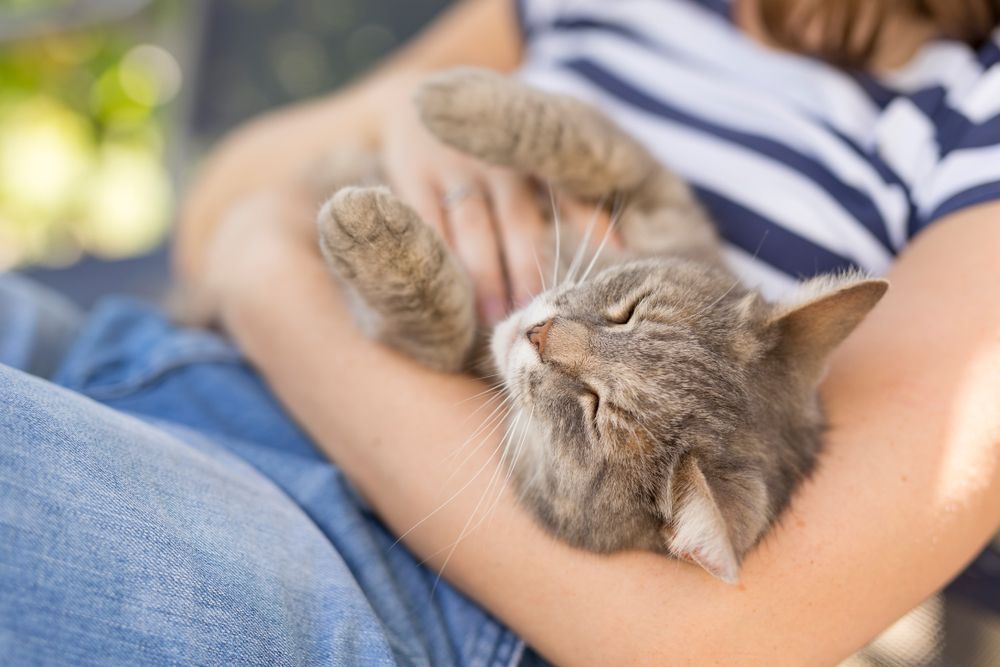
When it comes to pets that are good at sensing their humans’ emotions, dogs are usually the first to come to mind. After all, felines have a reputation for being independent and stand-offish rather than being “man’s best friend”. But are felines really incapable or unwilling to pay attention to how their people are feeling?
It turns out that felines can and do sense how we’re feeling, including when we’re anxious or depressed. Not only can our cats sense emotions such as anxiety and depression, but they can also change their behavior to act accordingly, determined by our mood. How do they do it?
Here’s how cats sense anxiety, depression, and more in their humans and how they can help those dealing with depression and anxiety!

Can Cats Sense Depression?
Studies indicate that cats can sense depression1 and spend more time with people who are depressed. However, they likely cannot understand that what you’re feeling is depression. Nonetheless, they likely do know that something is off.
Another study also found that cats seem to approach people more often when they sense that they are agitated or stressed 2.
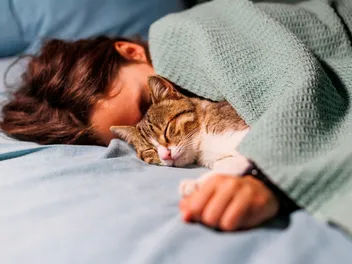
What exactly are they paying attention to? An overview of feline emotional cognition3 shows that felines can recognize emotions via visual and auditory observations. So, if you’re depressed and are feeling low-energy, you might address your cat in a listless voice, which they pick up on. Or if you’re frowning or crying, your pet will definitely notice. And if you haven’t had the urge to leave bed for a few days, other than to feed your cats and yourself, you can be assured your cat has noticed that something is off.

Can Cats Sense Anxiety?
When it comes to cats sensing anxiety, they’re still looking at you to determine how you feel, but they’re doing it a bit differently from how they sense depression. With emotions such as depression or happiness, your pet is picking up on what you’re saying or how you look and act. With anxiety, your pet is doing what’s known as social referencing.
A study4 put cats and their owners into a room filled with fans that had attached streamers. Some people were told to act happy about the fans, while others were told to act as if they were afraid. The result was the cats looking at their owners to see their reaction to the fans before deciding how they themselves would react. So, with anxiety, your cat is still looking at how you’re acting to figure out how you feel but also often mirroring that anxiety.

Can Cats Help Those With Anxiety & Depression?
Absolutely! In fact, cats can make excellent emotional support animals. What is an emotional support animal? It’s an animal that brings comfort to a person. These animals aren’t service animals since no training is involved in becoming an emotional support animal, but they are accepted under the Fair Housing Act (in the US).
Why do our feline friends make good emotional support animals? For starters, our kitty’s purr is sort of magical; not only does it have therapeutic powers , like lowering blood pressure and reducing the risk of heart attacks, but it may even help heal broken bones!
Another reason our cats are great at helping us through depression and anxiety is probably their ability to distract us. When dealing with mental health issues, such as anxiety or depression, one of the more important things you can do on bad days is to distract yourself from negative thoughts or behaviors. And what’s more distracting than a cute, cuddly kitty that wants to snuggle and play?
Cats may help reduce loneliness (which can often be a factor in depression and anxiety), and because we’re responsible for our pets, they encourage us to keep going so we can properly care for them.

Conclusion
Felines are absolutely capable of sensing anxiety, depression, and other emotions. They even look to us to see how they themselves should act or react to stimuli! And if you’re feeling down and out, your favorite kitty may be a useful resource. Cats make wonderful emotional support animals, as they have healing purrs, help distract us from negativity, reduce loneliness, and give us something to keep going for.
See also:
Featured Image Credit: Impact Photography, Shutterstock
Expert cat care, straight to your inbox
News, insights, and useful advice, delivered to you.

No spam — unsubscribe anytime.
By signing up, you agree to our Terms & Conditions and Privacy & Cookies Policy.
How useful was this post?
Click a star to rate. You can leave written feedback afterwards. (We read all feedback.)
Misty Layne lives out in the woods in small-town Alabama with her two Siamese cats —Serafina and Jasper. She also has an array of stray cats, raccoons, and opossums who like to call her front porch home. When she’s not writing about animals, you’ll find her writing poetry, stories, and film reviews (cats, by far, her favorite writing topic, though!). In her free time, Misty enjoys chilling with her cats, playing piano, watching indie and foreign films, photographing abandoned places, and catching up on her never-ending TBR list.