Whether you’ve recently adopted a declawed cat or had your own feline friend declawed, buying them an appropriate cat litter is one of the best steps that you can take to make their life easier and more comfortable.
Declawing a cat means that they have no claws to protect the rest of their paws, and these can become sensitive. Their paws will be especially delicate to sharp and harsh materials, which many litters are made from. Besides ensuring that you buy extra-soft litter, you will need to consider the other factors that are vital when choosing a cat litter:
- Do you prefer clumping or non-clumping litter?
- Do you want environmentally friendly litter?
- Do you need a formula that is dust-free or has minimal dust?
There is such a wide variety of litters available, including those from experienced manufacturers like Purina and Okocat, that you can find a litter to meet your requirements and those of your declawed cat. We have developed reviews of the best cat litters for declawed cats so you can choose the one that best fits your needs while being sympathetic to your kitty’s.
In this article

A Quick Comparison of Our Favorites in 2026
| Image | Product | Details | ||
|---|---|---|---|---|
Best Overall

|

|
Arm & Hammer Clumping Corn Cat Litter |
|
CHECK PRICE |
Best Value

|

|
Frisco Non-Clumping Recycled Paper Cat Litter |
|
CHECK PRICE |
Premium Choice

|

|
Dr. Elsey's Paw Sensitive Clumping Clay Cat Litter |
|
CHECK PRICE |

|
Fresh News Non-Clumping Paper Cat Litter |
|
CHECK PRICE | |
|
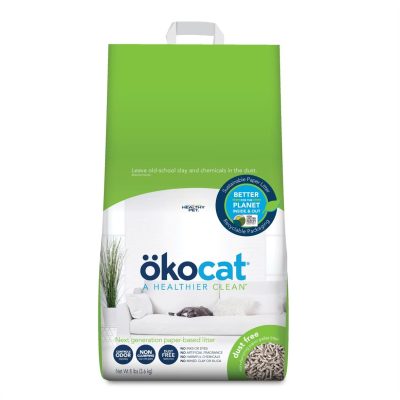
Okocat Natural Non-Clumping Paper Cat Litter |
|
CHECK PRICE |
Top 5 Best Cat Litters for Declawed Cats
1. Arm & Hammer Clumping Corn Cat Litter — Best Overall

Arm & Hammer Naturals Clumping Corn Cat Litter is made from corn fibers, which are a natural clumping agent mixed with mineral oil and baking soda. These additional ingredients serve to reduce dust and debris, and the litter is much softer than the standard clay products and even most of the litters are made of wood pellets and other ingredients. We think that it is the overall best cat litter for declawed cats.
Arm & Hammer specializes in odor elimination, and much of this stems from the level of clumping that is evident in its litter formula. As well as reducing odor, the corn combination is lightweight. Lighter litter means that you need less strength when emptying the box, and since this brand already has a very competitive price per pound, it works out to be one of the cheaper cat litter options available. Because it clumps so well, the Clumping Corn Cat Litter is easy to clean and clear up. It can also be skimmed, reducing the need to completely change the full litter as frequently.
The biggest drawback of Arm & Hammer’s litter is that it is heavily scented to mask the scent of cat urine, and this can leave a somewhat chemical smell behind.
- Inexpensive
- Corn fiber is gentle on paws
- Oil reduces dust
- Clumps well
- Has a strong chemical smell
2. Frisco Non-clumping Recycled Paper Cat Litter — Best Value

Frisco Non-clumping Recycled Paper Cat Litter is the best cat litter for declawed cats for the money and absorbs more liquid than clay does. It is also lighter and produces a lot less dust.
Like most paper-based products, it also does a bad job of retaining liquid because it doesn’t clump, will require regular litter box changes, and is another litter that includes baking soda in a bid to try to eliminate the nasty odor that tends to accompany cat litter. It is soft enough to be considered suitable for declawed cats but is more of a pellet and a lot harder than some other sympathetic brands on this list.
However, despite the baking soda, the litter smells of ammonia-soaked newspaper after very little time, and it has a strong smell as soon as it is poured into the tray.
- Paper-based pellets
- Includes baking soda
- Smells bad
- Doesn’t do a good job of eradicating the ammonia smell
- Not as soft as others
3. Dr. Elsey’s Paw Sensitive Clumping Clay Cat Litter — Premium Choice

Dr. Elsey’s Paw Sensitive Litter is specifically formulated for cats with sensitive paws, making it an excellent choice for declawed felines. This sand-like litter features a finer granule size for a softer texture that is gentle on tender paws. Its natural clay composition has superior clumping ability for easier scooping and cleaning.
It offers comfort in addressing the needs of declawed cats and has good odor control capability, while being fragrance-free to help protect feline respiratory health and natural toileting behaviors.
The litter is also low-dust and is very lightweight, so it tracks quite a bit, and the clumping clay sometimes gets stuck on cats’ paws and on the bottom of the litterbox, like cement.
- Soft texture
- Hard clumping
- Low dust
- Good odor control
- Finer, lightweight particles might track outside the litter box
- Clumped clay can get stuck on cats’ paws and the litter box
- Not natural
4. Fresh News Unscented Non-clumping Paper Cat Litter

Recycled paper is one of the softest cat litter materials, which is why it features regularly among our list of the best litters for declawed cats. Fresh News Unscented Non-clumping Paper Cat Litter is another. It is inexpensive and the Fresh News company claims that it retains three times as much moisture as other litters.
It also states that it is a low-tracking litter, so you will endure fewer bits of litter spread around the house and near the tray. It is 99% dust-free, and although it is scented, it uses baking soda to replace the smell of urine and feces with a neutral and natural smell. The material itself is biodegradable, which means that it is environmentally friendly and won’t cause irreparable damage to the environment by finding its way to a landfill.
However, Fresh News suffers the same problem that a lot of paper-based litters endure: It does not retain liquid well, which means that pee is allowed to gather in the bottom of the tray. This can start to smell, will necessitate more frequent changes, and means that your cat can track it through the house.
- Cheap
- Biodegradable
- Dust-free
- Soft on paws
- Non-clumping
- No odor control
5. Okocat Natural Unscented Non-clumping Paper Cat Litter

Okocat Natural Unscented Non-clumping Paper Cat Litter is made from recycled paper. The white pellets are low-tracking and soft on your cat’s delicate paws. The pellets are free from dyes, scents, and ink.
Colors won’t run, and because the pellets use a plant-based odor control, they help to eliminate the ammonia odor that is present in cat urine and tends to gather around the litter tray. Okocat claims that the pellets gather and soak up all liquid produced and that the litter is not only suitable for cats with sensitive paws but also those with sensitive respiratory systems.
However, the litter isn’t the cheapest. It requires frequent changes to eliminate odor and mess, and although the litter is quite soft, it seems to stick to cat paws, so it is easily spread around and tracked into the carpet and other surfaces. Also, it turns to mush and then dries once it has been used, and that makes cleaning it from the tray very challenging.
- Soft paper pellets
- Soaks up liquid
- Requires frequent changing
- Difficult to clean up
- Tracks through the house

Buyer’s Guide: Find the Best Litter for Declawed Cats
Cat declawing can be a stressful experience for a cat, and you should have everything you need in preparation for your cat having the procedure done. This means you will need bedding, food, and possibly above all else, decent litter that is suitable for their use.

Do Declawed Cats Need Special Litter?
Immediately following the operation, your cat will have incredibly sensitive paws. They will need to avoid liquid, moisture, and dust, and they should avoid sharp and hard objects. They should especially avoid trying to claw, scratch, or bury in hard litter pellets.
Even after your cat has had the chance to recuperate from their operation, they will have no claws to protect their paws, and they will be much more sensitive to harsh environments and harsh materials. Clay may clump and be painful to stand on, while wood pellets will certainly be too sharp for your cat to scratch at.
Clumping or Non-clumping
The big decision when buying cat litter is whether you want clumping or non-clumping litter. Clumping litter clumps into a ball when it gets wet. It makes it easier to skim soiled litter from the tray without having to replace all of its contents, but it can be uncomfortable for your declawed cat.
What’s more, some clumping litter sticks to the tray, and unless the clumping nature of the litter does a good job of eliminating odor, it can quickly start to smell. With that said, it is usually preferred over non-clumping varieties because it is easier to clean and tends to fare better at odor control.
Odor Control
Odor control is an important consideration of litter choice. Cat urine has a very strong ammonia smell, and not only does it smell unpleasant and acrid, but it can also be an irritant for home residents. Feces obviously also smells.
Some litters naturally help to combat odor by clumping and retaining the smell inside the fiber of the litter itself. Other litters use scents and include ingredients that emit a smell to replace the smell of cat urine and feces.
Dust-Free
This is especially a problem with the clay litter that pervades the market, but litter dust is also fairly common with wood pellets. It is rarely a problem with recycled paper because the texture of the paper simply prevents dust from forming.
The dust-free formula is especially beneficial if your cat suffers from asthma, allergies, or respiratory problems, but it is also important for a cat that is wearing bandages and other dressings. Most litters that claim to be nearly dust-free offer 99% or more dust reduction.
No Tracking
Most litter comes in the form of pellets. These are made from any of several primary ingredients, and they can expand when they get wet. Whether the pellet expands or not, it can get caught in the claws or between the paw pads of your cat.
When they walk on carpet or jump on furniture, the action of moving and knocking their paws against other surfaces leads to the litter pellets being left behind on other surfaces. This is referred to as tracking and it can leave a real mess behind. If you want to avoid cleaning it all the time, look for litter that claims to be non-tracking.
Material
Common cat litter materials include clay and wood pellets. However, these are hard materials and are not recommended for use with declawed cats.
- Corn — Corn fibers are soft but are not that easy to come by. They also have quite a unique smell, which can become especially prominent when the corn fiber gets wet.
- Paper — The vast majority of sympathetic cat litter is made from recycled paper, often from recycled newspapers or magazines. It is soft, environmentally friendly, and one of the cheapest available materials. Paper is naturally non-clumping, but it is also naturally dust-free.
Additional Ingredients
Although most litter for declawed cats is made from recycled paper, it tends to incorporate additional ingredients. Baking soda helps to reduce odor and replace ammonia with a more neutral smell. Olive and other vegetable oils may be used to further reduce the dust that a particular litter creates. You may even find some ingredients that change color when they get wet, making it easier to identify the areas of litter that need urgent changing.
Weight
Some cat litter is described as being lightweight. If you have picked up a 20-pound bag of cat litter, you will know that whatever material it is made from, the litter can prove heavy. More lightweight material can be transferred to a smaller container, is easier to move around in the litter tray, and tends to be softer and less painful on declawed paws.

How We Selected Our List of Cat Litters for Declawed Cats
Catster has an experienced, expert team of writers, editors, and veterinarians who carefully consider a wide range of parameters when choosing the cat litters for declawed cats. This includes but is not limited to customer reviews, brand reputation, veterinary experience, hands-on testing, and of course, our cats have a say in the process too! We aim to select and review only the best products available, to help you make the best possible choice and most informed decision for your and your cat’s needs.
Why Trust Catster?
A trusted online brand since 2001, Catster has much experience with cat litters for declawed cats. Our team of cat-loving writers, editors, and veterinarians is dedicated to helping you make the best decision for your precious cats. Our aim is to provide the best information available for cat owners to help cats live their best life possible. To do this, we scour reviews from the most trusted sources available and this, combined with our veterinary team’s experience and expertise, helps us gather the best options available to readers. Our team is deeply invested in the health and welfare of cats the world over, and believes that expert knowledge and veterinary guidance will help you make the right choices—for you and your cats
Conclusion
Getting the right cat litter is always a challenge. You need something that does a good job of controlling the smell of ammonia, which is a strong odor and difficult to control. You also want something that doesn’t track through the house, though this is usually less of a problem with a declawed cat, and you will want something that is relatively dust-free, especially if your cat suffers from asthma or a respiratory problem.
If you have a declawed cat, you will also want something sympathetic to their specific requirements. The clay and wood pellet litter products that most owners buy are too hard and too sharp for a declawed cat. The sharp edges can cause cuts, and if your cat doesn’t feel comfortable using the litter in their tray, there is a good chance they will find an alternative location to the toilet.
Here, we have reviews of the best cat litter for declawed cats, including Arm & Hammer Clumping Corn Cat Litter, which is inexpensive and soft and still does a good job at handling the basic requirements of cat litter, and the Frisco Non-Clumping Recycled Paper Cat Litter, which absorbs more liquid than other materials.
Hopefully, this list has helped you decide on the best litter for declawed cats for all your requirements and the sensitive needs of your cat’s paws.
See also:
Featured Image: Lightspruch, Shutterstock