Get

In Your Inbox

Catster is reader-supported. When you buy via links on our site, we may earn an affiliate commission at no cost to you. Learn more.

Why Does My Cat Throw Up After Eating? 8 Vet-Reviewed Reasons & Solutions

Share

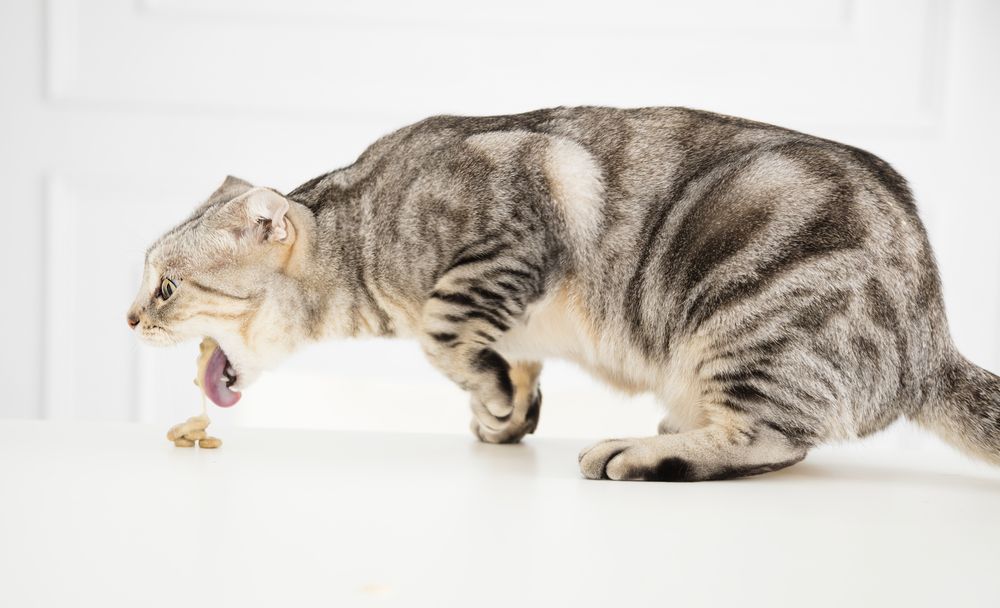
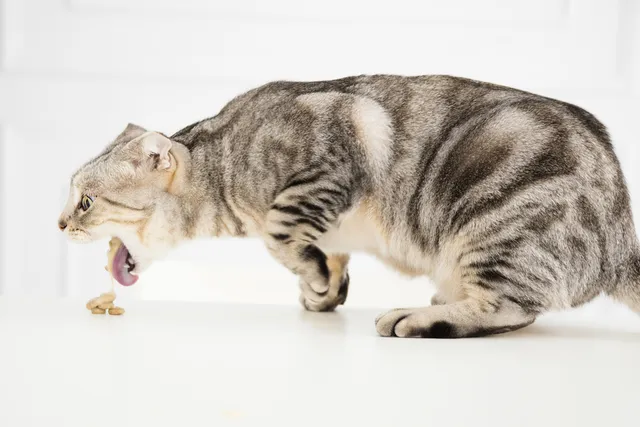
sick cat vomiting the food on a white background

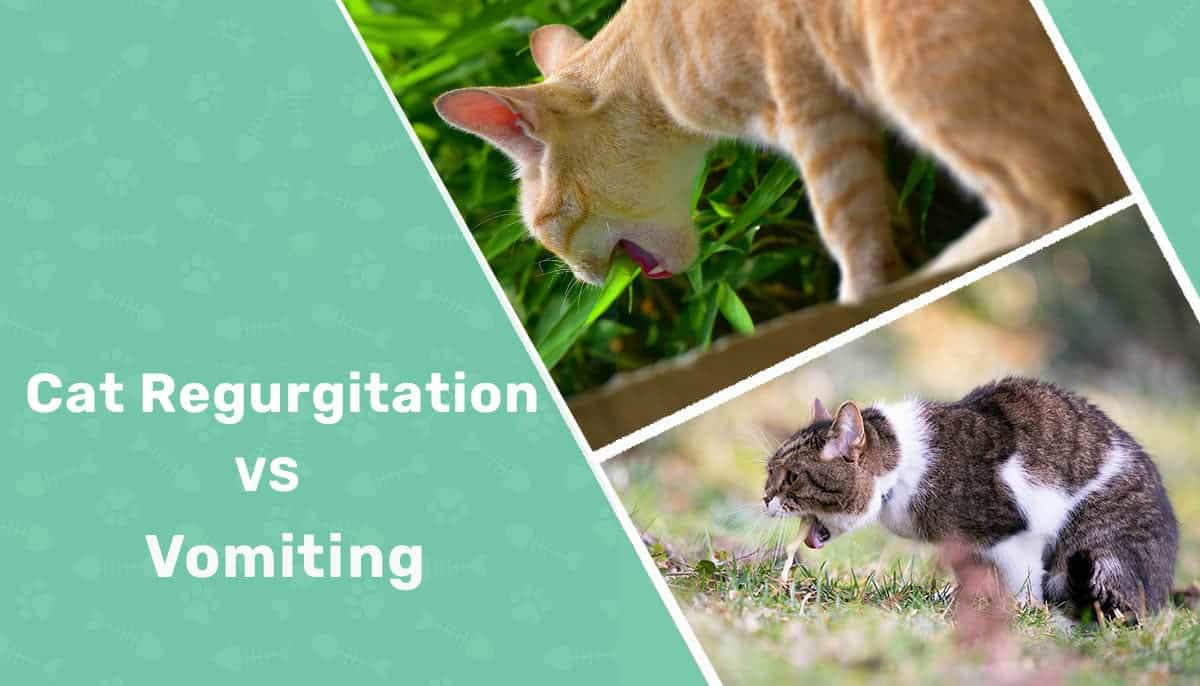
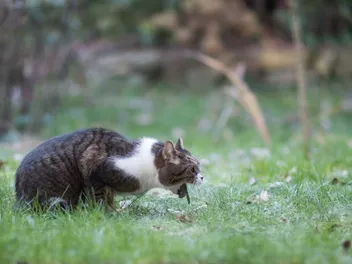
If your cat starts throwing up after they eat, it’s obviously very alarming behavior that you want to get to the bottom of as soon as possible. But what exactly could be the cause of your kitty’s stomach issues? Vomiting itself is a non-specific sign with many possible causes. It is also easy to confuse vomiting with coughing and regurgitation in cats; it’s best to show your veterinarian videos to ensure your cat’s behavior is true vomiting. Some signs of true vomiting are abdominal contractions and bringing up stomach contents.

Digestive problems can be common for cats, but it can be quite tricky to pinpoint an exact cause without some trial and error—and the help of a vet. Before you make an appointment, though, you can check out some potential things that could be the cause of your cat’s throwing up down below.

divider 3 paws

The 8 Potential Reasons Your Cat Is Throwing Up After Eating

1. They Ate Too Quickly

playful cat is touching and punching food with a slow feeder toy
Image Credit: Veera, Shutterstock

Perhaps the most common reason a cat throws up after eating is that they ate too fast. Like us, cats ingest small amounts of air when they gulp their food. What happens to you when that happens? Gas or burping, if we had to guess. Those happen to your cat too, but vomiting can also occur in some cases.

What to Do:

You can help your cat stop eating so fast by giving them smaller, more frequent meals. You should also consider buying a specially made slow-feeding cat bowl that forces your cat to eat in slow, measured bites.


2. They Ate Too Much

Kitties that get ove-rexcited at mealtime can easily eat too much and find themselves vomiting the excess in a corner later. You can spot this if your cat is regurgitating their food into the food bowl, water bowl, or on the ground. Eating too much is very common in multi-cat households where either cat eats the other’s food, effectively giving one cat a kitty complex about needing to eat as much as possible. It can also be due to overfeeding on your part. Use your cat’s body condition score as a guide as to whether they are eating too much 1.

What to Do:

To combat this, we suggest feeding your cats in separate areas if you’re in a multi-cat household. You should also consider downsizing their portions. Feeding smaller, more frequent meals throughout the day is the easiest way to ensure your cat doesn’t eat too much in one sitting.


3. Food Intolerance Or Allergies

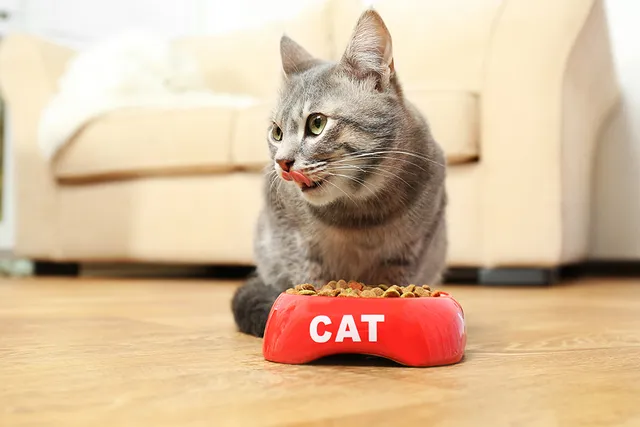
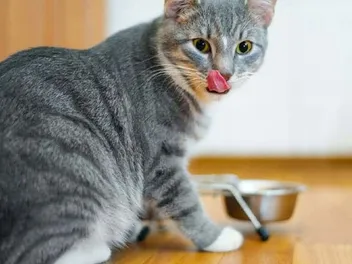
Tabby cat sitting in front of a emty food dish and looking to the camera
Image Credit: Lightspruch, Shutterstock

Additives, preservatives, food colorings, and other artificial ingredients in your cat’s dry food could be playing poorly with their stomach and causing vomiting, although cat food ingredients are generally well tolerated by most cats. Sometimes cats are allergic to perfectly healthy ingredients, usually a specific kind of protein e.g. chicken or beef. If your cat has eaten something new, or something they shouldn’t have (dietary indiscretion), this could also cause vomiting.

What to Do:

We recommend making sure your cat can’t get into something they shouldn’t. This includes human food, household plants and more. You can try changing the diet, but there are so many options out there from gastrointestinal diets to hypoallergenic diets that we recommend speaking to a vet about dietary choices. One tactic they may use is an elimination diet, but it’s best to follow their advice on this.


4. Hairballs

More than a few hairballs per month should be considered abnormally high and, in fact, could contribute to your cat vomiting. A poor grooming routine or stomach health could be to blame. However, there is often an underlying cause to bringing up hairballs.

What to Do:

Try grooming your cat with a grooming glove or brush to remove dead hair and reduce the number of hairballs your cat throws up. Another option is to put your cat on a special hairball reduction diet that promotes good stomach health and helps them pass hairballs. However, if vomiting up hairballs is a common problem, it needs to be checked out by your vet.


5. Stress

Angry cat hissing and screaming hiding
Image Credit: Josh Norem, Shutterstock

The effects of stress on the stomach and intestines are well documented in animals and people, and involves reduced blood supply to the stomach. Vomiting can be a side effect of stress induced by major or even minor life changes. Moving, new babies, and new pets in the home are a few common reasons your cat could be stressed out. Even something like a moved litter box or missing their feeding time can cause your cat significant stress, in turn inducing vomiting.

What to Do:

We recommend a vet visit to rule out other causes of vomiting and for treatment of your cat’s anxiety. If your cat is vomiting from stress, pay attention to your cat’s trigger and adjust from there. If you can completely eliminate the trigger, that is ideal, but if not, you might need to work to expose your cat to it gradually so that they’re more comfortable. Some cat’s are more anxious than others, and those with anxiety disorders can benefit from anxiety medication.


6. Stomach Conditions

Inflammatory bowel disease, gastritis, bacterial infections, and stomach parasites are all known to cause vomiting, along with other signs. Vomiting, diarrhea, constipation, and frequent litter box visits are some signs that could signify an underlying stomach condition.

What to Do:

If you suspect your cat has a stomach condition, we recommend taking your cat to the visit for a full workup to deduce the cause.


7. Gastrointestinal Blockage

Veterinarian checks teeth to a big maine coon cat at vet clinic
Image Credit: Ermolaev Alexander, Shutterstock

A toy, string, or other small object lodged in your cat’s stomach or intestine could trigger them to vomit as ingesta is not able to move forward in the digestive tract. Other concerning signs for gastrointestinal blockage include inappetence, passing small/loose stools, abdominal pain, and lethargy. This is an emergency situation and requires a prompt vet visit.

What to Do:

Go to the vet! Your vet will be able to do an X-ray and see if any foreign objects are blocking up your cat’s GI tract before determining the proper course of action.


8. Metabolic Disease

Certain changes in your cat’s body function can make them feel unwell and lead to nausea and vomiting. Kidney disease, liver disease, and an overactive thyroid gland are common causes of vomiting in cats. Metabolic disease may be accompanied by other signs like weight loss, increased thirst, appetite changes, behavioral changes, lethargy, and diarrhea.

What to Do:

Schedule a veterinary visit for your cat. Your vet can perform bloodwork to ensure everything is functioning normally, and give treatment recommendations if there is something amiss.

divider 3 paws

Final Thoughts

Cats have surprisingly delicate stomachs that can get upset and spew vomit for a variety of reasons. Eating too quickly, too much, food intolerance, and plain old stress are just a few possibilities. You can narrow some of these down with careful observation, but in the end, your vet will be most able to diagnose what’s wrong with your kitty’s stomach. If it is severe, accompanied by other signs, or persists for more than 48 hours, we suggest giving them a call.


Featured Image Credit: Tom Wang, Shutterstock

Want content like this delivered to you?

Sign Up For Our Newsletter

News, insights, expert advice, and everything cat

* By submitting, you agree to our Terms & Conditions and Privacy & Cookies Policy.


How useful was this post?

Click on a star to rate (you can leave written feedback after clicking submit)

Help us improve Catster for pet parents!

Your feedback really matters.

What did you like about this post? Also how can we improve it?

Join the conversation

Leave a Reply

You’re very welcome to leave a comment or question. Please know that all comments must meet our community guidelines, and your email address will NOT be published. Let’s have a positive and constructive conversation.


Catster's Digital Magazine is Back!

Vet-approved health & behavior advice

Real cat stories & community features

Weird Cat Behaviors That Actually Make Perfect Sense

We have been sharing our lives with cats for thousands of years, yet we still find ourselves genuinely stumped by what they get...

The Dream of Talking to Cats Just Got Closer to Becoming a Reality

If you’ve ever wished your cat could simply tell you what they wanted, you’re not alone. From the meow that wakes you before...

Kizzy: The Feline Princess With a Purpose

We were first introduced to Miss Kizzy after she won a licky-treat challenge hosted by Professor Fluffovich, our resident feline research specialist. While...

Chatting With Sally About Mission Meow & Helping Cat Rescue Organizations Collaborate | Chatty Cattys, Episode 24

In this episode of Catster’s podcast, Chatty Cattys, Nicole and Dr. Karyn sit down with Sally Williams, the founder of Mission Meow, for...

More related

Scottish Fold Munchkin Mix Cat Breed: Info, Pictures, Temperament & Traits

The Scottish Fold Munchkin cat is a crossbred that possesses the short-legged traits of a Munchkin and the folded ears of a Scottish...

8 Best Cat Shampoos for Dander of 2026: Reviews & Top Picks

Cat dander can be frustrating to deal with, especially when you’re dealing with or know someone who is dealing with feline allergies. It...

Do All Cats Have Whiskers? Vet-Reviewed Facts & FAQ

Whiskers are an iconic part of the cat’s face, but not all cats have whiskers. Some hairless cats, for example, do not have...

Do Cats Like Fans? Vet-Verified FAQ & Alternatives

When summer is approaching, many cat parents no doubt think about how to keep their cats cool and comfortable. If you’re wondering whether...

Keep reading

Can Cats Eat Rice Pudding? Vet Reviewed Nutrition Facts & FAQ

Sometimes, it can be tempting to treat our cats to a little bit of something we are enjoying, but it can be tricky to tell which foods are good for them and which are not. If you are wondering whether...

Can Cats Eat Rice Pudding

Can Cats Eat Guava? Vet-Approved Facts & FAQ

Guava is a popular fruit for various reasons. It’s no shocker that humans delight in and derive nutrients from this tropical fruit. But what about feline companions? Can they eat guava? And if so, do they get any nutritional reward...

Can Cats Eat Guava

Why Is My Cat So Affectionate in the Morning? Vet-Verified Facts & FAQ

It isn’t odd to hear about cats trying to keep their owner in bed later for extra cuddles. Even cats that aren’t typically affectionate may want to cuddle in the morning. This often raises the question as to why cats...

cat curling on bed

How Far Can Cats Hear? Vet-Reviewed Facts & FAQ

Domestic cats are amazing creatures. They can jump five times their height, tap into the earth’s electromagnetic field to navigate, see minute movements in the dark, and feel astonishingly minor changes in airflow with their whiskers. And those aren’t the...

Calico cat with ears pointing up

How Often Should I Change Cat Litter? 5 Things to Consider (Vet-Reviewed)

Cats are fastidious animals that greatly appreciate fresh, clean litter. If the litter isn’t up to their standards, they may just do their business somewhere else—like your floor, which is why it’s important to keep up with litter box maintenance....

man-cleaning-litter-box

How Much Should My Cat Weigh? Vet-Approved Chart & Infographic

Cats are one of America’s favorite pets, but as more of them spend their lives indoors, they are also putting on more weight. Obesity can lead to several health problems, but most importantly, it shortens their lives. If you want...

Cat paws stand on smart scales that makes bioelectric impedance analysis, BIA, body or weight fat measurement

Are Petunias Poisonous to Cats? Vet Approved Houseplants Examined

Cats are known for being curious and getting into things that may not necessarily be great for them. After all, they are animals, right? Not too different from curious pups, rabbits, or even pet guinea pigs. It’s in their nature...

Catster_Are Petunias Poisonous to Cats

Why Does My Cat Wiggle Before They Pounce? 4 Vet-Reviewed Reasons

The little wiggle that cats display before pouncing might be one of the most adorable things that you’ll observe as a cat parent. Whether your pet is stalking a live critter or a catnip-infused plush toy, before your cat gets...

a polydactyl cat ready to pounce

Love Cats? So Do We! Join the Catster Community

Stay informed with expert pet care insights delivered straight to your inbox! Discover professional guidance on animal behavior, feeding tips, trusted product picks, and much more.


Sign up for the Catster Email Newsletter

Stay informed with expert pet care insights delivered straight to your inbox! Discover professional guidance on animal behavior, feeding tips, trusted product picks, and much more.