Get

In Your Inbox

Catster is reader-supported. When you buy via links on our site, we may earn an affiliate commission at no cost to you. Learn more.

Why Does a Mother Cat Move Only One Kitten? 4 Vet-Approved Reasons & When to Worry

Share

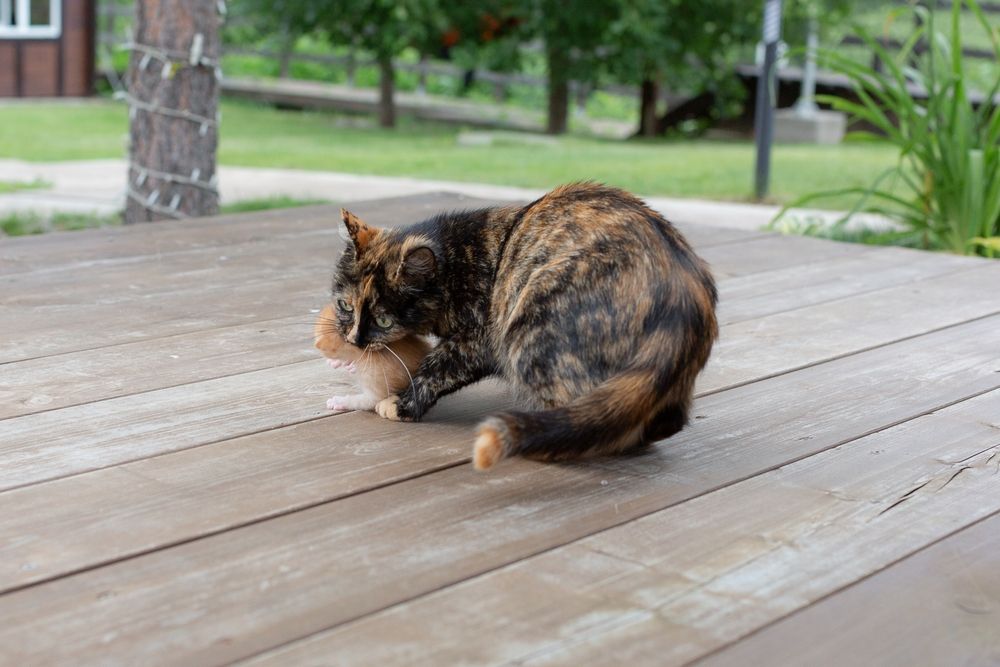
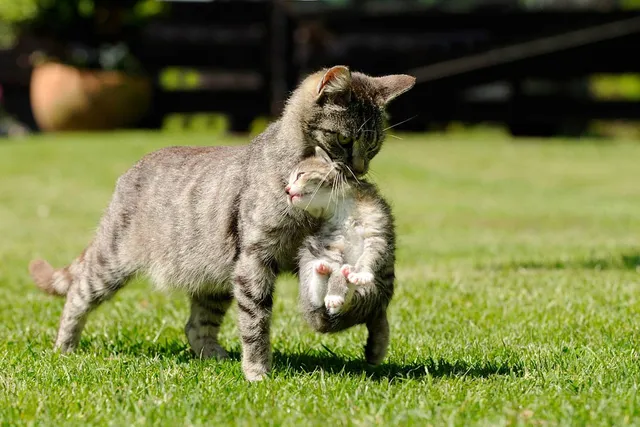
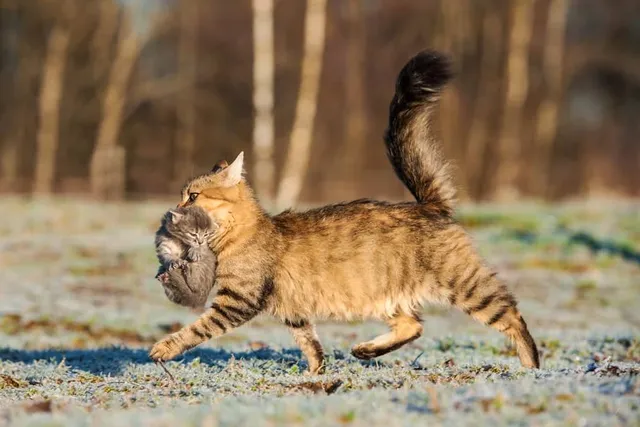
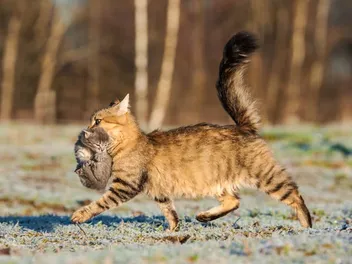
Mother cat carrying her newborn kitten outdoors

If your gorgeous cat has just had kittens, it can be an exciting time for you as a pet parent. Despite the urge to meet those kittens right away, though, it’s best to give your cat time alone with her babies for the first few days. While you should provide high-quality kitten food, water, a clean litter tray, and a quiet environment for the mother cat, most professionals recommend not socializing with the kittens until they’re at least 2 weeks old.

During this time, you can keep an eye on your cat and her babies from a distance. Most of the time, a mother cat will keep her kittens in the same warm and cozy nest that she built before she gave birth. She may occasionally decide to move the nest to a different location if she feels uncomfortable or stressed.

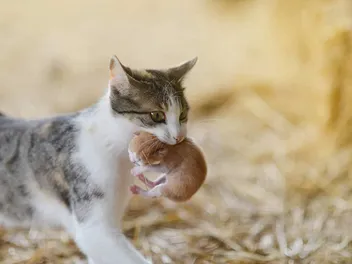
In rare cases, a mother cat may remove just one kitten from the nest, and that’s the scenario that we’re going to look at in closer detail here. Why do mother cats move just one kitten, and when should you worry about this behavior?

divider 2 cats

The 4 Possible Reasons Why a Mother Cat Moves Only One Kitten

1. She Wants to Move All the Kittens to a New Location

Sometimes a mother cat will decide to move all her kittens to a new location. Maybe her current nest feels too noisy or exposed, or there are too many people coming over to look at her and her kittens when she really wants to be left alone.

In this case, a mother cat may move one kitten before returning to her nest to collect the others. You may just have caught her in the middle of her move, so keep an eye on her, and see if she’s planning on moving the whole litter. Don’t interfere with this process other than to provide more bedding, food, water, and a litter tray once your cat has settled into her new location.

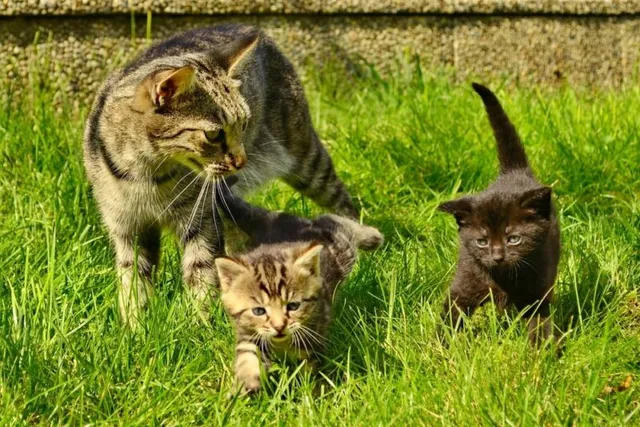
Tortoiseshell mother cat with her kittens
Image Credit: Cat Hammond, Shutterstock

2. Something May Be Wrong With One Kitten

Cats are sensitive creatures, but they are also hardwired for survival. Sometimes, a cat senses that there is something wrong with one of her kittens, even if that’s something we can’t see. Some kittens may have an underlying health condition, and in this case, a mother cat may remove that kitten from the nest and focus her attention on the remaining, healthy kittens. It might seem like a harsh decision, but this is a throwback to your cat’s instincts to survive. In the wild, a poorly kitten that becomes seriously sick may attract predators, and that puts the mother cat and the rest of her litter in grave danger too.

If you see your mother cat has moved just one kitten and makes no attempt to create a new nest or move any other kittens, there could be something wrong with that one kitten. You can try gently placing them back in the nest and wait to see what happens.

You should also book a vet exam to start figuring out if there’s an underlying health condition affecting that kitten. If the mother cat continually removes the kitten and won’t allow them to nurse, you can bottle feed the baby and raise them as an orphan. Kittens need feeding at regular intervals, and you’ll need to keep them warm and dry. Ask your vet for advice on how to care for an orphan kitten. This scenario usually occurs within 24 hours of your cat giving birth, so keep a close eye on her from a distance. 

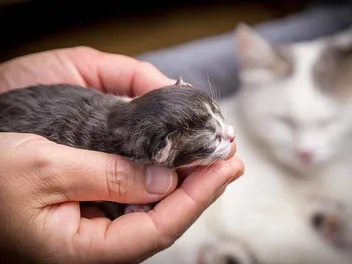
vet-holding-new-born-kitten
Image Credit: Kachalkina Veronika, Shutterstock

3. She Is Confused and Disoriented

Labor is hard work! Some cats will cope with it better than others. Sometimes, a mother cat can appear confused and disoriented after giving birth. She may behave in strange ways, including moving kittens to places that you wouldn’t expect and then possibly forgetting about them.

In this case, retrieve the misplaced kitten and put them in the nest. Keep a close eye on your cat, and call your vet to explain how she’s acting.


4. She May Have Too Many Kittens to Care For

Some cats have larger litters than they can realistically take care of. In this situation, your cat may decide to remove one of the weakest kittens from the nest, to concentrate her energies on the others. This is rare but not unheard of.

If your cat has had an unusually large litter and makes attempts to remove one kitten from the nest, she’s following her ingrained survival instincts. You may be able to persuade her to keep the kitten in the nest and give supplementary milk replacement powder to help all kittens grow up big and strong.

If she rejects the kitten again, this is another scenario where you can hand-raise the kitten on milk replacement powder alone.

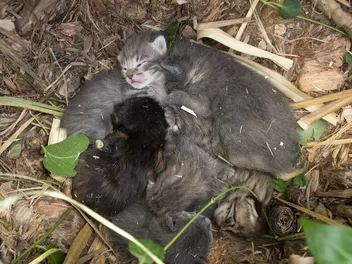
mother-cat-and-her-babies
Image Credit: Esin Deniz, Shutterstock

divider 2 cats

What Should You Do With the Kitten That’s Been Removed?

If your cat has removed one kitten, what’s your next step? The first thing to do is to place the kitten back in the nest with their littermates. Keep a close eye on the mother cat to see if she tries to remove them again.

If she does, keep the kitten warm and dry in the meantime. Call your vet for advice as soon as possible, as newborn kittens need milk every 3 to 4 hours. Your vet may ask for more information, request that you come in with the kitten for a physical exam, or give you advice on how to raise the kitten as an orphan. With care and attention from their human owners, most orphan kittens thrive and go on to grow into lively juveniles with plenty of energy!

If you need to speak with a vet but can't get to one, head over to PangoVet. It's an online service where you can talk to a vet online and get the advice you need for your pet — all at an affordable price!

Preventative wellness PGV mention keep cat healthy Preventative wellness PGV mention keep cat healthy mobile

Conclusion

Keeping a close eye on your cat and her kittens means you’re well-placed to offer help if needed. A mother cat removing a kitten from her nest is a rare occurrence, but knowing how to cope with it if it does happen is the best way that you can support your feline and her new babies.

See also: 


Featured Image Credit: Valeriya_Chistyakova, Shutterstock

Want content like this delivered to you?

Sign Up For Our Newsletter

News, insights, expert advice, and everything cat

* By submitting, you agree to our Terms & Conditions and Privacy & Cookies Policy.


How useful was this post?

Click on a star to rate (you can leave written feedback after clicking submit)

Help us improve Catster for pet parents!

Your feedback really matters.

What did you like about this post? Also how can we improve it?

Join the conversation

4 Responses

  1. thank you very much I am a first time cat owner and definitely first litter so I have no clue what I'm doing what she's doing or what's going on I'm scared someone will get hurt or lost in the shuffle somehow. I finally allowed her to take the kitten to the dresser drawer where she wanted it idk why not they are both much calmer now, for now thank you

    1. Hey Najah genet. We are happy to read that you found our post useful. Please know that if you ever need support as a first-time cat owner, our experts at www.pangovet.com are only one click away and happy to help you.

  2. bonjour, une chatte qui vit en exterieur avec ses petits de 27 jours, un de ses petits se retrouve en dehors du nid regulierement depuis 3 jours, elle essaye de porter son chaton pour le ramener au nid….mais ny arrive pas et le
    laisse tout seul en dehors du nid, je lui ramene son petit et le lendemain ça recommence. est ce une négligence ou un délaissement l'attitude de la mére ? le chaton est il teméraire ou bien il suit sa mére par manque de lait ? ou bien sa mére cherche à l'exclure ? l'obstacle pour rejoindre le nid est infranchissable pour le chaton et la mére ne fais pas beaucoup d'effort pour ramener son petit quitte à le laisser…ce qu'elle fait d'ailleurs, les autres de la fraterie ne bouge pas du nid, cela dis elle toilette tout de même son chaton, est ce une attitude normale, faut il intervenir pour secourir le chaton, pour information…je nourris la mére depuis plusieurs mois (moitié sauvage) et son chaton n'hesite pas à venir vers moi en miaulant….merci d'avance de vos conseils.

    1. Hello,

      thank you for your question. We understand that you may be worried for the kitten, however, mother cats are known to take care of their kittens until they are able to take care of themselves. If the mother cat fails to do this, there is usually some reason for this. It is also possible that the kitten is stronger/more curious than others so it simply wants to explore. As long as the kitten gets fed by its mother, there is nothing you need to do, especially when it comes to feral or half-feral cats. You can keep feeding the mother cat and perhaps add some food for kittens as well so they have option to eat if they will decide to. Also, and most importantly please consider that cats are very prolific. The best way to help her and the rest of the kittens is by getting her spayed. The kittens will also need to be neutered and hopefully adopted. Otherwise, very soon, you will have hundreds of kittens in the street. Thank you for reading us.

Leave a Reply

You’re very welcome to leave a comment or question. Please know that all comments must meet our community guidelines, and your email address will NOT be published. Let’s have a positive and constructive conversation.


Talk With A Vet Online

Peace of mind,
anywhere, anytime

Affordable vet advice

Do Cats Cause Schizophrenia? Scientists Find a Link – Here’s What It Means

Being a fierce advocate (and occasional recipient of) mental health support and awareness, the term ‘crazy’ is not one I like to fling...

One in 100 Cats Gets Diabetes – Here’s How to Catch It Early

One in every 100 cats develops diabetes.1 That’s not a rare, unlucky condition reserved for cats with obvious health problems. It’s common enough...

Dramatic Rescue Turns Into Dramatic Reunion

What started as a routine call for the RSPCA became a heroic, five-hour rescue featuring one trapped and traumatized cat, an emotional family...

Ask Dr. Paola – Help! How Do I Know if it’s Ear Mites! (May 4, 2026)

Welcome to our “Ask Dr. Paola” series, where every Monday we bring expert advice straight from Dr. Paola Cuevas (MVZ) to help our...

More related

7 Possible Signs Your Cat May Need a Feline Friend: Vet-Reviewed Introduction Tips & More

If only our pets could talk, we’d have a much easier time understanding their needs. Cats can be even more difficult to decipher...

9 Best Cat Litters for Kittens (2026) – Reviews & Top Picks

Bringing home a fluffy new kitten is an exciting and memorable time. While you might have picked up all sorts of toys and...

Sphynx Kittens for Sale in the USA: 2026 Breeders List

Excited Cats advocates for adopting before shopping, though we fully understand there are many reasons for seeking a breeder. So, we encourage it...

Kanaani Cat: Breed Info, Pictures, Care & Traits

A Kanaani is a relatively new and rare breed of cat that originated in Israel during the 1990s. The breed was started by...

Keep reading

Can Cats Drink Ensure? Vet-Approved Health Facts & Safety Guide

When your cat isn’t feeling well, you want to ensure they stay hydrated. Since a loss of appetite can strike humans and animals alike when they’re sick, your cat needs to get the nutrition they need so they can become...

Can Cats Drink Ensure

Why Are Some Cats Lap Cats While Others Aren’t? Vet-Reviewed Reasons

Every cat has their own unique personality and preferences. This is why some end up being natural lap cats, others will learn to be lap cats, and still others will never be lap cats. More research on feline behavior has...

young man sitting on couch with his cat on his lap

7 Best Kitten Foods for Diarrhea in 2026 – Reviews & Top Picks

If you have a kitten with diarrhea, it can be a scary experience. Diarrhea can dehydrate your kitten and rob it of important nutrients it needs to grow into a healthy cat. In some cases, you can improve the situation...

American cat kittens eating

Does My Cat Need a Cat Bed? Vet-Reviewed Facts & FAQ

If you’re a cat owner, you know how important it is to provide the best possible care for your pet. One way to make sure your cat is comfortable and feels safe and happy is to provide them with an...

tabby cat on bed

How to Safely Surrender a Cat: 4 Responsible Steps & FAQ

Surrendering your cat can be a difficult and emotional experience. It’s important to consider all the potential implications of surrendering your pet before making this decision. This article outlines everything you need to know about how to safely and responsibly...

cat on woman owners lap

My Cat Takes Food Out of Their Bowl to Eat: 5 Vet-Reviewed Reasons

If you’ve ever had a cat for a pet, you may have seen them pawing the food out of their bowl, putting it on the floor, and then eating it. Sometimes a cat will even take the food and run...

cat by a bowl

Can Cats Get Lice? Vet-Approved Facts & Treatment Tips

Lice are a common problem for most pet owners, especially if your pet enjoys the outdoors. They can cause skin disease and itchiness, affect your pet’s coat, and even cause a variety of health complications. Many cats, especially those who...

cat scratching itself

Are Forget-Me-Nots Toxic to Cats? Vet-Reviewed Houseplants Examined

If you’re a flower fanatic, you have undoubtedly seen and adored the lovely forget-me-not. Woodland forget-me-nots (Myosotis sylvatica) are a species of perennial plants with stunning blue flowers. Fans of forget-me-nots prize the delicate flowers with white or yellow eyes....

Catster_Are Forget-Me-Nots Toxic to Cats

Love Cats? So Do We! Join the Catster Community

Stay informed with expert pet care insights delivered straight to your inbox! Discover professional guidance on animal behavior, feeding tips, trusted product picks, and much more.


Sign up for the Catster Email Newsletter

Stay informed with expert pet care insights delivered straight to your inbox! Discover professional guidance on animal behavior, feeding tips, trusted product picks, and much more.