How Long Should Kittens Stay With Their Mother? Vet-Reviewed Facts & Development


In this article
There is no doubting the attraction of young kittens. They’re tiny and stumble around, and our instinct to protect them takes over. However, taking a kitten away from their mother too soon can be detrimental to the little furball.
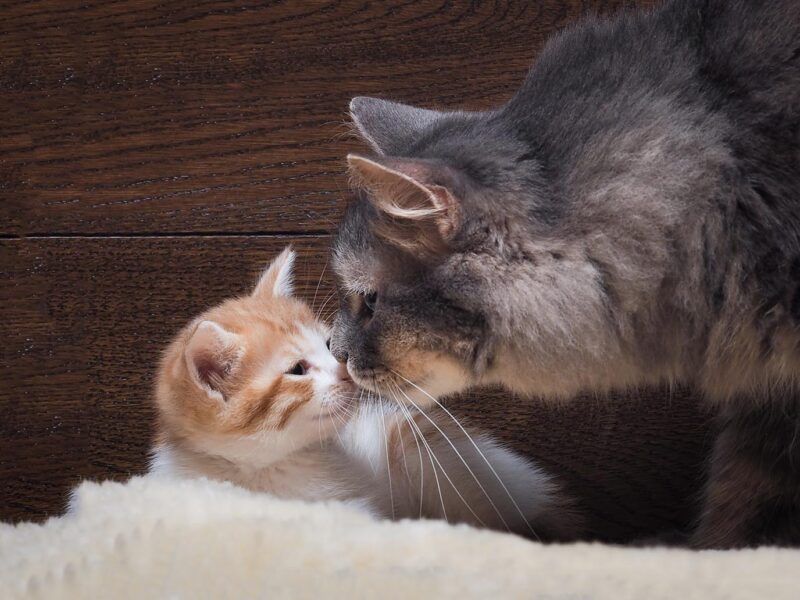
Not only do mother cats wean their kittens and ensure that they are physically healthy, but they also teach them how to behave and how to interact with the world around them. While it is possible for a kitten to survive without their mother—and this happens often when a mother cat gets ill or is unable to look after her litter—the kitten will simply not receive the same level of care from a foster parent as they would from the queen.
While it is common to see kittens being put up for adoption between the ages of 8 and 10 weeks, when they have been weaned, it is better to wait until the young cat reaches 12 weeks of age. They have better developed, physically and emotionally, and have a better chance of leading a healthy and fulfilled life.

Kitten Development
Although it can take longer with some breeds, most kittens develop into adult cats by the time they reach 1 year of age. However, the most development and the greatest number of changes occur in the first 8 weeks.
Briefly, here are the major changes you can expect a kitten to undergo.
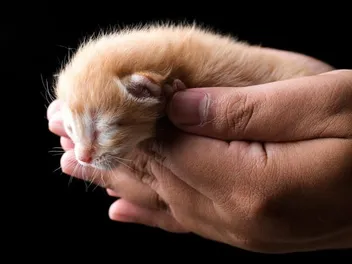
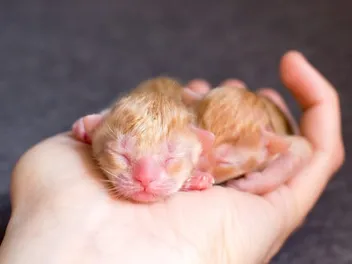
- 2 weeks — Kittens are born with their eyes closed and are deaf and blind for approximately the first week. By week 2, their eyes will open, but their eyesight is still very limited, so they should be kept away from bright lights. During the first 2 weeks, you will hear the kitten making little meowing noises to attract their mother’s attention.
- 4 weeks — By week 3, your kitten will have started purring, and they will start to make more noise, especially as they walk around and investigate their surroundings a little more. At this time, a kitten’s eyes may start to change color, and they will look more attentive with upright ears. They will have started to walk at 3 weeks, albeit very unsteadily, and during the fourth week, they will start to explore. Week 4 is when a kitten can start to balance upright, and it’s a good time to start the introduction of the litter box.
- 7 weeks — At 5 weeks, the kitten will start to develop some of their infamous curiosity. You should start to socialize with them at this age, which means introducing them to the rest of the family, other animals, and new people. Let them adventure a little. Around this time, your kitten should be getting their first round of vaccinations, too. By this time, your kitten will have almost all of their baby teeth. Weaning starts around this time, with wet food introductions highly suggested by week 6.
- 10 weeks — At around this stage, the kitten should be transitioning away from milk and onto solid food. At this age, they are still learning how to be a cat, and they will pick this up from their mothers and siblings. They still have a lot of key lessons to learn, including how to be agile little climbers and how to socialize.
- 12 weeks — By 12 weeks, the kittens should be fully weaned and socialized. This is when it is safe to take them away from their mother. 12 weeks is also the time when a kitten gets their next round of vaccination shots, which makes it a good time to adopt them.
- 6 months — If your kitten was strong enough and weighed enough to cope with anesthesia, your vet may have performed spaying or neutering after 8 weeks, but most vets will want to wait until the cat reaches 4–6 months of age.
- 1 year — Most kittens have developed into fully-fledged adult cats by the time they reach 1 year of age. They may still charge around, play games, and indulge in other kitten-like behavior, but 1-year-olds are adult cats—physiologically, at least. The cat may not display their adult personality until they reach 24 months of age, however.

What Happens If a Kitten Is Removed From Their Mother Too Soon?
Kittens get nutrients, vitamins, and minerals from their mother.
- If they are taken away too soon, it can lead to an increased chance of illness. It could lead to your cat being weak and physically smaller.
- Kittens also learn behavioral patterns, actions, and reactions, as well as social interactions, from their mother and siblings. If they are taken away too soon, you could end up with a grumpy cat that has not learned how to behave properly.
- This lack of social interaction and social cues from mom can also lead to an insecure and scared kitten, so yours may be jumpier than they would be if they had been left with mom for 2 more weeks.
- Another important skill that a kitten learns from their mother is how to use a litter tray. It is possible to teach a kitten how to use a tray, but the mother would have better results and would teach the process naturally.

Can Kittens Survive Without Their Mothers?
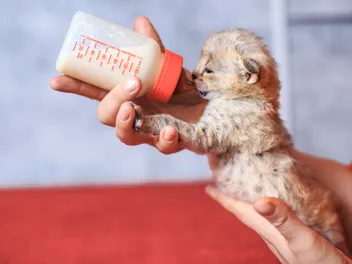
If the kitten is very young, bottle feeding with milk replacement formula will be required every 2–3 hours, even throughout the night. Before 3–4 weeks of age, kittens will also need gentle stimulation with a soft moist wipe to urinate and defecate. After that age, they can start going on their own but will still need to learn how to use the litter box.
Essentially, a kitten can survive without their mom, as long as they receive the proper and full care of a surrogate.
Will Mother Cats Reject Their Kittens If Humans Touch Them?
Mother cats will not reject kittens if they are touched by humans. However, if you find a kitten or litter of kittens and you can’t see the mother, you should wait before taking them in. The mother may be hunting for food and due to return. Watch the area from a distance to ensure that she comes back.

Do Cats Get Sad When Their Kittens Are Taken Away?
Separating a mother and her kittens can lead to sadness for the kittens and their mother. The mother may search the house and meow for her kittens for a couple of days before she goes back to her routine. Kittens can find it more difficult, with some becoming anxious and refusing to eat for several days.
Conclusion
Although many people adopt kittens at 8 weeks of age, it is better to wait until they reach 12 weeks, have been fully weaned, and have had the opportunity to properly socialize with their siblings. This will enable the kitten to develop further, and it will make things easier for you with your new kitten in the long run. There are some instances where this isn’t possible, of course, and although some very young kittens do not survive bottle weaning, the majority do.
If you see a litter of kittens with no mother cat around, do allow some time for the mother to return before you remove the kittens.
Featured Image Credit: Irina Kozorog, Shutterstock
Expert cat care, straight to your inbox
News, insights, and useful advice, delivered to you.

No spam — unsubscribe anytime.
By signing up, you agree to our Terms & Conditions and Privacy & Cookies Policy.
How useful was this post?
Click a star to rate. You can leave written feedback afterwards. (We read all feedback.)
Christian started writing for a local newspaper as a teenager, and he's been involved in the publishing industry for most of his adult life. Combining his love of writing with a passion for animals, he is currently the Director of Editorial at Pangolia and the Editor-in-Chief at Catster.
Christian lives in the Philippines with his wife, son, and four rescue cats: Trixie, Chloe, Sparky, and Chopper.