Get

In Your Inbox

Catster is reader-supported. When you buy via links on our site, we may earn an affiliate commission at no cost to you. Learn more.

What Does Ringworm Look Like on a Cat? Vet Approved w/ Pictures

Ringworm lesion in cat

It is never enjoyable when something is wrong with your cat. Whether it’s an upset stomach, a cut, or something more serious, neither you nor your pet are having a good time when they are ill. And when you hear the word “worm” regarding your cat, your mind likely comes up with a scenario that’s not very pleasant.

However, the good news is that there are no actual parasitic worms involved when it comes to ringworm infection. That still does not make it enjoyable for your cat, though, so you should be aware of what it looks like on a cat—even more so because your cat can pass it along to you!

Let’s go over what ringworm looks like on a cat. We will also give you the lowdown on how ringworm is treated and ways to help keep ringworm from spreading. Keep reading for more information and pictures of ringworm in cats.

divider 3 paws

What Is Ringworm?

Despite its name, ringworm is a fungal infection that affects the hair, nails, and skin and is not a parasite1. The fungi that cause this infection are known as dermatophytes—some dermatophytes only infect a single species, while others will infect several different species and spread from species to species.

And because most ringworm infections in cats are caused by a specific dermatophyte species known as Microsporum canis that also infects people and dogs2, you run the risk of getting ringworm from your affected pet.

What Does Ringworm Look Like on a Cat?

closeup of a cat with ringworm
Image Credit by: Nadya Besoonov, Shutterstock

Ringworm gets its name from how it typically looks on human skin—a red ring around where the infection is located. In pets, you’ll normally see hair loss around the infected area. These lesions usually show up around the ears and head, front legs, or back (though they may show up anywhere on the body).

There may be more symptoms that appear other than hair loss, though. You might also see the following:

  • Gray scaling on the lesions
  • Dull fur
  • Broken, stubbly hair
  • Abnormal-looking nail beds or nails
  • Itchiness
  • Inflammation of the skin
  • Dandruff
  • Changes in the color of the fur or skin
  • Excessive grooming or scratching of infected areas

If you need to speak with a vet but can't get to one, head over to PangoVet. It's an online service where you can talk to a vet online and get the advice you need for your pet — all at an affordable price!

PangoVet_Mention-in-Content for PangoVet2 save money

How Is Ringworm Treated?

The first step in treating ringworm in cats is, of course, taking them to the vet for a proper diagnosis. Your vet will have several ways to determine if the infection is indeed ringworm. Some of the ways they’ll test for ringworm include:

  • Wood’s lamp, which is a fluorescent lamp that will show the skin lesions as bright green if they are ringworm
  • Fungal culture, which involves taking hair from your cat and monitoring for the growth of fungi
  • Examination via microscope, which involves removing hair from your pet and viewing it through a microscope to locate spores
  • PCR testing, which looks for fungal DNA

Once ringworm has been determined, there’s a combination of ways in which the infection is treated. First will be with oral antifungal medication—likely either Terbinafine or Itraconazole—which will work to stop the infection and keep it from proliferating. Then, topical treatments will be used to help stop the ringworm from spreading to anyone else in your home. These could be medicated shampoos or a sulfur rinse that works to disinfect your cat’s coat.

Finally, you’ll need to do some cleaning to eliminate any fungal spores in your home. This will include vacuuming and disinfecting carpets, sweeping and disinfecting floors, and washing any sheets, cat beds, or clothing that may be contaminated.
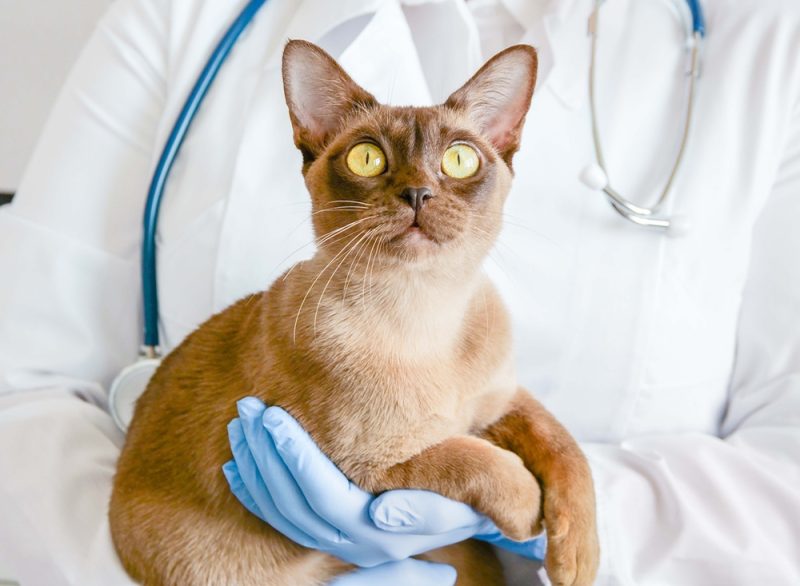
vet holding burma cat
Image Credit by: Elpisterra, Shutterstock

How Can I Stop the Spread of Ringworm?

If your cat has ringworm, there are a few things you can do to help prevent it from spreading to yourself or others in your home. For starters, your pet may need to be quarantined for some time while treatment occurs. You should also wash anything your cat has come into contact with recently, whether that’s toys, beds, clothing, or other items. It’s also a good idea to wash items such as bedding a couple of times a week while your pet is being treated to continue keeping your cat’s environment decontaminated.

Finally, one of the most vital ways to avoid ringworm contamination is to avoid petting or touching your cat while it’s in the treatment phase. If you can’t resist giving your cat some love, wash your hands incredibly well after touching them, and don’t touch any other part of your body, such as the face.

divider 3 paws

Conclusion

Recognizing what ringworm looks like on a cat can help you prevent this infection in its tracks before it spreads throughout your home. If you see that your pet has skin lesions with a red ring around them, consult with your vet to first make sure it actually is ringworm. Then, once you have a suspected or confirmed official diagnosis, treatment can begin.

During treatment, it’s important to decontaminate your home environment to prevent reinfection or the spread of infection among others in the home. It will be a bit of cleaning on your part, but well worth it to get rid of the ringworm!


Featured Image Credit: Yaya photos, Shutterstock

Want content like this delivered to you?

Sign Up For Our Newsletter

News, insights, expert advice, and everything cat

* By submitting, you agree to our Terms & Conditions and Privacy & Cookies Policy.

How useful was this post?

Click on a star to rate (you can leave written feedback after clicking submit)

Help us improve Catster for pet parents!

Your feedback really matters.

What did you like about this post? Also how can we improve it?

Join the conversation

2 Responses

Leave a Reply

You’re very welcome to leave a comment or question. Please know that all comments must meet our community guidelines, and your email address will NOT be published. Let’s have a positive and constructive conversation.

Talk With A Vet Online

Peace of mind,
anywhere, anytime

Affordable vet advice

How Poisonous Are Wolf Spiders to Cats? Vet-Reviewed Safety Facts

Wolf spiders look downright scary. These arachnids are hairy and are relatively large compared to other spiders you may find in and around...

24 Medium-Sized Cat Breeds: Info, Pictures, Characteristics & Facts

Every single cat out there is a keeper. However, while some folks pick the largest breeds to scare away local mice, others go...

What Type of Cat Is Garfield? Possible Options

There are few felines as well-known as our beloved cartoon cat Garfield. This fat orange cat has brightened people’s days with his surly...

Hurricane Preparedness for Pets: How to Ready Your Cats

Hurricanes are difficult to deal with for anyone, but if you’re a cat parent, you have extra work to do to prepare for...

More related

How to Tell the Difference Between a Cat Hairball & Cough: Vet-Reviewed Facts

Seasoned cat owners could hear a cat retching up a hairball from a mile away, but the sound might sound like a cough...

History of Tuxedo Cats – Taking a Look at Their Past

With their gorgeous black and white coats, tuxedo cats appear ready for a night on the town. Anyone can recognize a tuxedo cat...

What Are Struvite Crystals in Cats? Our Vet Explains Causes & Treatments

If you notice any changes in your cat’s urination habits, this could be a sign of an issue with the urinary tract and...

11 Ways to Keep Cats Out of Flowerbeds: Easy & Expert Tips

We all love our feline friends. They keep us company and even add beauty and elegance to our houses. But there are probably...

Keep reading

15 Weird Cat Behaviors That Stump Kitty Parents: Facts & Explanation

Cats are comical in some ways and confusing in others, and they have some undeniably curious habits. Often, it’s worth the effort to figure out what’s causing their behavior. If they don’t leave you scratching your head, your cat could...

cat making crazy face playing with wand

Why Does My Cat Growl? Meaning, How You Should React & FAQ (Vet-Verified)

Pet cats are usually friendly and interactive with their human companions. But sometimes, they display aggressive behavior, such as growling. You may be wondering why cats growl and what it means when they do it. Is your cat acting territorial,...

angry cat hissing

Is Schefflera Toxic to Cats? Vet-Verified Facts & Safety Guide

Schefflera are popular subtropical plants that are commonly grown indoors. These pretty houseplants feature oval leaves that appear to drop from a central stem. Some people think the leaf configuration resembles an umbrella. Hence this beautiful houseplant’s most common other...

Catster_Is Schefflera Toxic to Cats

Why is My Cat Foaming at the Mouth? 5 Vet Reviewed Reasons & Advice

It’s the end of a long day of work when you arrive home, looking for your favorite furry feline. No one comes to greet you at the door, which is a rare occurrence, so you go looking for Miss Kitty...

Orange cat drooling

Can Young Cats Develop Diabetes? Our Vet Explains Signs, Treatment & FAQ

Diabetes is a complex metabolism condition affecting many animals, including cats. With estimates reaching 1% of the cat population 1, it’s easy to wonder if your cat could be at risk for developing the disease. While older cats seem to...

vet holding sick cat

How to Get My Cat to Stop Begging for Food at Night: 8 Vet-Approved Tips

Is your cat constantly begging for food at night? Maybe it’s the early evening when you’re still awake, or perhaps you’re dead asleep and their meowing and pawing is waking you up. Either way, it’s beyond annoying. Making it even...

Calico cat standing up begging for treat asking for food scratching leg looking up

Cat Pancreas: Feline Anatomy Explained (Vet-Reviewed)

The inner workings of the feline body are similar to our own in many ways, but as you can imagine, there are also some significant differences. One of the similarities the human and feline bodies share is that they both...

vet checking up tabby cat

Why Do Cats Pee on the Couch? 5 Vet-Verified Reasons & Solutions

Cats naturally take to litter boxes very well, so it’s alarming when they stop using the litter box and suddenly your cat keeps peeing on the couch. Improper urination on furniture is sadly quite common, and it doesn’t help matters...

White cat standing infront of his pee in the couch

