Get

In Your Inbox

Catster is reader-supported. When you buy via links on our site, we may earn an affiliate commission at no cost to you. Learn more.

Bald Spots on Cats: 10 Vet-Verified Causes & Treatment Options

Share

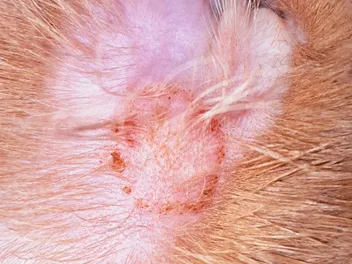
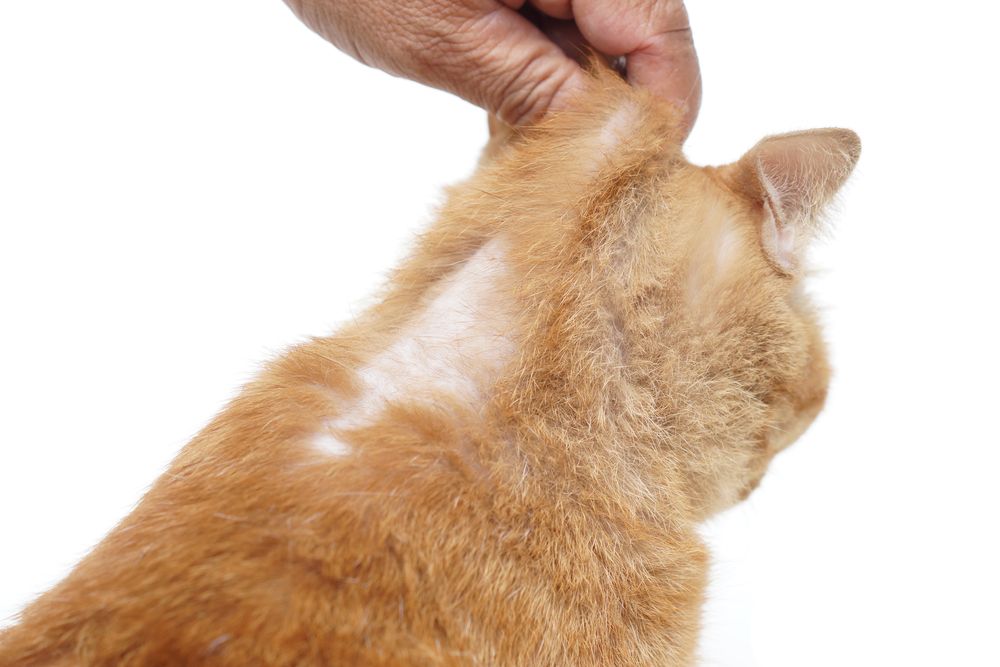
cat with bald spot on neck

One feature synonymous with cats, the hairless breeds notwithstanding, is a soft and fluffy coat. So if your feline has developed a bald spot, we need to find out the cause and get on top of treating the problem. The trouble is that there are quite a lot of conditions that can cause hair loss in our cats; some are merely irritating, while others are potentially deadly. Your vet will be able to diagnose the problem, but in the meantime, here are 10 reasons your cat might have a bald spot, including the options for treatment.

divider cat paws 2 oct 2024

The 10 Possible Causes & Treatment Options for Bald Spots on Cats

1. Fleas

stray cat with skin disease scratching the ear
Image Credit: nu aom, Shutterstock

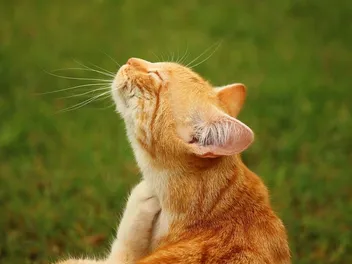
Easily the most common cause of itchiness (pruritus) in cats, fleas are a problem almost every pet owner has had to deal with at some point. Although fleas are a top cause of pruritus, they don’t always cause hair loss. Cats that suffer from Flea Allergy Dermatitis (FAD), however, experience a more severe reaction to these parasites, often resulting in severe pruritus and hair loss, particularly over the back, abdomen, and hind legs.

Cats with FAD do not necessarily have a lot of fleas, so it’s not always easy to spot the problem.

Treatment

One of the biggest mistakes people make when dealing with fleas is thinking that killing the fleas on the cat will solve the problem. In reality, you need to use a prescription-strength product to kill adult fleas and their larvae, as well as treat your home. The flea life cycle means that flea eggs, larvae, and pupae can continue to emerge and jump onto your pet for up to 6 months, so you need to continue to treat your cat and their environment for at least that length of time to ensure you’ve eliminated all life stages.

If your cat suffers from FAD, it is wise to keep them on year-round flea prevention to avoid future flare-ups of this very uncomfortable condition.


2. Ringworm

sphynx cat with ringworms
Image Credit: alexeisido, Shutterstock

Don’t let the name fool you; ringworm is a fungal infection, not a worm at all. Fungal spores can spread through direct contact with infected animals or people, but can also be transferred on surfaces, clothing, etc. The classic sign of ringworm is a dry, scaly, circular lesion on the skin that usually isn’t itchy. In most cases, you might see one or two lesions, but immunocompromised individuals can end up with lesions that extend over large areas of the body.

Ringworm is zoonotic, which means that it can spread between animals and humans, so strict hygiene is essential when handling an infected pet.

Treatment

In many cases, ringworm is treated with topical preparations, so an e-collar is often needed to stop your cat from licking it off. Bathing with a cat-friendly antifungal shampoo can also be useful. In more severe cases, oral treatment may be prescribed.

If you need to speak with a vet but can't get to one, head over to PangoVet. It's an online service where you can talk to a vet online and get the advice you need for your pet — all at an affordable price!

PangoVet_Mention-in-Content for PangoVet2 save money

3. Mange

tabby cat with mange in a shelter
Image Credit: Casey Elise Christopher, Shutterstock

There are a number of different species of mites that can cause the condition collectively referred to as ‘mange.’ One that you may already be familiar with is Otodectes cynotis, or ear mites. The mites that will cause bald spots in cats are Notoedres cati (feline mange), Cheyletiella blakei (walking dandruff), and Demodex (feline demodicosis). Both feline mange and walking dandruff are highly pruritic and contagious, able to spread between animals and humans. Demodex is non-contagious, not usually pruritic, and not overly common in cats.

Mange in cats is more commonly encountered in high-density or feral cat populations, and those in poor living conditions, whereas demodex infection is often an indication of underlying disease or immunocompromise.

Treatment

Mites are usually diagnosed using microscopic examination of skin scrapings, although in the case of walking dandruff, the moving mites are visible to the naked eye, hence their name. Notoedres and Demodex can be difficult to locate and identify, and treatment is often commenced based on the suspicion of infection.

To successfully treat mite infestations, cats must be treated with a specific insecticide, which is found in most prescription flea and tick treatments, for a minimum period of 6-8 weeks. In the case of Notoedres and Cheyletiella, all in-contact animals should also be treated, even if they are not currently showing signs.


4. Allergy

Allergic skin diseases in domestic cats
Image Credit: eremeevdv, Shutterstock

Cats can be affected by environmental and food allergies that can result in extreme pruritus, self-trauma, and loss of fur. The most common areas affected are the face, neck, and around the ears, with some cats causing severe damage to their skin through scratching and rubbing.

Treatment

Managing allergies in cats can be challenging, and more complicated if environmental allergens are involved. The first step in treatment is to identify, as accurately as possible, the trigger(s) of the allergic reaction, as this will determine the best course of treatment. If a food allergy is suspected, a feeding trial can allow the problematic ingredient(s) to be identified and avoided in the future.

Treatment of allergies will usually involve some, or all, of the following:

  • hypoallergenic/hydrolyzed/novel protein diet
  • antihistamines, antibiotics, or steroids to manage clinical signs
  • allergy injections
  • manipulation of the environment to reduce allergen load (more frequent cleaning, air purifier, etc.)

5. Infection/Abscess

cat with abscess on the neck
Image Credit: Eileen Kumpf, Shutterstock

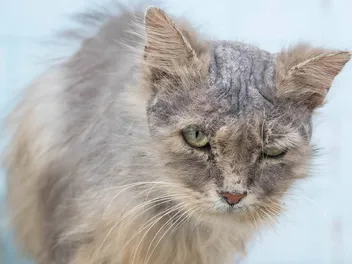
More common in cats that live outdoors, superficial skin infections and abscesses will often result in bald patches, due to either damaged hair follicles or trauma from licking. Quite often, the initial cause of infection may go unnoticed, and it’s not until we see a bald spot with a gooey layer or discharge that we realize there’s a problem.

Treatment

Antibiotics are typically the treatment of choice for abscesses, but antibacterial shampoos may be used for minor superficial skin infections. Depending on the location, history, and presentation of the infection, your vet may perform further tests, such as bacterial and fungal cultures, to ensure the appropriate treatment is being prescribed.


6. Skin reaction

veterinarians examining a Maine Coon cat at a veterinary clinic
Image Credit: Maria Sbytova, Shutterstock

A bald spot may appear if your cat has come into contact with an irritant substance. Some cats are allergic or highly sensitive to the ingredients found in some spot-on flea products, resulting in a bald area where the product was applied. In some cases, the skin itself is not inflamed, but in others, significant inflammation and irritation can occur.

Treatment

The main way to deal with a contact reaction is to bathe the area in plain water. However, if your cat is extremely agitated or pained, or you are concerned that a toxic or harmful substance may be involved, contact your vet immediately for advice, and stop your cat from licking the area.

Steroids or antibiotics may be needed to treat the inflammation and any secondary infections that may arise.


7. Overgrooming

cat's body with slicked spots of receding hairline on the coat
Image Credit: Azovsky, Shutterstock

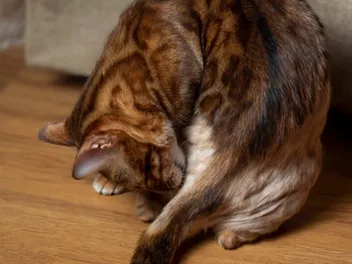
In addition to skin problems like parasites, allergies, infection, or irritation, cats may also over-groom to the point of causing bald patches for several other reasons, including stress, pain, neurological conditions, digestive issues, and behavioral problems. Once infectious, allergic, and parasitic causes have been ruled out, identifying the trigger for over-grooming can be quite challenging, and often requires some thinking ‘outside the box’ to work out.

Further complicating this diagnostic process is the fact that some cats start over-grooming in response to a particular problem but continue with the behavior out of habit or compulsion once the initial cause has resolved.

Treatment

Treatment for over-grooming depends entirely on the underlying cause but may involve:

  • pain relief
  • anxiolytics
  • treatment and support of digestive issues
  • manipulation of the environment to address stress
  • the use of e-collars to create a physical obstruction to the grooming

8. Eosinophilic Granuloma Complex

Feline eosinophilic granuloma complex
Image Credit: DoctorAun, Shutterstock

A particularly frustrating and often recurrent condition, eosinophilic granuloma complex (EGC) is best understood as the body producing an allergic response to a parasite that isn’t actually there. The result is one or multiple raised, inflamed, oozing lesions that may or may not be pruritic. The condition has been potentially linked to traditional allergy triggers like flea and insect bites, but some medications, foods, and environmental allergens have also been implicated.

Much of the time, the lesions will resolve on their own, but when the cat is particularly itchy, they can cause significant damage to the area, resulting in traumatic wounds and secondary infection. The most common location for EGC lesions to appear is on the hind limbs and the mouth.

Treatment

In some cases, no treatment is required, as the lesions resolve over a course of weeks without incident. However, cats that have experienced EGC are likely to have episodes in the future.

When the lesions are pruritic, steroids and e-collars are often needed to limit the amount of trauma to the skin, with antibiotics if infection occurs.


9. Cutaneous Squamous Cell Carcinoma

cat recovers from surgery at home for ear cancer on both ears
Image Credit: Dragoncello, Shutterstock

Oral squamous cell carcinoma (SCC) is a common and invasive tumor of the mouth in cats, while cutaneous (skin) SCC is somewhat less common and less devastating. It usually occurs on skin that is light in color with thin fur coverage, with ears, nose, and eyelids most commonly affected. Because it is strongly linked to UV radiation, the individuals most at risk are light-colored cats that spend time in the sunshine, either outside or through windows.

SCC usually appears as hairless, inflamed, or ulcerated skin lesions that scab over and open up, never fully healing.

Treatment

Unlike the oral form, cutaneous SCC is relatively slow growing and rarely metastasizes, so surgical excision can be curative. However, the location of the tumor will impact how invasive and successful the surgery can be. Pinnectomy (removal of the ear pinna) is quite commonly performed, resulting in earless or teddy bear-eared felines, but owners are often more reluctant to have significant amounts of tissue removed from around the eyes and nose.

Alternative treatments include cryosurgery, radiotherapy, and photodynamic surgery.


10. Cutaneous Lymphoma

A relatively common form of cancer in cats, cutaneous lymphoma can be tricky to diagnose as it can appear anywhere on the body in many different forms, including nodules, masses, ulcers, or just hairless, flaky skin. Eventually, the lesions typically become red and inflamed and ooze fluid. Diagnosis requires a biopsy of the affected skin, and in many cases, the cancer has already spread to the lymph nodes and internal organs by the time a diagnosis is made.

Treatment

If diagnosed early, surgical excision of a single skin tumor can be successful, but this is uncommon. In most cases, chemotherapy is the only treatment option, and the prognosis is usually poor.

For this reason alone, it is always worth having any unusual lumps, bumps, or bald spots checked by your vet.

divider cat faces 2 oct 2024

Final Thoughts

A bald spot on your cat’s skin may be nothing to worry about, but that doesn’t mean you should ignore it. It is far better to risk being told ‘it’s nothing’ than to miss the opportunity for an early diagnosis of a more sinister condition. If you’ve noticed any bald patches or changes in your cat’s skin, make an appointment with your vet, or you can video chat with one online at PangoVet.

Also see:


Featured Image Credit: wk1003mike, Shutterstock

Want content like this delivered to you?

Sign Up For Our Newsletter

News, insights, expert advice, and everything cat

* By submitting, you agree to our Terms & Conditions and Privacy & Cookies Policy.


How useful was this post?

Click on a star to rate (you can leave written feedback after clicking submit)

Help us improve Catster for pet parents!

Your feedback really matters.

What did you like about this post? Also how can we improve it?

Join the conversation

Leave a Reply

You’re very welcome to leave a comment or question. Please know that all comments must meet our community guidelines, and your email address will NOT be published. Let’s have a positive and constructive conversation.


Talk With A Vet Online

Peace of mind,
anywhere, anytime

Affordable vet advice

Ask Dr. Paola – Help! My Momma Cat Is Very Thin! (May 18, 2026)

Welcome to our “Ask Dr. Paola” series, where every Monday we bring expert advice straight from Dr. Paola Cuevas (MVZ) to help our...

The Cat Biting Mistakes Most Owners Make (And What Works Instead)

Cat bites sent more than 400,000 people to emergency rooms in the US each year.1 Not scratches. Bites. And the reason they’re so...

Do Cats Cause Schizophrenia? Scientists Find a Link – Here’s What It Means

Being a fierce advocate (and occasional recipient of) mental health support and awareness, the term ‘crazy’ is not one I like to fling...

One in 100 Cats Gets Diabetes – Here’s How to Catch It Early

One in every 100 cats develops diabetes.1 That’s not a rare, unlucky condition reserved for cats with obvious health problems. It’s common enough...

More related

Can Cats Eat Strawberries? Vet-Approved Diet Facts & FAQ

Cats often appear to have a slim selection of foods they’ll eat, which can make it seem surprising when they greedily munch down...

How to Clean Cat Toys Safely: 5 Vet-Approved Steps That Work

Having to clean your cat’s toys might seem quite obvious now that you think about it, but you’d also be forgiven for not...

Are Azaleas Poisonous to Cats? Vet-Reviewed Houseplants Examined

Azaleas are ornamental shrubs that are incredibly popular and loved by gardeners everywhere. Not only are they sturdy, resistant plants, but the flowers...

Thai Cat Breed: Info, Pictures, Temperament & More

Perhaps you love the colorpoint pattern of the Siamese but would prefer a cat with more rounded edges. You need to meet the...

Keep reading

Why Do Cats Like Running Water? 6 Interesting Vet-Reviewed Reasons

Most cats aren’t big fans of water, especially when it comes to bathing. They typically shy away from it and many owners also seem to think that their pets don’t drink nearly as much as they should. However, there’s one...

cat drinking from faucet

How to Save Time at the Vet? 11 Vet Approved Tips for Being Efficient at the Vet

Going to the vet’s office isn’t much different than seeing your doctor. You want to make the most out of your time with minimal hassle. Your veterinarian also wants to use their time effectively to help you and your animal...

cat owner bringing her pet to the vet

Are Cats Lactose Intolerant? Vet-Reviewed Facts & FAQ

Cats are infamous for their love for milk. However, it turns out that cats might be lactose intolerant. But how true is that claim? Unfortunately, it is true: Most cats are lactose intolerant. Lactose intolerance is the inability to digest...

A cat with milk bottles

How to Care for a Disabled Cat With Special Needs: 11 Tips to Prepare Your Home

Disclaimer: This article has been reviewed by a qualified veterinarian using information available at the time of review. The knowledge of feline medicine is continually evolving. This article is not intended to replace consultation with a veterinarian for your specific...

tabby longhair cat standing outdoors in the garden with walking aid or wheelchair

Do Cats Get Embarrassed in the Same Way Humans Do? Vet-Reviewed Feline Behaviour

Embarrassment is a very human emotion that we experience on a number of occasions, whether you walk out of a bathroom with toilet paper on your shoe or slip on stage at your graduation. Oftentimes, we see our cats do...

shy cat in bucket

Why Do Cats Like Sitting on Laps? 5 Vet-Verified Reasons

Cats generally love to curl up and sit on laps, and it’s a favorite feline activity. If you have a lap cat at home, you may wonder why your buddy loves sitting on your lap so much. Cats sit on...

Domestic cat lying on owner's lap

Why Is My Cat Breathing Fast? 5 Reasons Behind This (Vet Answer)

A cat that seems to be breathing faster than usual is always alarming and should be checked by your vet straight away. After all, any change from the ordinary often signals an underlying problem, particularly when it comes to breathing....

manx-lying-on-the-floor

Manx Cat Health Problems: 8 Vet-Reviewed Issues

It’s an easy task to fall in love with the Manx cat—their bouncy personalities, communication skills, easygoing temperament, and enjoyment of pets and children make them wonderful additions to most homes. Let’s not forget that tail—or lack of tail—that makes...

Catster_Health Problems of Manx

Love Cats? So Do We! Join the Catster Community

Stay informed with expert pet care insights delivered straight to your inbox! Discover professional guidance on animal behavior, feeding tips, trusted product picks, and much more.


Sign up for the Catster Email Newsletter

Stay informed with expert pet care insights delivered straight to your inbox! Discover professional guidance on animal behavior, feeding tips, trusted product picks, and much more.