7 Skinny Cat Breeds: Top Choices for Your Home (With Info & Pictures)
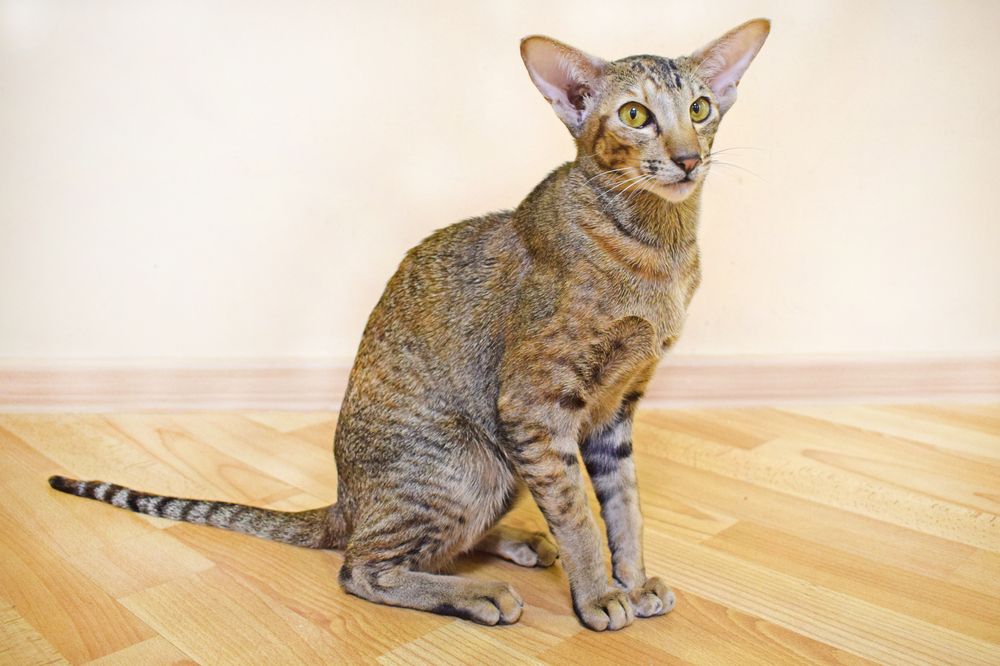
All cat breeds have their own unique shape. Some are bulkier and naturally more muscular, like the Maine Coon, while others are smaller and more athletic. Often, people think of the Siamese as the quintessential skinny cat. However, there are lots of other skinny cat breeds out there as well.
In this article, we’ll take a look at many of the skinnier cat breeds out there. Some of these cat breeds are incredibly small, while others are only slightly skinnier than regular cats.

The 7 Skinny Cat Breeds
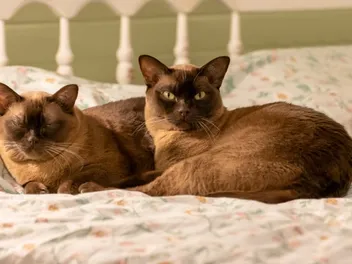
1. Burmese

| Max Weight: | 7–12 pounds |
| Life Expectancy: | 15+ years |
The Burmese is an extremely active cat that is very human-oriented. They love to play and are a bit of a handful for this reason. We only recommend this feline for owners who are home a lot. They are not lap cats by any means. Instead, they do better with children and people who are looking for a playful feline. These cats stay playful even as adults—they do not slow down for many years.
This breed is extremely smart. You can train them to walk on harnesses and play fetch. They love attention and become attached to their owners, so they often just want to make them happy.
Pros
- Trainable
- Very playful
Cons
- Prone to isolation anxiety
- Can be a bit too smart
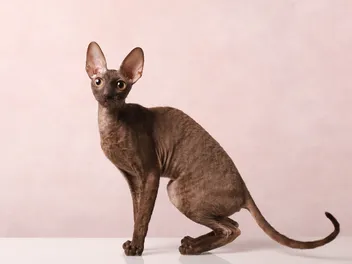
2. Cornish Rex

| Max Weight: | 7–11 pounds |
| Life Expectancy: | 9–13 years |
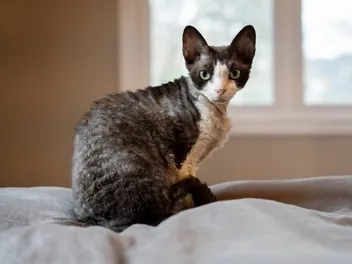
The Cornish Rex is a newer breed that is the result of a genetic mutation that occurred in the 1950s. This mutation gave the cats their remarkable curly coat, which is largely what they are known for. This breed loves to cuddle and is extremely affectionate. They are attentive, which makes them good for owners who are looking for a cuddle buffy.
However, they are also quite active and like to play. We highly recommend them for homes with children as they are very forgiving.
Cornish Rexes can be prone to isolation anxiety, as they do not like to be alone. Therefore, they do not do best with owners who spend much of their time outside the home. Furthermore, they also do not do well in outdoor conditions, as they don’t have a very practical coat.
Pros
- Loveable
- Playful
Cons
- Prone to isolation anxiety
- Doesn’t do well outdoors
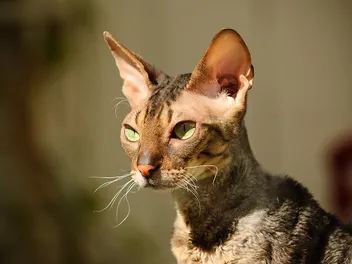
3. Devon Rex

| Max Weight: | 7–11 pounds |
| Life Expectancy: | 9–13 years |
The Devon Rex looks similar to other skinny cats we’ve described thus far. They have lanky bodies and are quite athletic. They are very social and love their people, and therefore, they don’t necessarily like being alone—they are not a great option for those who are gone much of the day. However, they can be a great choice for people who are looking for a cat that will get quite attached to them.
These cats are not as active as the others we’ve described. However, they aren’t exactly inactive either. They will still play, though they are not extremely active.
Pros
- Very people-oriented
- Very cuddly
Cons
- Prone to isolation anxiety
4. Japanese Bobtail

| Max Weight: | 6–11 pounds |
| Life Expectancy: | 9–13 years |
As their name suggests, this species originated in Japan. They have an extremely short tail that really makes it look like they don’t have a tail at all. Technically, they do have a tail. It is just extremely short and kinked. While this does make them unique, it can also lead to health problems.
These cats are very people-oriented. They love to be with their owners and are known for following their people around the house. They are also quite active and love to play, which makes them better for those looking for a more active cat. They do get along with other cats, however, they seem to get along best with cats that are similar to them.
Overall, these cats are quite hardy. Some are prone to health conditions due to their tail, though.
Pros
- Hardy
- People-oriented
Cons
- Short tail does cause some health problems
5. Javanese

| Max Weight: | 5–9 pounds |
| Life Expectancy: | 8–12 years |
The Javanese is one of the smallest cats out there. On top of being small overall, they are also extremely lanky. They only reach about 9 pounds max. It isn’t odd to find some smaller cats at closer to 5 pounds.
This breed is known to be very people-friendly and known for following their people around the house. Furthermore, these cats can also be extremely vocal, so they aren’t best for those looking for a quiet animal. They are quite loud by all measures!
These cats are quite intelligent and extremely active. They can be trained to walk on a harness, which we recommend for exercise purposes.
Pros
- Very small
- People-oriented
Cons
- Extremely active
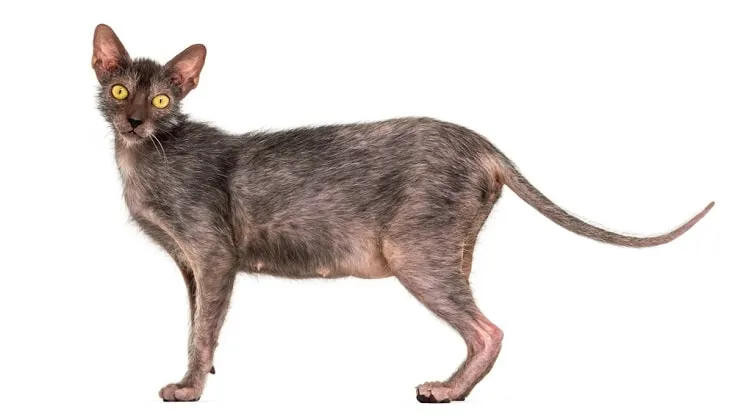
6. Lykoi
| Max Weight: | 5–13 pounds |
| Life Expectancy: | 12–15 years |
The Lykoi is a very uncommon cat that is the result of a unique mutation. Basically, it makes the fur growth on these cats a bit different, making them look a bit like a werewolf. This feline also has no undercoat. Therefore, they do not shed very much.
However, this breed is extremely rare. The cats with this genetic mutation were only sought out recently, and they are not well established. Finding one is challenging, and they are often quite expensive.
These cats cannot be left outdoors because of their lack of a coat. They do not do well in heat or cold, as you might imagine. Furthermore, they also have a very high prey drive and thus do not do well with small animals of any sort—and they can do a number on the neighborhood birds, as well.
Pros
- Hypoallergenic
- Unique
Cons
- Cannot be left outside
- Difficult to find
- High prey drive
7. Oriental Shorthair

| Max Weight: | 8–12 pounds |
| Life Expectancy: | 15+ years |
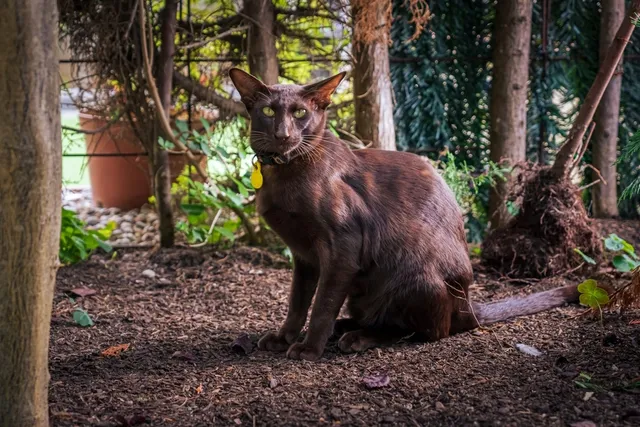
These felines are a bit larger weight-wise than other cats on this list. However, they are quite tall and lanky. Despite their higher weight, they are extremely skinny.
This feline is a mix of many different cats that eventually became its own breed. Today, it is well established. Therefore, they are not terribly difficult to find and don’t tend to be extremely expensive.
This breed was specifically made to be a companion cat. They are extremely people-oriented and prefer to be with their people at all times. Therefore, they are a bit more work than other breeds and do not do well when alone. We recommend them for owners who are going to be home most of the day.
They are prone to some inherited diseases. However, choosing a qualified breeder does lower the chance substantially.
Pros
- Very friendly
- Larger than some other cats
Cons
- Prone to some inherited diseases
- Prone to separation anxiety
Conclusion
There are many skinny, small cats that are adorable and make great pets. Some of these cats are tall and lanky, while others are just small overall. Many of the breeds we mentioned are short and skinny. They are often described as eternal kittens, in fact.
When choosing one of these cats, you need to look beyond their physical qualities, though. Many of these small cats are very people-oriented. They were designed to be companion animals in many cases, which means that they need interaction. Otherwise, they can develop separation anxiety. We do not recommend getting one of these cats unless you are home a lot.
Keep your lifestyle and wants in mind when finding a cat breed to adopt. Some of them are more active than others. Do not adopt a playful cat if you’re looking for a cuddle buddy, for instance.
Sources
Featured Image Credit: Zhigulina Oksana, Shutterstock
Expert cat care, straight to your inbox
News, insights, and useful advice, delivered to you.

No spam — unsubscribe anytime.
By signing up, you agree to our Terms & Conditions and Privacy & Cookies Policy.
How useful was this post?
Click a star to rate. You can leave written feedback afterwards. (We read all feedback.)

Kristin is passionate about helping pet parents create a fulfilling life with their pets by informing them on the latest scientific research and helping them choose the best products for their pets. She currently resides in Tennessee with four dogs, three cats, two fish, and a lizard, though she has dreams of owning chickens one-day!