Is Ivy Toxic to Cats? Vet-Reviewed Houseplants Examined


In this article
Plants can make for a wonderful addition to any home or yard. Not only do they add to the aesthetic, but they also come with other benefits, such as increasing oxygen and humidity and even cleansing the air around us. Cats tend to enjoy plants just as much as we do but for different reasons.
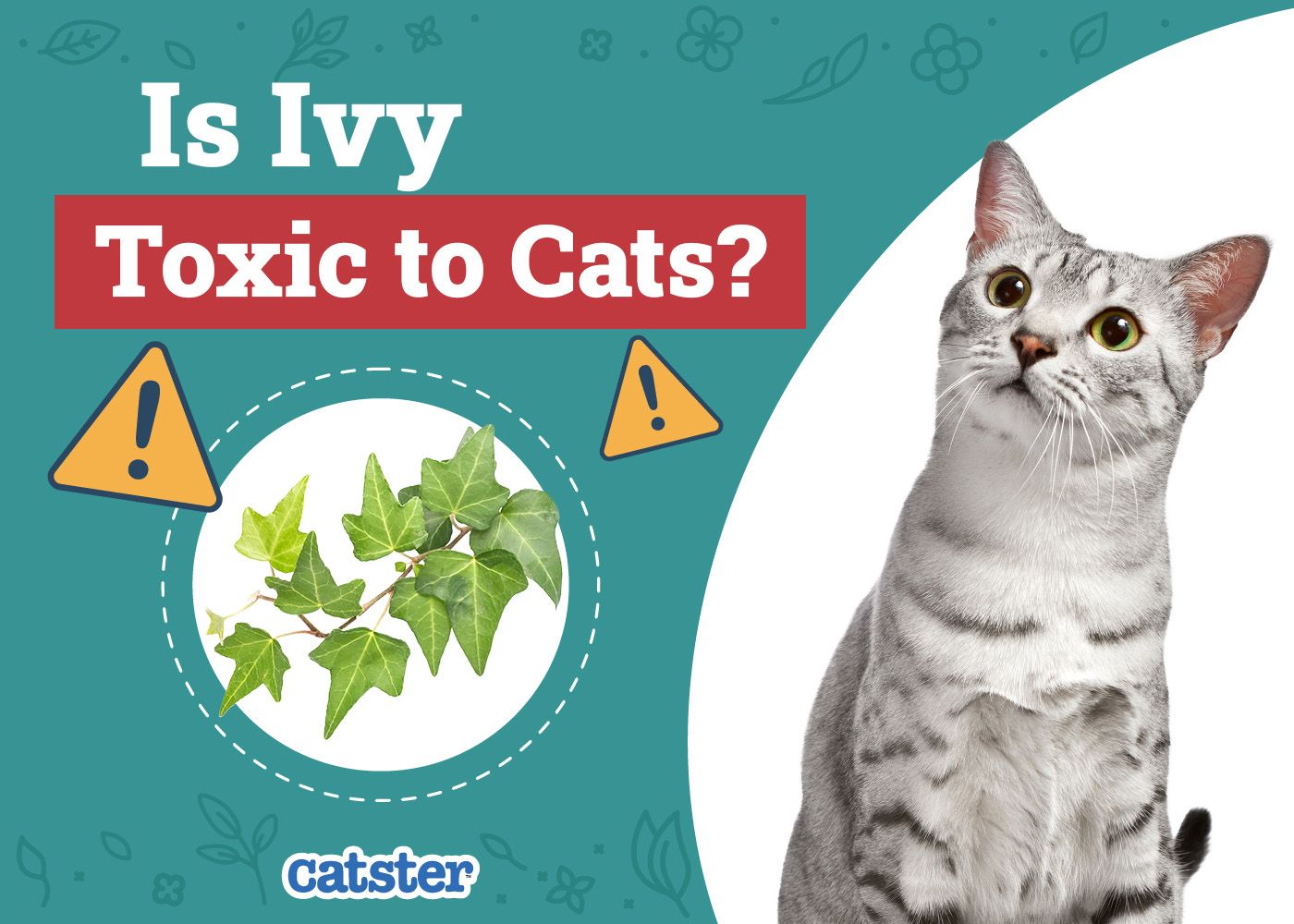
As cat owners, we must do all we can to ensure their safety, and knowing which plants pose a danger to our beloved pets is essential. So, is ivy toxic to cats? Some varieties of ivy are toxic to cats, while others are not. Here, we’ll talk all about ivy and, all things considered, ivy, as well as the toxicity dangers it can pose.

Is Ivy Poisonous to Cats?
Ivy is a very common houseplant that is not only beautiful but very hardy and easy to grow. Scientifically speaking, ivy consists of about 15 different plant species of the genus Hedera. These evergreen woody vines belong within the ginseng family, Araliaceae, and are native to Europe and most of Asia.
It is important to keep in mind that there are many plants labeled as “ivy” that are not true ivy, and that’s where some confusion sets in. When discussing the dangers that ivy can pose to cats, the American Society for the Prevention and Cruelty of Animals (ASPCA) database lists several plant species under the term “ivy”, as toxic.1 Due to ivy being used as such a loose term, we’ve provided the varieties listed as toxic, whether they are true ivy or not.
Toxic “Ivy” Plants
Due to ivy being used as such a loose term, we’ve provided a list of the varieties listed as toxic, whether they are true ivy or not. If your cat has ingested or potentially ingested any of the following, you will need to contact your veterinarian for further assistance.
English Ivy (Hedera helix)

English Ivy also goes by the names Branching Ivy, Glacier Ivy, Sweetheart Ivy, and California Ivy. This ivy is a very fast-growing perennial vine that is not only a common houseplant but is also considered an invasive species that can quickly overtake its environment. English Ivy is toxic to cats and can cause vomiting, abdominal pain, excessive salivation, and diarrhea.
Irish Ivy (Helix hibernica)
Also known by the common name Atlantic Ivy, this variety is commonly confused with English Ivy. With Irish Ivy, however, the leaves are wider than they are long and have a broader terminal lobe with shiny leaves and green veins. Irish Ivy is also considered toxic to cats.
German Ivy (Senecio mikanioides)
Also referred to as Cape Ivy, German Ivy is an evergreen climbing vine that’s native to South Africa. It is commonly used as an accent to flowers, and though it is not a true ivy, it is considered toxic to cats and can cause vomiting, diarrhea, excessive salivation, breathing difficulties, fever, and muscle weakness.
Devil's Ivy (Epipremnum aureum)

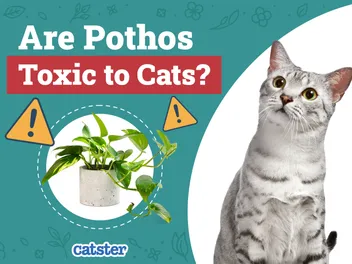
While Devil’s Ivy is not considered true ivy, it is still labeled as such and is very toxic to cats. This plant is also commonly known as Pothos, Golden Pothos, Taro Vine, and Ivy Arum. According to the ASPCA, Devil’s Ivy can cause oral irritation, pain and/or swelling of mouth, tongue, and lips, excessive drooling, vomiting, and difficulty swallowing.2
Mountain Ivy (Kalmia latifolia)
Mountain Ivy is another name for the plant variety known as Mountain Laurel. Other common names include Spoonwood and Calico-Bush. Mountain Ivy is a beautiful flowering plant that is native to the eastern United States. It is another species that does not belong in the category of true ivy but is sometimes referred to as such and is toxic to cats.
Ground Ivy (Glechoma hederacea)
Ground Ivy is a perennial, evergreen creeper that belongs to the mint family, Lamiaceae and is considered toxic to cats. It is very aromatic and goes by several names, including Creeping Charlie, Gill-Over-the-Ground, Run-Away-Robin, Alehoof, Tunhoof, Catsfoot, and Field Balm.
Boston Ivy (Parthenocissus tricuspidata)

Boston Ivy is not a true ivy, but it is a perennial woody vine in the grape family. It is native to eastern Asia, including Korea, Japan, and the northern and eastern regions of China. Also referred to as Japanese Ivy or Japanese Creeper, this plant sports reddish leaves in the springtime, which turn green during the summer. Boston Ivy is considered toxic to cats.
Australian Ivy Palm (Schefflera or Brassaia actinophylla)
The Australian Ivy Palm is an umbrella tree that is native to Australia and New Guinea. It can grow up to 50 feet in its natural habitat but can be kept as an indoor plant with proper pruning. This plant is considered toxic to cats.

Non-toxic “Ivy” Plants
Swedish Ivy (Plectranthus australis)

Despite the common name, Swedish Ivy is not part of the true ivy genus Hedera. Swedish Ivy has been popular as a houseplant since around the 1940s. It’s great for beginners and it thrives in a variety of soil, watering, and different light conditions. Not only that, but it is also considered non-toxic to pets, making it an even more ideal choice.
Grape Ivy (Cissus rhombifolia)
Grape Ivy gets its name due to its resemblance to grapevines. It also produces small, dark berries that even resemble grapes. Grape Ivy is not a true ivy at all; it belongs to the same family as grapes, the Vitaceae family. Grape Ivy is non-toxic to cats and makes a great choice for either potted or hanging houseplants.
Kenilworth Ivy (Cymbalaria muralis)

Also known as Coliseum Ivy, Oxford Ivy, and Ivy-Leaved Toadflax, Kenilworth Ivy is a flowering plant native to the Mediterranean. This short perennial typically grows as ground cover or along rocks and walls but can easily be kept as a houseplant. While not a true ivy, this plant is considered non-toxic to cats.
Ivy Peperomia (Peperomia griseoargentea)
Ivy Peperomia is a species of flowering plant that is native to Brazil. It belongs to the family Piperaceae and is an evergreen perennial that produces rosettes of heart-shaped silverish-gray leaves with pronounced, curvy veins. Ivy Peperomia is not a true ivy and is not toxic to cats.
Poison Ivy (Toxicodendron radicans)

One of the first plants to come to mind when you hear the word “ivy” is Poison Ivy. We humans avoid this plant like the plague due to the well-known, itchy, uncomfortable rash that results from contact with the plant. Another plant that is not a true ivy, you would think that Poison Ivy would be toxic to cats, and though it has been included on toxic plant lists, it is actually considered non-toxic to cats if ingested. In fact, cats hardly ever suffer the contact dermatitis associated with Poison Ivy coming in contact with the skin.
Spider Ivy (Chlorophytum comosum)
Spider Ivy is a perennial evergreen flowering plant in the family Liliaceae. It gets its name from its spider-like foliage and is another species that is not considered a true ivy. Also referred to as the Ribbon Plant, Spider Ivy is a popular household plant that is considered non-toxic to cats.
Signs of Toxicity in Cats
Different plants have varying levels of toxicity, if you suspect your cat has ingested a toxic plant, you need to contact your veterinarian or a pet poison control center immediately, even if they are not yet showing any signs. Depending on the circumstances, your cat may or may not need to be taken to a local clinic or animal emergency facility immediately.
Possible symptoms of ingesting a toxic plant include:
If your cat shows signs of the symptoms above or you suspect they might be suffering from underlying health issues, you should contact your vet.
Keeping Your Cats & Plants Safe
Having a cat does not mean that you cannot have houseplants. You will just need to be more vigilant and take extra steps to ensure your cat is safe from potential toxins. We’ve included some tips you can follow to help keep your cat safe.
1. Avoid Toxic Plants
It may go without saying, but the easiest way to keep your cats safe from any kind of plant toxicity is by avoiding any toxic plant species. Before you purchase any new plants, check to see if that species is considered toxic. There are so many different species that resemble each other that you may be able to find a nontoxic plant that gives you a similar look without being harmful if ingested by your cat.
As for cats that are allowed to venture outdoors, know what is in your yard and any neighboring yards, and do your best to make anything toxic inaccessible. With outdoor cats, it is much more challenging if they are left unsupervised and free to roam.

2. Keep the Plants Out of Reach
For the sake of both your cat and your plants, try keeping any houseplants up and out of reach of your kitty. Plants are ever-so-tempting to chew and play with. Keeping them out of reach will not only prevent your cat from any issues associated with ingestion but will also save your plant from severe damage.
3. Try Using Deterrents
Citrus is a common deterrent for cats due to the smell, as well as hot chili oil. Cats are not big fans of citrusy or spicy scents and will typically avoid anything that smells like such. Use caution when spraying plants with citrus, as the acidity in citrus fruit juices could cause harm to some plants. Vinegar is another potential deterrent that comes with the same risk.
You can also try utilizing a spray bottle of water to give your cat a quick spritz if it goes anywhere near the household plants. This may not work for all cats, and you will not always be available to use this trick, so this is just a quick, in-the-moment deterrent.
4. Purchase Cat Grass or Catnip
Try buying your cat their own plant. Cat grass and catnip can be purchased either online or at your local pet store. These plants are perfectly safe for cats to chew on and ingest and make a great choice for those that have cats that can’t seem to stay out of their plants. Though these two plants are unrelated, they both grow easily and do not require a green thumb.

5. Prune the Plants
If you keep your plants well-trimmed or pruned regularly, it can help reduce risks of ingestion or damage to the plant, especially those varieties with dangling foliage. Long, flowing plants are a hard temptation to resist if you’re a cat.
6. Designate a Plant Room
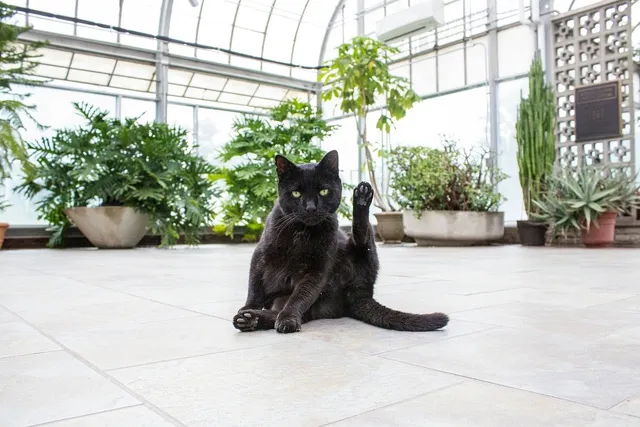
Some plant lovers who are also cat owners have opted to create their own plant room or separate greenhouse. Having a separate area for the plants that are completely inaccessible to cats will not only allow you to keep whatever plant varieties you wish, but it also ensures your cat is safely away from any potential dangers. Not everyone will have the available space for this option, but it is something to consider for those who do or those who wish to try and set aside some extra space.
7. Buy Artificial Plants
Artificial plants make an excellent choice for those who are only using plants as home décor. Artificial plants won’t provide the same benefits as live plants, but they are made to look indistinguishable from living plants, and they don’t require all the care and maintenance.

Conclusion
Ivy is used as a loose term that refers not only to true ivy plants but many other species outside the true ivy genus of Hedera. Some ivy plants, like the English Ivy, are toxic to cats, while others are not. It is best to proceed with caution and always check the specific species of plant and its toxicity to pets before deciding to purchase. If you ever suspect your cat may have ingested or come in contact with a toxic variety of plants, you need to contact your veterinarian immediately for guidance.
Sources
https://www.aspca.org/pet-care/animal-poison-control/toxic-and-non-toxic-plants/english-ivy
https://www.aspca.org/pet-care/animal-poison-control/cats-plant-list
https://www.aspca.org/pet-care/animal-poison-control/toxic-and-non-toxic-plants/mountain-laurel
https://www.aspca.org/pet-care/animal-poison-control/toxic-and-non-toxic-plants/australian-ivy-palm
https://www.aspca.org/pet-care/animal-poison-control/toxic-and-non-toxic-plants/swedish-ivy
https://www.aspca.org/pet-care/animal-poison-control/toxic-and-non-toxic-plants/grape-ivy
https://www.aspca.org/pet-care/animal-poison-control/toxic-and-non-toxic-plants/kenilworth-ivy
https://www.aspca.org/pet-care/animal-poison-control/toxic-and-non-toxic-plants/poison-ivy
https://www.aspca.org/pet-care/animal-poison-control/toxic-and-non-toxic-plants/spider-ivy
https://www.olympiapetemergency.net/site/blog/2021/11/11/plants-toxic-cats
Featured Image Credit: leoleobobeo, Pixabay
Expert cat care, straight to your inbox
News, insights, and useful advice, delivered to you.

No spam — unsubscribe anytime.
By signing up, you agree to our Terms & Conditions and Privacy & Cookies Policy.
How useful was this post?
Click a star to rate. You can leave written feedback afterwards. (We read all feedback.)
Lindsey and her husband enjoy traveling the US with their kids and photographing wildlife. Her passion is to educate others on the importance of proper animal care, with an emphasis on reptiles and exotics since their care requirements can be much more complex. She is also a huge advocate for bully breeds. She feels most at home in the forest either on horseback or in hiking boots.