Get

In Your Inbox

Catster is reader-supported. When you buy via links on our site, we may earn an affiliate commission at no cost to you. Learn more.

How to Treat Lice in Feral Cats: 4 Tips & Tricks (Vet Answer)

Share

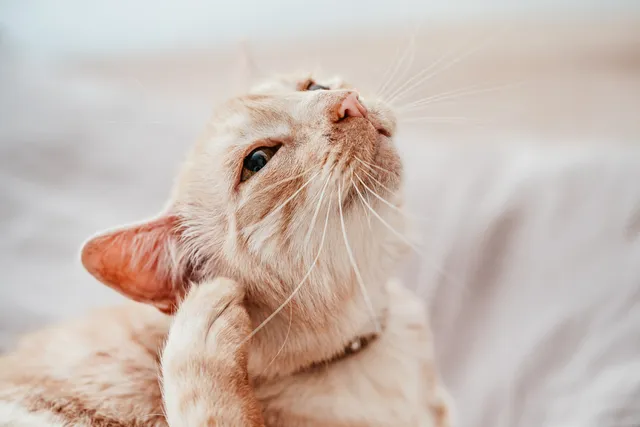
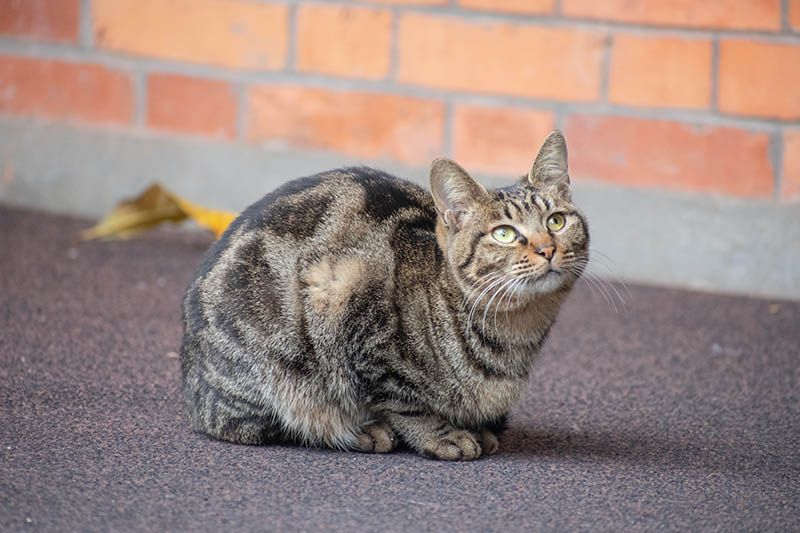
semi-feral cat sitting on the ground looking up

Lice on cats are not as common in our pets because of the use of flea and tick-preventative medications. Unfortunately, there is no good way to get these medications to feral cats.

And at-home remedies do nothing, as does treating and spraying the homes of feral cats with insecticides—absolutely nothing. So, what can you do to help treat lice in feral cats? Read on to learn how!

divider cats oct 2024

Cat Lice Infestations 101

The species of louse that infests cats is called Felicola subrostratus. Lice are species-specific, meaning they only infect one species. So, you cannot get lice from a cat, and neither can your dog. This does mean, however, that your pet cat can get lice from feral cats.

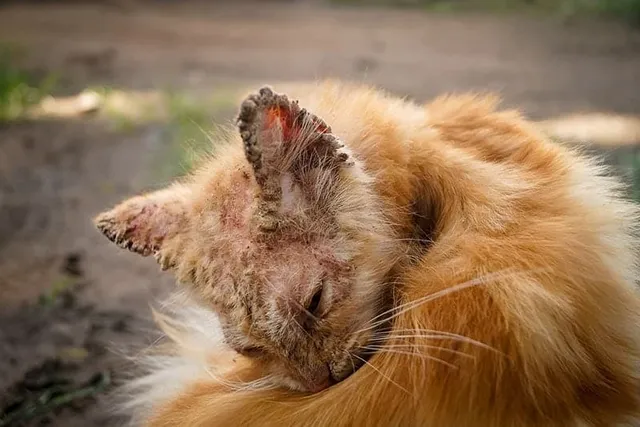
The good (and bad) news is if a feral cat is infested with lice, then as disgusting as it may seem, the lice are probably not its biggest problem. Lice do not suck blood; they only chew the skin. So, while the skin can get very itchy, a cat can over-scratch themselves and get secondary bacterial infections. The lice are probably only a small part of their overall health problems.

two feral cats on the table
Image Credit: Nathalie Jolie, Unsplash

divider cats oct 2024

The 4 Tips to Get Rid of Fleas in Feral Cats

1. Get Close to Them

Diagnosing and identifying lice cannot be done without touching the cat. While lice infestations can cause skin issues that may be apparent from a distance, like hair loss, dermatitis, and over-grooming. All these problems can also be caused by other health problems and external parasites, such as:

  • Fleas
  • Mites
  • Malnourishment
  • And even systemic diseases like hyperthyroidism.

So, if you have a feral cat that you cannot touch, it would be very difficult to know that certain lice are a problem, not fleas, mites, or even poor nutrition. Even if you can touch the cat, lice might be theoretically big enough to see on the fur—but just barely. A microscope or magnifying glass can help. But also, it can be difficult to see them scurrying around in the fur—they are very quick and surprisingly good at hiding.

Sometimes it is easier to see the nits that collect on the hair. Nits are the eggs that get glued to hair strands. They are whitish gray, almost translucent, and oval, and importantly stay in one place.


2. Be Aware of Feral Cat Colonies

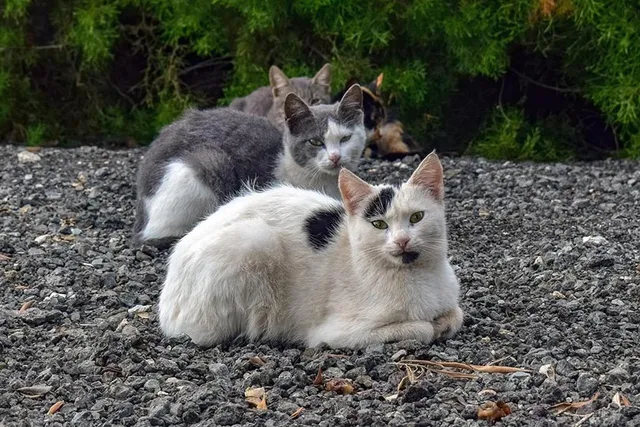
Lice are more likely to occur when cats are hanging out together in close proximity. So, a colony of feral cats is more likely to have lice than a singleton roaming alone.

Feeding a colony of cats can cause cats to cluster together when they normally would spread out. And that can mean that lice are more likely to spread from cat to cat. Getting all the cats together to feed them might actually be exacerbating the problem.

feral cats
Image Credit: Piqsels

3. Complete the Treatment

The medications that treat lice must be applied directly onto the skin. And they need to be repeated regularly. Most of the time, once a month is enough for in-house pets that are not exposed to a lot of lice eggs.

But if a feral cat has a high infestation rate and has a lot of eggs stuck to their fur, they will need to be treated again in 2 weeks because the eggs will have hatched by then.

So, in order to theoretically treat a feral cat, you would not only have to capture it once, but you would also need to do it again in 2 weeks.

If you need guidance on choosing a lice treatment for your cat, we suggest you speak to a vet.

If you need to speak with a vet but can't get to one, head over to PangoVet. It's an online service where you can talk to a vet online and get the advice you need for your pet — all at an affordable price!

PangoVet_Mention-in-Content for PangoVet2 save money


4. Treat All the Feral Cats

And you would have to treat all the cats in the neighborhood. The contagious nature of lice means that if a cat’s immune system is not strong enough to fight them off in the first place, then after you treat them, the lice will come back quickly.

Anyone who knows a cat that does not like to be held knows they would probably just rather live with lice than suffer the indignity of being manhandled—repeatedly.

It is just not worth the minimal reward of treating them by capturing, stressing, and releasing them. If you do catch them, arrange for them just to find them a new home—it’s a much more sustainable option.

two feral cats
Image Credit: JancickaL, Pixabay

divider cats oct 2024Conclusion

We know it is frustrating to not have a simple answer.  Unfortunately, that is often the problem with medicine. And feral cats have been a long, ongoing, and complicated problem for veterinary medicine. Reducing their numbers and providing safe, healthy homes for them is the only way to effectively ensure their well-being.

Lice are most likely to infest cats that live close together and are in poor health, and sadly this often perfectly describes feral cats. So, providing the cat with proper medical care, nutrition, and an uncrowded place to live is really the best treatment.

See Also:


Featured Image Credit: Akira, Unsplash

Want content like this delivered to you?

Sign Up For Our Newsletter

News, insights, expert advice, and everything cat

* By submitting, you agree to our Terms & Conditions and Privacy & Cookies Policy.


How useful was this post?

Click on a star to rate (you can leave written feedback after clicking submit)

Help us improve Catster for pet parents!

Your feedback really matters.

What did you like about this post? Also how can we improve it?

Join the conversation

2 Responses

  1. Five years ago I had 6 rural cat spade neutered and dewormed , for five years I didn’t have a problem . Then all six cat came down with lice ,they are all feral I can not put topical medication on them . They cry out in pain what can I do.

    1. Dear June,
      thank you for your message, although we are sorry to hear about your cats' struggle. Unfortunately, if you want to treat those 6 cats successfully, the only thing you can do is to capture them and provide them with lice medication on the skin. Based on the seriousness of the infestation, you will need to do this regularly until the lice are gone.
      Please keep in mind, that since all of those cats are feral and they are roaming freely, there is always a risk they will meet with another infested cat and the lice will return.
      Another thing we can recommend is asking for local animal services to help. You can also read some of our other articles on this matter:
      – How to Trap a Feral Cat: 9 Vet-Verified Steps for TNR Programs – https://www.catster.com/lifestyle/how-to-trap-a-feral-cat-for-tnr/
      – How to Get a Feral Cat Into a Carrier: 14 Expert Tips & Tricks – https://www.catster.com/lifestyle/how-to-get-a-feral-cat-into-a-carrier/
      Just copy and paste the URL into your browser. Hope this helps.

Leave a Reply

You’re very welcome to leave a comment or question. Please know that all comments must meet our community guidelines, and your email address will NOT be published. Let’s have a positive and constructive conversation.


Talk With A Vet Online

Peace of mind,
anywhere, anytime

Affordable vet advice

One in 100 Cats Gets Diabetes – Here’s How to Catch It Early

One in every 100 cats develops diabetes.1 That’s not a rare, unlucky condition reserved for cats with obvious health problems. It’s common enough...

Dramatic Rescue Turns Into Dramatic Reunion

What started as a routine call for the RSPCA became a heroic, five-hour rescue featuring one trapped and traumatized cat, an emotional family...

Ask Dr. Paola – Help! How Do I Know if it’s Ear Mites! (May 4, 2026)

Welcome to our “Ask Dr. Paola” series, where every Monday we bring expert advice straight from Dr. Paola Cuevas (MVZ) to help our...

Hope for the Tiniest Fighters: Baby Kitten Rescue | Heroes of the Pet World

In a world where the smallest and most vulnerable animals are often the easiest to overlook, Caroline and Baby Kitten Rescue’s work is...

More related

Cats on Cars in Cold Weather: Vet-Reviewed Facts and Safety Guide

When the cold days are among us, pet safety precautions will be broadcast over every social media platform—and for good reason! Frigid temperatures...

Introducing the Catsters: Dr. Lauren and Pancake & Tiller the Adventurers

Hi! My name is Lauren, and I’m a residency-trained feline veterinarian with a passion for cats, teaching, and adventure. When I’m not otherwise...

Does Vinegar Stop Cats From Pooping Where They Shouldn’t? Vet-Verified Tips & Reasons for This Behavior

Having to deal with a cat that has a bad habit of pooping somewhere they shouldn’t can be frustrating. Fortunately, vinegar could help....

Cat Hiccups: Our Vet Explains Causes & What to Do

Can cats get hiccups? In short, yes! Just like their human counterparts, cats can get bouts of hiccups for a variety of reasons,...

Keep reading

Can Cats Eat Papaya? Vet-Approved Nutritional Science & Info

Papaya is not poisonous or toxic for cats. However, that doesn’t mean they should eat as much as they want. Cats do not benefit much from fruits and often don’t derive meaningful nutrition from them. In addition, they can experience...

Can Cats Eat Papaya

Do Cats Like Blankets? Vet-Reviewed Feline Behavior Explanation & Safety Tips

Cats are interesting creatures that tend to march to their own beat. It can be tough to get a cat to do something you want them to and to stop doing things that you don’t like. So, if a cat...

kitten playing under a blanket

5 Vet-Reviewed Reasons Why Your Cat Uses You As A Scratching Post & How To Stop It

Your cat’s claws are used for survival as hunting weapons and tree-scaling devices in the wild. As domesticated pets, their claws are kept in tip-top shape with regular scratching, which also serves as a way to do a full body...

Two cats in a cat tree with scratching post

Can Cats Eat Pumpkin Seeds? Vet-Reviewed Nutrition Facts & FAQ

Yes, most cats can eat pumpkin seeds without suffering any adverse effects. Pumpkin seeds are packed with nutrients that are extremely beneficial. What’s more, some cats seem to love the taste of these seeds. Therefore, do not be afraid to...

Can Cats Eat Pumpkin Seeds

Cats Making Biscuits: Vet-Reviewed Explanation

Cats have their fair share of quirky behaviors. They race around the room, chasing invisible objects for no apparent reason, or turn anything into a toy, whether it’s appropriate or not. And don’t get us started about bringing us “presents.”...

tabby-cat-paws-on-backrest-of-couch

How to Care for a Blind Cat: 7 Vet-Reviewed Tips

When your cat starts to lose their vision, you might start to worry about how much harder it will get to care for them. Fortunately, going blind is not nearly as big of a deal to your cat as it...

Portrait of a blind tabby cat

Do Cats Like Watching TV? The Surprising Answer!

Cats are rather curious creatures that can find entertainment in all sorts of random household objects. While some cats find chasing toys a fun pastime, other cats may enjoy watching TV. Cats’ eyes can pick up specific images on the...

Cat intently watching TV

Can Cats Eat Pork Rinds? Vet-Reviewed Facts & FAQ

If you frequently eat pork rinds either as a snack or as part of a meal, you’ve probably experienced your cat wanting some. After all, pork rinds are made from the skin of a pig, and pork is meat, so...

Can Cats Eat Pork Rinds

Love Cats? So Do We! Join the Catster Community

Stay informed with expert pet care insights delivered straight to your inbox! Discover professional guidance on animal behavior, feeding tips, trusted product picks, and much more.


Sign up for the Catster Email Newsletter

Stay informed with expert pet care insights delivered straight to your inbox! Discover professional guidance on animal behavior, feeding tips, trusted product picks, and much more.