Does Vinegar Stop Cats From Pooping Where They Shouldn’t? Vet-Verified Tips & Reasons for This Behavior



In this article
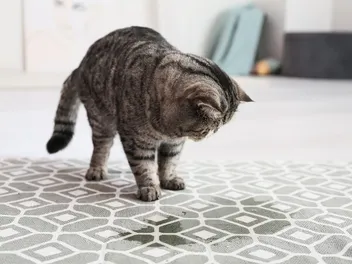
Having to deal with a cat that has a bad habit of pooping somewhere they shouldn’t can be frustrating. Fortunately, vinegar could help. Cats generally dislike the smell of vinegar, which means it can act as a natural deterrent and help keep your kitty from returning to unsolicited areas. It’s not a magic solution and should not be fed to cats directly, but when used appropriately, vinegar might discourage your cat from pooping somewhere other than the desired place.
Let’s get into how you can use vinegar to stop cats from pooping where they shouldn’t, as well as some factors that could cause your cat to inappropriately defecate outside the litterbox in the first place. Tackling the underlying reason behind this type of behavior is just as important as finding a solution to stop it from happening again.

Do Cats Like the Smell of Vinegar?
Cats do not like the smell of vinegar, and most will actively avoid vinegar if they can. You can use vinegar as a deterrent to keep cats from peeing or pooping in a location they shouldn’t. If cats feel uncomfortable in the location, they won’t return to it for any reason, even to relieve themselves!
However, remember that if you don’t address the underlying issue, the cat may still not poop in the desired location; they’ll just find somewhere else to go instead.


The 3 Tips for Using Vinegar to Stop Cats From Pooping in the House
If you’re using vinegar to keep your cat from using the bathroom somewhere they shouldn’t, there are a few tips you should follow to make it as successful as possible. We’ve highlighted three of the most important tips for you to follow:
1. Dilute the Vinegar
While there isn’t anything wrong with using pure vinegar, it’s stronger and more likely to stain surfaces than if you dilute it first. Mixing one part distilled white vinegar to one part water will work well. It’s a small step, but it ensures everything in your home stays in great shape.

2. Reapply
Vinegar works as an excellent deterrent for cats, but the smell will dissipate over time. When that happens, your cat might revisit the area and use it again. Reapply the diluted vinegar every few days for a couple of weeks until your cat no longer thinks about using the area.
3. Don’t Spray Your Cat!
It might seem obvious, but you should never spray your cat’s body directly with vinegar. It’s unsafe for your cat, so don’t even spray it close to them so you don’t have to worry about accidentally hurting them.

The 6 Reasons Why Your Cat Might Not Be Using the Litter Box
While vinegar can be used to deter cats from pooping in unwanted areas, it’s important to address the root cause if your cat has suddenly stopped using their litter box. Understanding why your cat isn’t using the litter box is essential; otherwise, the problem may persist, and your cat will likely find another inappropriate spot to go.
1. Dirty Litter box
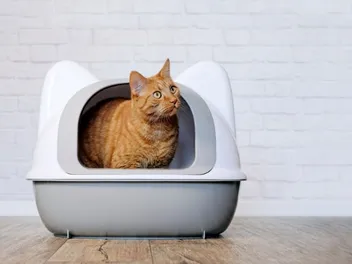
Cats don’t like using a dirty litter box, and if you’re not cleaning it enough, they’ll find somewhere cleaner to relieve themselves. Clean out the litter box daily and do a full wash out weekly to keep it clean enough for your cat to return to use it.
Cleaning up after our pets is not the most enjoyable part of owning them. Despite keeping a clean litterbox, cat odors and stains may still exist around the house. Sometimes, even the best litter box setup needs extra help. If you're tired of dealing with bad smells from litter boxes, Hepper Advanced Bio-Enzyme Pet Stain & Odor Eliminator Spray can help with the worst pet stains and smells. Additionally, the Advanced Bio-Enzyme Cat Litter Deodorizer neutralizes odors upon contact.
Our Favorite Products
| Image | Product | Details | |
|---|---|---|---|

|
Hepper Advanced Bio-Enzyme Pet Stain & Odor Eliminator Spray |
|
Check Price |

|
Advanced Bio-Enzyme Cat Litter Deodorizer |
|
Check Price |
At Catster, we’ve admired Hepper for many years and decided to take a controlling ownership interest so that we could benefit from the outstanding designs of this cool cat company!
2. Not Enough Litter Boxes
You need a litter box on each floor of your home, and you need at least one litter box per cat plus one. If you have three cats, you need at least four litter boxes; if you only have one cat, you still need two.

3. New Litter Type
Did you recently change the type of litter inside the box? If so, your cat might not like the new litter. If you change it back to what they used before, your issues might disappear. Whenever you change litter or food, you must transition very slowly.
4. Can’t Find the Box
If you recently changed the litter box's location, you might need to show your cat where you moved it to. You can’t blame your cat for not using the litter box if they don’t know where it’s at!
5. Stressful Location
If there’s a lot of activity around the litter box, your cat might not feel comfortable using it. You need to find a quiet location where your cat can peacefully relieve themselves; otherwise, they might find a peaceful location even if there isn’t a litter box.

6. Medical Problems
If your cat going to the bathroom outside of the litter box is a new habit, and you haven’t changed anything else, there might be an underlying medical problem you need to address. If you can’t figure out anything that’s changed, take your cat to a vet to rule out a medical problem.
If you have any concerns or curiosities about your cat or their health, we recommend you contact a vet directly.
Final Thoughts
Now that you know how to use vinegar to keep your cat from pooping somewhere they shouldn’t, all that’s left is for you to start using it! You'll dilute the vinegar, start in an inconspicuous area, and reapply as necessary to get your cat back into the litter box!
Sources
Featured Image Credit: focal point, Shutterstock
Expert cat care, straight to your inbox
News, insights, and useful advice, delivered to you.

No spam — unsubscribe anytime.
By signing up, you agree to our Terms & Conditions and Privacy & Cookies Policy.
How useful was this post?
Click a star to rate. You can leave written feedback afterwards. (We read all feedback.)
Adam is a seasoned freelance writer and passionate animal lover who has dedicated years to rescuing countless animals. With a decade of experience as a freelance writer and an even longer history of animal rescue, he has honed his skills in both fields. Adam is also a proud father of three and thrives on challenges and new adventures.