How to Give a Cat a Bath Without Water: Vet-Approved Step-by-Step Guide


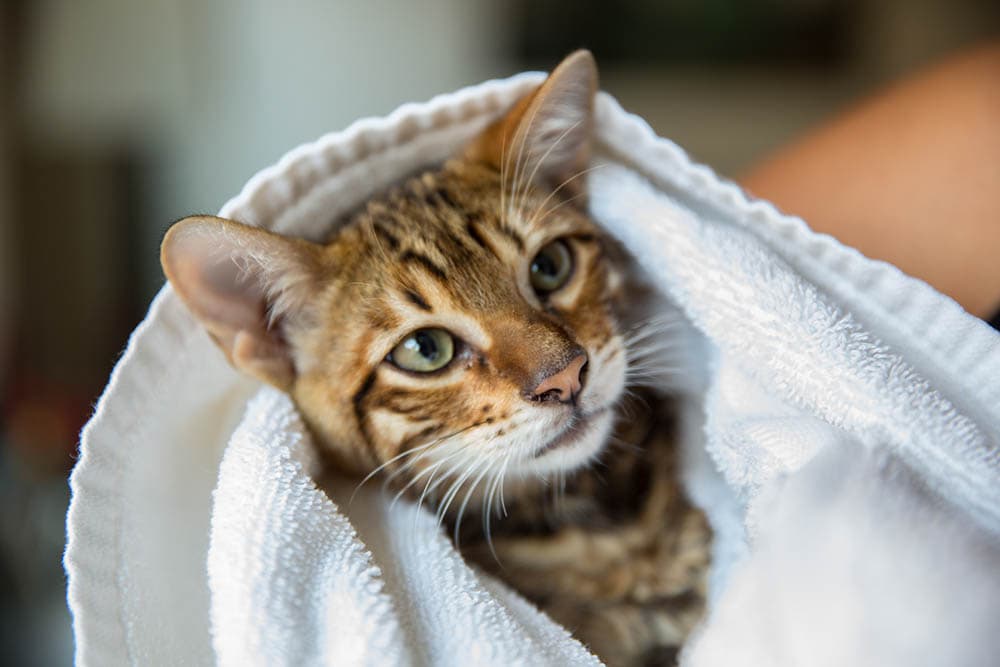
In this article
Most cats don’t like to get baths. The good news is that cats are excellent groomers and usually keep themselves clean enough, so baths aren’t necessary. However, sometimes your cat needs help keeping clean, and a bath is required.
If your cat hates water, it could be a chore you dread. If you’d rather do anything else than try to wrangle your cat in the bathtub, a waterless bath could be the solution.
In this article, we look at two ways to bathe a cat without using water. We also give you tips for grooming your cat regularly to keep them clean.

Product Recommendations
Keeping your cat clean doesn't necessarily require a full bath; pet wipes and dry shampoo are excellent alternatives to maintain your cat's cleanliness and freshness without using water.
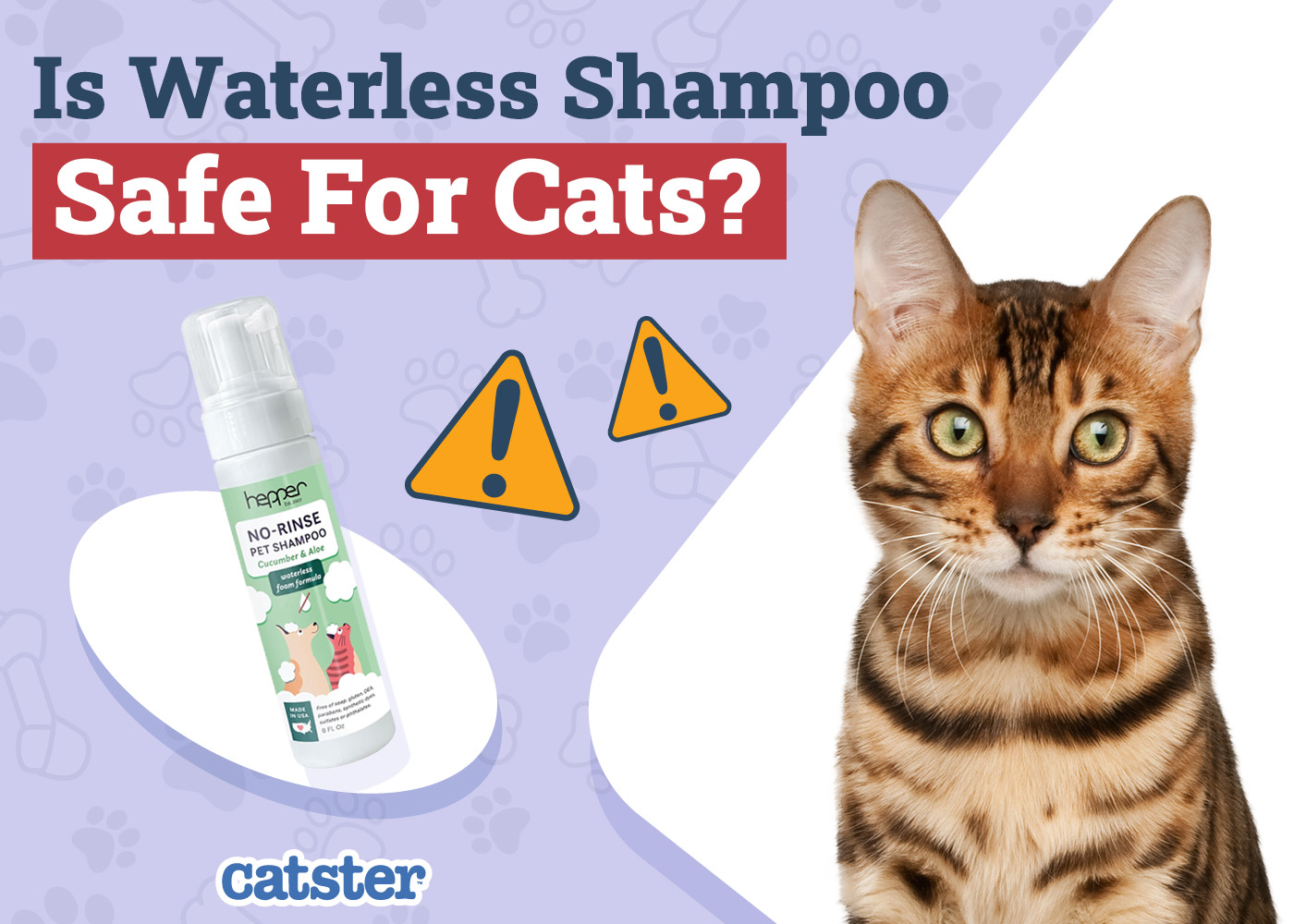
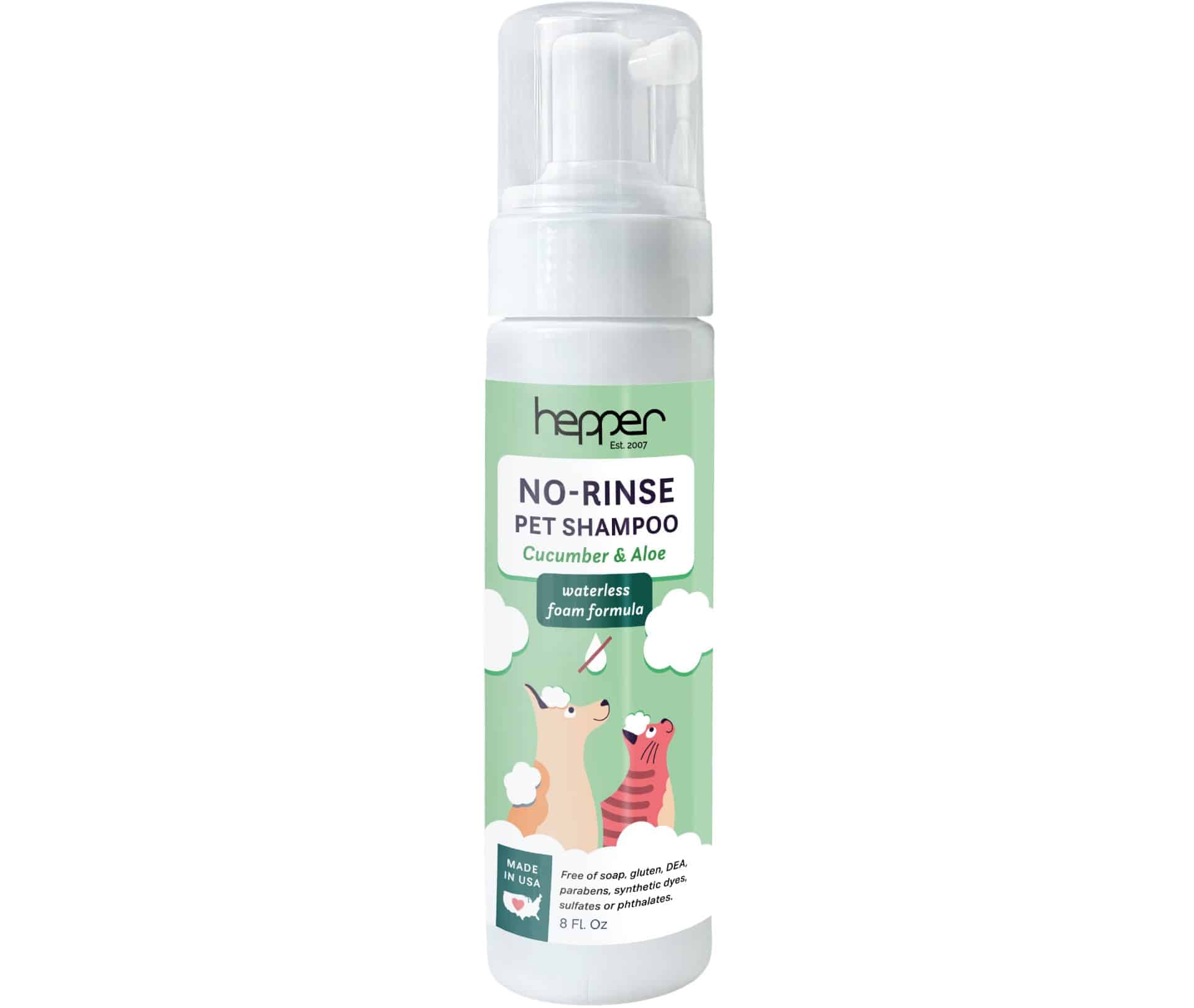
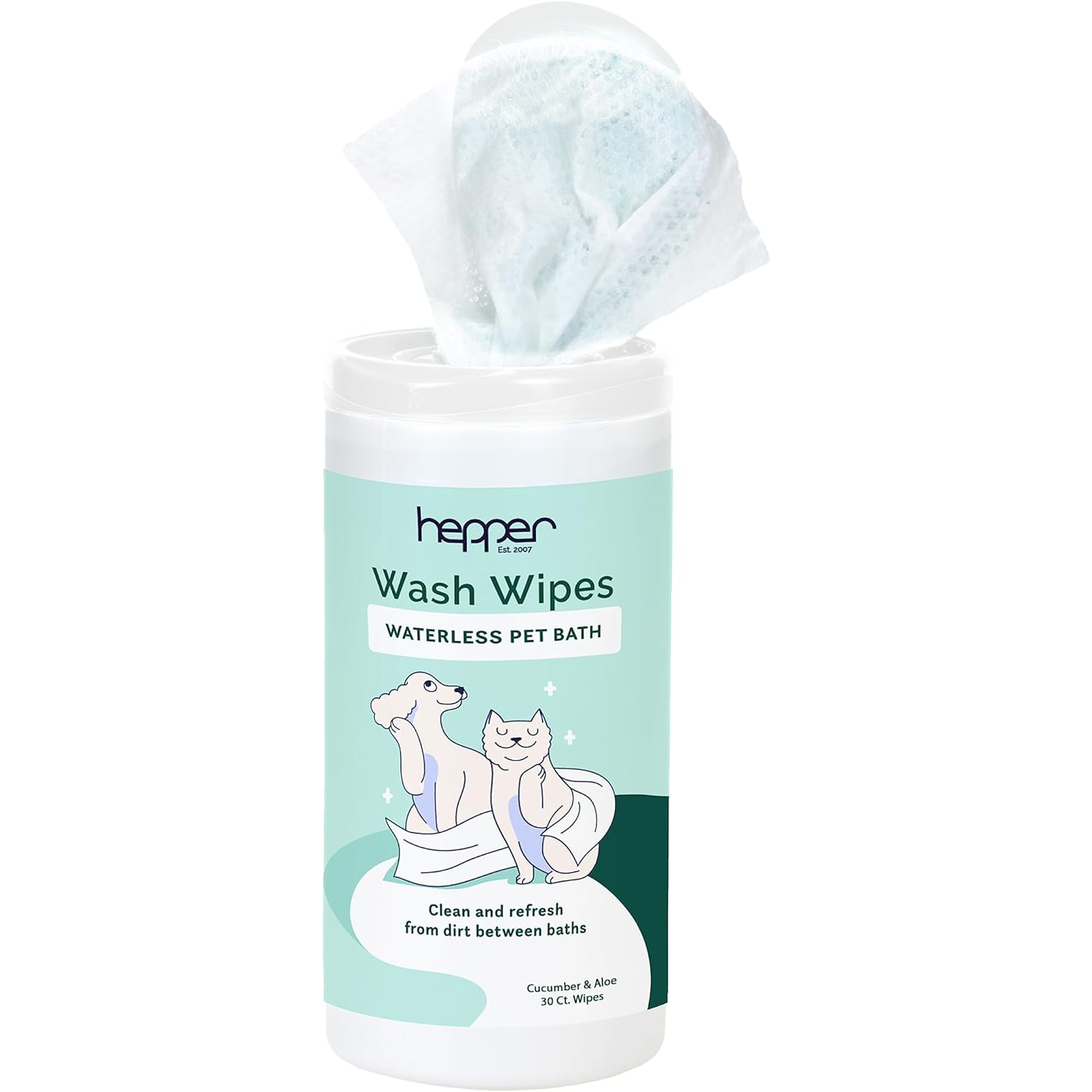
For cat parents seeking to help keep their water-averse felines clean, we highly recommend these waterless grooming products. The Hepper Waterless No Rinse Dry Shampoo is the ultimate fur refresher, and the Hepper Wash Wipes make cleaning eyes, ears, paws, and bum a breeze. Learn more about each product in the table below.
| Image | Product | Details | |
|---|---|---|---|
|
Hepper Waterless No Rinse Pet Shampoo |
|
Check Price |
|
Hepper Wash Wipes |
|
Check Price |
At Catster, we’ve admired Hepper for many years and decided to take a controlling ownership interest so that we could benefit from the outstanding designs of this cool cat company!
Why Do Cats Need Baths?

Cats typically groom themselves, but sometimes, you’ll need to step in and help them get clean by bathing them.
The Cat Got Too Dirty
If your cat likes to roam outdoors and gets incredibly filthy, they’ll need a bath to get clean. Cats shouldn’t lick and ingest too much dirt and grime since it can upset their digestion.
If your cat is covered in a substance, like oil or grease, they’ll need a bath with a product made to dissolve the substance to get them clean again.
The Cat Is Overweight
Cats carrying a few extra pounds may have trouble reaching some areas of their bodies. If your cat isn’t keeping themselves as clean as usual, it could be because they physically can’t. Bathing them will keep them clean and help them feel better. If your cat is overweight, you can consult a vet to develop a diet plan.
The Cat Is Elderly/Sick
Elderly cats or those with health issues may not feel like grooming themselves. Elderly cats may also have joint issues that make grooming painful. If a cat is sick with diarrhea or vomiting, they may get messy. A bath will be necessary to keep them from smelling bad and feeling worse.


How to Give a Cat a Bath Without Water
You can use two products to clean your cat without using water: waterless shampoo and cat grooming wipes. Waterless shampoos come in sprays, foams, and powders. Sprays can scare cats, especially if you use a spray bottle of water as a training method. If you decide to use a spray, it’s best to spray it into your hands first instead of directly on the cat.
Foams are easy to massage into your cat’s coat and cover a large area. They provide precise applications but can be messy. Powders are dry shampoos. They clean your cat, but you must use a brush to remove the residue from the coat. They can also cause cat hair to turn white from the coating temporarily.
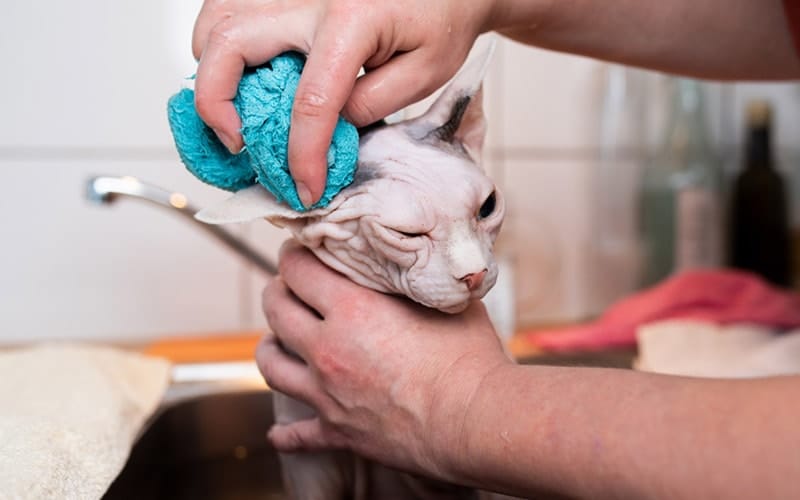
Grooming wipes are used to remove dirt and oil build-up from coats and are easy to use. Just take one in your hand and wipe down your cat as if you were petting them.
1. Using Waterless Shampoo
- Once you’ve chosen the waterless shampoo that you’d like to use, select a comfortable place for the bath. The best part is that it doesn’t have to be in a bathroom. You’re not limited to a place with a sink because you’re not using water. For example, if your cat is comfortable in the living room, the bath can be given there.
- Lay a towel down, and pick up your cat or coax them with treats. Stay relaxed and calm so your cat relaxes, too. Try to get them to rest on the towel.
- Once your cat is calm, apply the waterless shampoo. You may have to put the shampoo in your hand first, no matter which kind you choose, and apply it to your cat’s coat to keep them calm.
- If your cat doesn’t like their paws touched or they have sensitive areas of their bodies, you can apply the shampoo using a soft cloth instead.
- Work up a lather with the spray or foam shampoo, and use a towel to wipe off any excess. If you’re using powder, massage it into your cat’s coat as thoroughly as possible and then brush out the excess.
- After a gentle brushing to remove any tangles, let the cat’s coat air dry naturally.
2. Using Grooming Wipes
- Have the grooming wipes close by, with a few already out of the container for easy access. Start by petting your cat and making them comfortable. When your cat is relaxed, use the wipes instead of your hand to pet them.
- Gently massage your cat using the wipes to loosen the dirt and oil and remove it. Your cat should enjoy this and think that you’re petting them.
- One advantage of wipes is that you can easily clean the cat’s face and ears.
- Reward your cat with a treat afterward.

Groom Your Cat Regularly Between Baths
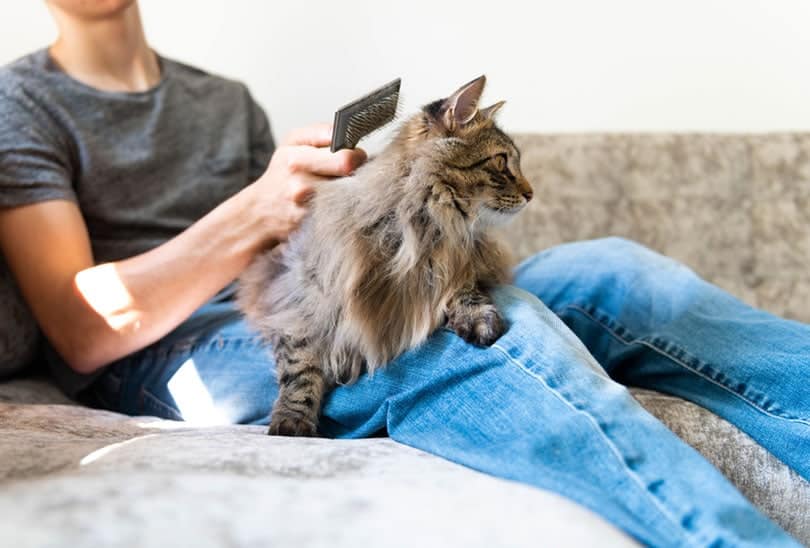
A brush or grooming glove can help keep your cat clean. Even if they do an excellent job of grooming themselves, regular brushing removes dirt, collects loose hair, and helps distribute oils throughout your cat’s coat.
If you brush your cat regularly, you will eliminate the need for frequent baths. Just be sure not to overbrush your cat. You're brushing too much if you notice the hair thinning in spots.
If your cat is prone to mats and tangles, use a de-matting tool or clippers if necessary. Removing the mats will keep dirt out of the coat. Don't use scissors since you could accidentally injure your cat.
While brushing, use this opportunity to clean your cat’s ears and check for signs of ear or eye infections. If their nails need to be clipped, this is the time to do it. If your cat will let you look in their mouth, check the teeth for any abscesses, redness, swelling, or decay.
Final Thoughts
Cats don’t need frequent baths because they do a good job keeping themselves clean through grooming. A bath is necessary sometimes, such as if your cat gets very dirty, is covered in a greasy substance, or is otherwise unable to groom themselves.
Bathing your cat without water can be a stress-free experience for you and your cat once you have the right products. We hope this guide has given you a few ideas on how to make your cat’s next grooming experience a positive one.
See Also:
Sources
Featured Image Credit: stockelements, Shutterstock

Expert cat care, straight to your inbox
Vet-reviewed advice, behavior tips, and the best of Catster. Free, and you can unsubscribe anytime.
By signing up, you agree to our Terms & Conditions and Privacy & Cookies Policy.
Christian started writing for a local newspaper as a teenager, and he's been involved in the publishing industry for most of his adult life. Combining his love of writing with a passion for animals, he is currently the Director of Editorial at Pangolia and the Editor-in-Chief at Catster.
Christian lives in the Philippines with his wife, son, and four rescue cats: Trixie, Chloe, Sparky, and Chopper.
Join the conversation
Ask a question, share your story, or send private feedback.