Get

In Your Inbox

Catster is reader-supported. When you buy via links on our site, we may earn an affiliate commission at no cost to you. Learn more.

Cat Lice vs Fleas: Vet-Reviewed Key Differences

Share

Lice VS Fleas

Sooner or later, every pet owner will find tiny bugs crawling on their pet’s skin. But are they fleas or cat lice? It can be hard to tell the difference between the two small pests.

Therefore, this article will teach you everything that you need to know about cat lice and fleas. With either one, an infestation on your cat is an issue that needs to be taken care of to get your pet back to optimal health.

divider cat paw scratch oct 2024

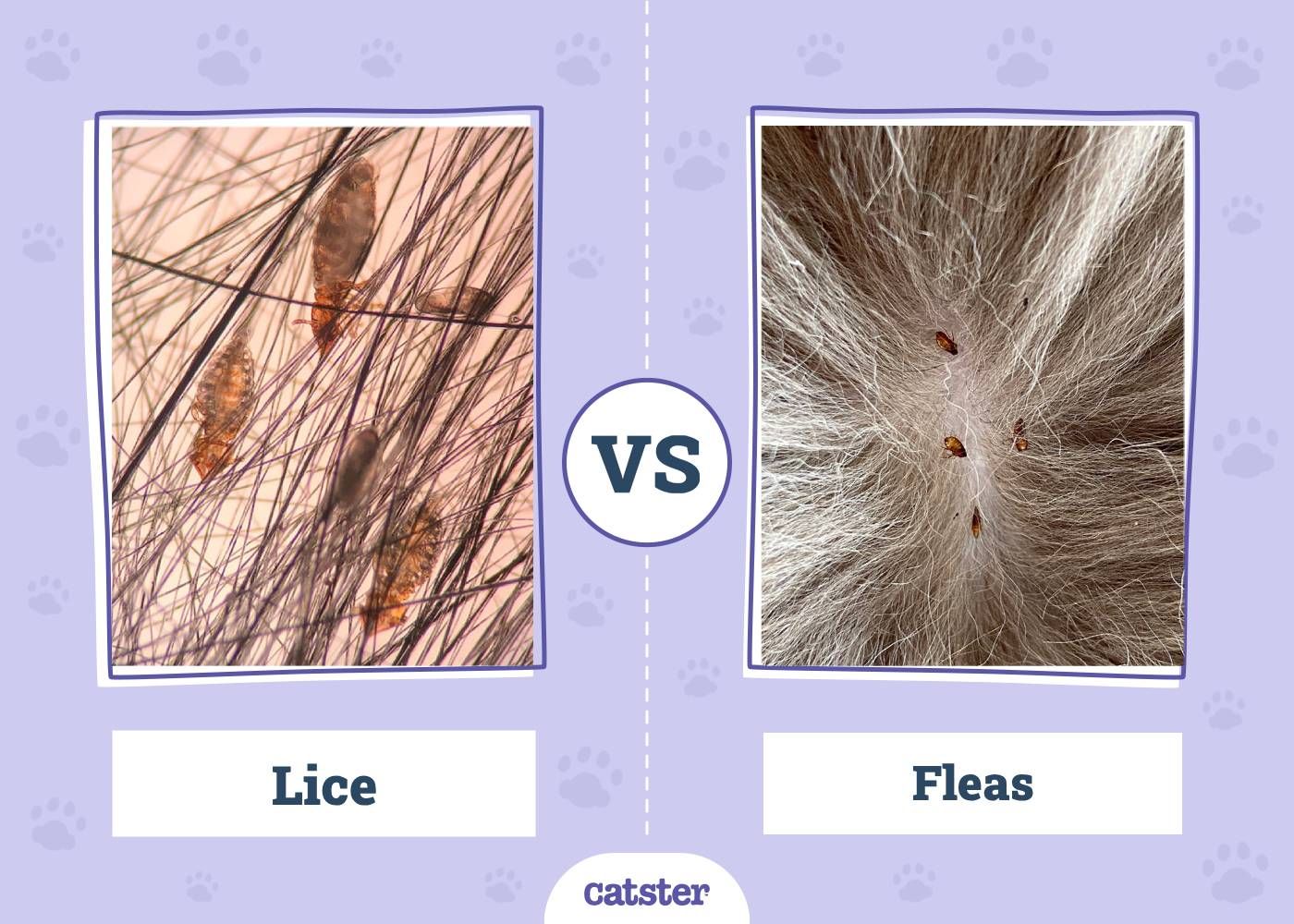
Visual Differences

side by side Lice VS Fleas
Image Credit: Left – Ferdinand Roy Karaeng, Shutterstock | Right – Vera Larina, Shutterstock

At a Glance

Cat Lice
  • Size: 1–2 mm
  • Lifespan: 1–2 days without a host, 4 weeks total
  • Body Shape: Oval
Fleas
  • Size: 1.5–4 mm
  • Lifespan: 12–14 days, up to 350 days
  • Body Shape: Flattened oval

divider cat paw scratch oct 2024

Cat Lice Overview

Cat lice are small flightless insects. They live on the hair or feathers of animals and people. There are a few different types of lice, but the cat louse (Felicola subrostrata) is similar to the one that humans can get. Cat lice chew and bite and are usually seen on older cats with longer hair. Poor grooming habits increase your cat’s chance of contracting them.

Cat lice prefer to live in environments where they have access to skin and hair. They move from host to host through direct contact. They are more common in the colder months, and their numbers dwindle during the summer.

Cat lice have claws on their legs that help them cling to the hair. The females glue their eggs to the host’s hair close to the skin, and regular shampooing will not remove the eggs. It takes roughly 3 to 4 weeks for eggs to mature into adults.

Signs

Your cat might not seem too agitated if they have lice. Because of this, it can sometimes be hard to diagnose the problem on your own. A heavy lice infestation could make your cat look scruffy and unkempt. They might also experience excessive scratching that leads to raw and bald patches. You might notice small white dots, or eggs, on the fur.

Treatment

You will not be able to treat cat lice with home remedies or store-bought solutions. Getting rid of cat lice requires a trip to the vet for prescription topical preventions that are effective at killing lice. Don’t forget that you will need to wash all soft objects in hot water to kill any eggs lingering around the house. Fortunately, with the widespread use of monthly flea-and-tick preventions, lice infestations are now fairly rare in cats and dogs.

If you have a question about your cat's health or behavior, why not Ask a Vet for Free with Catster. Our veterinary team answers reader questions and provides trusted advice to help you better understand your cat.

askavet on catster

divider cat paw scratch oct 2024

Fleas Overview

Fleas are small, wingless insects. They feed on animal blood and aside from being a nuisance, can transmit diseases and cause allergies and anemia. There are over 2,200 flea species around the world. The two most common types are the cat flea (Ctenocephalides felis) and the dog flea (Ctenocephalides canis).

Cat fleas start reproducing roughly 1 to 2 days after a blood meal. Once they’ve found a host, the females lay eggs while feeding on the surface of the cat’s skin. A single female flea can produce 50 eggs per day, or 2,000 in her lifetime.

Flea eggs are oval-shaped with a pearly white color. The eggs often drop onto bedding or carpeting and hatch within 1 to 6 days. Freshly hatched flea larvae are free-moving and feed on organic debris in their environment until they are fully developed and can find a host.

Signs

It can be a little hard to tell if your cat has fleas or not. Here are some of the most common signs that your cat has fleas:

  • Increased scratching
  • Bald spots or hair loss
  • Skin irritation
  • Excessive grooming
  • Lethargy
  • Pale gums
  • Black specks in cat’s fur or bedding

Treatment

There are various ways to treat cats for fleas. Your vet will either give you a topical or internal application. Here are the most common types:

  • Flea powders
  • Flea sprays
  • Flea collars
  • Topical flea treatments
  • Oral flea medication

That said, the most effective flea preventions and treatments are ones prescribed by your vet versus those available over the counter.

divider cat paw scratch oct 2024

What Are the Differences Between Cat Lice and Fleas?

The biggest difference between cat lice and fleas is that lice burrow into parts of the body, while fleas are mainly on the surface. Fleas are able to jump higher and are much quicker than lice. Lice bites are much less painful than flea bites.

Lice and fleas are both small, wingless insects that consume blood from their hosts. Lice mainly live on hairy parts of the body, and fleas tend to stay in areas of warmth, like armpits and ears.

Fleas are larger than lice and have a much longer lifespan. While they are both oval-shaped, a flea has a flatter body and is a dark reddish-brown color rather than a gray color.

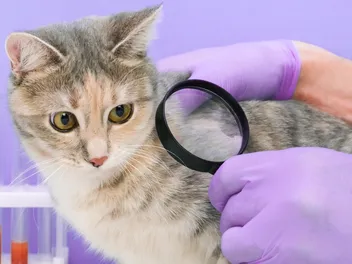
vet holding magnifying glass searching cat fleas over a grey and orange cat
Image Credit: lev.studio, Shutterstock

divider cat paw scratch oct 2024

Final Thoughts

Trying to tell the difference between two tiny insects can be a challenge. But in the end, both cat lice and fleas can cause discomfort or be dangerous to your cat. Even if you can’t tell the difference between the two, you need to take your pet to the vet so they can get treated with proper medicines or ointments. The sooner you fix the problem, the sooner your feline friend will be back to feeling and looking their best.

See also:


Featured Image Credit: Left wimala namket, Shutterstock | Right – KanphotoSS, Shutterstock

Want content like this delivered to you?

Sign Up For Our Newsletter

News, insights, expert advice, and everything cat

* By submitting, you agree to our Terms & Conditions and Privacy & Cookies Policy.


How useful was this post?

Click on a star to rate (you can leave written feedback after clicking submit)

Help us improve Catster for pet parents!

Your feedback really matters.

What did you like about this post? Also how can we improve it?

Join the conversation

4 Responses

    1. You are welcome. You might find this post helpful: https://www.catster.com/cat-health-care/best-flea-treatments/

  1. Good learning curve for me, thank you but still not sure if my cat has fleas or lice?
    Guess the same expensive treatment?
    Thanks, Alan.

    1. Hi Alan, a vet can help you identify them, and they can also recommend a treatment, as not every medicine covers both parasites.

Leave a Reply

You’re very welcome to leave a comment or question. Please know that all comments must meet our community guidelines, and your email address will NOT be published. Let’s have a positive and constructive conversation.


Catster's Digital Magazine is Back!

Vet-approved health & behavior advice

Real cat stories & community features

Ask Dr. Paola – My Cat Loves Eating Grass, But It Makes Her Vomit! (June 29, 2026)

Welcome to our “Ask Dr. Paola” series, where every Monday we bring expert advice straight from Dr. Paola Cuevas (MVZ) to help our...

Learning to Speak Cat with Anthony Smith

Many cat lovers know me through Learn to Speak Cat and Cattitude – Doggonit, cartoons that explore the often mysterious, occasionally mischievous, and...

Weird Cat Behaviors That Actually Make Perfect Sense

We have been sharing our lives with cats for thousands of years, yet we still find ourselves genuinely stumped by what they get...

The Dream of Talking to Cats Just Got Closer to Becoming a Reality

If you’ve ever wished your cat could simply tell you what they wanted, you’re not alone. From the meow that wakes you before...

More related

So Phresh Cat Litter Review of 2026: Recalls, Pros & Cons

Review Summary If you’re looking for an effective cat litter brand at an affordable price, it’s worth taking a look at So Phresh....

Cat Shock Collars: How They Work, Safety Advice & Alternatives (Vet-Reviewed)

Several products are available to train pets, but the shock collar is one of the most controversial. It’s a device more commonly associated...

How Long Does Catnip Take to Kick In? Effects & Tips (Vet-Verified Info)

Many cat owners have witnessed the effects of catnip on their feline companions, and most people agree it’s pretty entertaining. Catnip (Nepeta cataria)...

Why Can’t My Cat Meow? 9 Vet-Verified Causes & When to Worry

While some cats can be very vocal, others rarely utter a word. However, if your cat has lost their voice and is letting...

Keep reading

Why Does My Cat Stare at Me While I Sleep? 6 Vet-Reviewed Reasons

Most cat owners can recount waking up on at least one occasion with their cat staring straight at them. It can be uncomfortable, especially if you wake up to direct eye contact. But what is your cat trying to say?...

Adorable furry cat of seal lynx point color with blue eyes

7 FIV in Cats Vet-Approved Facts You Might Not Know About

Feline immunodeficiency virus (FIV) is a common and serious infection in cats worldwide. This lentivirus, which weakens the cat’s immune system, is similar to the human immunodeficiency virus (HIV) responsible for AIDS in humans 1. Although cats with FIV may...

woman holding her cat in vet clinic

Why Can’t My Cat Meow? 9 Vet-Verified Causes & When to Worry

While some cats can be very vocal, others rarely utter a word. However, if your cat has lost their voice and is letting out a rasp or a squeak or isn’t managing to make any noise whatsoever, it could be...

Cat lying down turning its ear while staring at the camera

What’s the Price of Spaying or Neutering a Cat in the UK (2026 Costs)

Getting your cat spayed (female) or neutered (male) is a common and important consideration when you’re a new cat parent. The price of spaying and neutering varies on your cat’s sex—the procedure is more expensive for female cats—and your location....

two cats lying on a pillow

Cats Are Obligate Carnivores: Vet-Approved Info & Feline Diet Facts

Cats are often called “obligate carnivores,” especially in reference to their diet. But what does this mean? In short, obligate carnivores are “true” carnivores that require animal meat in their diet for proper growth, development, maintenance, and reproduction. They’re made...

grey cat eating meat

Virtual Vet Visits: What to Expect & FAQ (Vet Verified)

Virtual doctor visits or telemedicine is a product of the pandemic and the restrictions it imposed. Nevertheless, virtual vet visits have stuck around and serve a purpose and have many benefits for pet owners, particularly for cats. Dogs often ride...

female veterinarian doing virtual vet visits

How to Trim the Nails of an Angry or Aggressive Cat (Vet-Approved Guide)

If you ask Mojo, the cat, about his favorite pastimes, nail trims would definitely NOT be on the list. Sleeping and eating are favorite pastimes, but nail trims are not. Mojo is a tough-looking former stray who now holds court...

Why Is My Cat So Obsessed With Water? 8 Vet-Reviewed Reasons & Tips

You might expect a cat to be obsessed with food—but water? Whether it’s drinking excessively, tipping the bowl over, splashing their paw around in it, or trying to get in the shower with you, some cats take a particular shine...

cat drinking from cat water fountain

Love Cats? So Do We! Join the Catster Community

Stay informed with expert pet care insights delivered straight to your inbox! Discover professional guidance on animal behavior, feeding tips, trusted product picks, and much more.


Sign up for the Catster Email Newsletter

Stay informed with expert pet care insights delivered straight to your inbox! Discover professional guidance on animal behavior, feeding tips, trusted product picks, and much more.