How to Keep Cats Off Kitchen Counters: 10 Effective Vet-Approved Tips & Tricks


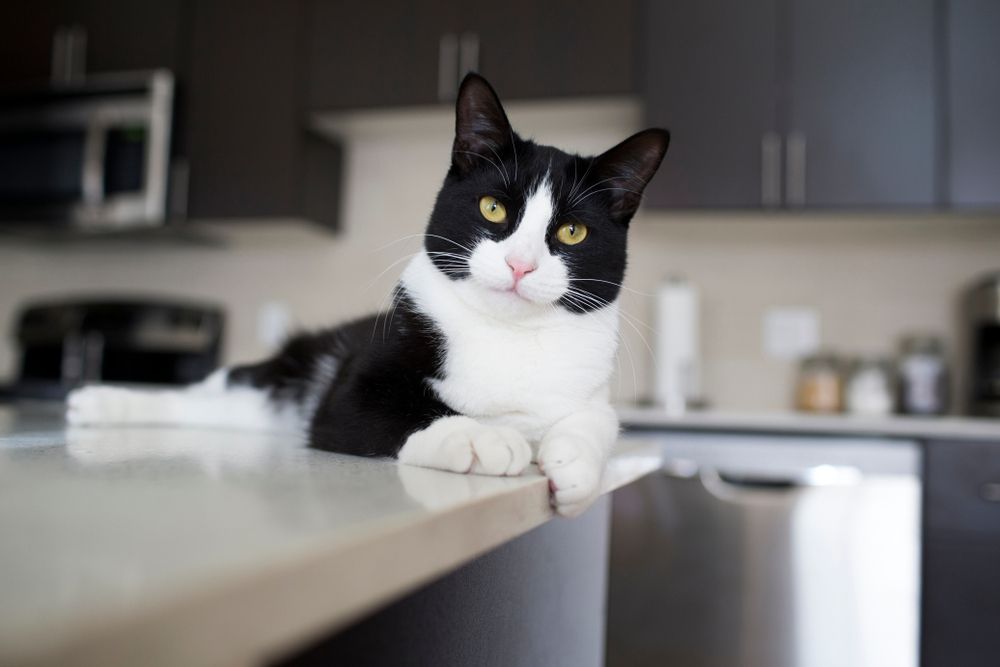
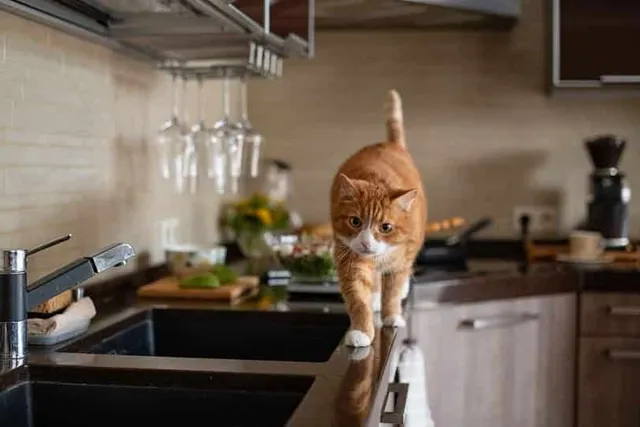
Cats are curious creatures that love to explore their surroundings. However, this sometimes means that they get into things that they shouldn’t or end up in strange places, though most often, it means they won’t stay off the kitchen counters. When your cat constantly climbs on your countertops, you're forced to constantly clean them for sanitary reasons.
If you are looking for ways to keep your cat off your kitchen counters, we have advice here that might save you some trouble!

The 10 Ways to Keep Cats Off Kitchen Counters
1. Remove Your Cat’s Temptations
Oftentimes, your cat wants to get on the counters because something up there is enticing them. If there is food on the counter, they will try to get it. If they can get it, they will feel satisfied for jumping on the counter and will continue to climb onto your counters.
Wipe down your counters after every meal, and promptly remove any ingredients when cooking. If any food needs to absolutely be kept on the counters, cover it with plastic wrap or place it in a container. The sooner that your cat learns that they cannot get to any food from your counters, the less eager they will be to jump up there.
Do note that plastic wrap is definitely something that a cat can work their way through. Leaving your food covered in plastic wrap will not guarantee that your cat can’t access it.
2. Reward Your Cat’s Desired Behavior

If your cat is obsessed with climbing onto high places, it will be hard to discourage them from jumping onto your countertops. In this instance, instead of trying to discourage this behavior, try encouraging the behavior that you do want to see.
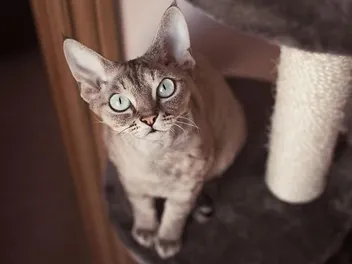
Purchasing a cat tree and placing it in another room may provide your cat with an alternative outlet to curb their jumping curiosity. If they spend time on their tree, consider rewarding them with a treat every now and then in an attempt to reinforce the behavior.
3. Avoid Punishing Your Cat
Punishment is not a good way to handle misbehavior in cats. Cats do not respond to it because they do not understand that their behavior is causing the punishment. Punishing your cat comes with undesirable consequences too, as it can instill fear in your cat and make them distrust you. They may become wary of doing normal tasks, such as using their litter box, which could cause them to go to the bathroom outside of their litter box.
Punishment shouldn’t be confused with a quick correction, which cats can respond to. However, a correction is best if it’s verbal (a stern “no) and done within 3–5 seconds of the undesired behavior. If you wait too long, your cat won’t be able to figure out what they’re being given corrections for.
4. Play With Your Cat Often

If your cat is a more energetic sort, they may be climbing on your counters due to excess energy. Setting aside time to play with them each day can help burn energy and keep them from jumping up to places they shouldn’t.
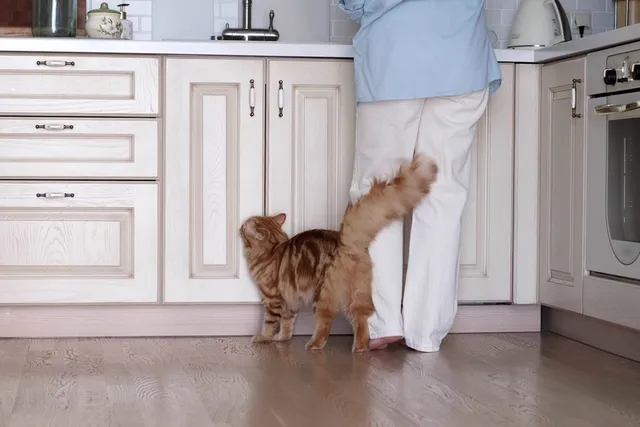
Likewise, if your cat is feeling neglected, they may jump on counters when you are using them in order to try to get your attention. Playing or otherwise spending time with them will help them feel less neglected.
5. Offer Another Outlet for Your Cat’s Climbing
While trying to keep your cat off the counters, don’t forget that it is in their nature to find high places. Cats will seek high spaces on instinct, and your counters often fall into that category. Your cat will almost always want to climb, so instead of trying to prevent the behavior, why not offer them an outlet?
If you can invest in a cat tree, a catio, or another structure that your cat can climb on, then you can begin rewarding them for climbing on these rather than on the counters. That way, it’s a win-win for both of you!
6. Make Sure You Don’t Have a Faucet Leak

Food on the counter may not be the only thing drawing your cat to jump up there. If your cat can access water from the sink, that may also be part of the reason.
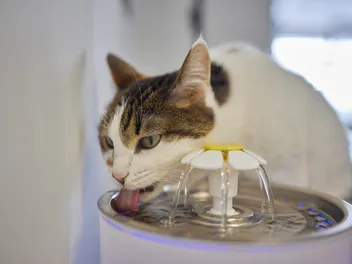
A leaky faucet may be encouraging your cat to climb your countertops for a drink of fresh water (or just out of sheer curiosity). The best way to limit this behavior is to fix the leak. However, don’t stop there. Ensure that your cat’s water bowl is clean and accessible. If anything is making your cat’s water bowl undesirable, they may not be getting enough water. Consider investing in a stainless-steel water fountain, and refill the water often..
7. Keep Chairs Out of the Way
If your cat uses chairs or another piece of furniture to access the counters, try moving them away from the counter for a while. Don’t worry about reorganizing your entire house: this should be a temporary move, as a prolonged period of separation may be enough to break your cat’s counter-hopping habit. If your cat returns to their habit soon after removing the chairs, try again until the habit is officially broken.
It is worth mentioning that healthy adult cats who aren’t overweight and don’t have issues with their limbs (such as arthritis) can often easily jump onto a counter, even without the assistance of a chair or other perch.
8. Close the Blinds

Like food and water, your cat may be jumping on the counters because it gives them access to the sunshine. If there is a window by your counter, close the blinds to make the countertops less enticing.
Similarly, if your cat has a good view of the outdoors from your countertops, they may be inclined to jump up there to watch the outdoor world. Closing the blinds can discourage this habit.
If there is another spot where your cat could enjoy the sunshine or the view, such as a window ledge or a couch, consider opening those blinds for them so they will be more interested in being there than on your counters.
9. Place Deterrents on the Counters
If you have tried everything you can to encourage your cat to find an outlet elsewhere, but nothing seems to work, you may want to consider humane deterrents. An example is filling up empty bottles with some coins and placing them on the counter where your cat likes to jump. The cat may knock them over and the sound may deter your cat from attempting to re-engage in this behavior.
10. Use a Physical Barrier
Sometimes, you may not have the time or patience to train your cat. You might also be wondering if your cat only behaves in your absence and jumps on top of counters in your absence (with their litter paws!)
The most practical long-term solution is to set up a physical barrier that doesn’t allow your cat into your kitchen. Though this sounds extreme, it’s often a good investment, as the kitchen is a particularly dangerous place for cats.
The risk isn’t just that your cat jumping onto a counter is unhygienic, but it’s also dangerous for your cat! They may cut themselves on a sharp object or eat something toxic. As such, the peace of mind a barrier provides is often worth the investment involved in installing it.
Conclusion
A cat’s curiosity is a lovable trait, but that doesn’t mean it can’t cause trouble from time to time. If your cat has declared themselves the ruler of the countertops, try any number and combination of these tips and tricks to redirect the behavior. We hope that you have found this list helpful and that your counters will remain cat-less in the future!
Featured Sarah McGraw, Shutterstock
Expert cat care, straight to your inbox
News, insights, and useful advice, delivered to you.

No spam — unsubscribe anytime.
By signing up, you agree to our Terms & Conditions and Privacy & Cookies Policy.
How useful was this post?
Click a star to rate. You can leave written feedback afterwards. (We read all feedback.)
Cats are Jordyn’s passion. Whenever she has the opportunity she loves to learn about animals and share her knowledge with everyone. She is devoted to her sassy tabby cat named Jack and works hard to buy him his favorite treats and toys. Discovering new ways to better care for her cat is always on her to-do list, and she is eager to help pet parents everywhere. In Jordyn's spare time, she loves to write, read, and take long walks. She has a creative spirit, which often helps her to come up with funny cat names.