Cats and Countertops: What Olga Gets Away With
Hi, I’m Christopher! Read my introduction to learn more about me and my silly Russian Blue cat, Olga.
Due to their climbing and balancing skills, cats can explore several areas in their homes off-limits to canines. Dogs are undoubtedly irritated when they see their feline roommates casually strolling along on the countertops in the kitchen, but I’ve never allowed cats, dogs, or birds to access areas where I prepare food.
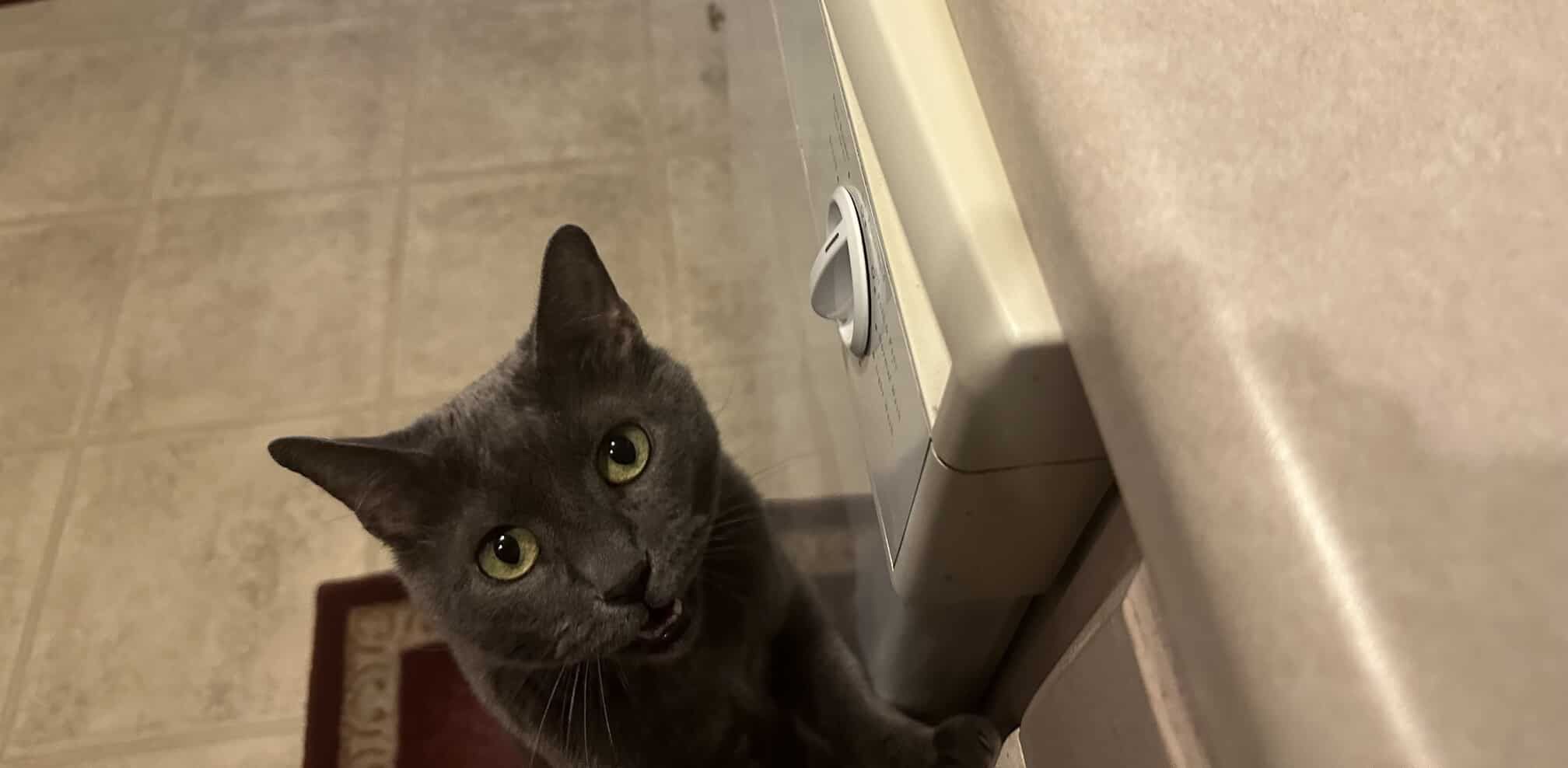
Unlike my previous cat, Olga hasn’t tried to leap on the counter, and luckily, she’s not as agile as a Siamese. However, she gets excited before mealtime, and when I’m opening a can of food or pouring kibble into a bowl, she stands on her hind legs with her front claws beneath the lip of the countertop and walks back and forth. She’s a quiet cat, but she belts out her cutest meows to encourage me to move faster with the food.


Playful Behavior
I haven’t trained Olga to stop scooting around with her claws on the counter's edge because it cracks me up. She looks hilarious, and it’s one of the few times, except for car rides to the vet’s office, when I hear her voice. After placing her food bowl on the floor, I always sanitize the counter. Since her claws only touch the bottom edge, they’re less likely to contaminate my food, but I don’t like taking chances regarding food safety.
Indoor Cats vs Outdoor Cats
Indoor cats like Olga don’t typically encounter decaying carcasses, fertilizer, pesticides, or feces from wild or stray animals in their homes. Some owners may think keeping their cats indoors makes them less likely to contaminate their kitchen when they jump on the counters.
Although that makes sense, indoor cats spend plenty of time in the litter box. After Olga digs around and covers up her waste, the last place I want her to jump is a clean counter I use to prepare food.
Safety Considerations
I have friends who allow their cats to eat and play on the countertop, but I think it’s a bad idea for several reasons. Besides the possibility of me getting sick from the litter box’s bacteria, I’m afraid Olga will get hurt if she jumps on the counter and lands on a chef’s knife or serrated bread knife. I don’t eat out often and usually make dinner at home, so I prep food on the counter every day.


Although I let her near the counter when I’m preparing her food, I keep her away when chopping vegetables, making dough, or working with ingredients like onions and garlic. Olga isn’t a picky eater, but since onions, garlic, and any species from the Allium family are toxic to felines, I keep her away from the kitchen when I’m prepping them.
Sometimes, the aromas from cooking are too much for her to ignore, and she runs into the kitchen and begs for a bite. It’s hard to resist the pleas of a primarily silent cat, but I say, “No!” and she walks away reluctantly. If your cat plays on the countertops, I suggest training them to explore other areas of your home.
The kitchen is dangerous, even for humans, and your gourmet meal will delight your family and friends even more when prepared in a sanitary environment.

This article is a part of Christopher and Olga's series.
Expert cat care, straight to your inbox
News, insights, and useful advice, delivered to you.

No spam — unsubscribe anytime.
By signing up, you agree to our Terms & Conditions and Privacy & Cookies Policy.
How useful was this post?
Click a star to rate. You can leave written feedback afterwards. (We read all feedback.)

Christopher Bays is a writer and editor with a soft spot for cats of all shapes and sizes. He enjoys researching and caring for Olga, an adopted Russian Blue mix who is always by his side while working. In his free time, Christopher enjoys gardening, writing short stories, listening to music, and hiking.