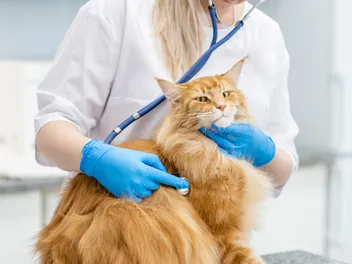
How Do I Give CPR to a Cat? Vet-Verified Step-by-Step Guide


In this article
Performing a feline cardiopulmonary resuscitation (CPR) is a procedure every veterinarian and technician master, but likely not every cat companion. CPR is used to maintain blood flow and oxygen delivery throughout the body when a cat’s heart stops beating. It involves compressing the cat’s chest to keep blood pumping and giving breaths to provide oxygen to the lungs. The good news is that it doesn’t require extensive medical training or advanced veterinary skills, but in an emergency, CPR can mean the difference between life and death for your cat.
It’s important to note that pet parents should learn how to perform it at a veterinary first aid course for higher chances of success. Additionally, it’s essential to know that CPR is not indicated for every collapsed cat and that it should never be performed on a healthy cat or a cat whose heart is still beating.
The process is most efficiently performed by two people: one to breathe for the cat and another to perform heart compressions. While CPR and assisted breathing can buy a bit of time until a veterinarian can see your pet, unfortunately, around 90% of cats that require this sort of intervention ultimately don't survive1. Read on for a step-by-step guide to doing CPR on a cat.

Preliminaries
Cats often don't recover if they've reached the point of requiring CPR at home. Therefore, don’t blame yourself for the heartbreaking event that your cat does not recover after needing CPR. In the meantime, it’s critical to do everything possible to prevent an avoidable emergency for your cat. Take the time to cat-proof your home. Remove plants like lilies that are toxic to cats, and install child locks on cabinets containing cleaning supplies or other hazardous items, such as essential oils, that your cat shouldn’t access.
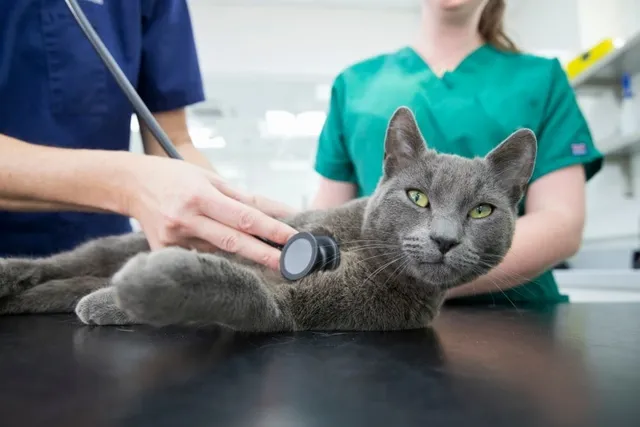
Ensure your cat receives regular veterinary care. Take your pet for routine wellness checkups—senior cats should be seen at least twice a year. Regular visits, along with blood work, urine tests, and blood pressure checks, are essential for detecting chronic diseases early.
Keep an eye on your cat’s overall health, and have them seen immediately if they show any signs of trouble breathing, lethargy, appetite changes, or seizures. Cats that are unwell and do not receive timely care often deteriorate further, potentially collapsing or losing consciousness if the underlying condition is left untreated. Late detection of feline diseases frequently results in fewer treatment options and a higher risk of mortality.

But even if you do everything you can to ensure your cat remains safe and healthy, a situation may arise in which you need to provide CPR. But before you begin CPR, assisted breathing, or any other medical intervention, you first need to determine if your cat is unconscious but breathing or unconscious and no longer breathing on their own.
If your cat is unconscious but breathing on their own, take your pet to the emergency veterinarian for diagnosis and treatment. If your cat isn't breathing on their own, but their heart is beating, assisted breathing might be all that's required. CPR with assisted breathing may be needed if your pet has stopped breathing and their heart is no longer beating. To determine if the cat is breathing, look at the animal's chest to see if there's movement. Put your ear close to your cat's nose to hear faint breath sounds better. Below you'll find the steps involved in feline-assisted breathing and CPR.

How to Give CPR to a Cat
Before attempting CPR on a cat, it’s crucial to ensure you are in a safe environment where you won’t be at risk of harm. Never start CPR if you’re in an unsafe scenario. CPR can be a life-saving intervention, particularly if a cat’s heart has stopped due to a sudden and specific incident like drowning, electrocution, or choking. However, if the cat has suffered severe trauma or their heart has stopped due to a serious medical condition, the chances of success are very low, and attempting CPR might not be the most humane course of action. Always assess the situation carefully before deciding to proceed.
1. Remove Any Airway Obstructions
Open your cat's mouth and take a good look inside. To ensure your pet's airway is clear before you begin assisted breathing, use your finger to remove any obvious obstructions. Bring your cat's tongue to the very front of their mouth and use your hand to close their jaw.
2. Breathe Into Your Cat's Nose
Straighten your cat's neck to open the passageway from your cat's nose to their lungs. While keeping your cat's mouth shut with your hand, form an airtight seal with your mouth around their nostrils and breathe in. Blow gently into your cat’s nose to provide two rescue breaths, one after the other, each lasting about one second. You should see your cat’s chest rising with each breath, otherwise, reposition the head and your hands and try again.
3. Determine If You Need to Begin Chest Compressions
If your cat still doesn't have a heartbeat after the first round of assisted breathing, consider administering chest compressions. Ideally, you'll be able to quickly find someone willing to help, as administering CPR and performing assisted breathing simultaneously requires two people.
4. Begin Chest Compressions
To perform CPR on your cat, lay your pet on their side, squeeze your thumb and fingers together encircling their chest with your hand, and press rhythmically—aim for around 60 compressions per minute or two per second. You'll want the chest to decrease by about ⅓ during each compression. Use gentle but firm pressure to ensure sufficient compression.
5. Continue Assisted Breathing
Alternate chest compressions with assisted breathing. You should give two breaths after 30 chest compressions, and you will do this continuously until your cat starts breathing on their own. However, you will stop every 2 minutes to check if your cat shows any signs of recovery. Therefore, you will repeat 4 times the following CPR cycle: 30 chest compressions and 2 breaths, and then stop to check your cat. It's best to perform feline CPR with two people—one who can concentrate on heart compressions and another to provide assisted breathing. Delivering compressions can actually be quite fatiguing, so it helps to have a second person who can step in. Compressions should be counted aloud to facilitate chest compression and assisted breathing coordination.
6. Check For a Heartbeat
Every two minutes monitor your cat’s condition for signs of improvement, such as gasping, breathing, beginning to move, or regaining consciousness. If this occurs, stop CPR and take them to the nearest vet immediately.
7. Switch Places to Avoid Fatigue
Switch places every 2 minutes with your fellow first-aid colleague to fight fatigue and ensure your pet receives the support they need until veterinary assistance becomes available.
8. Know When to Stop
Despite your best efforts, there are times when CPR may not lead to recovery. If you have been performing CPR for 20 to 30 minutes without any signs of improvement, it might be time to stop. While this can be a hard reality to face, many cats won’t respond to CPR, particularly if they have endured extended periods without oxygen.

Conclusion
Unfortunately, most cats that require CPR don't survive even after they make it to the veterinarian. The best option is to take your cat to the veterinarian immediately if they start exhibiting signs of serious illness, such as difficulty breathing, seizures, lethargy, blood loss, diarrhea, or vomiting.
You can prevent chronic feline illnesses from sneaking up on you with regular veterinary checkups and blood tests to keep track of your pet's kidney and liver functions. Please don’t wait until there's a crisis at home before getting your cat the necessary medical care.
Featured Image Credit: Lebedko Inna, Shutterstock
Expert cat care, straight to your inbox
News, insights, and useful advice, delivered to you.

No spam — unsubscribe anytime.
By signing up, you agree to our Terms & Conditions and Privacy & Cookies Policy.
How useful was this post?
Click a star to rate. You can leave written feedback afterwards. (We read all feedback.)
Lorre Luther is a writer who is firmly convinced that cats are smarter than humans. She left her law career in the United States and moved to the Netherlands to follow her dream of becoming a writer. Lorre currently lives in Rotterdam, she enjoys traveling and greatly appreciates the beauty of nature. Lorre has a spot for animals and admires the intelligence of cats.