Chimera Cat: Vet-Verified Facts, Info, Pictures & History


In this article
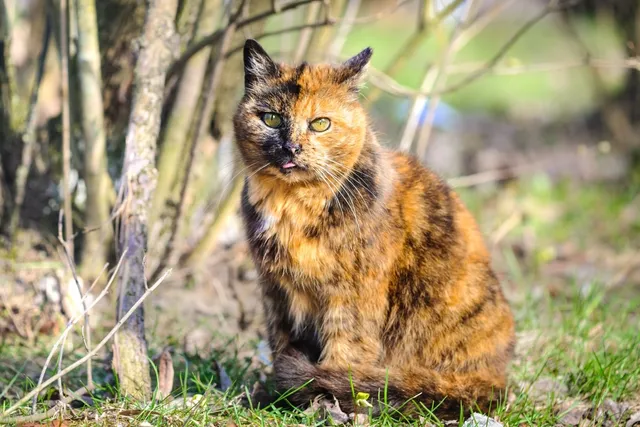
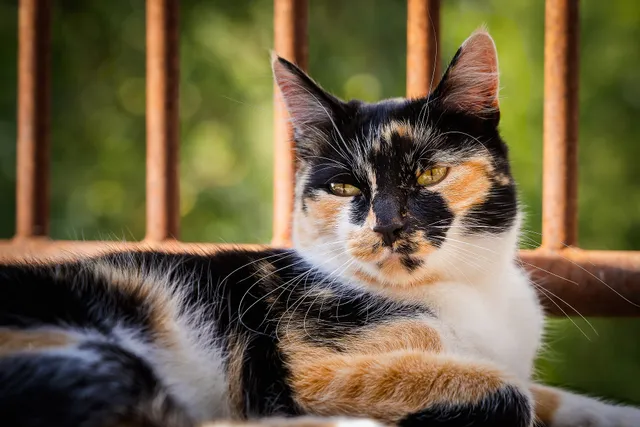
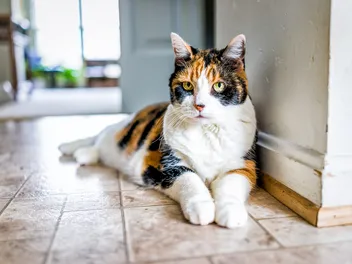
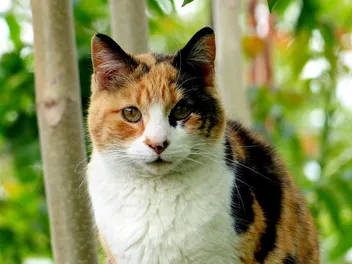
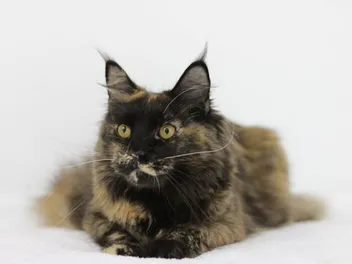
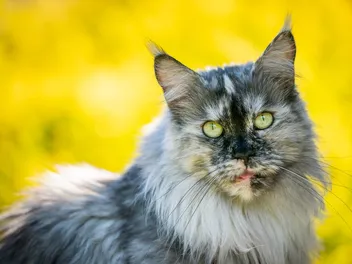
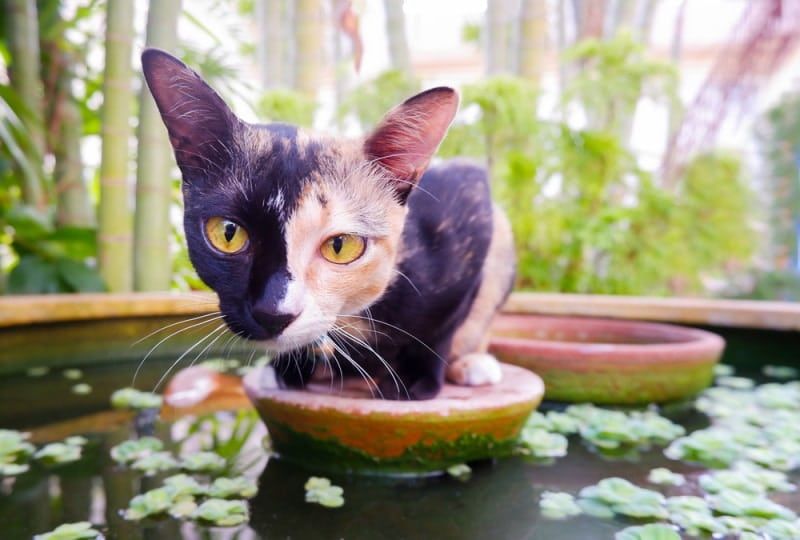
A chimera cat has two distinct coat colorings on their body. Many have a divide along their faces, where each half of the face sports a distinct color, appearing like two cats sharing the same face.
A chimera cat results from two embryos merging in their mother’s womb in the early stages of development. This results in a single cat carrying two sets of DNA instead of one. Physically, the different genes manifest through coat color and eye color. However, not all chimera cats can be identified through these physical traits, and not all cats with two distinct colors are chimeras.

The Earliest Records of Chimera Cats in History
Chimera cats are named after the chimera creature of Greek mythology, a fire-breathing monster with body parts from different animals. It usually consists of a lion’s body, a goat’s upper body protruding from its back, and a serpent’s head for a tail.
While chimera cats bear no resemblance to this monster, their genetic makeup and mixed physical characteristics make it a suitable name. Since they begin as two different embryos but end up as one cat carrying two sets of DNA, they can be viewed as two animals sharing one body.
Note that chimerism exists in other animals, such as dogs and donkeys. It’s also a genetic occurrence in humans, often when an embryo in the womb absorbs DNA from its twin. However, chimera cats are more common compared to other animals.

How Chimera Cats Gained Popularity
Chimera cats gained popularity due to their distinct look that sets them apart from other felines. This is especially true with chimera cats whose colors are divided equally on their faces. There are a few celebrity chimera cats online, contributing to the rising popularity of these felines.
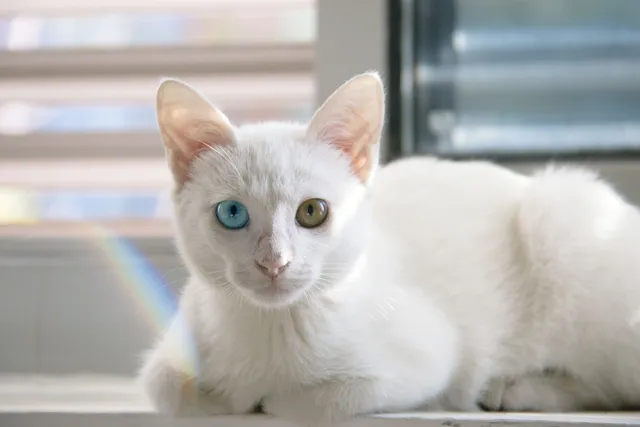
The most popular chimera cat is named Venus. She has a two-colored face, with one side sporting black and the other orange. Also, she has different colored eyes: one blue and the other green. Not all chimeras have heterochromia like Venus, but the condition further enhances the split-face trait of these cats.
Another popular chimera cat is Quimera, who has the same black and orange coloring on her face as Venus. Quimera also has different colored eyes (one green and the other blue). Narnia, a famous chimera feline with no heterochromia, has a black and pale blue face and blue eyes.
Personality & Traits of a Chimera Cat
When most people think of owning a chimera cat, they are driven by their admiration for their rare beauty. They may fail to realize that chimeras have unique personalities, like every other cat.
Chimera cats occur due to an unusual phenomenon when they are embryos in their mother’s wombs. This can happen to a cat of any breed; hence, no personality type can be attributed to all Chimera cats.

What Else Can Cause Unusual Color Combinations?
There are three ways that a cat can end up with seemingly impossible color combinations. The first of these is a chimera. This embryo fusion can result in an XY/XY genotype if two male embryos fuse, XX/XX if two female embryos fuse, or XY/XX if both male and female embryos fuse. Chimeric cats are often fertile, contrary to popular belief.
The second is XXY cats (Klinefelter syndrome in humans). This is a chromosomal condition characterized by an additional chromosome, and the cats are usually sterile. Additionally, they often have other health problems and may have a shortened lifespan. Lastly, a somatic mutation (mosaic) is when one cell within the embryo mutates to produce a different color, which is a seemingly impossible color combination.
Top 4 Unique Facts About Chimera Cats
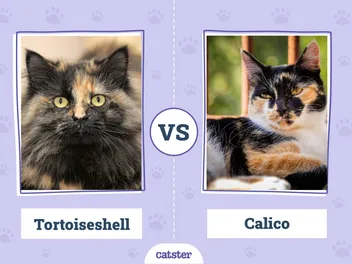
1. Most Tortoiseshell Male Cats Are Chimeras
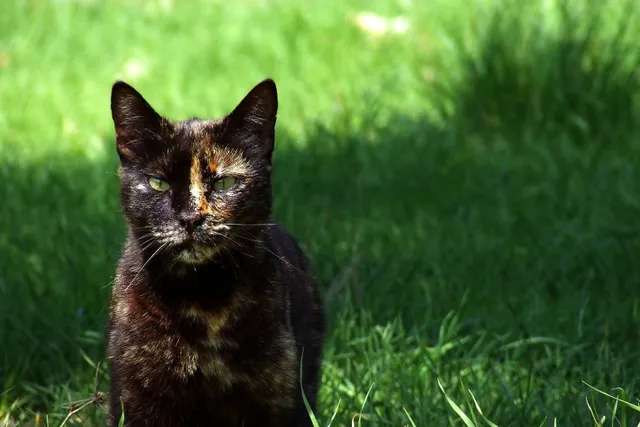
Male tortoiseshell cats are rare; there is only one male tortoiseshell cat in every 3,000. On the rare occasion that a male tortoiseshell cat is born, they're most likely a chimera.
Normally, male cats only contain one X chromosome and one Y chromosome. The X chromosome can carry either the black or orange color associated with tortoiseshell cats, so male cats can only have one of the colors. However, when a male embryo fuses with a female embryo in the womb, he gets an extra X chromosome, enabling him to acquire a new coat color. In the process, he becomes a tortoiseshell and a chimera.

2. Chimera Cats Can Have Two Blood Types
The characteristics of chimera cats go beyond their visible physical characteristics. The presence of two sets of DNA in their bodies can also be found in their blood, where they have two blood types.
This duality extends to their body organs; some organs will have a different genetic makeup than others. DNA tests that reveal differences in the genetic makeup of a cat are the perfect way to identify a chimera.
3. Any Cat Breed Can Be a Chimera
Chimeras are not a breed. They result from two embryos fusing in the womb, which can happen to any cat.
4. Chimera Cat Breeding Is Almost Impossible
Since chimeras are not a breed, purposely breeding them is very difficult. Often, a mother cat will have several embryos when pregnant, birthing multiple kittens.
During their development, some embryos may fuse, resulting in a chimera. This genetic occurrence is out of breeders' control and cannot be brought about by selectively breeding cats.
Does a Chimera Cat Make a Good Pet?
Chimera cats can make good pets like any other cat. However, your experience with a chimera cat depends on several factors determining whether they are a good fit for you and vice versa.
To find a chimera feline that’ll be an ideal pet for you, consider their breed and upbringing and your family composition and home. Chimera cats have the same average lifespan of about 16 years as other cats. Therefore, if you want one, consider your ability to commit to their long-term care.
Appearance-wise, do you want a shorthaired cat or a longhaired one? This is crucial for grooming and maintenance. Attitude-wise, do you want a playful cat or one that’s calmer? If you have kids in the family, going for a playful chimera is more suitable.

Conclusion
Chimeras cats are unique, not only in their appearance but also because of the process that leads to their appearance. They deserve the same care, attention, and love as their fellow cats.
If you want to adopt a chimera cat, look for one in a rescue center or shelter, since there are no Chimera breeders. Beware that they often come at a higher price than other felines due to their rarity and coveted appearance.
Featured Image Credit: Valeriana002, Shutterstock
Expert cat care, straight to your inbox
News, insights, and useful advice, delivered to you.

No spam — unsubscribe anytime.
By signing up, you agree to our Terms & Conditions and Privacy & Cookies Policy.
How useful was this post?
Click a star to rate. You can leave written feedback afterwards. (We read all feedback.)
Christian started writing for a local newspaper as a teenager, and he's been involved in the publishing industry for most of his adult life. Combining his love of writing with a passion for animals, he is currently the Director of Editorial at Pangolia and the Editor-in-Chief at Catster.
Christian lives in the Philippines with his wife, son, and four rescue cats: Trixie, Chloe, Sparky, and Chopper.