Get

In Your Inbox

Catster is reader-supported. When you buy via links on our site, we may earn an affiliate commission at no cost to you. Learn more.

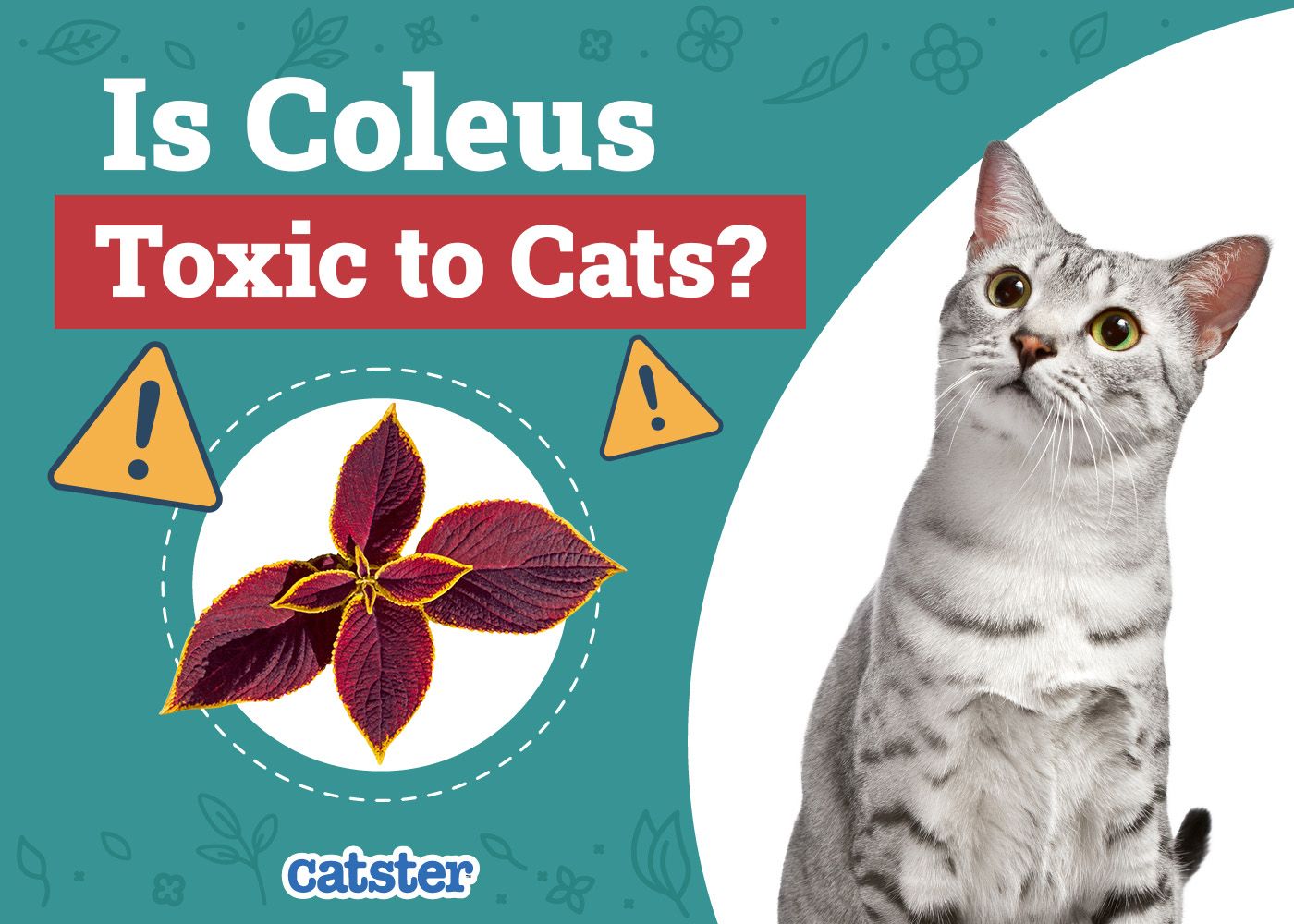
Is Coleus Toxic to Cats? Vet Approved Advice

Share

Catster_Is Coleus Toxic to Cats

Even if you don’t know it, you probably have seen beautiful coleus plants in people’s homes and gardens. These colorful plants are common staples because of their beauty, but that doesn’t mean they’re completely safe for cats. So, is coleus toxic to cats? The oils in coleus leaves can indeed be dangerous to cats, and it’s important to watch your cats to prevent poisoning.

divider cat paws oct 2024

What is Coleus?

Potted-painted-nettle-Coleus-Blumei-Velvet-plant-in-flower-pot
Image Credit: Firn, Shutterstock

Coleus amboinicus is a common indoor and outdoor plant known by many names. It’s recognizable for its serrated, teardrop-shaped, or almond-shaped leaves that are bright and showy. Many varieties of coleus have patterns of purple, yellow, and green on their leaves that make them stand out in a garden.

The plants can be indoor or outdoor and annual or perennial, depending on your climate and home. It’s also common to “overwinter” coleus plants, planting them outdoors for most of the year and transferring them to indoor pots during the coldest months.

Common names for Coleus plants:
  • Bread and butter plant
  • Country borage
  • East Indian thyme
  • Indian borage
  • Spanish thyme
  • Stringing thyme

Causes of Coleus Poisoning in Cats

Coleus is known for its beautiful leaves, but it also produces an irritating essential oil that can cause poisoning in people, cats, and dogs. Contact poisoning happens when the skin comes into contact with coleus. It’s less common in cats because of their protective fur coats, but it can still occasionally occur.

Signs of Coleus Poisoning in Cats

The signs of Coleus poisoning differ based on whether your cat ate the Coleus or just came into contact with it.

Signs of contact poisoning include:
  • Rash
  • Redness
  • Irritation
  • Itchy or painful skin

You might also see the signs on your cat’s tongue, gums, and lips, along with excessive drooling if your cat nibbles on the coleus or grooms after getting the oils on their fur.

Gastrointestinal irritation occurs when your cat eats coleus as well. This happens when the oils in the plant irritate the digestive system.

It can include:
  • Vomiting
  • Diarrhea
  • Stomach pain
  • Occasionally bloody stool or vomit

According to the ASPCA, depression and anorexia are also possible signs of coleus poisoning.1

You might not always notice right away if your cat has consumed something they shouldn’t have. It is important to watch your cat’s behavior afterward to see if they are showing any symptoms of irritability or poisoning.

divider cat paws oct 2024

Coleus and Essential Oil Poisoning in Cats

Essential oils are dangerous to cats, whether they are an irritant or not, since cats can’t process them. Some sources suggest that liver damage, difficulty breathing, or seizures are possible signs. Although cats are in danger from all types of essential oil exposure, we couldn’t find reliable sources linking the oils in coleus to these more extreme reactions.

sick grey tabby cat
Image Credit: chie hidaka, Shutterstock

Prevention and Treatment

If you own indoor coleus plants, keep them out of reach of cats. Because most cats aren’t particularly interested in coleus when given the choice, outdoor plants are usually safe unless your cat shows a special interest in them.

Most of the signs of coleus poisoning are mild, and most gastrointestinal reactions and skin irritation can be monitored at home. However, if your cat eats several leaves of the plant or shows severe poisoning signs, contact a vet immediately.

They include:
  • Bloody stools or vomit
  • Seizures
  • Difficulty breathing
  • Difficulty moving

divider cat paws oct 2024

Last Thoughts

Coleus is a beautiful plant, but it’s best to be cautious around it because of the dangerous oils. Skin and intestinal irritation are painful and potentially dangerous side effects of contact with coleus, and it’s vital to protect your cat from these dangers.

See Also: 


Featured Image Credit: Alexei, Pixabay

Want content like this delivered to you?

Sign Up For Our Newsletter

News, insights, expert advice, and everything cat

* By submitting, you agree to our Terms & Conditions and Privacy & Cookies Policy.


How useful was this post?

Click on a star to rate (you can leave written feedback after clicking submit)

Help us improve Catster for pet parents!

Your feedback really matters.

What did you like about this post? Also how can we improve it?

Join the conversation

Leave a Reply

You’re very welcome to leave a comment or question. Please know that all comments must meet our community guidelines, and your email address will NOT be published. Let’s have a positive and constructive conversation.


Catster's Digital Magazine is Back!

Vet-approved health & behavior advice

Real cat stories & community features

Chatting About Big Cat Tourism, Lion Hunting, and Learning From Our Mistakes | Chatty Cattys, Episode 26

In this episode of Catster’s Chatty Cattys podcast, Nicole and Dr. Karyn dive into the dark side of big cat tourism and the...

Why Cats Sit by the Door (But Don’t Go Through It)

Door-sitting is one of those quirky little habits that almost every cat owner experiences at some point. You know how it goes: a...

Six Legs Are Better Than Three – How A Tripod Dog and Kitten Found Friendship Through Recovery

Sometimes the most meaningful friendships begin in the most unexpected places. At a Maryland veterinary hospital operated by Last Chance Animal Rescue, two...

The Original Space Invaders – Why Zero Respect for Personal Boundaries Is a Good Thing

Cats have a reputation for being independent, and in many ways they are. But anyone who has tried to work at a laptop...

More related

Blue Burmese Cat: Info, Pictures, Facts & History

Blue Burmese cats are gorgeous, medium-sized cats with muscular builds and distinctive round heads. They’re known for being almost dog-like due to their...

When Do Kittens Start Pooping? Vet-Approved Facts & FAQ

Kittens are adorable little animals that we can’t help but clamor over. It’s much easier to adore kittens than it is to care...

Where Did Smurf Cat Come From? Explaining the Internet Meme

While cat memes are no stranger to the internet, the Smurf Cat has left many feeling confused and scratching their heads about how...

Is Sedum Poisonous to Cats? Common Houseplants Examined & Vet-Reviewed

When it comes to succulents and cats, you can never be too careful. The last thing you want is something growing in your...

Keep reading

Can Cats Eat Apples? Vet-Reviewed Nutritional Facts & FAQ

There’s nothing quite like the satisfying crunch of a juicy apple. While this fruit offers plenty of health benefits for humans, you may wonder if it’s something you could provide your kitty if it appears interested in your crunchy snack....

Can Cats Eat Apples

How to Boost Your Cat’s Immune System: 8 Vet-Reviewed Tips

Nobody wants to deal with a sick cat all the time, and the last thing your cat wants, is to be sick regularly. It’s part of your job as a responsible pet owner to do what you can to keep...

female veterinarian carrying a white cat

Why Do My Cat’s Farts Smell Like Eggs? Our Vet Explains

Have you ever noticed that your cat’s farts smell like rotten eggs? Is there a way to prevent this unpleasant scent? That rotten egg odor is primarily due to sulfur compounds produced in the digestive process. When cats eat certain...

Cat Stinky

Wellness vs Blue Buffalo Cat Food: Our 2026 In-Depth Comparison

If you’ve spent time wandering around your pet food store, you might’ve noticed two brands that are a bit higher-end than normal: Wellness and Blue Buffalo. Each of these brands was started fairly recently, and both have cashed in on...

Wellness VS Blue Buffalo

Can Cats Eat Saltines? Vet-Approved Nutritional Value & Alternatives

Saltines are a favorite salty snack of many people because of their dry and crunchy texture and ability to match any salty or sweet food. Often, our pets may be attracted to these delicious snacks too, so you might wonder...

Can Cats Eat Saltines

Why Do Cats Lick You? 6 Vet-Approved Possible Reasons

Cats are notoriously aloof little critters, so it’s hard not to feel like the chosen one when yours licks you. But what’s the real reason cats lick their humans? Is it a way to show affection, or is something more...

cat-licking-owners-face

Can Feral Cats Be Friendly? Vet-Reviewed Facts & Advice

Feral cats aren’t socialized by humans, by definition. They haven’t been raised around humans and have spent much of their time with other cats instead. Therefore, feral cats typically act like wild animals and aren’t usually friendly—unlike the domestic cats...

feral cat on the stairs

7 Ways to Help a Cat With Stress: A Vet-Verified Guide

Cats have had a reputation of being somewhat aloof and independent. But sometimes, we forget that our kitties can become stressed, too. The good news is that in some scenarios, their stress can be managed with some environmental tweaking. Read...

A young teen girl naps on the couch, hugging her cat

Love Cats? So Do We! Join the Catster Community

Stay informed with expert pet care insights delivered straight to your inbox! Discover professional guidance on animal behavior, feeding tips, trusted product picks, and much more.


Sign up for the Catster Email Newsletter

Stay informed with expert pet care insights delivered straight to your inbox! Discover professional guidance on animal behavior, feeding tips, trusted product picks, and much more.