CBD for Cats: Pros, Cons, Uses & Safety (2026 Update)



In this article
Review Summary
| Overall Rating: | 2/5 |
| Potentially Usefulness: | 4/5 |
| Regulatory Oversight: | 0/5 |
| Scientific Evaluation: | 0/5 |
| Price: | 2/5 |
Disclaimer: The information presented has been fact checked by one of our in-house veterinarians, However, this is not a recommendation, prescription, or endorsement, and it is not a replacement for individual veterinary advice and clinical examination. We do recommend ensuring that you are not purchasing illegal products, as the local regulations of cannabis-derived products are different in each jurisdiction.
CBD has fast become one of the most popular options for treating human conditions such as insomnia, anxiety, and pain. There’s anecdotal evidence that it may reduce the frequency and intensity of seizures and help manage neurological conditions such as Parkinson’s disease. Dog owners have been using CBD products for years to address joint pain, lower anxiety, and ease seizures, so there’s plenty of evidence that CBD has veterinary uses. While there hasn’t been much research done on cats, it appears that CBD lowers anxiety, increases appetite, manages pain, and can reduce nausea in some kitties, making it a great option for pet parents looking for natural ways to support their feline’s health.
Keep in mind that as of 2024, no large-scale scientific studies have been completed to evaluate the effectiveness of CBD on various feline health conditions or the long-term safety of using the product. Small-scale studies suggest that it is safe for them, but regulatory oversight of pet CBD products is entirely lacking, so it’s hard to be sure you’re getting a high-quality, uncontaminated product at the precise dosage listed on the package.

CBD for Cats — A Quick Look

Pros
- Natural option
- Reduces anxiety
- Increases appetite
- May help manage seizures
- Decreases osteoarthritis-related joint pain
- Potential anti-inflammatory effect
Cons
- No regulatory oversight of veterinary products
- Products can contain little or no CBD and dangerous additives
- Not clinically proven to be effective
- Can be difficult to determine precise dosage
Specifications
If you decide to use CBD to manage your kitty’s health issues, it’s essential to make the right choice for your pet’s needs. Read on for a rundown of the most important factors when determining what product to purchase.
Dosage
The standard dosage is 1–5 milligrams (mg) for every 10 pounds. A vet should be able to recommend a dosage for your cat depending on the intended therapeutic effects.
Treatment Goal
Some products have formulations designed to address specific issues such as pain or low appetite. Make sure you’re giving your pet a product that'll provide the most relief for their particular problem.
Type of CBD Product
There are a few different types of feline CBD products on the market, including CBD isolate, full-spectrum CBD, and broad-spectrum CBD. CBD isolate often comes packaged as crystals and usually doesn’t contain any additives. Broad-spectrum products contain CBD, plus a few extra cannabinoids. Full-spectrum products, however, often contain some tetrahydrocannabinol (THC), which is not recommended for felines.

Type of Delivery Method
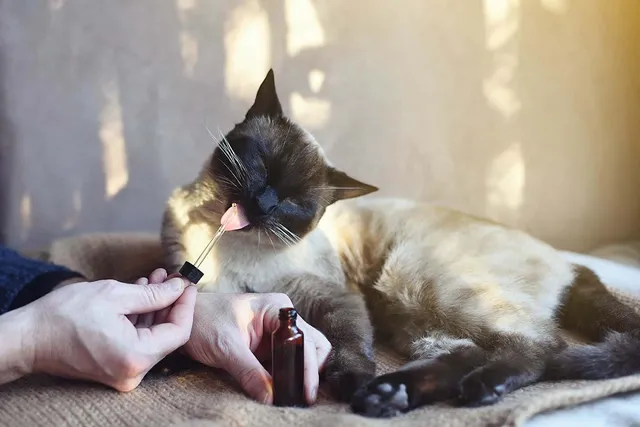
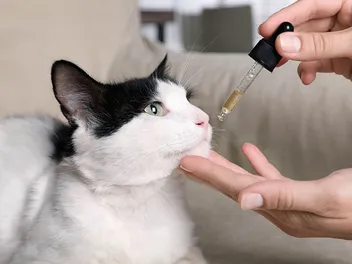
Choose a delivery method that won’t annoy your cat. There are crystals you can mix into your pet’s wet food and treats, or you can use CBD oil.
Testing/Certificate of Analysis
Because there’s no regulatory oversight of feline CBD products, it’s critical to only purchase brands that are recommended by your cat’s vet or those an independent laboratory has tested to ensure ingredient quality and dosage.
Feline-Specific Product
Never give your cat a CBD product made for humans or designed specifically for dogs. It’s okay but not optimal for kitties to take veterinary CBD formulations created for feline and canine use, but the gold standard is to give your cat feline-specific CBD products.
Clear Instructions
Providing the correct dosage is critical when addressing serious feline medical issues such as anxiety and pain, so look for a product that offers clear instructions on dosing.
FAQ
Will CBD Get My Cat High?
No. CBD is a specific compound that’s found in marijuana plants. CBD doesn’t contain THC, the chemical responsible for producing the sensation of being high.
CBD works in animals just like it does in humans, by interacting with your pet's endocannabinoid system.
CBD works in animals just like it does in humans, by interacting with your pet's endocannabinoid system (ECS).
What’s the Recommended Dosage for Cats?
The general guidelines for feline CBD usage are 1–5 mg for every 10 pounds. Speak with a veterinarian to ensure you’re providing the right dosage and using a high-quality product without dangerous fillers before getting started.
Can I Give My Cat CBD Products Designed for Humans?
It’s not a good idea to give your kitty CBD products designed for humans for several reasons, including the possibility of accidentally giving your cat a bit of THC. Many human CBD products contain small amounts of it. The THC in marijuana is actually toxic to cats and can cause your cat to vomit, become uncoordinated, and even have seizures. In addition, humans and cats need dramatically different dosages of CBD, making it easy to give your feline a high dose if using a more concentrated product for human consumption.
What Happens If I Give My Cat Too Much CBD?
If your kitty gets too much pure, high-quality CBD oil at once, they will probably become sedated and need to be monitored. They won’t become super stoned or be in danger of poisoning. They may become lethargic and want to curl up somewhere for a long nap. However, frequently giving your kitty a high dosage of medication can harm their liver.
It’s a different story if your furry friend ingests too much of a product containing THC and CBD. THC is toxic to cats, and felines that eat too much are at risk of suffering significant side effects, including vomiting. Other side effects include lethargy and ataxia. This happens most often with human-grade products that contain small amounts of THC.
What Users Say
- “It’s great for dealing with the zoomies!”
- “Really helps with anxiety before claw clipping and trips to the veterinarian.”
- “Has helped reduce stress licking.”
Conclusion
CBD has become increasingly popular as a holistic way to reduce feline anxiety and pain. It may also be able to encourage them to eat more and in some cases, manage seizures. While CBD has benefits, you’ll still need to use it with caution, at least at this point, since there have not been any large-scale, randomized studies evaluating CBD products' safety or effectiveness. Currently, there is no regulatory oversight of feline CBD products, making it impossible to be truly sure of the dosage your cat is getting or the quality of the ingredients used. See Also:
Sources
https://medterracbd.com/products/cbd-tincture-pets/?variant=41494205300928
https://www.petmd.com/cat/care/cbd-oil-cats-what-you-need-know
https://www.akc.org/expert-advice/health/does-cbd-work-for-dogs/
https://www.pawcbd.com/blog/post/best-cbd-oil-for-cats-what-to-look-for
https://www.akc.org/expert-advice/health/does-cbd-work-for-dogs/
https://www.ecodogsandcats.com/holistapet-hemp-oil-for-pets/
https://www.thesprucepets.com/is-marijuana-toxic-to-cats-555055
https://www.akc.org/expert-advice/health/does-cbd-work-for-dogs/
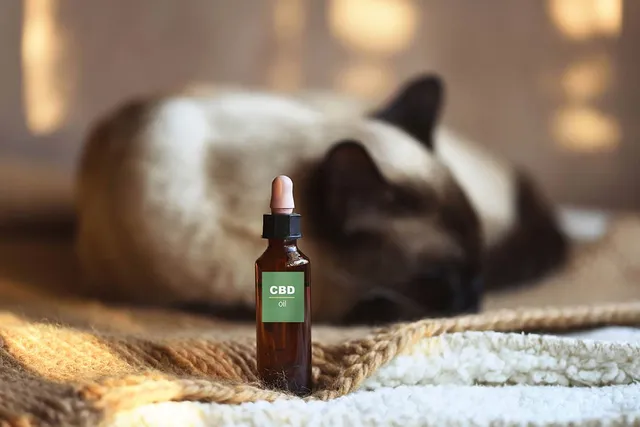
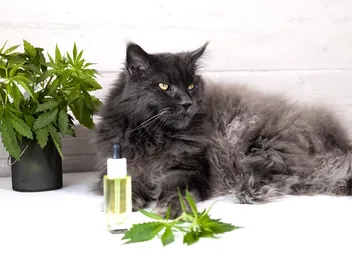
Featured Image Credit: CBD-Infos-com, Pixabay
Expert cat care, straight to your inbox
News, insights, and useful advice, delivered to you.

No spam — unsubscribe anytime.
By signing up, you agree to our Terms & Conditions and Privacy & Cookies Policy.
How useful was this post?
Click a star to rate. You can leave written feedback afterwards. (We read all feedback.)
Lorre Luther is a writer who is firmly convinced that cats are smarter than humans. She left her law career in the United States and moved to the Netherlands to follow her dream of becoming a writer. Lorre currently lives in Rotterdam, she enjoys traveling and greatly appreciates the beauty of nature. Lorre has a spot for animals and admires the intelligence of cats.