Get

In Your Inbox

Catster is reader-supported. When you buy via links on our site, we may earn an affiliate commission at no cost to you. Learn more.

CBD Oil for Cats: What It Is, What It Isn’t & How It Works (Vet Answer)

cbd oil and cat on background

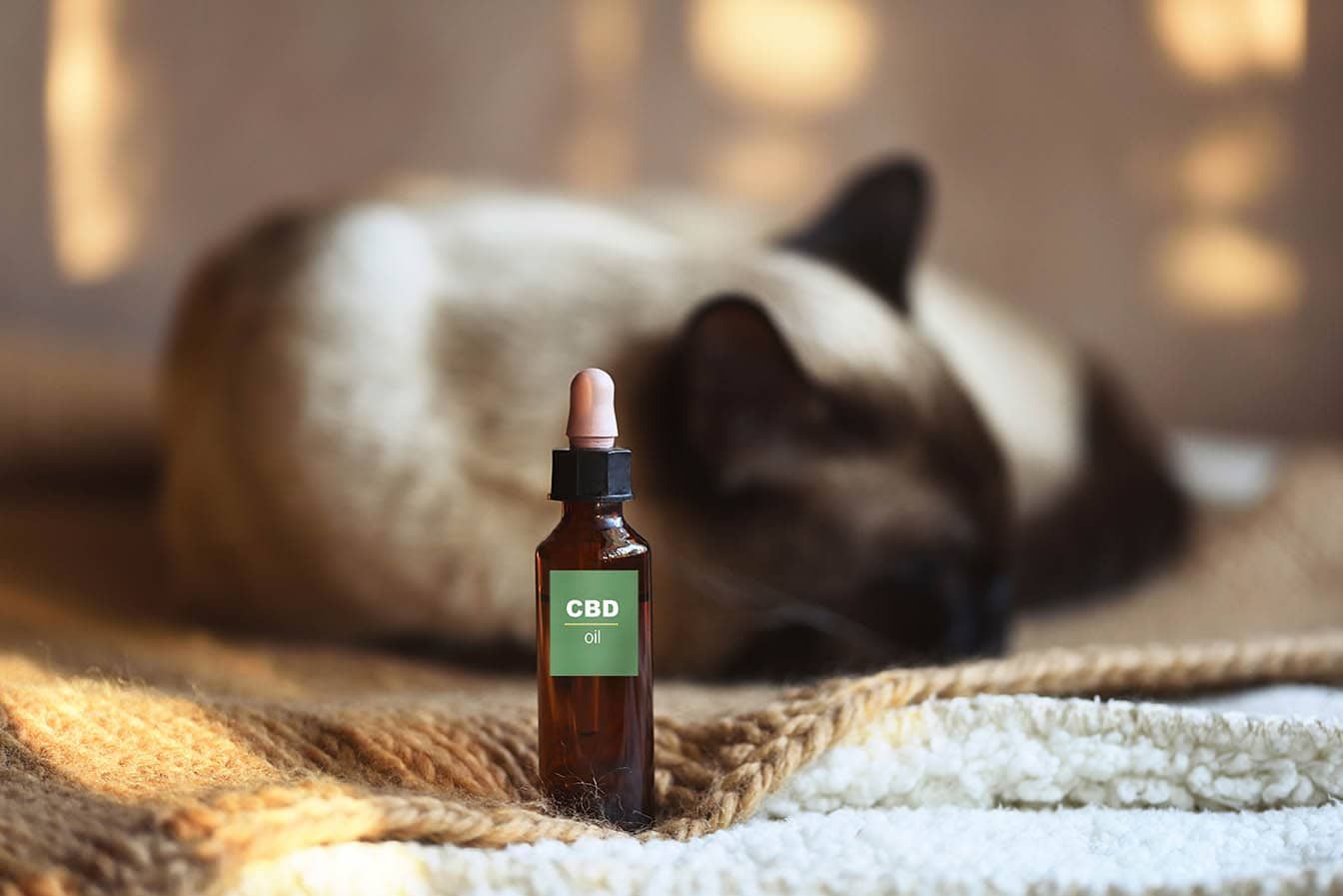
CBD oil has garnered significant attention and momentum in the human medical field. This “medical cannabis” has been used to treat chronic pain, anxiety, skin conditions, migraines, dementia, and other ailments. The rise of CBD oil in human medicine has seen a concurrent rise in interest in the veterinary sphere. As a practicing veterinarian, I have certainly observed more and more cat owners ask questions about this proposed wonder oil.

Can CBD oil be used in our pets? Is it safe? Does it work? Do they get high? The short answer is this: it probably works, and it’s probably safe, but more research is needed. Read on to find out more!

divider 2 cats

What Is CBD Oil?

The important difference between marijuana and CBD oil is the THC content. THC is just one active chemical in the cannabis plant, but this is the psychoactive chemical; in other words, this is what makes people “high”.

Cannabidiol is another active chemical produced by the cannabis plant; however, it is not psychoactive, so it will not produce the same high as THC. Cannabidiol is the primary component of CBD oil.

cbd oil
Photo Credit: OMfotovideocontent, Shutterstock

How Does CBD Oil Work?

Cats’ bodies, like ours, contain an entire endocannabinoid system in the brain. Neurons are the cells that make up the nerves and brain, and neurons contain endocannabinoid receptors. These receptors can be “activated” by THC, producing psychoactive effects.

These receptors can also be activated by cannabidiol, the main ingredient in CBD oil, to produce a realm of other potentially positive effects.

How is CBD Oil Given to Cats?

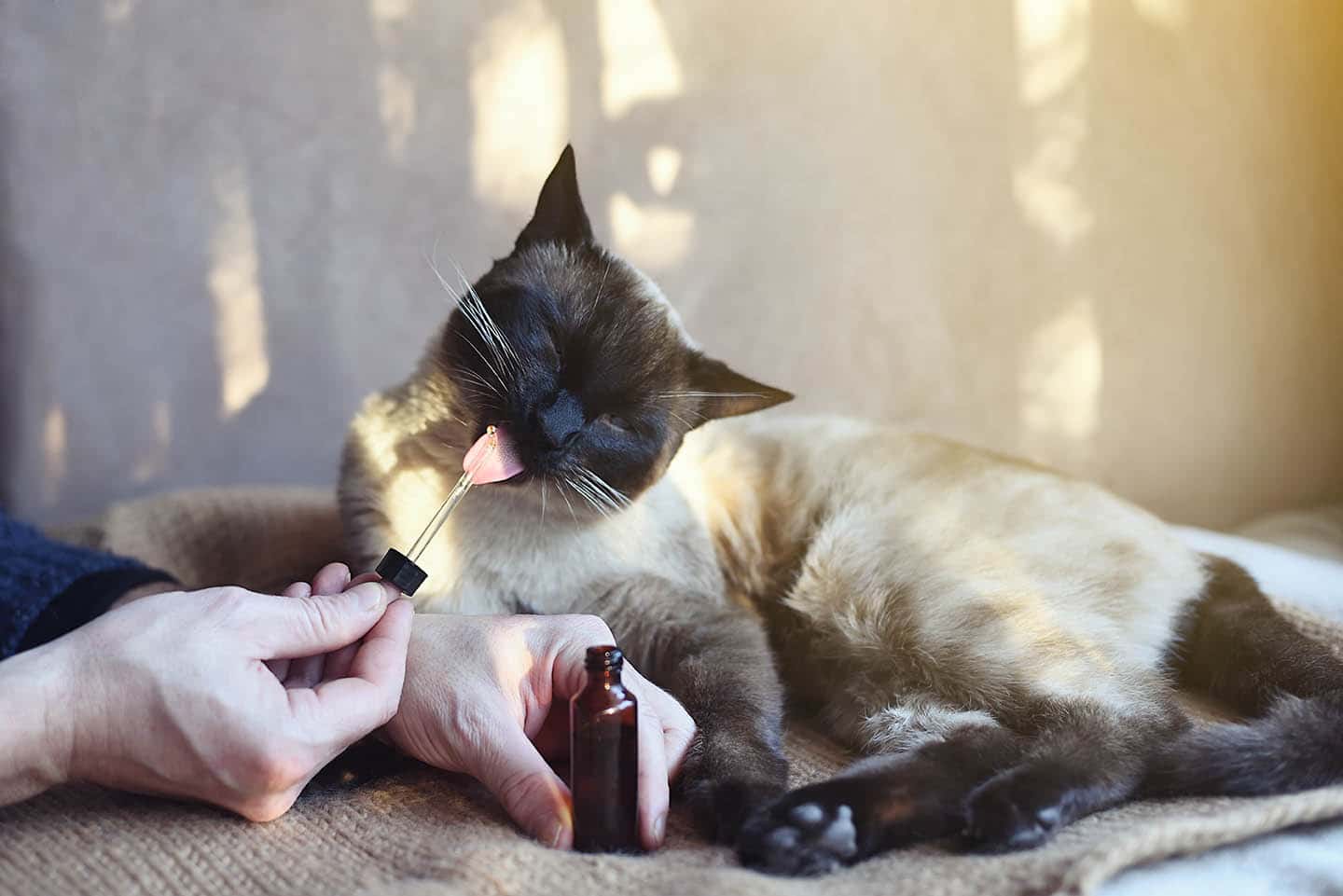
CBD oil is given orally, two to three times per day. It can be given directly into the mouth or mixed with food. Some owners claim you can rub oil onto a cat’s ears, but this is unlikely to be effective, and oral dosing is best. It should only be given on the advice of a veterinarian.

When you first begin giving CBD oil to your cat, observe them closely for any vomiting, diarrhea, sedation, or restlessness. If you miss a dose, do not give a “double dose” when the next one is due; just resume the normal dosing.

cat-taking-CBD-oil_Erin-Stone-Pixabay
Image Credit: Pixabay

divider 2 cats

Potential Uses of CBD Oil

Because the endocannabinoid system is located within the brain, most of the uses of CBD oil in cats relate to pain and neurological diseases.

Some examples include:
  • Inflammation. CBD oil may work well, in conjunction with common anti-inflammatory medications, to reduce inflammation.
  • Chronic pain from osteoarthritis. This is probably the most well-researched and understood use of CBD oil in pets.
  • Seizures and epilepsy. More research is needed, but CBD oil may be able to reduce the reliance and/or dosages of common anticonvulsant
  • Anxiety. Cats that suffer anxiety, chronic stress, and other behavioral disorders may benefit from CBD oil.
  • Nausea reduction. CBD oil may help relieve nausea in felines.
  • Appetite stimulation. For cats that won’t eat for whatever reason, CBD oil may help stimulate appetite.
  • Cancer. There are a couple of anecdotal case reports of CBD oil shrinking different tumors in pets.

divider 2 cats

Potential Downsides to CBD Oil

sad-sick-cat
Photo Credit: Julia-Cherk, Shutterstock

CBD oil should never replace good veterinary care. If you suspect that your cat could benefit from CBD oil, arrange a consultation with a veterinarian and discuss the use of this medication. Do not purchase CBD oil online and begin administering it without veterinary advice. While CBD oil is believed to be generally safe, there are several potential downsides to consider:

  • There are no FDA-approved CBD oil products for cats.
  • Dosages vary based on your cat’s age, weight, condition, and tolerance.
  • Quality control appears to vary, and many products are not third-party tested for purity and potency.
  • THC content should be either very low or zero; cats can become “stoned” and significantly unwell if they receive THC.
  • Vomiting, diarrhea, and nausea are all possible side effects.
  • Research supporting the use of CBD oil in cats is lacking.
  • Drug interactions. If your cat takes other medications, CBD oil may interfere with the absorption or metabolism of these drugs.

If you have questions about your cat’s health or want more information about CBD for cats, you can speak to a vet from the comfort of your own home to help make a plan. They can determine when an in-clinic vet visit should be made.

If you need to speak with a vet but can't get to one, head over to PangoVet. It's an online service where you can talk to a vet online and get the advice you need for your pet — all at an affordable price!

PangoVet_Mention-in-Content for PangoVet2 save money

divider 2 cats

Conclusion

CBD oil appears to be a promising plant-based medication with a range of benefits. Its use in managing arthritis and chronic pain in dogs is fairly well understood. It is likely of significant benefit for arthritic cats, too. The use of CBD oil for seizures, anxiety, cancer, and skin conditions in pets still requires more research.

Always consult a veterinarian before commencing oral CBD oil therapy, and always use pet-grade products. While it may not be the miracle oil some people claim it to be, CBD oil may well prevail as a useful tool in comprehensive treatment plans for our feline friends.


Featured Image Credit: Lightcube, Shutterstock

Want content like this delivered to you?

Sign Up For Our Newsletter

News, insights, expert advice, and everything cat

* By submitting, you agree to our Terms & Conditions and Privacy & Cookies Policy.

How useful was this post?

Click on a star to rate (you can leave written feedback after clicking submit)

Help us improve Catster for pet parents!

Your feedback really matters.

What did you like about this post? Also how can we improve it?

Join the conversation

Leave a Reply

You’re very welcome to leave a comment or question. Please know that all comments must meet our community guidelines, and your email address will NOT be published. Let’s have a positive and constructive conversation.

Talk With A Vet Online

Peace of mind,
anywhere, anytime

Affordable vet advice

European Burmese Cat Breed Info: Pictures, Temperament & Traits

When researching any cat, it is important to understand the different personality traits that go along with each breed. If you aren’t familiar...

How Long Does It Take to Adopt a Cat? 3 Vet-Approved Factors to Consider

If you want to adopt a cat, you might wonder how long it will take to bring them home. If your area has...

My Cat Is Sneezing Blood, What Do I Do? Our Vet Explains the Causes & Care Guide

If you notice your cat sneezing blood, it should be a cause for concern. Cats can sneeze blood for many reasons: blocked nasal...

How to Tell If a Cat Is Allergic to Food: Vet-Approved Diagnosis Methods & Treatments

If you’re a cat owner, you probably know how important it is to provide them with a balanced and healthy diet. However, what...

More related

Solensia for Cats: Vet-Reviewed Uses & Effectiveness

According to clinical studies, 40% of all cats show some signs of feline osteoarthritis.1 That number dramatically increases as a cat ages. By...

Why Do Cats Like Running Water? 6 Interesting Vet-Reviewed Reasons

Most cats aren’t big fans of water, especially when it comes to bathing. They typically shy away from it and many owners also...

How Fast Can a House Cat Run? Record & Average Speeds

Some cats spend more time napping than running, while others love to run around the house and play all day long. Whether your...

How Far Apart Can Kittens Be Born? Vet Verified Facts

The amount of time a cat is in labor varies, but most kittens can be born between minutes to about an hour apart....

Keep reading

Can Cats Eat Apple Pie? Vet Reviewed Advice

Apple pie is a popular dessert, and the smell alone will attract any hungry and curious pet. If you catch your cat sniffing around the pie dish, you may be tempted to share a slice, or if your cat has...

Can Cats Eat Apple Pie

Is My Cat’s Jaw Broken? Vet-Reviewed Signs to Be Aware

Cats instinctively hide their pain, so it can be difficult to tell if something is amiss. If your cat is in pain, you will want to look out for subtle signs. These can include changes in behavior, routines, or posture....

Red cat dropping his jaw surprisingly

Why Do Cats Bury Their Poop? 3 Vet-Verified Reasons for This Behavior

Burying items, especially waste, is not at all uncommon in the animal kingdom. Dog owners have long witnessed this behavior from their canine pals, who love to bury all sorts of goodies. But cat owners observe their cats carefully burying...

two cats looking at the litter box

How Much Time Should You Spend With Your Cat? Vet-Approved Advice

We all have busy lives, so we’re constantly trying to carve out time to spend with our family and friends and still have quality alone time. When you own a cat or multiple cats, you need to spend time with...

young cat owner playing with her pet at home

Do Cats Have a Clitoris? Feline Reproduction Facts & FAQ

If you’ve ever wondered if female cats have clitorises, the answer is yes; it’s an anatomical part shared by all female mammals! Fetuses all start with a structure called the genital tubercle that becomes a penis when exposed to fetal...

Curious cat

Can Cats Drink Tap Water? Vet Approved Facts & FAQ

As humans, we have so many options when it comes to what to drink each day. Coffee for breakfast (or all day), juice, soda, milk, or even adult beverages are all on the menu. Cats, however, generally only get one...

Can Cats Drink Tap Water

How to Retrain a Cat to Use a Litter Box: 13 Vet-Approved Tips

Inappropriate elimination can be difficult to deal with, resulting in ruined belongings and strained relations between cats and their favorite people. It’s one of the most commonly reported behavioral problems in cats. Litter box issues are often caused by stress,...

Ginger cat in blue litter box

Why Is My Cat Scared All of a Sudden? 10 Vet-Approved Reasons

It can be very disconcerting to a loving cat parent when their cat starts acting scared. True, some cats are naturally more nervous or jumpy than others, but if the change is sudden and unexpected, it’s important to try and...

scared British blue-point cat hiding under the bed