How Much CBD Oil Should I Give My Cat for Anxiety? Optimal Dosing Chart

In this article
CBD has exploded in popularity recently, being touted as a miracle cure for a wide range of ailments that’s supposedly a more natural alternative to many pharmaceuticals. But CBD isn’t just for people. More and more CBD products are being made for our pets, intending to provide a safe, natural way to alleviate pain and inflammation while promoting health. If you’re interested in trying CBD oil with your cats, then you’ll need to understand how to dose it properly to prevent unwanted side effects like vomiting and nausea, which you’ll know how to do by the end of this article.

Why Use CBD Oil for Cats?
CBD has been shown to provide many benefits for people, and it’s believed that it could offer the same benefits for other animals, including cats. Anecdotally, many people have reported noticing positive effects after dosing their cats with CBD, though more studies are necessary to prove CBD’s effectiveness in felines.
One of the biggest benefits of CBD and a major reason why you might use it for cats is to reduce inflammation and pain. If your cat has an injury, it could be in pain. Plus, localized swelling can impede healing. CBD might be able to reduce both the swelling and associated pain, helping your cat to feel better and simultaneously allowing it to heal faster. This can also be highly helpful for certain gastrointestinal disorders that are common in cats like feline inflammatory bowel disease, which inflames and irritates the gastrointestinal tract.
CBD is also thought to reduce anxiety and provide a calming effect, which can be useful for cats that are prone to being overly hyper or anxious. Some cats experience separation anxiety, and it’s possible that CBD can help to alleviate the anxiety your cat feels when you leave. You can also administer CBD prior to a stressful event to help your cat remain calmer, such as when you’re going to the vet or another crowded place.

How CBD Works
In all vertebrates, including mammals, the endocannabinoid system (ECS) is responsible for regulating many body functions. CBD interacts directly with the ECS, which has two primary receptors. CB1 receptors help with processing memory, stimulating appetite, and physical sensations such as paint, and even help regulate your mood and sleep. CB2 receptors fight off inflammation, alleviate pain, and help reduce damage to tissues. CBD stimulates these receptors, providing benefits such as reduced pain and inflammation, improved sleep, increased appetite, and more.
Because cats have an ECS that’s similar to our own, CBD works very similarly in a cat's body to how it works in a human’s body. Luckily, CBD is a non-addictive substance, which is part of why it’s becoming so popular. Furthermore, CBD is not psychoactive, even though it is an extract of the cannabis plant. The psychoactive compound in cannabis that produces the euphoric “high” is tetrahydrocannabinol or THC. CBD is an entirely separate compound that produces no psychoactive effects and no high.

CBD Oil Dosing Chart for Cats
| Cat Body Weight | Regular Dose Formula: 0.25 mg * 1 lb body weight | Strong Dose Formula: 0.5 mg * 1 lb body weight |
| 2 pounds | 0.5 mg | 1 mg |
| 6 pounds | 1.5 mg | 3 mg |
| 10 pounds | 2.5 mg | 5 mg |
| 14 pounds | 3.5 mg | 7 mg |
| 20 pounds | 5 mg | 10 mg |
| 30 pounds | 7.5 mg | 15 mg |
Source: CBD Clinicals
CBD Oil Dosage for Cats
When determining the proper CBD dose for your cat, there’s a lot to consider. Your cat’s weight is a great place to begin, using the chart above to determine an approximate starting dosage for your cat. But you also need to consider your cat’s age, overall health, and diet, plus the purity of the CBD product you’re administering.
Old cats or those in poor health should be given lighter doses than cats that are perfectly healthy and younger. However, kittens should be administered light doses as well. You should also start with a low dosage and slowly increase it over time so you can see how your cat reacts.
You must also factor in the potency of your CBD. Not all CBD is created equal. Some CBD is far more concentrated than others you might purchase, which would make it easy to accidentally serve your cat too much. Make sure to check the total amount of CBD contained within the product you choose so you can determine how large a dose will be. A one-milligram dose of a particular CBD oil could be five drops, while that same five drops could be 10 milligrams of CBD in a different oil.

CBD Dosing Frequency for Felines
Determining how much CBD to administer to your cat is only part of the battle. You must also consider how often your cat should be given CBD, which is dependent on your purposes. If you’re just dosing your cat with CBD to keep it calm for an event, then you’ll only need to provide a single dose about 30 minutes prior to the event.
Some cats will be given CBD daily to help with minor pains like arthritis or dysplasia or mild anxiety. These cats will usually do well on one or two doses per day, such as once in the morning and once in the evening. If you’re administering CBD to help with serious pain and inflammation, then you’ll want to offer doses as you feel is necessary, but no closer than eight hours between doses.
Is CBD Oil Proven to Be Safe for Cats?
So far, there have been no reports of adverse effects due to cats receiving CBD. However, the FDA has not approved the use of CBD animals. That said, many veterinarians do recommend CBD for felines, and in studies, no cats have shown any lasting harmful effects. Even so, there are a few negative side effects that some cats might experience due to CBD use. Often, these are associated with being given a dose that is too heavy.
The most common side effects of CBD in cats include:
CBD Oil vs Other Alternative Treatments
CBD can often be a more natural form of treatment than medication, though many believe CBD can still be equally effective. For certain ailments, CBD does seem to provide a great solution; particularly when the problem is related to pain and inflammation. CBD offers great relief for those suffering from chronic inflammation and pain issues like arthritis, hip dysplasia, or other bone and joint problems. Compared to medications often offered for such conditions, CBD is more natural and has fewer major side effects.
However, there are many times that CBD is given when there might be a better solution. For example, diet can often be used to induce major changes to a cat’s health. For cats with feline inflammatory bowel disease, CBD may offer some relief, but the real cure is a change in diet. So, while CBD can certainly be helpful and might be an adequate alternative for some treatments, it’s not the catchall solution for every health problem your cat might experience.

How Can I Give CBD Oil to My Cat?
Today, CBD is being put into many different products; some of which are specifically made for pets. When it comes to cats, there are three main options for you to choose from: tinctures, capsules, and treats.
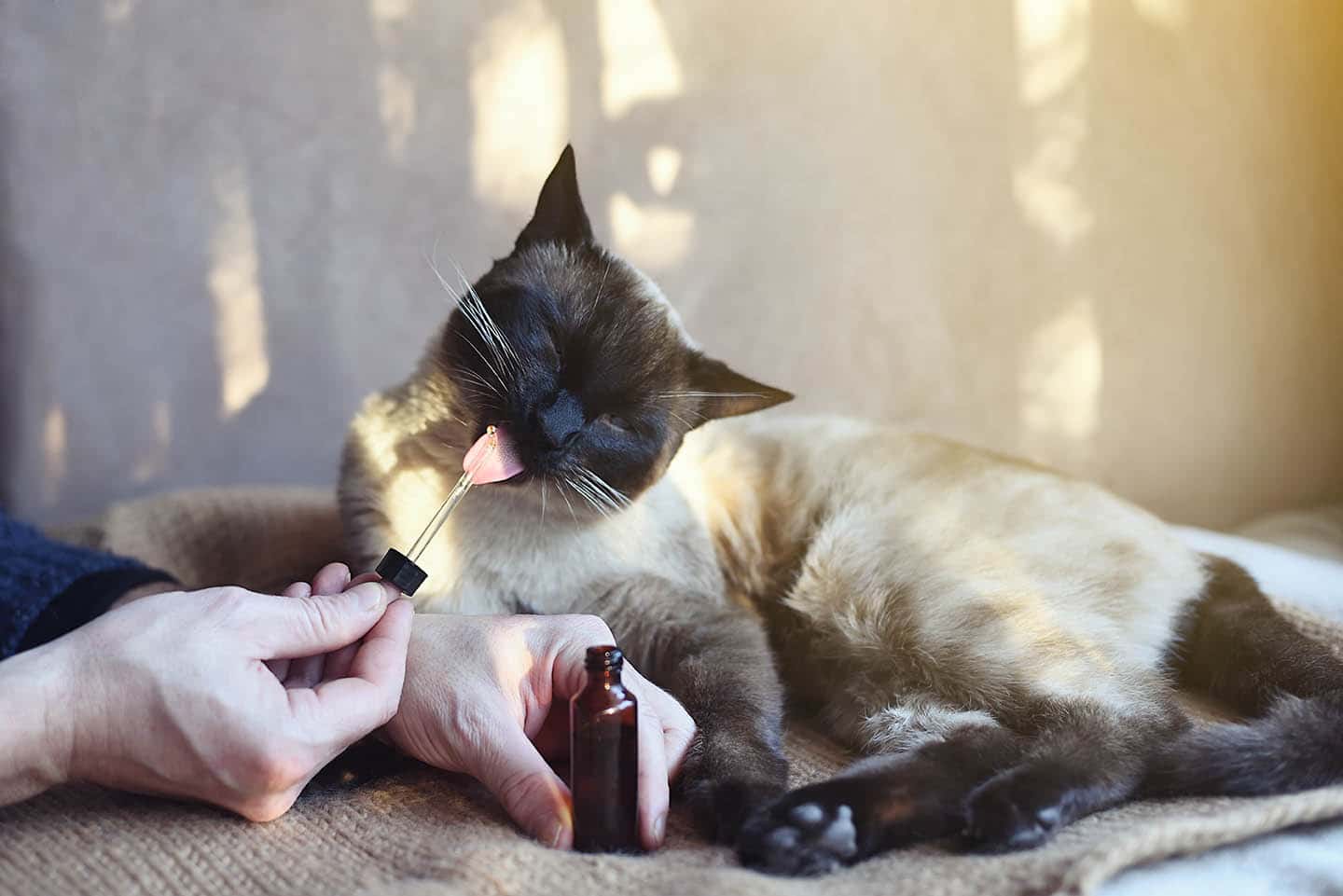
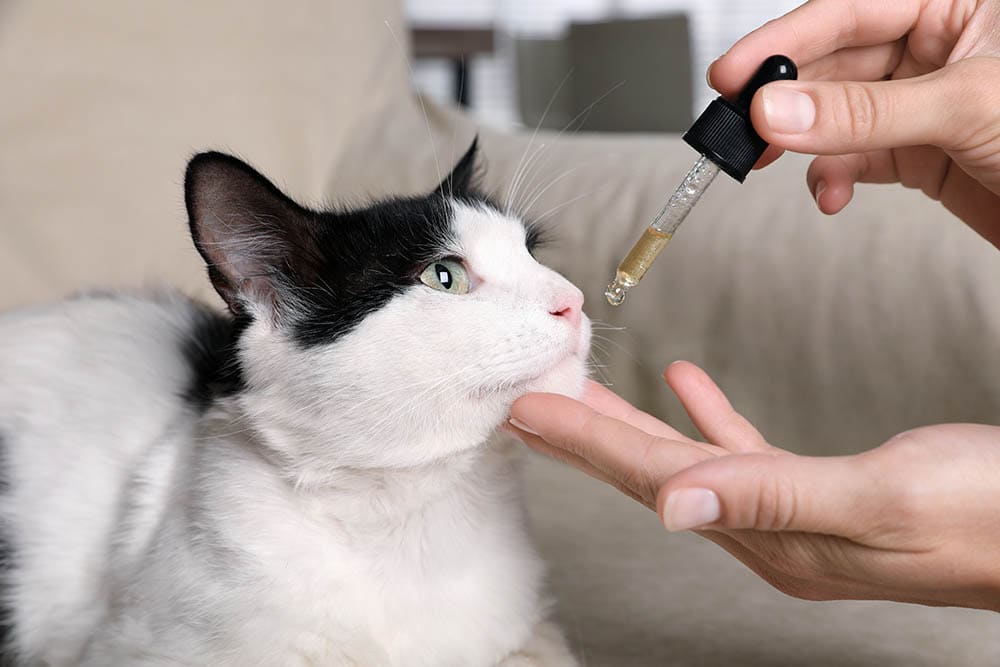
A CBD tincture is a concentrated liquid version of CBD. You’ll administer it using a dropper, and the CBD can be easily mixed into your cat’s food or water. Capsules are small pills full of CBD oil, which can be stuffed into your cat’s food or offered in a small treat so they’re easy to swallow.
CBD treats might just be the easiest and most convenient way to provide CBD for your cat though. These treats are tasty for a cat, so it’ll be easy to get yours to take its medicine. Plus, they’re made in very low dosages since cats are so small. It can be difficult to administer such a small dosage from a dropper, especially because many tinctures are so concentrated that a few drops would be far too much CBD for your cat to consume.

Conclusion
CBD is still a relatively new way to treat pets, even though it is been used in cannabis for thousands of years. It is safe for cats, but more research needs to be done to prove its efficacy. Still, anecdotally, many cat owners report positive effects, such as reduced pain, inflammation, stress, and anxiety. Today, there are many ways to offer CBD to your cat, including tinctures and treats. Just be careful not to overdose your cat or it might experience an upset stomach, vomiting, and diarrhea.
Featured Image Credit: Lightcube, Shutterstock

Expert cat care, straight to your inbox
Vet-reviewed advice, behavior tips, and the best of Catster. Free, and you can unsubscribe anytime.
By signing up, you agree to our Terms & Conditions and Privacy & Cookies Policy.
A true Renaissance man, Dean Eby has worked a variety of hands-on careers, including home building and remodeling, personal training, and now shares his experiences and understanding as a writer. An avid outdoorsman, Dean spends much of his time adventuring through the diverse terrain of the southwest United States with his closest companion, his dog, Gohan.
For Dean, few passions lie closer to his heart than learning. An apt researcher and reader, he loves to investigate interesting topics such as history, economics, relationships, pets, politics, and more.
Join the conversation
Ask a question, share your story, or send private feedback.