Does CBD Oil Help Cats with Kidney Disease? Vet-Reviewed Facts & FAQ


In this article
Cat’s kidneys play a crucial role in their overall health. If your feline’s kidneys are not functioning properly for whatever reason, the resulting problems can be life-threatening, impacting their well-being and quality of life. Chronic kidney disease, or CKD, is one of the most common conditions affecting middle-aged and senior cats.
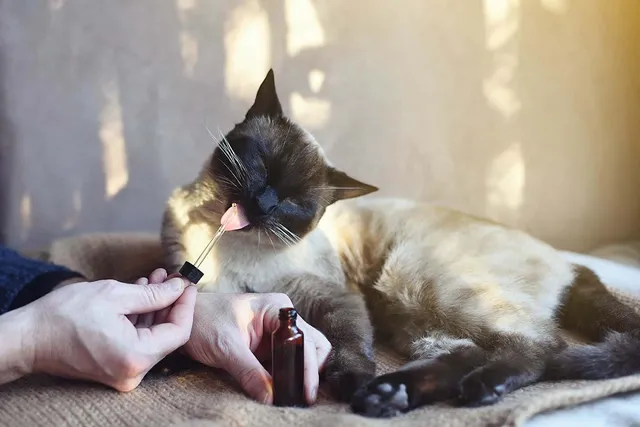
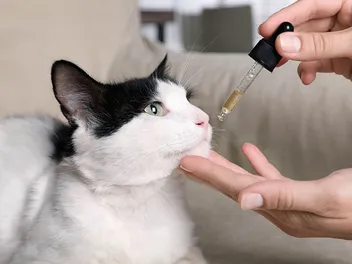
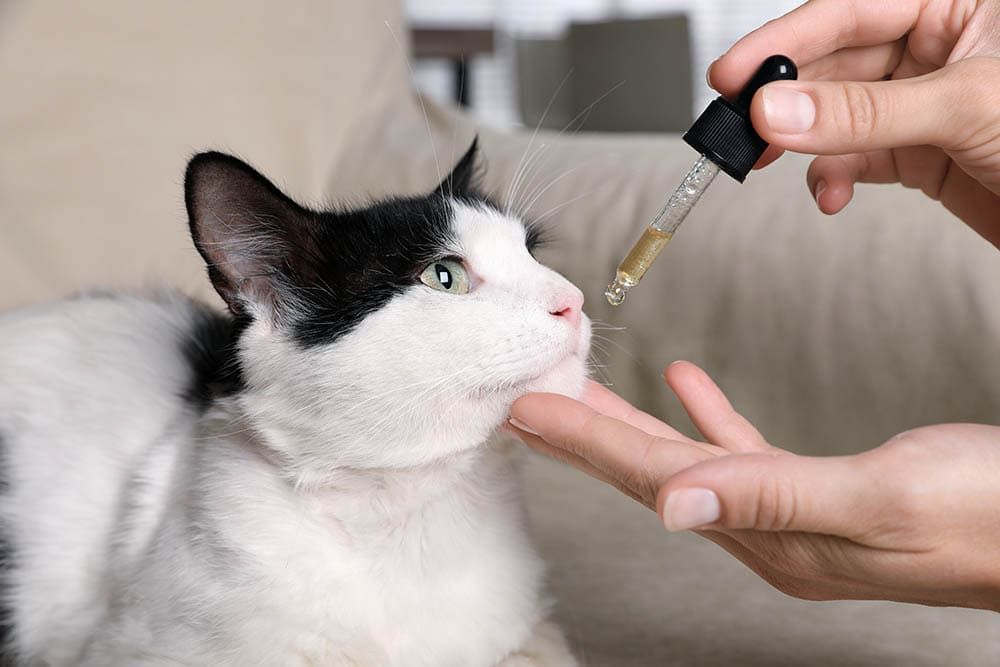
If your cat has already been diagnosed with CKD, you may be wondering how you can help them. Sadly, chronic kidney disease has no cure, but signs of the disease and its progression can be managed with a particular medication, a prescription renal diet, and frequent blood checks at the vet. CBD Oil, a holistic craze for humans and pets alike, may be used as an attempt to help some felines if prescribed and used under the guidance of a veterinarian.
CBD oil has been anecdotally used in veterinary medicine for relieving signs like nausea, pain, inflammation, and anxiety. However, there is currently limited research into the indications, efficacy, and safety of its use, as well as the recommended dosage.
While CBD oil may be helpful for some cats with kidney diseases, it is not FDA-approved and may contain harmful or illegal substances. You should always talk to your veterinarian before adding CBD to your cat’s routine.

Kidney Disease in Cats
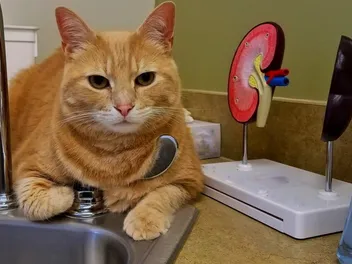
As the name implies, kidney disease impacts the body’s kidneys. The kidneys’ main function is to filter blood and remove waste and undesirable byproducts; the important compounds return to the bloodstream while the rest is moved to the bladder to be expelled as urine. Your cat’s kidneys help control blood pressure, electrolyte levels, produce important hormones and substances, and remove metabolic waste from the blood.
As your cat ages, their kidney function may start to decline. Some cats may develop kidney disease earlier on, due to various causes, from bacterial or viral infections, inflammation of the kidneys, presence of urinary stones, autoimmune conditions, polycystic kidney disease, and more. This can affect your cat’s normal body functions, leading to gradual weight loss, poor appetite, increased drinking, and peeing.
The more damage sustained to your cat’s kidney over time, the higher chance your furry friend will develop full-fledged kidney disease. Catching kidney disease early on before the signs are glaringly obvious is difficult and incredibly important, as typical signs of advanced kidney disease do not appear until at least 70–75% of the overall kidney function is already lost.
Chronic kidney disease (CKD) is one of the most common diseases affecting domesticated cats. An average of 30–40% of cats over 10 years of age will experience kidney disease, and CKD is more common in older and even middle-aged cats. If your cat is over 15 years old, they are more likely to develop kidney disease.
Two main types of kidney disease can affect your cat:
What is CBD Oil & Is It Safe for Cats?

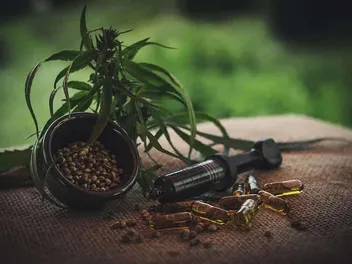
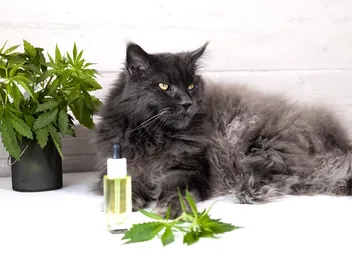
CBD stands for cannabidiol, one of the many compounds available in the cannabis plant. While some people confuse CBD oil for marijuana, CBD is different from actual marijuana and hemp products. Cannabidiol is separate from cannabinoid THC or delta-9-tetrahydrocannabinol, which is psychoactive. CBD is not a psychoactive substance and will not result in a high when consumed by humans or pets.
How May CBD Benefit Cats with Kidney Disease?
CBD is not a one-stop-shop cure for kidney disease, and currently, there isn’t sufficient and compelling scientific evidence that it will help your cat manage the signs they experience.1 There are studies that showed the benefit of CBD in dogs and cats suffering from osteoarthritis or for seizure management. It does seem to help as a painkiller and an anti-inflammatory, in cats suffering from gingivitis and oral inflammation, based on observations from their owners.2
Traditional kidney disease treatments also focus on managing the most common signs, such as poor appetite, nausea, weight loss, and changes in drinking and peeing. CBD may be a useful tool to help alleviate some of our cat’s pain, inflammation, and even anxiety or stress, but only if it’s used under veterinary guidance.
Still, based on the scarce current scientific evidence and the lack of CBD product regulation on the market, it remains crucial to consult with a veterinarian first before considering its use, as some products may contain variable amounts of actual CBD, or none at all, or may contain other harmful substances such as THC.
Some human CBD products contain a variable amount of THC, which is considered toxic to cats and may cause them harm.
Pain Control
Giving your cat CBD oil according to your vet's instructions may help to reduce their overall pain levels. Just as it works with humans, CBD has inhibitory effects on the certain neurotransmitters and nerve signaling, in order to reduce the pain messages between the brain and body.3 This isn’t a permanent solution, but it can provide some cats with a degree of pain relief.
Decrease of Inflammation Within the Body
Damage to the body causes inflammation. If you damage your wrist, it will swell. Damaged kidneys may cause your cat’s body to release inflammatory compounds, encourage blood flow, and increase the arrival of various inflammatory cells to the injured site, worsening chronic low-grade inflammation of the kidneys. The longer your cat is suffering from inflammation, especially chronic inflammation, the more overall damage to the organ and your cat’s body. Chronic inflammation may even speed up the disease’s progression.
According to some studies, CBD has anti-inflammatory properties and may be used for the treatment of inflammation and pain in humans and pets. However, there are no specific studies into the effects of CBD oil on acute or chronic kidney disease in cats, and whether it may be beneficial, but it has been used anecdotally in certain cases.

Relief from Stress, Anxiety, & Depression
CBD is often used to reduce stress, anxiety, and depression, and it seems to work similarly for our feline friends, although this requires further scientific evaluation. If your cat is suffering from kidney disease or another medical condition, they may also suffer from feline cognitive decline, separation anxiety, increased stress levels, and others. CBD may provide relief from the overwhelming feelings of anxiety and confusion, even for our cats.
Managing Nausea
If your cat is suffering from kidney disease, the resulting buildup of unfiltered waste in their blood can cause them to experience nausea and subsequent vomiting. This can result in weight loss and further affect their appetite. CBD may be able to help to control nausea and vomiting. According to a 2011 study, CBD has the potential to help with nausea and reduce vomiting in several animal species including cats.
Supports the Endocannabinoid System
The Endocannabinoid System (ECS) functions similarly for humans as it does for our pets. Almost all animals have an ECS; this includes cats, dogs, horses, monkeys, dolphins, and even fish, sea urchins, and mussels. The ECS system helps maintain a healthy and natural internal balance for cats, dogs, humans, and other animals, by regulating many of the critical bodily functions, affecting everything from inflammation, the immune system, pain receptors, and emotions like anxiety, learning and memory, sleep, temperature control, and eating.
Using exogenous CBD may support your cat’s natural ECS functions and potentially allow endocannabinoids to stay present in their system longer.
Is CBD Oil Safe for Cats with Kidney Disease?
Although giving your cat verified CBD oil product is generally safe if used under veterinary guidance at recommended dosages, there are still potential side effects. As you would with any supplement, consult a veterinarian before considering offering it to your cat, in order to make sure the product is safe for felines.
Monitor your cat closely for the first few days from starting the product, in case they develop any undesirable adverse effects that show they are not tolerating the product well.
Many pet owners have shared stories about how using CBD with their cats has improved their cat’s life and lessened the signs of various health conditions. While not fully scientifically confirmed, particularly when it comes to felines, anecdotal evidence shows that CBD oil has the potential to cause a noticeable improvement.
However, be mindful of some of the possible adverse effects associated with cannabidiol and contact your vet in case your cat shows any signs of illness or changes in their behavior after taking CBD oil.
Possible side effects associated with the use of CBD in cats may include:
- Nausea and drooling
- Vomiting, gagging
- Reduced appetite
- Diarrhea
- Lethargy
- Pacing
- Head shaking
- Licking
- Skin irritation if topical product used
- Rarely allergic reactions, with rash, facial swelling, and breathing difficulties (requires immediate veterinary attention)
While the use of CBD oil is generally safe for most pets, when given at doses prescribed by a veterinarian, make sure you do not give your cat CBD oil containing THC. THC is the compound responsible for causing the neurological side effects of cannabis. Consuming THC will affect your cat’s basic motor functions and can even lead to agitation and excitable behaviors. THC is also toxic to cats and may cause the following:
- Lethargy and depression
- Drooling and vomiting
- Excitability or excessive sleepiness
- Loss of balance
- Dilated pupils
- Low body temperature
- Low blood pressure
- Seizures
- Coma
Contact your vet immediately if you suspect your cat ingested a product containing THC.
Final Thoughts
Giving your cat CBD oil to help relieve the signs of kidney disease should only ever be considered with continuous veterinary guidance and input. As a pet owner, it is your responsibility to ensure it is properly certified CBD and that it doesn’t contain any THC. Make sure it comes from a good source, has certified laboratory testing, and does not contain any additives.
However, based on the up-to-date info we presented in this article, be critical when considering the use of CBD for your feline with kidney disease, due to currently limited scientific evidence, lack of established safety dosing recommendations, or known long-term potential side effects.
Speak to your vet regarding specific recommendations regarding CBD for your kitty, as an additional means to try and improve their quality of life.
See Also:
Sources
Pharmacokinetics of escalating single‐dose administration of cannabidiol to cats - PMC
The role of cannabinoids in pain modulation in companion animals - PMC
A case report of CBD and THC as analgesic therapy in a cat with chronic osteoarthritic pain - PMC
Scientific Validation of Cannabidiol for Management of Dog and Cat Diseases
Featured Image Credit: New Africa, Shutterstock
Expert cat care, straight to your inbox
News, insights, and useful advice, delivered to you.

No spam — unsubscribe anytime.
By signing up, you agree to our Terms & Conditions and Privacy & Cookies Policy.
How useful was this post?
Click a star to rate. You can leave written feedback afterwards. (We read all feedback.)
Christian started writing for a local newspaper as a teenager, and he's been involved in the publishing industry for most of his adult life. Combining his love of writing with a passion for animals, he is currently the Director of Editorial at Pangolia and the Editor-in-Chief at Catster.
Christian lives in the Philippines with his wife, son, and four rescue cats: Trixie, Chloe, Sparky, and Chopper.