Cat Anatomy: 10 Vet-Reviewed Facts Pet Parents Should Know



You love your cat’s cute face and tiny paws, but how much do you know about the rest of their body? When taking them to the vet, it can be easy to let discussions of the finer details of your cat’s anatomy pass over your head. It can be complicated, after all, and difficult to understand.
Thankfully, it doesn’t have to be so hard. By focusing on the basics of cat anatomy, you can be well-informed the next time you have a vet visit. To help you along your journey, this article has 10 important things about cat anatomy that every cat parent should know.

The 10 Cat Anatomy Facts
1. Purpose of the Purr
It can be easy to dismiss the sound of your cat’s purr as a simple sign of his contentment, but the truth is much more complex.
While cats do purr to express their happiness, there are many other reasons why they may purr, such as stress or pain. So, if you notice your cat purring much more than usual, check for any other signs that something may be amiss. Their purring could indicate a medical condition or injury, as a cat’s purr is said to have bone-healing properties.

2. Types of Cat Teeth
Fully grown cats have a total of 30 teeth. These teeth have various purposes depending on where they are located in the mouth. For instance, your cat’s incisors are smaller teeth toward the front of the jaw, and they are essential for keeping a hold on prey. Your cat’s canines are the long, sharp teeth used to kill its prey, and the pre-molars and molars chew the food.
It’s important to have a baseline understanding of your cat’s teeth because 50–90% of cats older than the age of 4 will suffer from some form of dental disease. The more you understand your cat’s teeth, the better care you can take of them.

3. All About the Ears
The ears serve an essential purpose to a cat's anatomy, and not just for hearing sounds! Inside your cat’s ear is a vestibular system, just like in humans. This vestibular system is responsible for helping your cat to feel oriented and keep their balance. If your cat is suffering from an ear infection or other ear-related issue, their vestibular system may be impacted, and he may experience severe disorientation. If you notice that your graceful cat has suddenly gained four left feet, take them to the vet and see if the issue is ear-related.

4. Special Eyes
Your cat’s eyes are really something special. They can constrict to snake-like slits in bright light or expand to cover up nearly the entirety of the iris in darkness.
If you’ve ever wondered how your cat manages to get up to so much mischief in the pitch-black night, their eyes are a big part of the answer. While a human’s night vision is severely limited, your cat’s ability to see at night is more advanced. This is because your cat has a piece of ocular anatomy called the tapetum lucidum, which works to reflect light and allow your cat to see more.

5. The Truth About the Tail
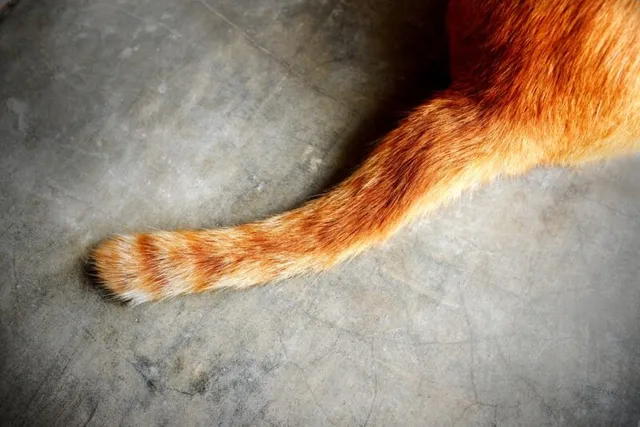
Your cat’s tail is essential to helping them keep their balance, but that’s not all it does. It is also vital for communication. Understanding your cat’s body language can help you bond better with your pet, and it can also help you identify when your cat is sick or in pain.
If your cat is happy, confident, or social, you may notice their tail is pointing upwards. If their tail sways gently, they are looking for attention. But they may feel agitated if their tail thrashes, thumps, or curls tightly around their body.
Your cat’s body language can be one of the first indications that something is wrong with his health, so be sure to familiarize yourself with the signs.

6. A Rough Yet Tiny Tongue
Your cat’s tongue may be small, but it performs many important duties. Not only does it entice your cat to eat their tasty meals, but it also allows them to groom themselves.
Your cat’s tongue is covered in tiny, spine-like structures known as papillae, which are made of keratin (the same material that makes up a human’s fingernails). These hook-shaped structures on your cat’s tongue help to remove loose fur from his coat.
While this can be helpful for grooming, it can also be a hazard if your cat gets into something he shouldn’t. If your cat chews on something, the papillae will force it back into his throat. Sometimes, they can drop it, but it isn’t always that simple. This is why keeping hazardous objects away from your cat’s reach is so important.

7. Whiskers Are Important
Whiskers are more than an aesthetic addition; they are essential to your cat’s balance and senses. Your cat’s whiskers are connected to their muscular and nervous systems, transmitting vital information so that they can evaluate the world around them. They aren’t just on their face, either—you can also find whiskers on their jaw and the back of their front legs.
Since your cat’s whiskers are essential to their sensory input and are connected to their nerve endings, you should never trim their whiskers. This will cause them serious orientation problems and pain.

8. Perfect Little Paws
Cats don’t typically enjoy having their paws touched, and there is an anatomical reason. Your cat’s paws are one of the most sensitive spots on their body, as they are full of sensory receptors. They are filled with nerve endings so that your cat can better navigate the terrain beneath him or feel the prey between his paws.
Since your cat’s paws are so delicate, they are also susceptible to damage from the environment.

9. Be Careful with the Claws
An injured or infected paw can significantly impede your pet’s normal way of life. You may notice swelling or redness around the feet, and your cat may experience difficulty and pain while walking. Thankfully, treatment and management of these conditions are relatively quick and have a good prognosis.

A good way to prevent nail disorders is to trim your cat’s nails properly. Don’t trim too close to the tissue and blood vessels, and ask a vet for advice if your cat becomes agitated when their nails are trimmed.
10. The Basics of the Bones
The average cat has 250 bones, which is more than the average human. Appendicular bones are the bones in the limbs, while bones of the axial skeleton contain the skull, spine, sternum, and ribs. Splanchnic bones are located in the soft organs of your cat’s body.
Cats have unique skeletal systems. They do not have a collarbone, and their backbone is impressively flexible. That is another reason why cats can often land on their feet.


Conclusion
Cats are incredible animals. Although many people are content to observe cats from a distance, it can be fascinating for pet owners to take a deeper look at the anatomy of a cat. Understanding the basics of your cat’s organs and body can help you recognize health problems or injuries if they occur, and that knowledge can also help you to be more informed at your next vet visit.
Sources
Featured Image Credit: Nils Jacobi, Shutterstock
Expert cat care, straight to your inbox
News, insights, and useful advice, delivered to you.

No spam — unsubscribe anytime.
By signing up, you agree to our Terms & Conditions and Privacy & Cookies Policy.
How useful was this post?
Click a star to rate. You can leave written feedback afterwards. (We read all feedback.)
Cats are Jordyn’s passion. Whenever she has the opportunity she loves to learn about animals and share her knowledge with everyone. She is devoted to her sassy tabby cat named Jack and works hard to buy him his favorite treats and toys. Discovering new ways to better care for her cat is always on her to-do list, and she is eager to help pet parents everywhere. In Jordyn's spare time, she loves to write, read, and take long walks. She has a creative spirit, which often helps her to come up with funny cat names.