Can Cats Catch Covid? Vet-Approved Facts & FAQ

In this article
Medical researchers are still learning about the SARS-CoV-2 (Severe Acute Respiratory Syndrome Coronavirus 2) virus that causes Covid-19 (Coronavirus Disease 2019). While it is rare, we know that pet cats can catch Covid from infected humans. It should not be confused with another coronavirus that only affects cats, feline enteric coronavirus (FECV).
Read on to learn more about how COVID may affect your pet cat, how to keep your cat safe if you get sick, and the difference between Covid-19 and feline coronavirus.

How Does Covid Spread to Cats?
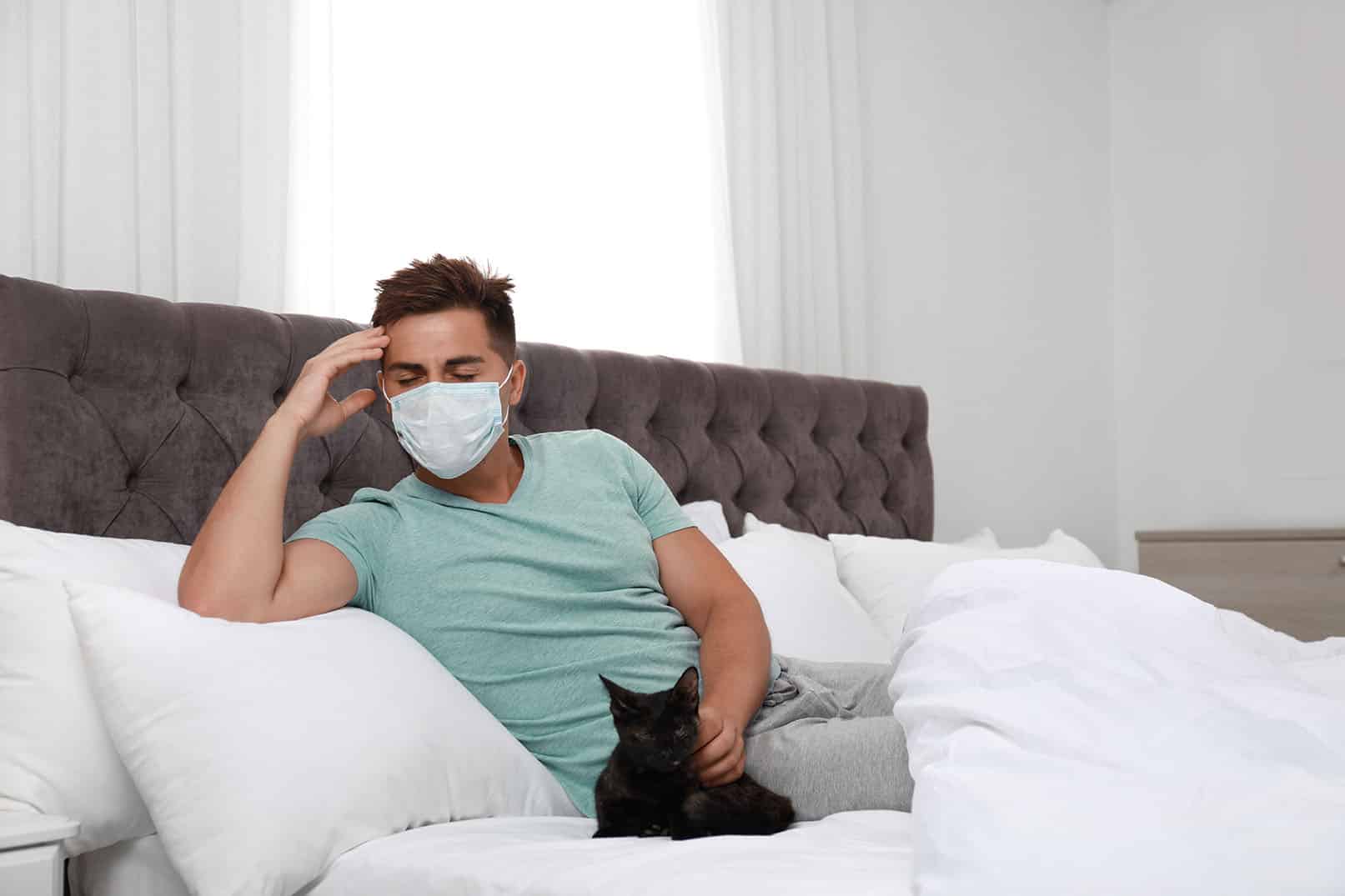
Your cat may contract COVID-19 if they have close contact with an infected person.1 The World Organization for Animal Health has reported cases of Covid-19 in some animals, including cats.2 Therefore, if you have COVID-19, you should thoroughly wash your hands before you touch your pet or handle their food and water. It is also best to wear a mask around your house and have it cleaned and sanitized frequently.
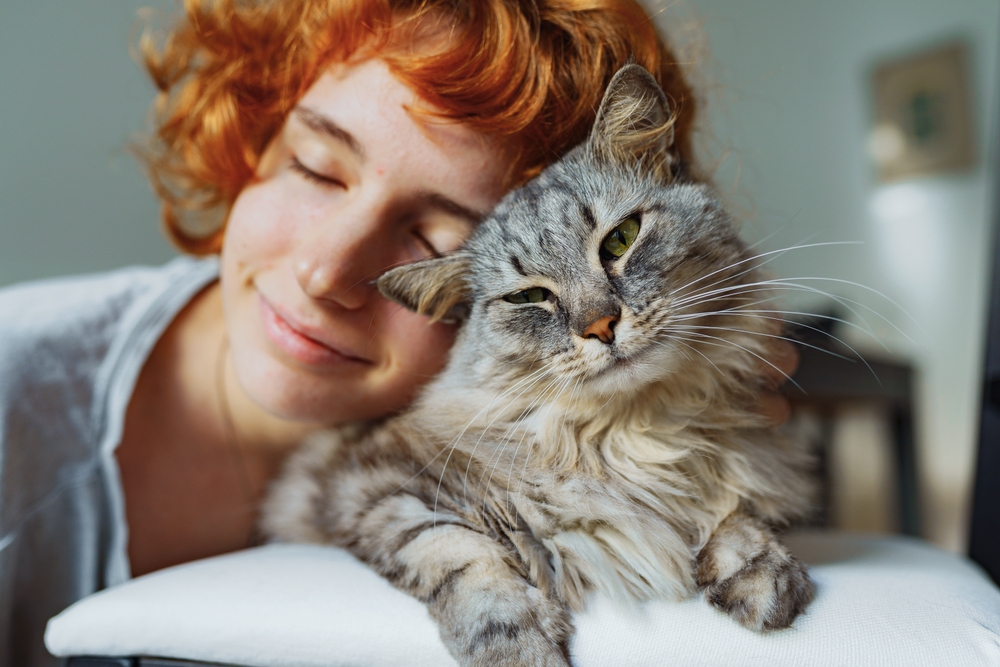
It’s hard not to cuddle your cat, but you should keep your distance from them until you are well to keep them safe. Your doctor can tell you how contagious you are. If possible, have an uninfected person at home to care for your cat while you recover.
You can help reduce the spread of Covid by wearing a mask and frequently sanitizing yourself and your house. However, masks aren’t safe for cats or other pets to wear. Additionally, you should not wipe or bathe your cat with chemical disinfectants, alcohol, hand sanitizer, or any other surface cleaners in an attempt to “sanitize” them; this will not help and will harm your cat’s skin.

What Are the Signs of Covid in Cats?
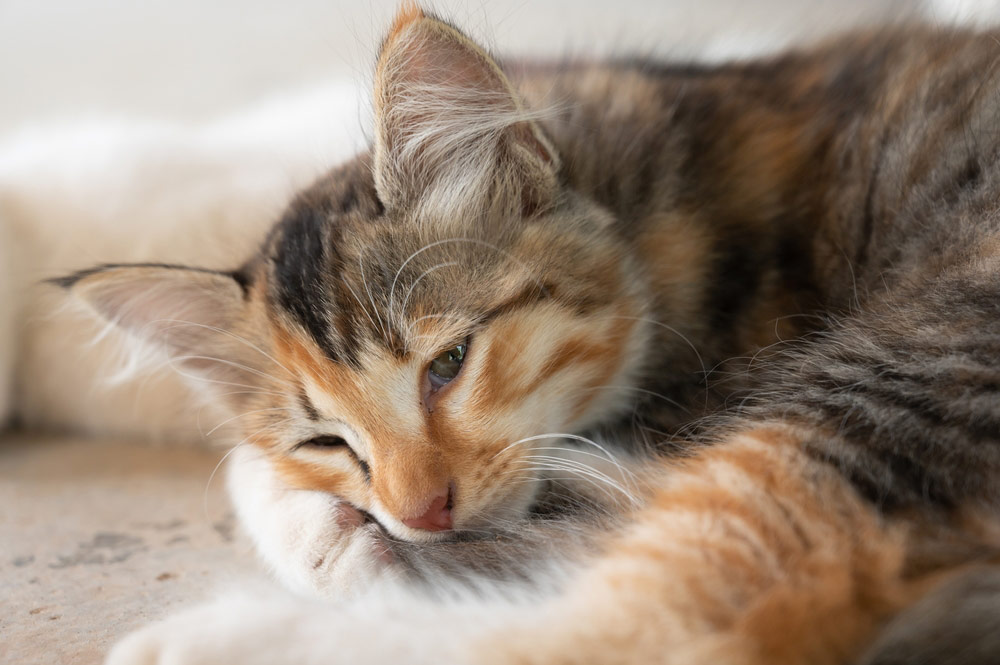
A cat can contract Covid from a human and not get sick. They may carry the virus but remain asymptomatic. Many cats with COVID-19 have mild signs and get better with at-home care. If you suspect that your cat has caught Covid, you may observe the following.
Signs your cat may have caught Covid-19 from you:
It is important to note that these signs aren’t exclusive to COVID-19 in cats; other illnesses may elicit similar signs. Regardless of your COVID-19 status, seeing these signs in your cat is an indication that your cat needs to be seen by a vet.
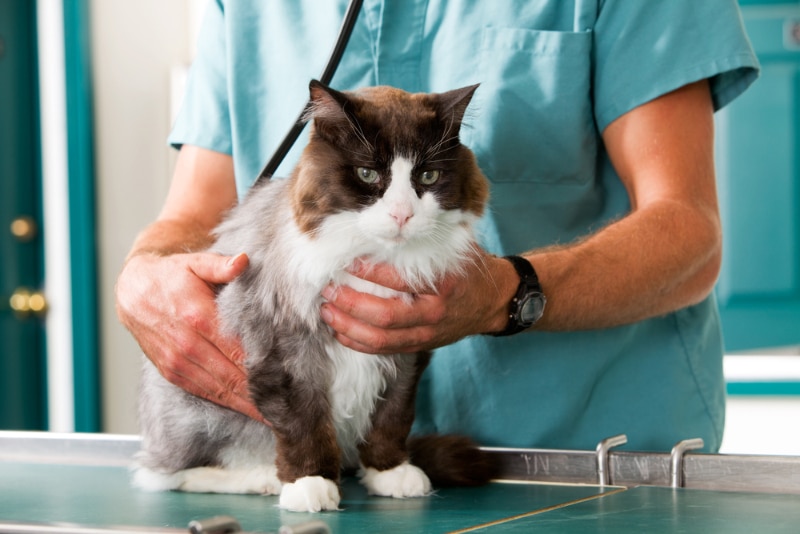
Call your vet immediately if you suspect that your cat contracted COVID-19 from you or someone else. It’s vital to contain the spread of Covid, so don’t go to your vet’s office if you are sick. Your vet can give you instructions on how to take care of your cat at home or advise you to make arrangements for someone else to bring your cat in to be seen.
Covid-19 versus Feline Enteric Coronavirus (FECV)
Covid-19 is just one of several coronaviruses. Cats are also susceptible to another called feline enteric coronavirus. Under most circumstances, this virus is relatively harmless, causing a mild episode of stomach upset, which most healthy cats can easily resolve. However, this virus can remain in your cat’s system and mutate, resulting in a notorious illness known as feline infectious peritonitis (FIP).
FIP is sometimes casually referred to as “feline coronavirus,” as it only affects cats and cannot be spread to humans. Cats that live in multi-cat households or have exposure to other cats are more likely to catch it. This coronavirus is spread through contact with other cats’ feces. Respiratory transmission is also possible but rare.
The signs of FIP may include reduced appetite, lethargy, jaundice, weakness, weight loss, upper respiratory problems, and a fever. Some cats may also have a bloated stomach. The signs of FIP overlap with those of other illnesses, and it’s crucial to get an accurate diagnosis. Contact your vet right away if your cat isn’t feeling well.
Can Cats Transmit Covid-19 to Humans?
Since we’ve learned that humans can transmit Covid-19 to cats, you may wonder if a cat with Covid-19 can pass the virus on to other humans. Fortunately, most research indicates that cats and dogs are not easily infected by COVID-19 under natural conditions, and there isn’t much evidence to suggest that they can spread it to other people.3
However, there has been a case where a vet was infected with Covid-19. It might have been transmitted from a cat whose owners had Covid-19.4 While inconclusive, case studies like these indicate that if you think your cat might have Covid-19, you should take extra precautions whenever you interact with them. Additionally, if your cat is sneezing, it is best to wear a mask and a face shield to offer yourself the best protection possible in the unlikely event that your cat sneezes on your face.
As always, follow-ups with your medical doctor (for you) and your vet (for your cat) are always recommended if you ever suspect that either of you has been exposed to COVID-19.
Conclusion
While it’s rare, cats may get Covid-19 from humans. Most cats that contract it show mild or no signs and in most cases, recover quickly.
Another coronavirus that only affects cats is FECV, which can cause FIP. Infected cats can spread this coronavirus to other cats but not to humans.
Remember to always call your vet or local animal hospital if you suspect that your cat has COVID-19, FIP, or any other illness.
Related Read: Can Cats Catch Diseases from Goats?
Featured Image Credit: New Africa, Shutterstock

Expert cat care, straight to your inbox
Vet-reviewed advice, behavior tips, and the best of Catster. Free, and you can unsubscribe anytime.
By signing up, you agree to our Terms & Conditions and Privacy & Cookies Policy.
Cassandra is a professional writer living in the Upper Midwest of the U.S. Much of her writing centers around animals and family life, but she's been known to dabble in fiction. Her favorite topics to write about are cats, dogs, parenting, and food. Cassandra shares her home with two rescue pets: Harley, a beagle, and Liam, a Siamese mix.
Join the conversation
Ask a question, share your story, or send private feedback.