Get

In Your Inbox

Catster is reader-supported. When you buy via links on our site, we may earn an affiliate commission at no cost to you. Learn more.

That’s Disgusting! My Cats’ Dirty Little Secret

Alex cleaning himself and leaving the door frame filthy

Hi, I’m Dr. Karyn! Read my introduction to learn more about me and meet my five hilarious cats: Clutch, Cyril, Alex, Zelda, and Zazzles.

Cats. Neat & tidy, delicate & demure, perfectly poised, pure, and pristine; they are the picture of cleanliness. But when you look a bit closer, you may start to see the dark, dirty, and greasy truth hidden beneath this seemingly flawless illusion.

I’m not talking about litter box etiquette or hairball habits, or even the mounds of fur that litter our hallways, infiltrate our wardrobes, and form blankets between our sofa cushions. These are just the well-known and largely inconsequential pitfalls of sharing your life with a cat. No, what I’m talking about is THIS:

Look at the state of my wardrobe door!

The grease, the grime, the oily deposits that slowly build up over time, so insidious in nature that we only become aware of their presence when they, seemingly overnight, become a blinding scourge on the corners, edges, and hidden surfaces of our world. One day, you’re walking around the house as usual, doing some vacuuming here, a little dusting there, when you practically trip over an unsightly accumulation of filth that you would swear wasn’t there the day before. And yet, it was. It has been there for some time now, imperceptibly gaining ground day by day until it leaps forth from obscurity and forces you to acknowledge its existence. No longer content to live in the periphery, these greasy blemishes will make you doubt your cleaning abilities, your attention to detail, and your sanity.


Cyril admires his greasy handiwork

Am I Overreacting?

Okay, maybe I’m being a little dramatic. Still, when you spend a significant amount of time each week cleaning up after five cats, five dogs, and one husband, it comes as a bit of a shock to realize these grubby little patches have been building up right under your nose, seemingly invisible until they were too large, too dark, and too ingrained in the plasterboard to miss.

The problem, as I see it, is threefold.

Firstly, I have fallen victim to the belief that my indoor cats are largely clean creatures, not capable of imparting grease and grime throughout my home.

Secondly, I tend to focus on floors and surfaces higher up when cleaning, forgetting to pay attention to things at cat height.

And finally, these marks do appear very gradually. If my cats were to actually wipe mud or dirt on the walls, doors, and cupboards, it would be noticed right away. Instead, this gradual accumulation is like the ill-fated frog, slowly boiling to death in a pot of water, heating up by such infinitesimal degrees that he doesn’t realize he’s cooking until it’s too late. Fortunately, the consequence in my scenario is a dirty wall, not a poached amphibian.

Leaving his grubby little mark

What Is It?

Ah! I thought you’d never ask. These unsightly smudges are not simply the result of dirt clinging to my deceptively clean felines, they are the result of scent marking. Pheromonal calling cards designed to make them feel at home, in much the same way we might spray some air freshener, light some scented candles, or set out flowers to create a pleasing olfactory experience.

Cat Scent Glands Infographic
You are free to use this image as long as you link back to Pangovet.com for credit.

Unlike the more adversarial tactics of urine spraying or territorial pooping, cats will often leave neutral or comforting pheromones behind by rubbing their face and head on surfaces in the areas they inhabit. With scent glands distributed around their whiskers, cheeks, forehead, and chin, whenever a cat rubs those zones on our doors, walls, and even us, they are leaving behind a few molecules that say “I like you and I feel safe and secure here.”

They choose edges to rub against as these tend to be more prominent points, and the corners allow them to apply more pressure to the glandular skin. Although the chemicals released by these glands do impart some territorial markers, they are not really possessive or designed to warn other cats off. They are also associated with feelings of comfort and calm, which is why cats seem to experience pleasure when they rub these areas against objects, people, and other cats.
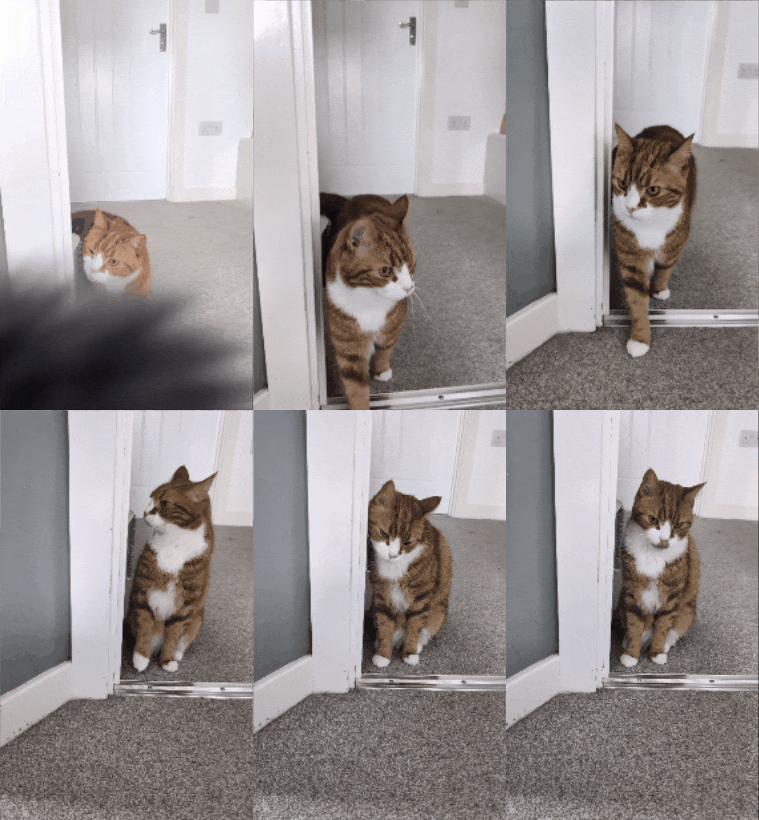
Alex cleaning himself through the door frame

Why So Grubby?

The secretions left behind each time a cat rubs their head against a doorframe are microscopic; you would never see them with the naked eye. But each time they push up against a spot, they leave tiny particles of dirt and dead skin cells along with the oily glandular material, and over time, these microscopic deposits build up, like the grubby marks that invariably appear around door frames and handles.

As you may have noticed with your own cats, most felines have favorite spots they like to rub against, and in my house, all five cats tend to use the same locations. So what starts out as an invisible chemical sticky note eventually becomes an oily, dirty billboard.

What Am I Going to Do?

It’s pretty simple; I’m going to pay a little more attention to these pheromonal hot spots when cleaning. BUT I am not going to use detergent, disinfectant, or any other chemical, enzymatic, or scented products here. These marks might be unsightly to me, but they are also very important to the serenity of my feline housemates. So when it comes to removing these grubby eyesores, it will be with water only – and you should do the same.

Dr Karyn's paw print signature

This article is a part of Dr. Karyn's series with her five hilarious cats.

Want content like this delivered to you?

Sign Up For Our Newsletter

News, insights, expert advice, and everything cat

* By submitting, you agree to our Terms & Conditions and Privacy & Cookies Policy.

How useful was this post?

Click on a star to rate (you can leave written feedback after clicking submit)

Help us improve Catster for pet parents!

Your feedback really matters.

What did you like about this post? Also how can we improve it?

Join the conversation

2 Responses

    1. Hi Barb, you can learn all about it here: https://www.catster.com/cat-behavior/cats-making-biscuits/
      We hope you enjoy the read.

Leave a Reply

You’re very welcome to leave a comment or question. Please know that all comments must meet our community guidelines, and your email address will NOT be published. Let’s have a positive and constructive conversation.

Talk With A Vet Online

Peace of mind,
anywhere, anytime

Affordable vet advice

10 Fascinating Facts About Mackerel Tabby Cats (Vet-Verified)

There’s something so iconic about the mackerel tabby cat. Maybe it’s their tiger-stripe pattern or the signature “M” shape on their foreheads. Either...

Maine Coon Kittens for Sale in Maine: Breeders List 2025

Catster advocates for adopting before shopping, though we fully understand that there are many reasons for seeking a breeder. So, we encourage it...

Can Cats Eat Feta Cheese? Vet-Approved Risks & Alternatives

It’s a common scenario: you’re enjoying a delicious snack or meal, and your feline friend gazes up at you with those pleading eyes...

Can Cats Be Allergic to Dogs? Vet-Approved Facts & FAQ

Cats can be allergic to certain food ingredients, flea saliva, dust mites, molds, and even outdoor particles like pollen from trees, grass, and...

More related

What Is a Cat Lady? The Surprising Answer & When It’s a Problem

We have heard the term “cat lady” more times than we can count. It seems awesome that someone often touts the phrase to...

We Chat with the Creator of “Hell’s Kitty,” a Show Starring a Cat Named Angel

Do you ever look your cat deep in the eyes and become overwhelmed with the soul-shuddering feeling that you are staring right into...

15 Cat Statistics & Facts All Cat Lovers Should Know (Vet-Verified 2025 Update)

Note: This article’s statistics come from third-party sources and do not represent the opinions of this website. It’s amazing how many cat lovers...

Is Declawing Cats Illegal in the UK? Facts, Side Effects & Care Tips

Every cat lover is familiar with the chilling sound of little kitty nails being dragged across a piece of furniture. Sometimes, our cat’s...

Keep reading

Do Cats Hate Having Their Whiskers Touched? Vet-Verified Facts & Info

Whiskers aren’t just there to make your cat look cute. They act as an important sensory feature to pull signals from the environment into your cat’s brain and nervous system. Because their whiskers are so sensitive, some cats hate having...

close up of cat whiskers

Are Spider Plants Toxic to Cats? Vet Reviewed Facts & FAQ

Spider plants are a common indoor houseplant. These fern-like plants are easy to take care of and look lovely in a variety of rooms. If you have pets, however, you need to look beyond whether this plant looks nice and...

Catster_Are Spider Plants Toxic to Cats

Why Do Cats Act Weird When Scratching the Base of Their Tail? 10 Vet-Reviewed Reasons

It’s not uncommon for cats to act weird when you scratch the base of their tail. This area is quite sensitive, and cats respond one way or another. Additionally, a tail that sticks straight upright into the air is referred...

young cat breathing heavily

Can Cats Eat Marshmallows? Vet Approved Nutritional Facts & Risks

If you’re enjoying a cup of hot chocolate with marshmallows on top, or are feasting on mallows directly from the bag, it can be tempting to offer one or a piece of one to your cat. But, it is important...

Can Cats Eat Marshmallow

How to Make a Hyperthyroid Cat Gain Weight: 4 Vet-Reviewed Ways to Help

Cats with hyperthyroidism can live healthier lives if their condition is managed. Since one major sign of hyperthyroidism is weight loss, cat owners may wonder how to help their cats gain weight. An experienced vet is your best source of...

loss weight or skinny cat

Can a Dog Get a Cat Pregnant? Vet-Reviewed Facts & FAQ

While dogs are, without a doubt, man’s best friend, they can also exhibit strange behavior. They eat plants from the garden and sleep in awkward positions, but one of the most bizarre behaviors you may witness is your dog mounting...

Savannah Cat hugging a dog

Is Pilea Toxic to Cats? Vet-Reviewed Houseplants Examined

When you think you’ve seen everything as a pet owner, your furry friend does something new to throw you for a loop. That’s what happens to cat owners every year when they notice their feline friends eating different plants in...

Catster_Is Pilea Toxic to Cats

Can Cats Eat Chicken Nuggets? Vet-Verified Facts & FAQ

Picture this: You’re eating some dinner one night, and your furry friends gather around you. Those sweet eyes are hard to resist, but you wonder if it’s safe to feed them human food. What should you do? Well, it depends...

Can Cats Eat Chicken Nuggets

