Why Do Cats Purr? 5 Vet-Reviewed Reasons Behind the Behavior

There’s something soothing about sitting with a purring cat, but do you know the reasons behind that distinctive vibration?
It’s commonly thought that cats purr when they’re happy and content. While this is true, it’s not the whole picture. Cats actually purr for a variety of different reasons. Before we find out what those are, let’s look at the exact mechanism that allows cats to make that noise we all know and love.

How Do Cats Purr?
The mechanism of a cat’s purr has taken scientists a long time to figure out.
It turns out that the purr originates in the cat’s larynx or voice box — more specifically, the part called the glottis. The glottis expands and contracts, and as it does so, the air around it vibrates. And those vibrations are what we hear and feel when our cats purr. The frequency of this purr is usually between 20-30 vibrations per second.

Some wild cats like pumas and ocelots also purr, but no cat can both purr and roar. So, lions, jaguars, and tigers all roar but can’t purr. The difference is thought to be due to the hyoid bone of the larynx. Purring cats have ossified hyoids, and roaring cats have hyoid bones that are only partially ossified. Even so, the research isn’t completely clear!
Scientists are also still trying to work out exactly what triggers the purring. It’s thought that the signal for a cat to start purring comes from a neural oscillator in the cat’s brain. But it’s still unclear at what point that this is triggered and a cat starts purring.
Perhaps that’s a puzzle that we’ll have to leave to the cats. What we do know are the reasons that cats purr, so let’s learn more!
The 5 Reasons Cats Purr
1. Cats Purr When They’re Happy
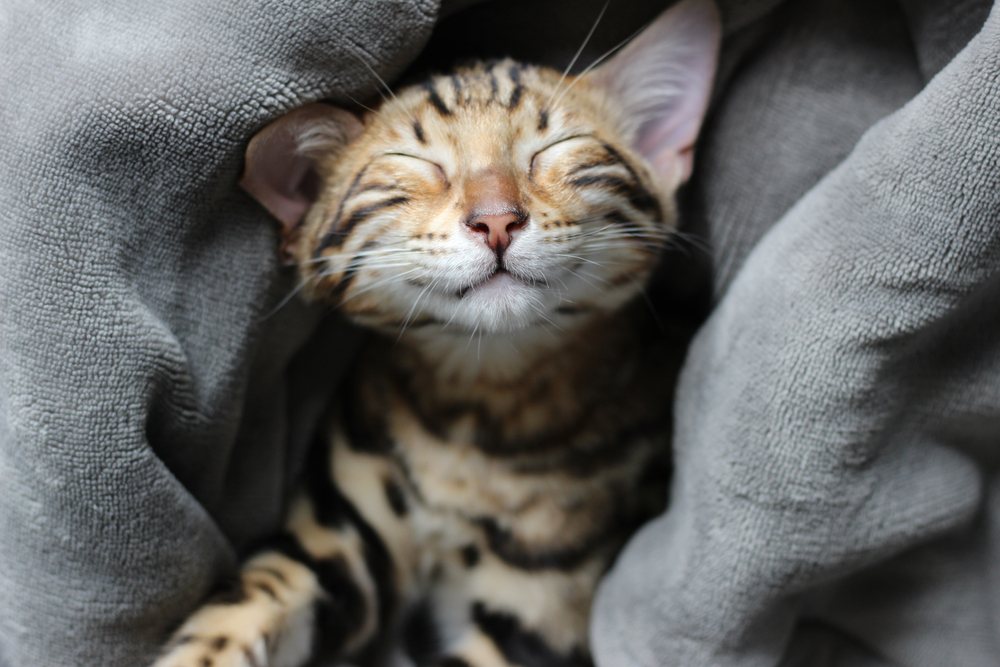
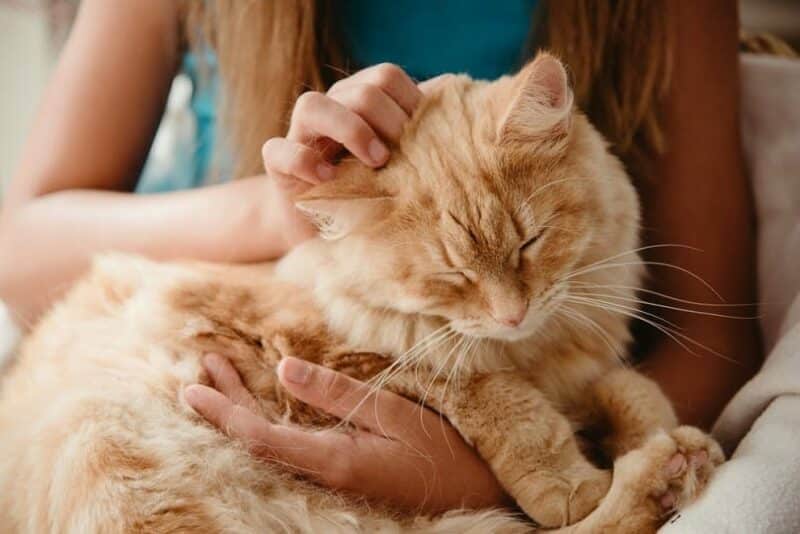
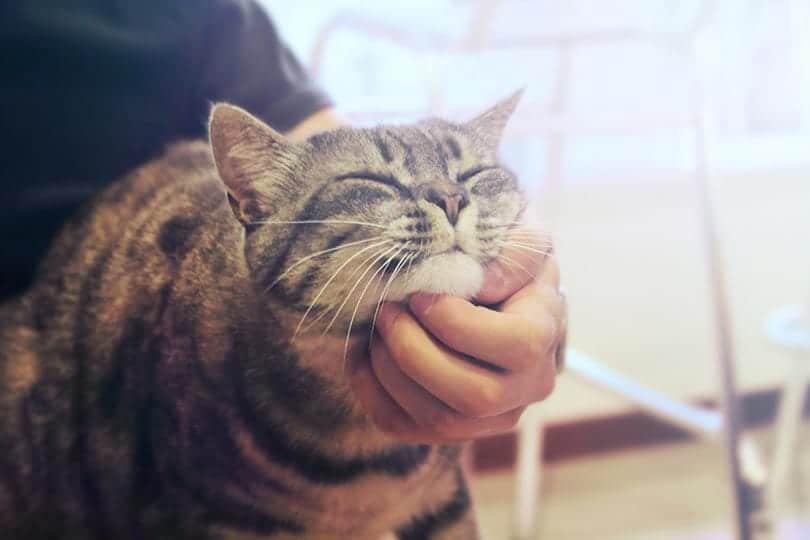
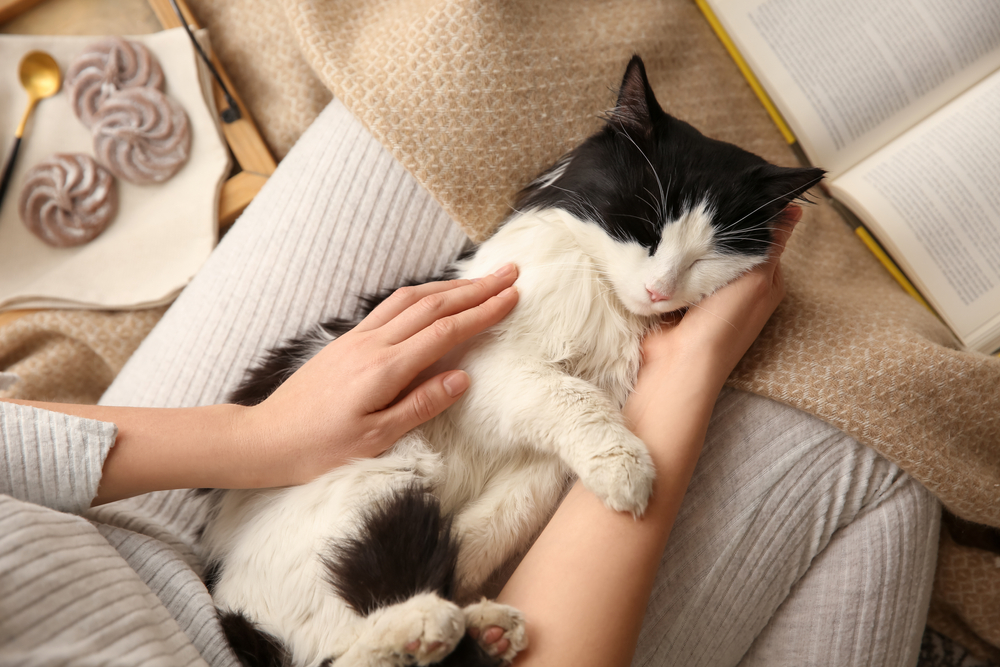
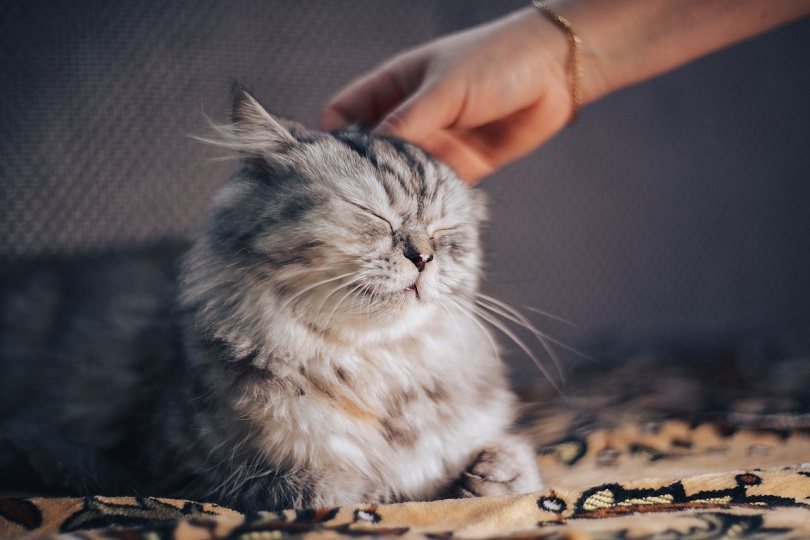
Cats do indeed purr when they’re happy and relaxed. If your cat is sat on your lap or chest with a blissed-out expression and half-closed eyes, you can be sure that they’re enjoying their relaxing time with their favorite person.

2. Cats Purr When They Need Something
Some cats will purr when they’re lining up at their food bowl for a snack. They may combine their purr with a chirp or meow to create an adorable burbling sound. The thought of food might be making your cat happy, and we can totally understand that!
Researchers have found that there’s a difference between the purr that a cat makes when requesting food and when they’re simply greeting their human and asking for attention. They found that the “solicitation” purr sounds more urgent and includes a higher frequency sound.
This high-frequency element of the solicitation purr is in the range of 220-520 Hertz (Hz), which corresponds closely to the cry of a human baby at 300-600 Hz. As humans, we’re pre-programmed to respond to the cries of a baby, so when cats use their solicitation purr to request something, maybe they’re exploiting the urge that we have to provide and care for our babies.
The same research showed that even people who weren’t cat owners could distinguish the difference between a solicitation purr and a regular purr.
We always knew that cats were smart!
3. Kittens Purr to Communicate With Their Mother Cat
Kittens can purr by the time that they’re a couple of days old, and trust us, it’s an incredibly cute sound! Purring helps kittens bond with their mother cat, but it also communicates to her that each kitten is happy, safe, and well.

4. Cats Purr When They’re in Pain
Some cat owners are surprised to hear this, but it’s true! Purring can help a cat to self-soothe, much like a child will seek out their parents for a reassuring hug when they are hurt.
Female cats also purr during the first stage of labor, and this is thought that this helps them relax and reduce pain.
If you have any concerns or curiosities about your cat or their health, we recommend you contact a vet directly.
5. Cats Purr to Speed Up Healing
Those cats are clever creatures. It’s been shown that the low frequency of purring creates vibrations that can help speed up the healing of bones, wounds, and tendons. Purring can even help reduce pain, make breathing easier, and reduce swelling and inflammation.
The frequency of a cat’s purr has been measured from 20Hz-150Hz, a range that matches healing frequencies used in therapeutic medicine. Bone healing responds best to frequencies from 25Hz-50Hz and soft tissues to frequencies around 100Hz.
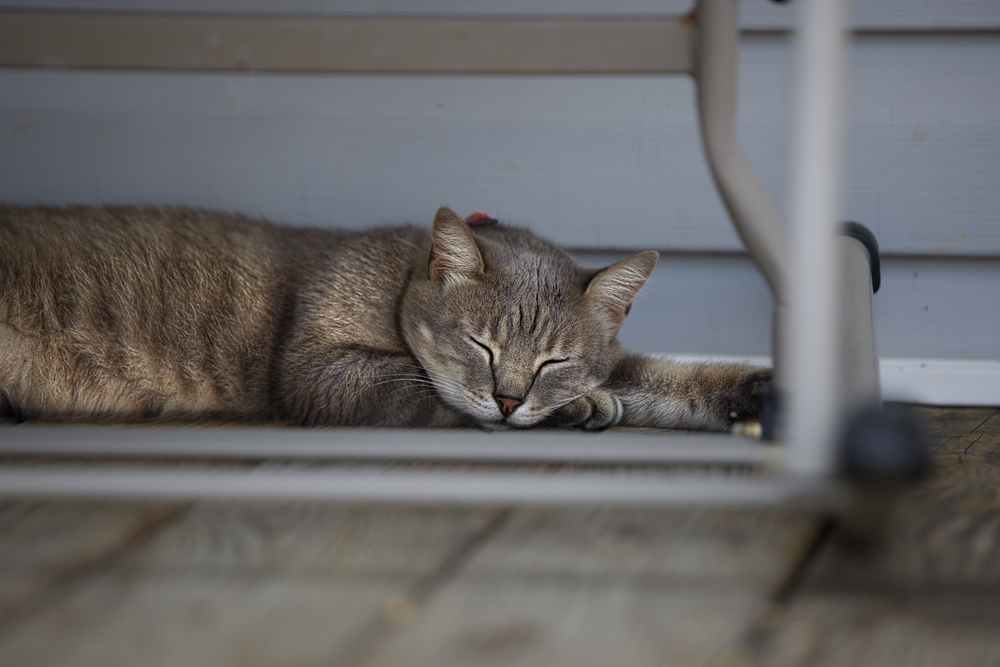
So, while your cat is purring away to themselves at night, they may be working at repairing their bodies.
Conclusion
Besides purring being beneficial to your cat, it is also good for us humans. Owning a cat can help reduce blood pressure and keep us feeling less stressed. Research has shown that cat owners are up to 40% less likely to suffer from a heart attack than non-cat owners. Who knows, perhaps the soothing and healing purring of cats plays a part in that?
Related Reads:
Featured Image Credit: Suzanne Tucker, Shutterstock

Expert cat care, straight to your inbox
Vet-reviewed advice, behavior tips, and the best of Catster. Free, and you can unsubscribe anytime.
By signing up, you agree to our Terms & Conditions and Privacy & Cookies Policy.
Emma is a freelance writer, specializing in writing about pets, outdoor pursuits, and the environment. Originally from the UK, she has lived in Costa Rica and New Zealand before moving to a smallholding in Spain with her husband, their 4-year-old daughter, and their dogs, cats, horses, and poultry. When she's not writing, Emma can be found taking her dogs for walks in the rolling fields around their home...and usually, at least some of the cats come along, too! Emma is passionate about rescuing animals and providing them with a new life after being abandoned or abused. As well as their own four rescue dogs, she also fosters dogs for re-homing, providing them with love and training while searching for their forever homes.
Join the conversation
Ask a question, share your story, or send private feedback.