How Far Can Cats Hear? Vet-Reviewed Facts & FAQ


In this article
Domestic cats are amazing creatures. They can jump five times their height, tap into the earth's electromagnetic field to navigate, see minute movements in the dark, and feel astonishingly minor changes in airflow with their whiskers. And those aren’t the only surprising things cats can do!
They can also hear in a wider range and from further away than humans. It is believed that cats may be able to hear sounds from 2,300 feet away, depending on the volume, frequency, and environmental conditions, and they can also hear sounds in a wider frequency range than humans, so we can easily add stunningly good hearing to the already long list of kitty superpowers! Read on for more information about cats and their hearing.

So Cats Can Hear Better than Humans?
Absolutely! Cats can not only hear sounds from further away than we can, but they can also hear a broader range of frequencies. Depending on the volume of the sound produced, ambient noise, and environmental conditions, humans may be able to hear voices and understand what's being said from around 500 feet away.
We can sometimes hear a person speaking but cannot determine what they're saying from around 1,000 feet—if the person is yelling. Cats, on the other hand, may be able to hear sounds made from 2,300 feet away or more, based on anecdotal reports. Cats’ hearing is generally four to five times better than humans.
And kitties can also hear a greater range of frequencies. Humans can hear sounds in a range from around 20Hz to 20,000Hz. Cats, on the other hand, can hear sounds from 48Hz to 85,000Hz.1 They have one of the broadest mammal hearing ranges! For comparison, dogs can hear sounds between 65Hz and 45,000Hz, giving cats a clear win in the hearing department!2
Cats are also pretty good at pinpointing where sounds are coming from. They can determine a sound's provenance within 3 inches from a whopping 3 feet away. Their ears can move a full 180° to locate the direction a sound is coming from, and they can move their outer ears independently of each other.
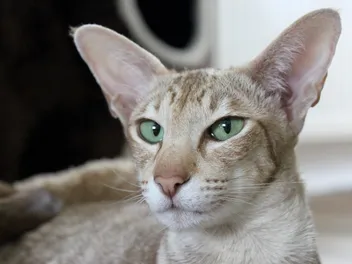
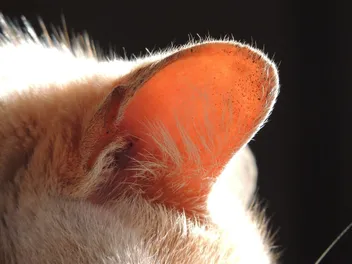
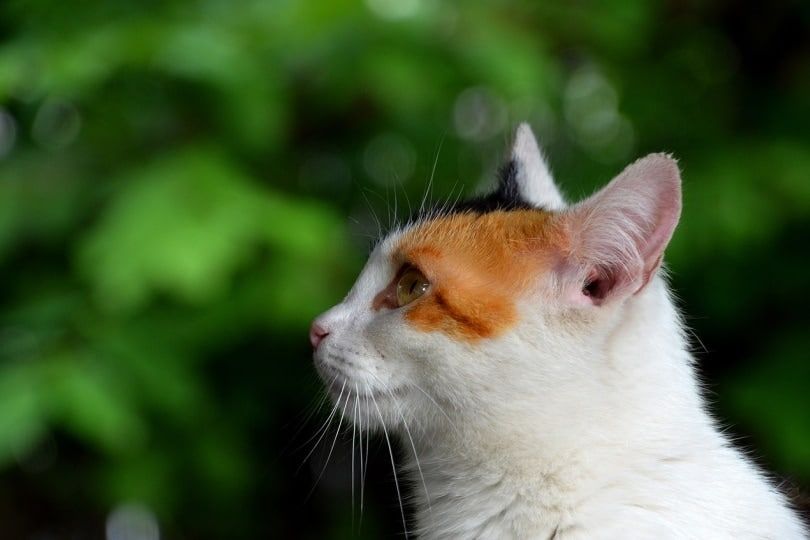
Kitties have 32 muscles in each ear, allowing them to move their outer ears precisely. The cute triangular part of a cat's outer ear is technically called the pinna. Cats can zoom in on sound by moving their outer ears. Pointing their ear in a specific direction increases their ability to hear what's happening in that area!

Why Do Cats Have Such Good Hearing?
Cats are predators, and many of their senses developed to help them find and track prey. They can see very well in low light and have a wider field of vision than humans. Their eyesight is optimized to see quick movements in dim light, and dusk and dawn are when cats prefer to hunt.
Their whiskers are full of nerve endings that help cats "see" up close. Their sensitive paws pick up on minuscule vibrations that allow them to feel the movements of critters around them. They developed exquisite hearing and moveable ears for precisely the same reasons—to locate and catch prey.
Are There Cats Who Can't Hear?
Yes. Some cats are born deaf. Cats with white fur and blue eyes are prone to deafness, as are certain breeds, such as Persian, Devon Rex, and Manx cats. Cats also lose their hearing due to injuries, tumors, polyps, certain medications, and chronic and severe infections.
Tumors in and around the ear and conditions that cause inflammation of the auditory nerves can also have a negative impact on feline hearing.
Middle and inner ear infections can damage a cat’s delicate internal ear structures and the eardrum to the point where deafness results. Common signs include redness and discharge from the ear, headshaking, head tilt, and ear scratching. Some cats suffering from an infection also have an unpleasant smell wafting from their ear or a discharge. Ear Infections can usually be caught and treated before they result in chronic issues or lead to complications.
What Happens if a Cat Can't Hear?
If a cat is born deaf, they'll learn to navigate the world without relying on the ability to hear. The same is true for kitties that lose their hearing later in life, but they may take longer to adjust than cats born with the impairment.
Cats are incredibly adaptable, and most learn to use their other senses more efficiently. While most cats who are born deaf or who lose their hearing do just fine, they’re at a serious disadvantage when it comes to avoiding predators or traffic. As a result, it's critical to keep your feline companion inside or to only allow them outside on a leash if you suspect they're suffering from hearing loss.

Is There Anything I Can Do to Protect My Cat's Hearing?
Because cats' hearing is much more sensitive than ours, limiting your pet’s exposure to loud noises is essential. There's a reason cats become agitated when exposed to crying babies and construction noises.
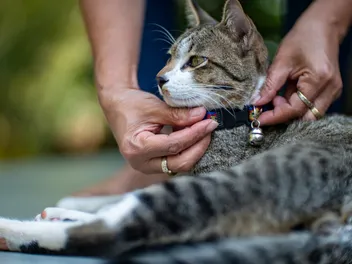
It's best to take your cat for regular check-ups to ensure everything is okay with their health. Your veterinarian will ensure your cat's not suffering from an ear infection or other ear-related issues, like mites. Most veterinarians recommend a yearly check-up for healthy young adults and middle-aged cats and twice-yearly visits for senior felines.

Final Thoughts
Cats' hearing puts ours to shame! They can hear further than we can in a stunningly wide range of frequencies. They use their super hearing to pinpoint prey, stay safe, and keep track of their owners. If you've ever wondered how your cat knows you're home before you open the door, it's because they can hear you coming from several feet away!
Sources
Featured Image Credit: akirEVarga, Pixabay
Expert cat care, straight to your inbox
News, insights, and useful advice, delivered to you.

No spam — unsubscribe anytime.
By signing up, you agree to our Terms & Conditions and Privacy & Cookies Policy.
How useful was this post?
Click a star to rate. You can leave written feedback afterwards. (We read all feedback.)
Lorre Luther is a writer who is firmly convinced that cats are smarter than humans. She left her law career in the United States and moved to the Netherlands to follow her dream of becoming a writer. Lorre currently lives in Rotterdam, she enjoys traveling and greatly appreciates the beauty of nature. Lorre has a spot for animals and admires the intelligence of cats.