


In this article
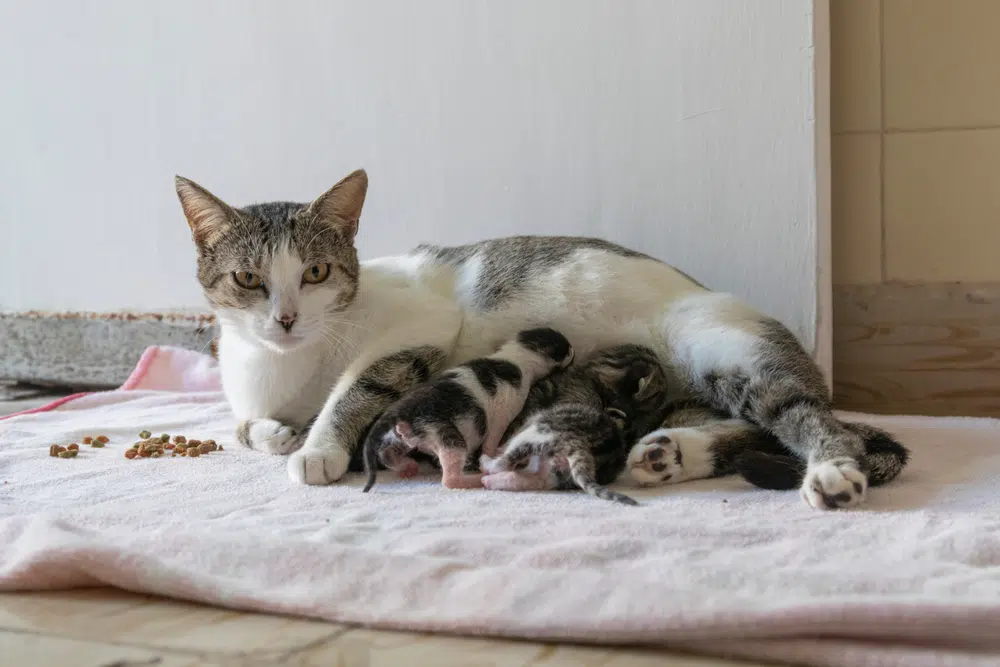
Cats are known to be exceptional at caring for their young ones, and there’s nothing more exciting than having a cat give birth to a litter of kittens at home. If you have a cat that has recently given birth, the first thing that comes to mind after ensuring that the kittens and mom are okay is when you can hold them.
In general, you should wait at least 2 weeks before holding a kitten, but there are cases where this may not be possible. Keep reading to discover why you should wait to hold kittens and what to do if you need to hold them earlier.

The Birth and Early Life of a Kitten
Cats are usually pregnant for 63 days. You will see changes in your cat’s behavior and appearance in the first few weeks of her pregnancy. The signs you will notice are:
- Eating more
- Resting more
- Their stomach will start growing
- Their milk glands begin to fill
- Looking for a nesting place (quiet places like attics, under the bed, etc.)
Your role as a responsible owner is to ensure your cat stays strong by giving her high-protein food and ensuring that she has a safe nesting place away from noise and other animals. When giving birth, you will first notice your cat’s nervous meowing and behaving like she’s trying to tell you something.
In the first stage, your cat may have a mixture of short contractions and relaxations. As time goes on, you will see stronger and stronger contractions until the first kitten is born. Sometimes, the second kitten can emerge quickly after the first, and sometimes, it can take a few hours.
The kittens are born blind and unaware of anything happening in the outside world. The most important task for a newborn kitten is eating. The mother’s milk is the only food that kittens eat for the first few weeks, and because of its high protein and fat value, the kittens grow rapidly. The milk also contains antibodies that protect kittens for the first few weeks of their lives.

Your Role in the Birth of the Kittens
Sometimes, inexperienced mothers need a helping hand during birthing, and that’s where you need to step in. This may include cutting the amniotic sack that the kitten is born in, detaching and sometimes clamping the umbilical cord, and cleaning the nose and mouth of the kitten to make sure that they’re breathing normally, as well as warming them up.
If your cat is distressed, or a kitten is stuck in the birth canal, the mum is bleeding or straining for more than 20 minutes without passing another kitten, or the mum or the kittens are unwell in any way, they need to be taken to the vet to assist with the delivery.
When you are assured that the kittens are alive and well, you must ensure they eat properly. A common occurrence, especially in a big litter, is that the bigger kittens drink most of the milk, so you’ll need to ensure every kitten is drinking and growing properly.
The same goes for the mother, who needs to regain her energy by eating and drinking regularly.
Relationship with the Adult Cat
A significant role in holding a kitten for the first few weeks is your relationship with the cat who gave birth. We often see stray cats who give birth and want to help them, but we must earn the mother’s trust before we can hold them. In that case, we suggest just leaving the food and water for the mother cat until she makes sure that you are not a threat to them.
On the other hand, with pet cats, the mothers may allow their owners to hold their kittens very soon, and it doesn’t make them anxious because of their bond with their owners. Sometimes, the mother cats bring their babies to the humans as a sign of trust, but still, unless there is a health issue or a kitten is not feeding properly, there is no need to handle them until they are 2 weeks old.
Orphaned Kittens
Before adopting an orphaned kitten, you must know it’s a lot of work. The kitten’s care depends on their age; older kittens are easier to care for, and you can hold them safely. With younger orphans, you’ll need to ensure that their temperature is alright, they are feeding and toileting regularly, and gaining weight properly.
You must feed the newborn kittens every few hours, as well as helping them to pass urine and feces before and after a meal, and also, if you find them, you should first take them to your vet for a check-up to see if everything is alright.
If you need to speak with a vet but can't get to one, head over to PangoVet. It's an online service where you can talk to a vet online and get the advice you need for your pet — all at an affordable price!



Handling Kittens
When handling newborn kittens, only do so before 2 weeks of age in case of any of the previously mentioned health issues, feeding or weight gaining problems, or if the kitten is orphaned. Ensure your hands are clean and warm. Newborn kittens are very fragile and don’t handle cold temperatures very well. Also, because of their small size and soft muscles and bones, you need to be very gentle while holding them. Do not let small children handle young kittens, as they may inadvertently harm them.
You should always handle newborn kittens in front of their mother because if they go out of her sight, it can cause stress and discomfort for the mother and the kitten.

Reasons to Hold a Kitten
We mentioned that the most important reason to hold a kitten is health-related, but the second on the list is socialization, which is very important to practice from an early age with the kittens. They are blind for the first 10-14 days of their lives, and in that period, they are unaware of their surroundings and don’t need to be socialized.
However, you should start socialization from 2 weeks old onwards by petting them and getting them used to your scent. You can hold them every day for a short period and get them used to being handled.
As time progresses, the kittens will become used to your touch, and as they get stronger, you can introduce them to objects such as toys.

Final Thoughts
Although most cats are very good at raising their kittens on their own, sometimes there are instances where they need our help. In those cases when their life or health is endangered, you will need to hold the kitten no matter their age, but you should typically wait at least 2 weeks before touching a healthy kitten. Remember, you can consult your veterinarian if you still have doubts and worries.
Featured Image Credit: Supavadee butradee, Shutterstock










