Can Indoor Cats Get Toxoplasmosis? Vet Reviewed Signs & Prevention Tips



As cat owners, we want to keep our cats safe. But we also want to keep our family safe. It seems like when you hear about toxoplasmosis, you have to choose between your cat or your safety.
Cat owners everywhere are worried about toxoplasmosis, but how much does the average person really know about the disease? Toxoplasmosis is caused by the parasite Toxoplasma gondii. It’s a zoonotic infection, meaning humans and animals can get it. Although it’s a serious zoonotic disease, most cat owners don’t need to be worried.
With the right precautions, you can keep your cat and your family safe. Let’s talk more about toxoplasmosis and answer the question, “Can Indoor Cats Get Toxoplasmosis?”.

How Common Is Toxoplasmosis in Cats?
Toxoplasmosis is one of the most common parasitic diseases and is very common in cats worldwide. About 20%-60% of cats will be infected with T. gondii in their lifetime. This includes indoor and outdoor cats as well as wild and domestic cats.
Cats are definitive hosts for T. gondii, meaning the parasite can carry out its entire life cycle within the cat (more on that later). But any warm-blooded animal can become infected with toxoplasmosis, like humans.
A cat’s lifestyle ultimately affects how likely it is to contract T. gondii and spread it to other animals and people. Outdoor cats that eat live prey like birds, rodents, and other small mammals are more likely to become infected. Indoor cats that eat undercooked or raw meat can also contract T. gondii.
How Toxoplasmosis Infects People
The primary concern for toxoplasmosis is how it infects people, specifically pregnant women or women who are trying to become pregnant. You can take steps to avoid infection. But before we get to that part, let’s discuss how the parasite gets from the cat to the owner.
Cats become infected when the cat eats infected food, plants, or soil. About 3 to 10 days after ingestion, the parasite lays its eggs (oocysts) inside the cat’s GI tract. The stomach acid and intestines “free” the eggs allowing for sexual reproduction of the parasite.
Around 10 to 14 days, the cat excretes more eggs, continuing the cycle.
Cats excrete oocysts for about two weeks before their immune system stops production inside their bodies. It’s within these two weeks that humans are prone to infection.
In some cases, people become infected through contact with the infected feces. This could be through cleaning the litter boxes or touching contaminated soil where the cat eliminated outside.
Humans are intermediate hosts, meaning they can become infected with T. gondii, but they won’t produce eggs inside their GI tract like cats. So far, cats are the only warm-blooded mammal that can host the T. gondii parasite for its entire lifecycle.
Most infected individuals show little to no clinical symptoms. But pregnant women should be wary of the parasite.

Are Cat Owners at a Higher Risk for Toxoplasmosis?
Contrary to popular belief, cat owners aren’t at any special risk of contracting toxoplasmosis above people that don’t own cats. A cat’s presence doesn’t mean you will become infected, and handling a cat doesn’t pass the parasite to you either since the eggs are found in the feces and not the coat.
Unless your cat is fed a raw diet or is an outdoor cat, it’s unlikely your cat will become infected with toxoplasmosis. Many house cats will never be exposed to the parasite, so owners shouldn’t worry about their cats infecting them.
Even if your cat has the parasite, your cat will shed the eggs for up to 14 days, and then it’s no longer an issue.
The most common ways for people to contract toxoplasmosis are:
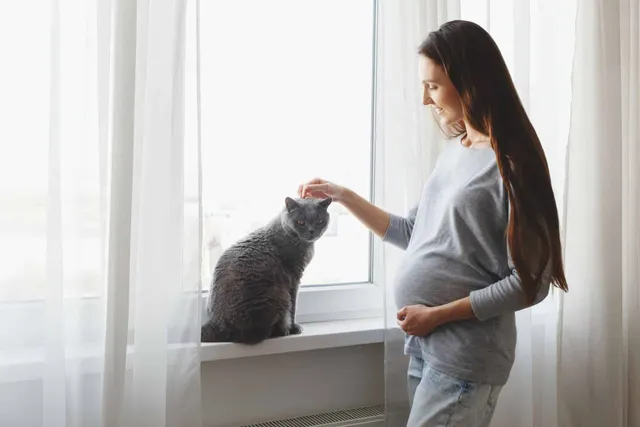
If you’re pregnant, you should take necessary precautions against toxoplasmosis, but the CDC advises that rehoming your cat when you are pregnant is not necessary.
How to Tell If Your Cat Has Toxoplasmosis
Cats with toxoplasmosis usually don’t show any symptoms, making it hard to catch. However, some cats can show clinical signs such as fever, loss of appetite, and lethargy.
These are vague symptoms and could point to any kind of illness, so the only way to know if it's toxoplasmosis is to run a blood test.
Immuno-compromised cats, specifically kittens and those with FeLV (feline leukemia virus) or FIV (feline immunodeficiency virus), have a higher risk of contracting toxoplasmosis.
Unfortunately, if your cat isn’t immune-compromised, you probably won’t be able to tell if they have the T. gondii parasite.

What to Do If Your Cat Has Toxoplasmosis
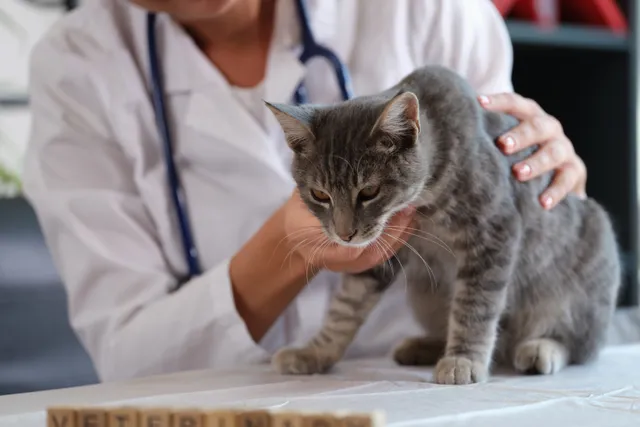
The good news about toxoplasmosis is that it’s treatable. If you suspect your cat is infected, it’s time to schedule an appointment with a veterinarian.
Your veterinarian will want to run blood tests that measure two types of antibodies (IgG and IgM) to T. gondii in the blood. The blood test results will show if your cat is infected and show if your cat is shedding oocysts (eggs). This helps determine if your cat is at risk of infecting others.
To treat toxoplasmosis, a veterinarian will prescribe an antibiotic. Additional medicine may be offered depending on how healthy your cat is.
How to Prevent Toxoplasmosis
Although the risk is low, you can prevent toxoplasmosis from infecting your cat and the rest of your house by following these tips:
- Clean the litter box daily.
- Use gloves when cleaning the litter box.
- Pregnant women should avoid handling the litter box.
- Cover kids’ sandboxes to prevent cats from eliminating in the box.
- Periodically disinfect the litter tray, or use litter box liners or disposable cat boxes.
- Don’t feed your cat raw meat.
- Properly disinfect surfaces that have had raw meat on them.
- Cook meat at 135 degrees Fahrenheit or higher.
- Properly filter water. If you don’t have a water filter, boil water.
If you are concerned or have questions about your cat's health, you can also speak to a vet from the comfort of your own home to help make a plan. They can determine when an in-clinic vet visit should be made.
Final Thoughts
Toxoplasmosis is a parasite that scares many cat owners, especially cat owners who are pregnant or want to become pregnant. It’s understandable. But don’t fret. The risk of becoming infected for the first time while pregnant is very low. The good news is that it’s a common parasite that can be treated for you and your cat.
If you’re pregnant and have cats, take the necessary precautions listed above to avoid infection. Go to your doctor with any questions about keeping you and your family healthy during your pregnancy.
Relax and breathe. The kitty can stay!
Featured Image Credit: Natata, Shutterstock
Expert cat care, straight to your inbox
News, insights, and useful advice, delivered to you.

No spam — unsubscribe anytime.
By signing up, you agree to our Terms & Conditions and Privacy & Cookies Policy.
How useful was this post?
Click a star to rate. You can leave written feedback afterwards. (We read all feedback.)
Cassidy's journey from vet tech and professional pet sitter to pet writer showcases her lifelong passion for animals, both domestic and wild. Throughout the years, she has cared for many pets and enjoys writing about the animal-human bond. She and her husband have settled in Wichita, where they live with their German Shepherd, Raven, two cats, Lucy and Strudel, and a small flock of backyard chickens.