Can I Crate My Cat During the Day? Vet-Approved Tips & FAQ


If your cat gets into trouble when left home alone, you might be desperate for a solution, especially if they’re prone to destructive behaviors. Maybe you’ve even wondered if you can crate your cat during the day like a dog. While crate training can benefit cats, you shouldn’t confine your kitty for more than an hour or so at a time except in certain circumstances, which we’ll cover in this article.
Keep reading to learn the benefits of crate training your cat and tips for how to help your kitty accept staying in a crate when needed. We’ll also discuss specific instances when your cat may need to stay longer in their crate.

Why You Shouldn’t Leave Your Cat in a Crate All Day
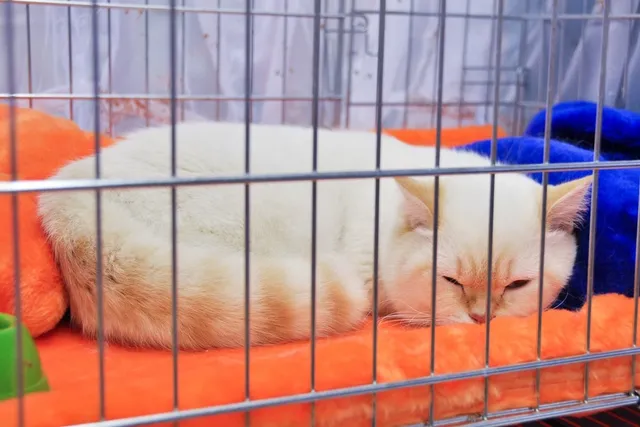
When used properly, a crate is a useful tool for cat owners, but it also has limits. Even a large dog crate won’t give your kitty the space to play or climb as they would outside the space. Active cats left in the crate for long periods may become stressed or even hurt themselves.
Your cat also has limited access to enrichment while they’re in the crate. They can’t use a scratching post, play with toys, or interact with other pets and may become bored if crated all day. Boredom can also lead to destructive behaviors or even self-injury.
Why a Crate Can Be Helpful for Cat Owners
On the other hand, teaching your cat to accept spending time in a crate can be helpful for several reasons. The most important one is safety. If your cat is confined to a crate, you know exactly where they are and how much trouble they aren’t getting into! It can also keep them from escaping the house during moving or home repairs.
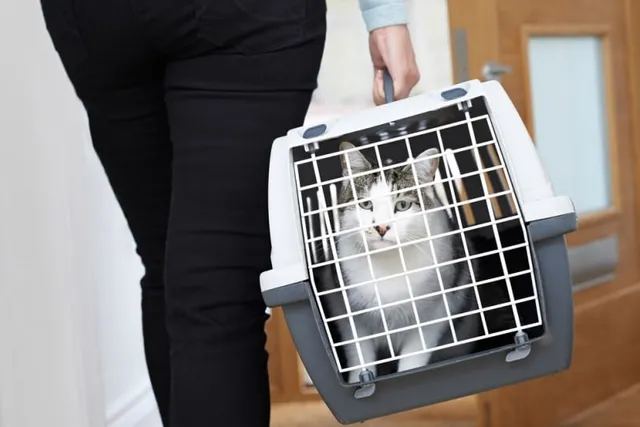
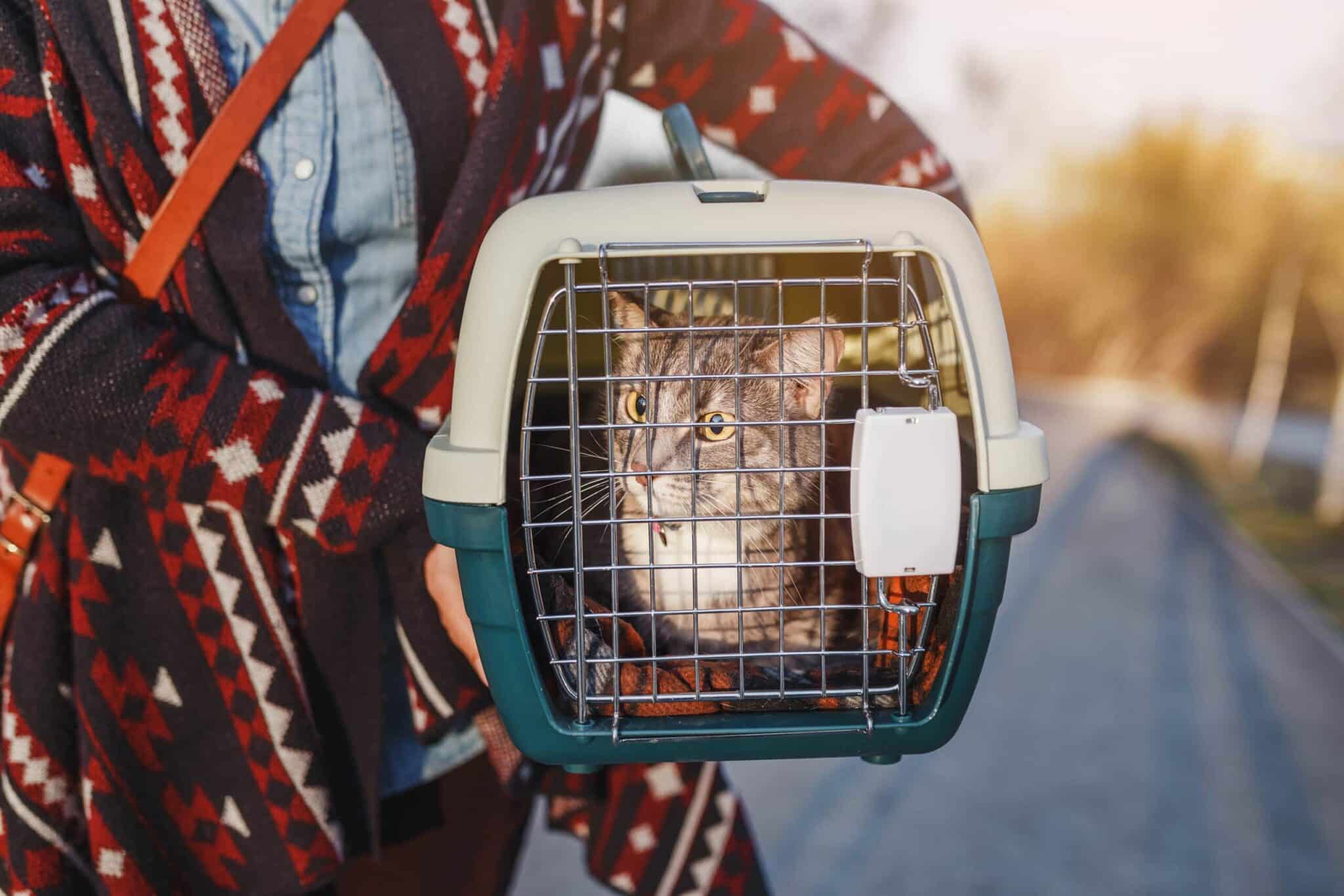
Your cat may need to stay in a crate during travel, especially if you stay in a hotel overnight. Cats can also learn to accept confined spaces if they must stay at a boarding facility or the vet’s office. With proper training, cats can learn to view their crate as a safe space and may even hide there when they feel stressed.


Tips for Helping Your Cat Accept Staying in a Crate
Your cat’s behavior is most easily shaped when it’s young, so start crate training when it’s a kitten, if possible.
1. Make the Crate Comfortable
Be sure to choose a crate that’s big enough for your cat to comfortably move around and lie down fully stretched out if they stay inside for longer periods. You’ll also need to fit a litter box, bed, bowls, and other items in the crate. A large dog crate is usually best for adult cats, while kittens may be able to use a smaller container.
2. Get Your Cat Used to the Crate Slowly
Once the crate is prepared, leave it with the door open for a few days to allow your cat to explore it. Scatter some treats or catnip inside to entice them if your kitty seems reluctant to enter the crate. You might even try feeding them meals inside the crate so that they associate it with a positive experience.
Once your cat seems comfortable with the crate, try shutting the door for a few minutes. Stay close by and give your cat treats or toys to distract and keep them calm. Praise and reward your cat once you open the crate door.
Some cats will accept being confined quickly, while others may show signs of stress or try to escape. If your cat meows or scratches at the crate door, try to avoid letting them out until they’re calm, or you may reinforce this bad behavior.
However, if your cat shows serious signs of stress like vomiting, drooling, peeing outside the litter box, or excessive vocalizing, let them out and re-evaluate the situation. Ask a vet for guidance if your cat seems overly distressed by your attempts to crate-train them.
If your cat accepts their time in the crate, gradually increase the length of time they stay in with the door closed until they’re comfortable with their new “bedroom.” Some cats may not accept the crate, and in this instance, do not force the issue.

Situations Where Your Cat May Be in a Crate Longer
There are a few situations where it may be acceptable for your cat to be crated longer, especially when they’re unsupervised.
Very young, small kittens are often safer staying in a crate than out in the house. They’re also more likely to tolerate a confined space for longer because they are so small. Crating a kitten can also help make litter box training easier, though most cats learn to use a litter box without such training.
If your cat has recently had surgery or another medical procedure, your vet may recommend that they stay in a crate during recovery. Too much activity can prolong the healing process after surgery. Sometimes, cage rest is suggested for cats that suffer certain spinal or soft tissue injuries as well.
Temporarily staying in a crate can also help a recently adopted cat get used to their new home. Sudden access to a whole house may overwhelm them and lead to anxiety.


Final Thoughts
In most cases, you shouldn’t leave your cat in a crate for long periods of time, so you’ll need to look at other options if they get into trouble while you’re gone. Perhaps you could keep them in a single, cat-proof room or hire a pet sitter to visit while you’re away. Don’t be afraid to ask your vet for solutions; some cats may benefit from medications or a meeting with a feline behavior specialist.
Sources
“The Benefits of Crate Training Your Cat”
Featured Image Credit: Chomphuphucar, Shutterstock
Expert cat care, straight to your inbox
News, insights, and useful advice, delivered to you.

No spam — unsubscribe anytime.
By signing up, you agree to our Terms & Conditions and Privacy & Cookies Policy.
How useful was this post?
Click a star to rate. You can leave written feedback afterwards. (We read all feedback.)
Elizabeth Gray is a lifelong lover of all creatures great and small. She got her first cat at 5 years old and at 14, she started working for her local veterinarian. Elizabeth spent more than 20 years working as a veterinary nurse before stepping away to become a stay-at-home mom to her daughter. Now, she is excited to share her hard-earned knowledge (literally--she has scars) with our readers. Elizabeth lives in Iowa with her family, including her two fur kids, Linnard, a husky mix and Algernon, the worldʻs most patient cat. When not writing, she enjoys reading, watching all sports, and spending time outdoors with her family.