Get

In Your Inbox

Catster is reader-supported. When you buy via links on our site, we may earn an affiliate commission at no cost to you. Learn more.

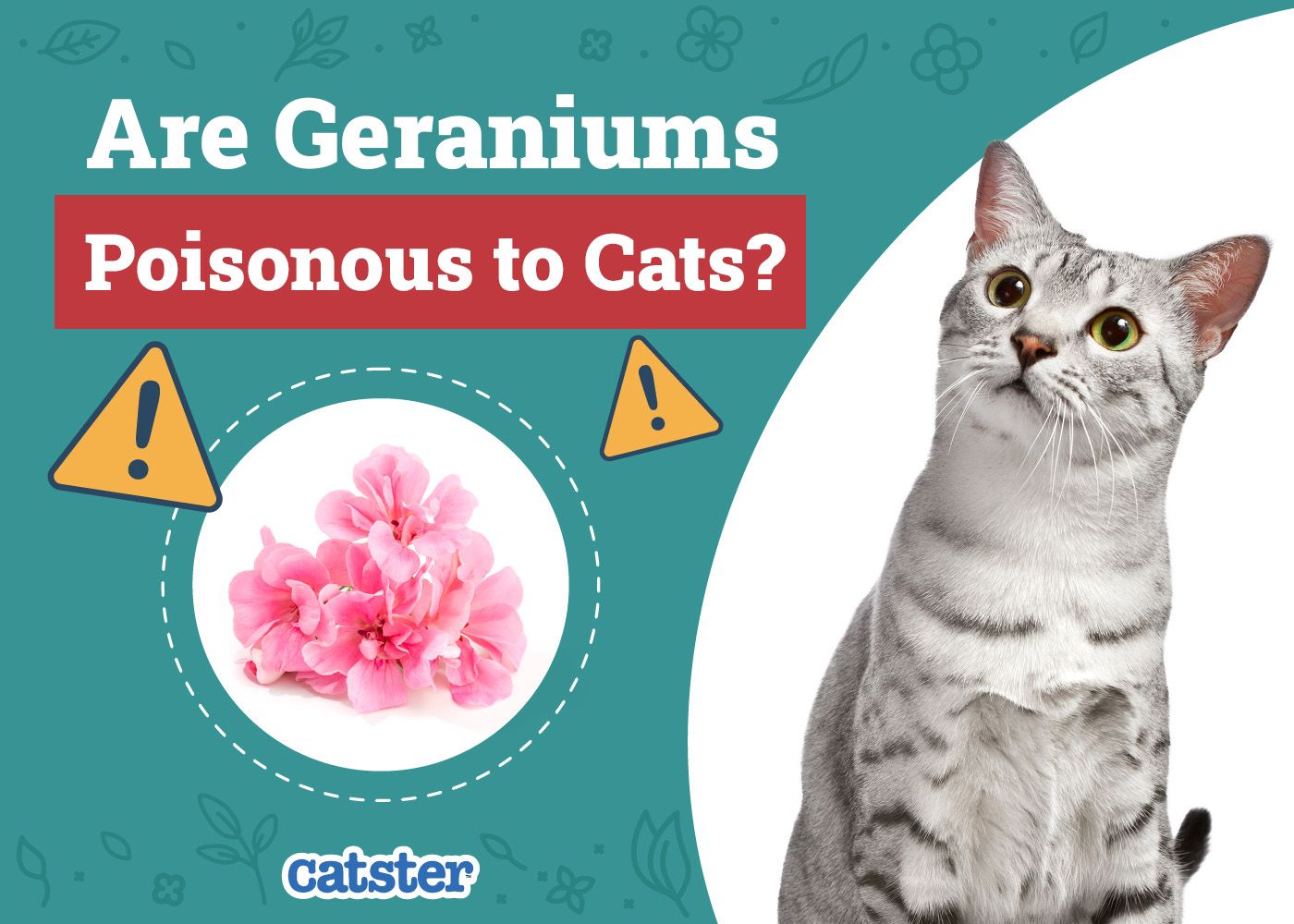
Are Geraniums Poisonous to Cats? Vet-Verified Facts & Info

Share

Catster_Are Geraniums Poisonous to Cats

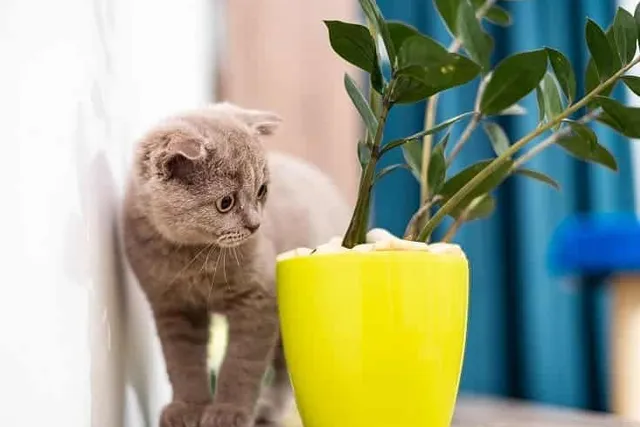
If you’re a cat lover who also loves plants, you already understand the importance of knowing which plants are toxic to your cat. Potted plants can be a lovely way to brighten up your home’s interior, but if you have pets, you need to be careful which ones you choose.

Geraniums may not be your best option, as they are mildly poisonous to cats.

divider cat paws 2 oct 2024

What Are Geraniums?

A geranium is a common houseplant that boasts beautiful blooms in an array of colors, and it’s most often seen in bright red. Geraniums have a pleasant, floral scent that is prized for essential oils and beauty products. Because they are safe for human consumption, they can be found in jams, jellies, and salad toppings.

As houseplants, they can make a beautiful addition to your shelf, window box, or garden. They flourish during the summer but can be brought indoors during the winter and will do well in a pot.

However, if you’re a cat owner who brings your geraniums inside, you will need to ensure they are kept in a location where your cat can’t access them. We’ll walk you through the signs that can occur when your cat eats a geranium and what you can do about it.

red and purple geranium flowers in a garden
Image Credit: Hans, Pixabay

What Happens When a Cat Eats a Geranium?

If your cat loves to snack on plants,  it’s in good company. Studies show that as many as 83% of cats will eat plants every once in a while.1 This could be an old instinct leftover from their days as wild animals, perhaps out of a need for a certain nutrient or to control intestinal parasites. Nowadays, it’s a habit that could land you both in the vet’s office.

Geraniums may be attractive to cats because of their scent. But even if your kitty isn’t much of an herbivore, you might want to pass on these flowers. Geraniums contain two toxins: geraniol and linalool. These substances are often used to repel mosquitos, but they can also have an adverse effect on your cat.

If you suspect your cat has eaten geraniums, check it for these signs:

  • Irritation on the skin and in the mouth
  • Vomiting
  • Lack of appetite
  • Depression or lethargy

These signs will probably be mild and pass quickly if your cat has only eaten a few petals. If they have managed to eat multiple plants, it could be much more serious.

If your pet is showing these signs, we suggest you speak to a vet.

If you have a question about your cat's health or behavior, why not Ask a Vet for Free with Catster. Our veterinary team answers reader questions and provides trusted advice to help you better understand your cat.

askavet on catster

What to Do When Your Cat Eats a Geranium

If your cat happens to munch on a geranium, don’t panic. Stay calm for your kitty and take the following steps:

  • Get your cat away from the plant immediately.
  • Use a damp towel to clean its mouth, inside and out.
  • Call your vet or the ASPCA poison control center, even if the cat isn’t showing symptoms.
  • If instructed to go to the vet, bring a sample of the plant with you, if applicable.
  • If instructed to stay home, follow your vet’s instructions and watch your kitty to make sure its symptoms don’t worsen.

In all likelihood, your cat’s symptoms will be mild, and the discomfort will pass after an hour or two. If your cat is experiencing mild skin irritation around the mouth or has vomited once but is otherwise acting as it normally would, don’t be alarmed. Keep an eye on your pet and ensure the signs don’t continue or intensify.

Always call your vet if you aren’t sure whether your cat’s behavior is normal or not. It never hurts to let them know what happened and get an expert opinion on the matter.

veterinarians examining a grey cat
Image Credit: Juice Flair, Shutterstock

Which Geraniums Are Toxic to Cats?

Not every geranium will have a poisonous effect on cats when ingested. However, scented geraniums, or Pelargonium spp., are poisonous to cats.

One geranium that is non-toxic is the cranesbill, or Geranium spp. Cranebills don’t look exactly like scented geraniums, but they have beautiful blooms that come in eye-popping colors. Since they’re extremely easy to grow and named for their resilience, cranesbills make for gorgeous groundcover and will bloom prolifically over a long period. Many hardy geraniums will flourish in containers indoors, as well.

Cranesbills are safe to have around cats, and they add bright colors to your home or garden.

divider cat paws 2 oct 2024

Non-Toxic Plants Your Cat Will Love

If you’re looking for houseplants that will spruce up your home and make your cats happy at the same time, you have plenty of options that are both safe and aesthetically pleasing. A few plants you might want to invest in are:

  • Catnip: It’s an obvious choice but also an absolute classic and all-around crowd-pleaser.
  • Lemongrass: If you like geraniums for their mosquito-repelling qualities, you’ll love lemongrass. It smells amazing, too!
  • Valerian: With beautiful blooms and a pleasant scent, a valerian plant could be a great swap for geranium.
  • Spider plant: Easy to grow, non-toxic, and fun to look at, spider plants make a zany addition to any space.

divider cat faces 2 oct 2024

Conclusion

Since scented geraniums are toxic to cats, you may wish to keep them out of your home and garden entirely. There are many alternatives that look as beautiful and smell as pleasant as scented geraniums, so you have plenty of choices. If you do choose to grow them, make sure they stay in a place your cat can’t access. Keeping them out of reach of your cat will keep it happy, healthy, and away from the vet’s office!


Featured Image Credit: Lena Svensson, Pixabay

Want content like this delivered to you?

Sign Up For Our Newsletter

News, insights, expert advice, and everything cat

* By submitting, you agree to our Terms & Conditions and Privacy & Cookies Policy.


How useful was this post?

Click on a star to rate (you can leave written feedback after clicking submit)

Help us improve Catster for pet parents!

Your feedback really matters.

What did you like about this post? Also how can we improve it?

Join the conversation

Leave a Reply

You’re very welcome to leave a comment or question. Please know that all comments must meet our community guidelines, and your email address will NOT be published. Let’s have a positive and constructive conversation.


Catster's Digital Magazine is Back!

Vet-approved health & behavior advice

Real cat stories & community features

Ask Dr. Paola – My Cat Loves Eating Grass, But It Makes Her Vomit! (June 29, 2026)

Welcome to our “Ask Dr. Paola” series, where every Monday we bring expert advice straight from Dr. Paola Cuevas (MVZ) to help our...

Learning to Speak Cat with Anthony Smith

Many cat lovers know me through Learn to Speak Cat and Cattitude – Doggonit, cartoons that explore the often mysterious, occasionally mischievous, and...

Weird Cat Behaviors That Actually Make Perfect Sense

We have been sharing our lives with cats for thousands of years, yet we still find ourselves genuinely stumped by what they get...

The Dream of Talking to Cats Just Got Closer to Becoming a Reality

If you’ve ever wished your cat could simply tell you what they wanted, you’re not alone. From the meow that wakes you before...

More related

Do Abyssinian Cats Shed a Lot? Vet-Reviewed Care Facts

Compared to other cat breeds, the Abyssinian cat does not shed much. They have a short, dense coat, and if you brush them...

Why Is My Cat Panting After Giving Birth? Vet Approved Facts & FAQ

Breeding your cat is a beautiful experience both for you and your cat. And while being pregnant is exciting, giving birth can be...

How Do Vets Neuter Cats: Our Vet Explains Step by Step

Congratulations! You just adopted your first boy cat. Maybe it’s a small kitten you found outside. Maybe it’s an older cat that’s been...

8 Best Cat Treats in Australia in 2026 – Reviews & Top Picks

Sometimes, we need to give our kitties a good reward—whether that be for a job well done or simply appreciation. It connects and...

Keep reading

Why Is My Cat’s Fur Matted on His Back? 10 Vet-Reviewed Reasons

Our feline friends spend a good amount of their time grooming themselves, but even with all that work and attention, they occasionally get mats in their fur. This is especially true when it comes to the back, as matted fur...

cat with matted fur

How to Bathe Your Kitten: 5 Vet-Approved Steps (With Video)

Water and kittens don’t make the best combination, but sometimes, it’s inevitable that you need to give your kitten a bath. They may need a medicated shampoo to treat fleas or a skin infection. Orphaned kittens can sometimes need help...

kittens on carpet

9 Best Shampoos for Sphynx Cats in 2026 – Reviews & Top Picks

Bathing your Sphinx is probably not on your list of favorite activities, but it helps keep your cat’s skin hydrated and healthy. Without a bushy protective layer of fur, Sphinx cats are more vulnerable to skin conditions. Hundreds of shampoos...

Sphynx Kittens

How to Care For a 6-Month-Old Kitten: Vet-Verified Complete Guide

Kittens are typically curious, playful, feisty, and even mischievous. They are no longer tiny, fragile newborns, but they aren’t fully grown and matured either. It’s vital to understand the specific types of care that your kitty requires when they’re 6...

Bengal kitten playing

Why Do Cats Like Hiding in Dark Places? 5 Vet-Reviewed Reasons

Cats love to hide behind furniture, in boxes, and under just about any object they can fit beneath. They are so stealthy you may find yourself shaking a bag of treats just to ensure they’re still in your house! But...

cat hiding in a dark place

How to Trim a Cat’s Nails (Who Won’t Cooperate): 12 Vet-Approved Tips

Trimming a cat’s nails can be an important part of feline maintenance. Cats use their claws for hunting, defense, and balance. While they do scratch them against abrasive surfaces like trees, fences, walls, and even scratch posts, they may still...

trimming nails of cat

How to Take Care of Your Cat’s Teeth: 8 Vet-Verified Tips

Dental problems are pretty common in cats. When plaque sits on their teeth, it hardens and develops into tartar. Tartar around the gum line causes irritation and inflammation that results in gingivitis, which can lead to full-blown periodontal disease and...

hand showing the teeth of blue tabby maine coon cat

How to Tell if a Cat Is Choking: 6 Vet-Reviewed Signs & What to Do

If your cat is choking, you need to ask fast, but before you try to give your cat the Heimlich, you should know what a choking cat looks like. Sometimes, cats look like they’re choking, but they’re coughing up a...

cat is choking

Love Cats? So Do We! Join the Catster Community

Stay informed with expert pet care insights delivered straight to your inbox! Discover professional guidance on animal behavior, feeding tips, trusted product picks, and much more.


Sign up for the Catster Email Newsletter

Stay informed with expert pet care insights delivered straight to your inbox! Discover professional guidance on animal behavior, feeding tips, trusted product picks, and much more.