Get

In Your Inbox

Catster is reader-supported. When you buy via links on our site, we may earn an affiliate commission at no cost to you. Learn more.

Calico Cats Personality: Info, Pictures, Origins & History


Share

Closeup portrait of old calico cat lying down by kitchen on tiled floor in home

Calico cats have a tri-color coat pattern that makes them instantly recognizable, and many cat lovers seek them out when it comes time for a new pet. What makes them even more interesting is that they are available in many breeds, so you won’t need to seek out an expensive breeder to find one.

If you are thinking about getting one of these cats but would like to know more about them first, keep reading while we discuss how they get to be calico, their history, formal recognition, and other interesting facts that will help you decide if they are right for your home.

Breed Overview

Height:

9–10 inches

Weight:

8–12 pounds

Lifespan:

10–16 years

Colors:

White, black, and orange or cream

Suitable for:

Small and large families

Temperament:

Independent, playful, energetic

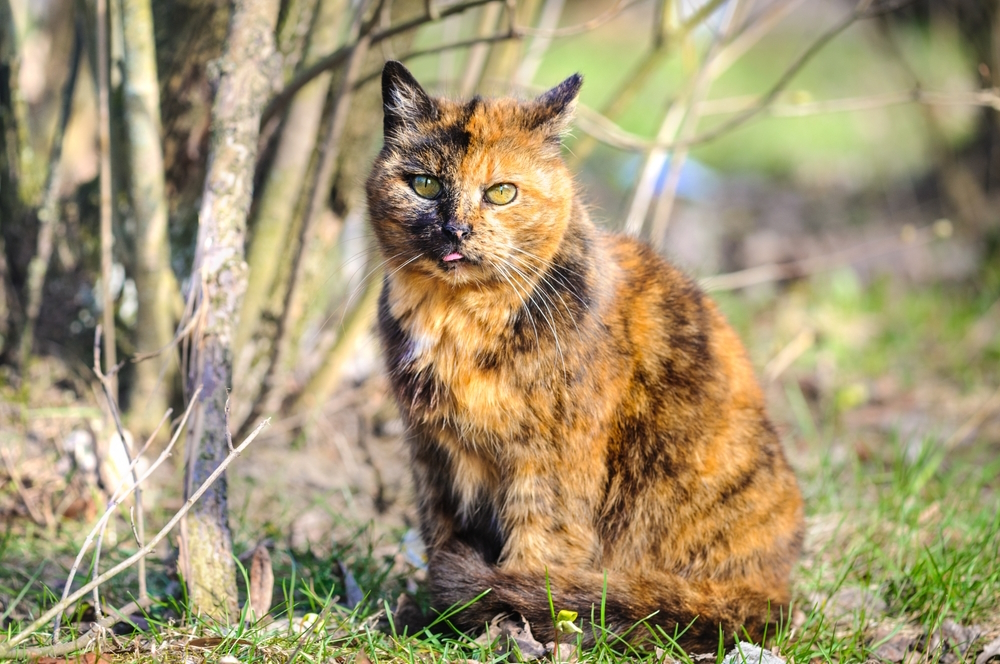
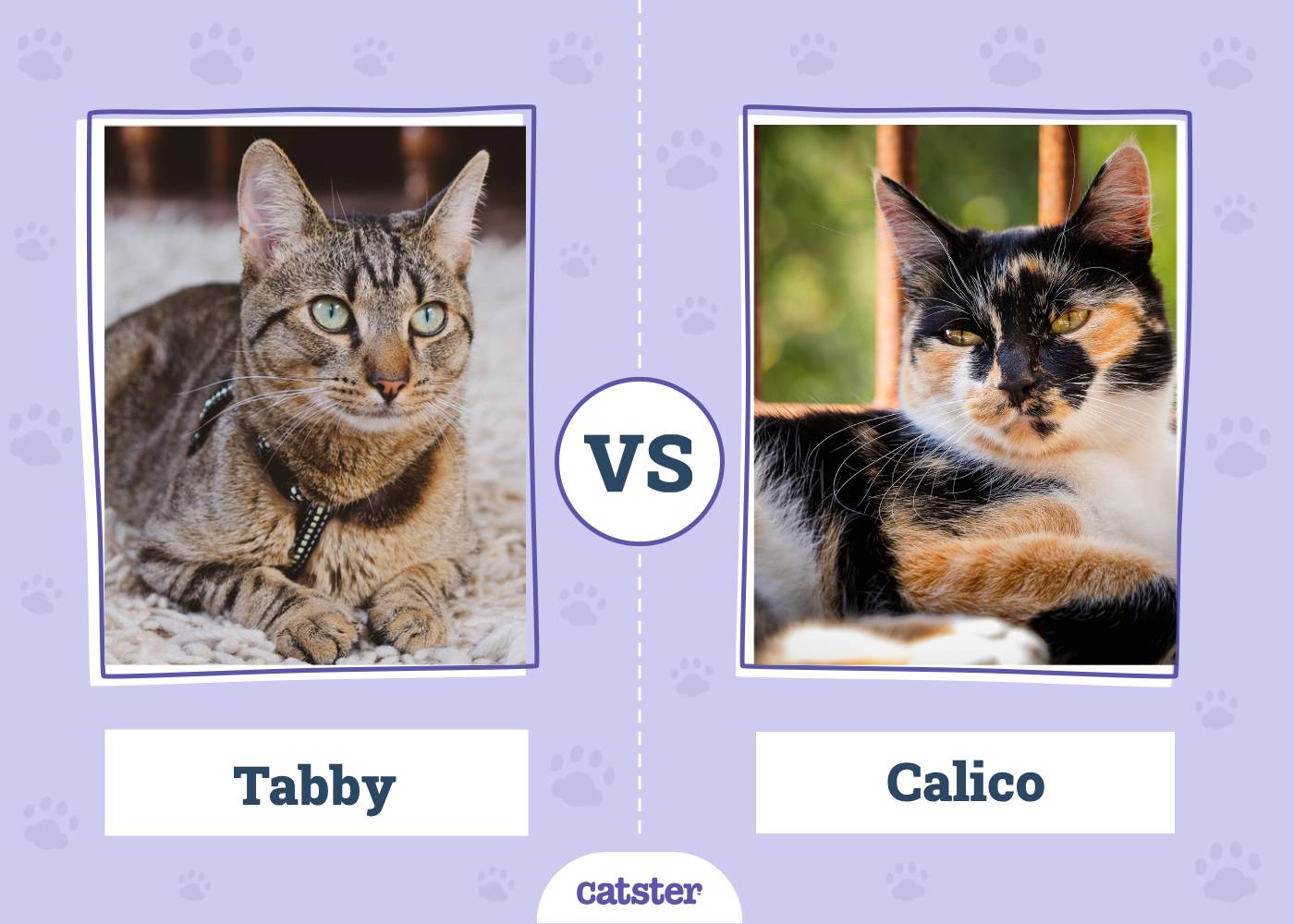
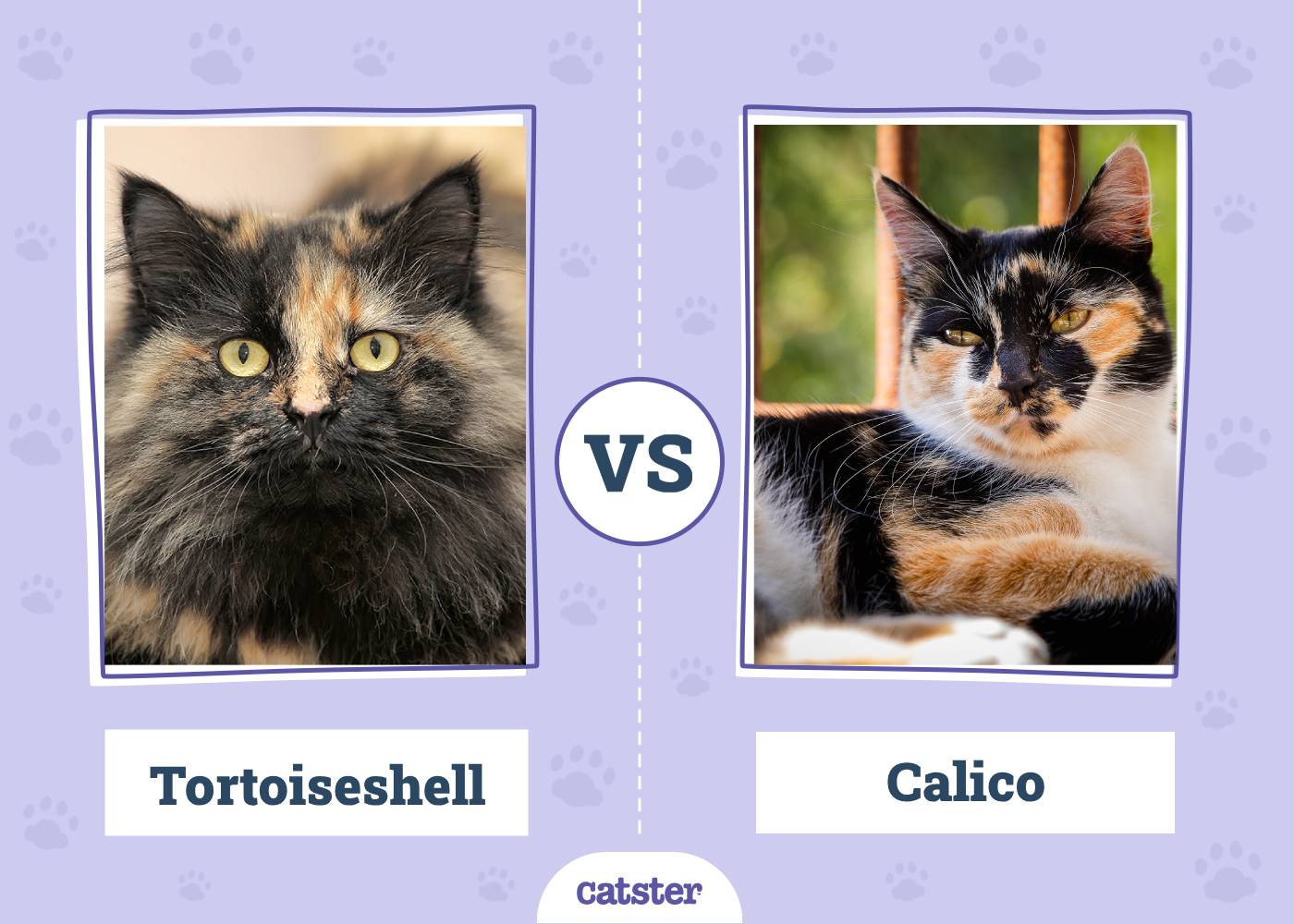
When discussing a calico cat, we are referring to the coat pattern and not a specific breed. This coat pattern has a unique blend of white, black, and orange or cream hues, and cats with this coat are unusual because most others have only one or two colors and are black or red.

Other than the coat pattern, calico cats are similar to other cats. Some may be outgoing and assertive, while others exhibit a more reserved or shy demeanor. One unusual fact is that most calico cats are female. The gene responsible for coat color is on the X chromosome. Female cats have two X chromosomes (XX), while males have one X and one Y chromosome (XY). Therefore, female cats can carry the gene for black on one chromosome and red on the other, while males can only have one of those colors.

In rare cases, a male cat can have an extra chromosome, giving them access to the calico coat.

Calico Cat Characteristics

Energy
+
A high-energy cat needs a lot of physical and mental stimulation to keep healthy and happy, while a low-energy cat needs minimal physical activity, but still needs mental stimulation. When choosing a cat, It’s important to ensure their energy levels match your lifestyle.
Trainability
+
Cats that are easy-to-train are more willing and skilled at quickly learning prompts and actions with minimal training. Harder-to-train cats are usually more stubborn or aloof and require a bit more patience and practice.
Health
+
Certain cat breeds are more prone to various genetic health problems, and some more than others. This doesn’t mean that every cat in those breeds will have these issues, but they do have an increased risk, so it’s important to understand and prepare for any additional needs they may require.
Lifespan
+
Due to their size or potential genetic health issues of a specific breed, some cats have shorter lifespans than others. Proper nutrition, exercise, mental stimulation, and hygiene also play an important role in your cat’s lifespan and quality of life.
Sociability
+
Some cat breeds are more social than others, both towards humans and other cats and animals. Cats that are more social have a tendency to rub up on strangers for scratches or jump on laps for cuddles, while cats that are less social shy away, hide, are more cautious, and even potentially aggressive. No matter the breed or gender, it’s important to socialize your cat and expose them to many different situations.

divider 2 cats

The Earliest Records of Calico Cats in History

The earliest records of calico cats date back to ancient times, with historical evidence suggesting their existence in various cultures around the world. The Egyptian people admired the mysterious and captivating tri-colored coats, and in Japan, they are a symbol of luck and good fortune.

Their appearance in art, literature, and folklore reflects the fascination and admiration that people have had for these colorful cats.

Calico kitten with toy
Image Credit: Elise Christopher, Shutterstock

How Calico Cats Gained Popularity

Calico cats gained popularity over the centuries due to a combination of their unique, rare, and visually striking appearance. While not a specific cat breed, the color diversity allows cat enthusiasts to appreciate calico cats in different sizes, shapes, and temperaments, contributing to their overall popularity.

In the digital age, calico cats have gained even more popularity through social media platforms as cat owners share pictures and stories of their pets.

Formal Recognition of Calico Cats

Formal recognition of calico cats as a distinct breed or pattern has not occurred because calico is not a specific breed of cat, and it can occur in many breeds, several of which are recognized by various cat clubs, including the American Shorthair, Japanese Bobtail, Maine Coon, and Scottish Fold.

calico cat
Image Credit: loicp90, Shutterstock

Calico Cat Personality – Are Calico Cats Mean?

We could not find any research that connects color to personality in cats, including those with the calico coat. Therefore, there is no reason to expect your calico cat to be mean. Each cat has a unique personality, and some will be friendlier than others, but most are playful, curious, and affectionate.

divider 3 paws

Top 5 Unique Facts About Calico Cats

1. They Have Beautiful Eye Colors

Calico cats can have a variety of eye colors, including blue, gold, green, or amber.


2. They Can Have Polydactylism

Some calico cats may exhibit polydactylism, meaning they have extra toes.

You are free to use this image but we do require you to link back to Catster.com for credit

3. Some Of Them Can Have a Pattern Called “Diluted”

Some calico cats have a diluted color pattern, where the black becomes gray, and the orange becomes cream. These cats are often called dilute calicos and have a softer, pastel-like appearance.


4. They Are Maryland State Cat

In 2001, Maryland, USA, adopted the calico cat as their state cat to honor the cats that arrived on ships to control rodents during the early days of the state’s settlement.

Cute calico cat looking at to the front
Image Credit: Mirahybrid, Shutterstock

5. Their Pattern Is Unique

The patterns on calico cats are similar to a human fingerprint, and no two are exactly alike. Each cat’s coat tells a distinct story of genetics and development.

divider 2 cats

Do Calico Cats Make a Good Pet?

Calico cats can make wonderful pets for the right owner. Their striking tri-color coat is extremely attractive and popular and is perfect for someone looking for a pet that stands out in a crowd. Regular grooming is essential for long-haired calicos, and even short-haired cats will benefit from occasional brushing.

Regular teeth brushing with cat-safe toothpaste is also a good idea. Otherwise, these adaptable pets can make great pets for large and small families in almost any home.

divider 3 paws

Conclusion

Calico cats are not a unique breed but are instead a type of coat pattern that contains three different colors, namely, red, white, and black. What is special about it is that it’s quite rare due to it requiring two X chromosomes, one for the black color and one for the red. Therefore, you usually only see it in female cats since males only have one X chromosome, except in extremely rare circumstances.

Otherwise, these cats are similar to any other cat and often exhibit friendly and playful tendencies that make them popular with pet lovers worldwide.


Featured Image Credit: Kristi Blokhin, Shutterstock

Want content like this delivered to you?

Sign Up For Our Newsletter

News, insights, expert advice, and everything cat

* By submitting, you agree to our Terms & Conditions and Privacy & Cookies Policy.


How useful was this post?

Click on a star to rate (you can leave written feedback after clicking submit)

Help us improve Catster for pet parents!

Your feedback really matters.

What did you like about this post? Also how can we improve it?

Join the conversation

Leave a Reply

You’re very welcome to leave a comment or question. Please know that all comments must meet our community guidelines, and your email address will NOT be published. Let’s have a positive and constructive conversation.


Catster's Digital Magazine is Back!

Vet-approved health & behavior advice

Real cat stories & community features

Chatting About the Rainbow Bridge, Euthanasia, and Laughter During Grief | Chatty Cattys, Episode 24

If you’ve ever felt the loss of a beloved cat, or are dreading the day when your pet crosses the rainbow bridge, you’ll...

The Simple Reasons Cats Refuse to Let Anyone Use the Bathroom Alone

Cats have an extraordinary talent for making themselves present in the most inconvenient places, and the bathroom ranks near the top of the...

A Paw-sitive Milestone: Canada Officially Becomes a Declaw-Free Nation

Canada has officially become a declaw-free nation. On May 25, 2026, a new regulation was filed in Ontario under the Provincial Animal Welfare...

The Surprisingly Simple Ways to Help a Cat With Hairballs

Cats spend an astonishing amount of time grooming. It is part hygiene routine, part comfort ritual, and part instinct that traces back generations....

More related

My Cat Is Panting After Playing, Should I Worry? 4 Vet Approved Reasons & FAQ

Ask anyone in your closest circle whether they’ve ever seen a cat panting. The most probable answer would be a “no.” That’s because...

Things Our Cats Hate: The Wednesday Cats of Catster

Welcome to the Wednesday Cats of Catster! Every month, we ask our cat-loving Catsters to weigh in on a new topic. This week,...

International Animal Rights Day 2026: When & How Is Celebrated

Our cats deserve the right to a loving home that provides for them every day. However, on International Animal Rights Day, the focus...

Does Cedarwood Oil Kill Fleas on Cats? Vet-Verified Effectiveness & Safety Explained

Fleas can be the bane of a cat owner’s existence. Once they appear, they’re everywhere, and worst of all, they make our kitties...

Keep reading

Do Cat Paw Pads Grow Back? Vet Approved Facts & FAQs

Cats are curious, active creatures adept at using their sharp eyes, noses, and ears to explore the world. But they also use information gathered from the hyper-sensitive nerves in their whiskers and paws! Cat paws are packed with delicate nerve...

Cat paw pads

Can Cats Eat Catnip or Is It Just for Sniffing? Vet-Verified Facts

Everyone knows that cats love catnip. If you’ve never seen a cat’s reaction to the herb, you must because it’s hilarious. Some cats go crazy on catnip, while others might just sit still and stare at nothing. The effects only...

Can Cats Eat Catnip

Why Doesn’t My Cat Purr? 6 Possible Reasons (Vet Reviewed)

There’s really nothing better than when you’re lying in bed, and your cat shows up to settle down on your chest, purring away. In fact, feline purring has been shown to lower stress and blood pressure in people, as well...

cat looking up

Can You Use Baby Shampoo on a Cat? Feline Shampoo Guide

Many cats don’t particularly enjoy being bathed, but sometimes it is necessary. Most cats never need shampooing, but if your cat has a skin condition that needs treating or has rolled in something that you need to clean off, you...

grey cat bath shampoo bubbles

Do Indoor Cats Need Flea Treatment? Vet-Reviewed Facts, FAQ & Tips

There are a great number of benefits to keeping cats indoors, especially with all the dangers they could face when out and about. However, believe it or not, house cats can still get fleas, so they still need to be...

cat having flea treatment

How to Tell if Your Cat Was Poisoned: 8 Vet-Reviewed Signs

If your cat is acting strange and exhibiting unusual behavior, it may be due to poisoning. Knowing the signs of poisoning will help you identify the problem in time and react accordingly. Of course, if you suspect your cat has...

vet checking up the cat

6 DIY Cat Popsicle Recipes (Vet-Approved)

Popsicles are tasty treats, but they’re usually not safe for cats to eat because they can contain added sugar, artificial colors, and other unhealthy ingredients for cats. Fortunately, you don’t have to feel bad every time you decide to unwrap...

blue tabby maine coon cat licking homemade ice cream treat popsicle

Can Cats Get Lyme Disease? Vet Approved Facts, Treatment & Prevention Tips

Owning a cat, especially one that enjoys roaming outdoors, comes with the concern of seasonal ticks. As a human, finding a tick firmly attached to your skin is concerning, and it evokes immediate worry about tick bite fever and Lyme...

removed tick from cat

Love Cats? So Do We! Join the Catster Community

Stay informed with expert pet care insights delivered straight to your inbox! Discover professional guidance on animal behavior, feeding tips, trusted product picks, and much more.


Sign up for the Catster Email Newsletter

Stay informed with expert pet care insights delivered straight to your inbox! Discover professional guidance on animal behavior, feeding tips, trusted product picks, and much more.