Bugs in Your Cat Litter Box? Vet-Approved Cleaning & Prevention Tips


In this article
Removing your cat's poop and pee from their litter box is one thing, but when it comes to finding nasty little bugs in there, it can be too much for a cat parent to bear! What are these tiny insects, and more importantly, how do you get rid of them? Don't worry—here we walk you through each step so you can 1) become a bug expert regarding your cat’s litter, 2) get rid of these pests quickly, and 3) make sure they don't come back.
So, grab your magnifying glass (perfect for a close-up inspection) and your latex gloves, and let’s get started!

What Types of Bugs Can Be Found in Your Cat’s Litter Box?
Here are the most common insects that may invade your cat’s private bathroom.
- Fungus Gnats: These tiny black flies look like mosquitoes but don’t bite. They usually invade our homes when the temperature warms up. They live and breed in decaying organic waste and damp plant beds, probably why your cat's litter box can attract them.
- Fruit Flies: These tiny, big-eyed pests love to fly around your fruit bowls, especially when bananas are overripe. They look like fungus gnats, though if you look closely, you may be able to make out their reddish eyes. You'll see them flying around not only your cat's litter box but also your trash can and other kitchen waste.
- Phorid Flies: Your cat's poop is a real magnet for phorid flies! These little brownish pests tend to deposit their eggs in animal feces and other decomposing waste. Phorid flies are easily recognized by the bumps on their thoraxes, giving them their nickname, “humpback flies.”
- Cockroaches: These infamous guests need no introduction. Unfortunately, your cat's litter box can be a haven for these nasty bugs, especially if it hasn't been changed in a while.
- Silverfish: These can be found all around your home, especially in humid, warm areas. These shiny, gray, scaly insects with slender bodies can grow up to 1 inch long. They occasionally wander into your cat's litter box to feast on decaying waste.
- Maggots: Since they are fly larvae, the presence of maggots depends on whether the litter was already visited by flies. Therefore, if you haven't changed the litter for a while and it's hot outside (ideal conditions for flies and other insects), you risk finding maggots in there.
- Tapeworms: These tiny, pale, yellow parasites can be quite difficult to spot in your cat's litter box. Seeing tapeworm segments in feces not only means that your cat is infected with tapeworms, but they may also have Indeed, the tapeworm is an intestinal parasite that uses a flea as an intermediate host to enter your cat.

Should You Take Your Cat to the Vet?
Seeing most of these bugs in your cat’s litter box usually doesn’t require anything from your veterinarian, except for tapeworms. If you notice tapeworms in your cat's feces or around the anus, you will need to visit your vet for a proper examination. They will provide a dewormer given in the form of a tablet or injection to rid your cat of worms, along with anti-flea medication.
The 3 Ways to Get Rid of Litter Box Invaders
Fortunately, it’s fairly easy to get rid of all the insects and flies that have taken up residence in your kitty's litter box. You should also consider purchasing an enzymatic cleaner to help clean the mess.
Did you know there's an enzyme cleaner that does it all? The Hepper Advanced Bio-Enzyme Pet Stain & Odor Eliminator Spray permanently removes the very worst smells and stains (truly, everything you can imagine!), and they offer a 100% satisfaction guarantee! Click here to get yourself a bottle.

- ADVANCED ENZYMATIC CLEANER - Penetrates the most stubborn smells and stains at the deepest molecular levels to dissolve any pet mess you encounter and lift it away at the source.
- FOR ANY MESS, ON ANY SURFACE - This pet odor eliminator cleans your carpets, floors, furniture, fabrics, and more. Whether it's urine, feces, vomit, or drool, you can erase all foul spots and smells!
- FRESH, NATURAL ODOR - Our unique formulation doesn't rely on dangerous or unpleasant chemical fragrances to get the job done. We eradicate smells and stains, not just cover them up.
At Catster, we’ve admired Hepper for many years, and decided to take a controlling ownership interest so that we could benefit from the outstanding products of this cool cat company!
1. Get Rid of the Whole Litter
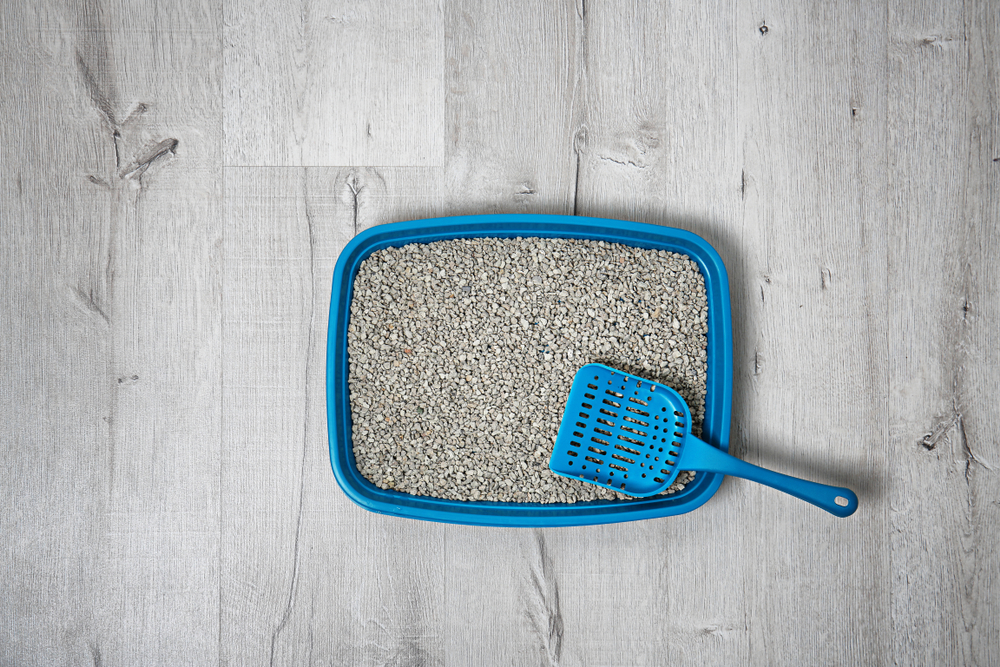
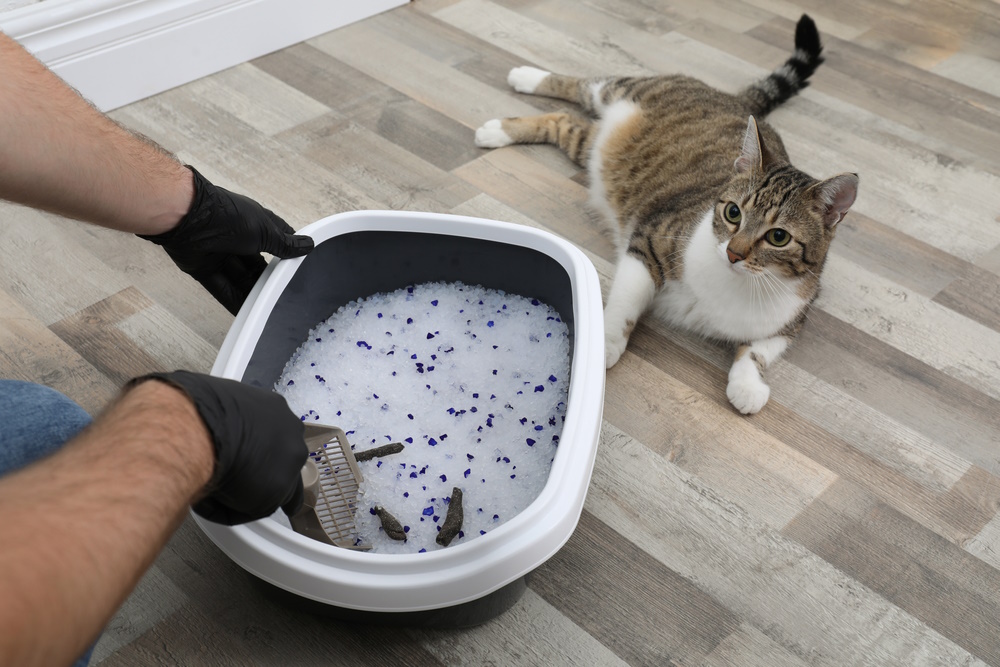
It's time for a big clean! Throw the entire contents of the litter box into a garbage bag that you seal carefully to prevent the bugs from escaping.
2. Wash and Disinfect the Box Thoroughly
Wash the box thoroughly with a mild detergent or litter box cleaner. You can also spray white vinegar, but be sure to dilute it well, as the remaining acidic smell may put off your cat. Sprinkling a little baking soda diluted in water can be just as effective.
3. Consider Changing the Type of Litter That You Use
If you are using organic or “all-natural” litter, this may be the problem. This type of substrate tends to stay moist, which can attract insects that feed on decaying organic matter. Consider replacing it with a clay-based or silica-based litter, at least for a while, to see if it makes a difference in your insect problem.
That's it! You got rid of all those nasty bugs. But now the real question is: How do you make sure they never come back?

How to Prevent Bugs From Getting Into Your Cat's Litter Box
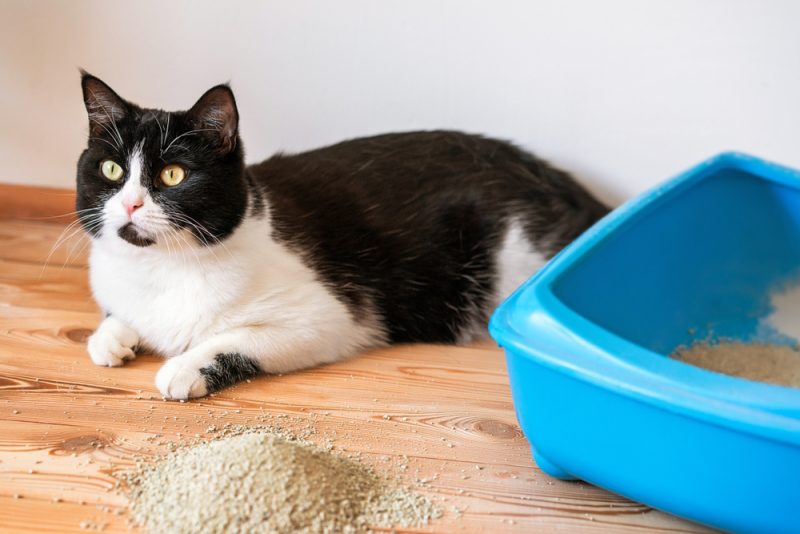
The easiest solution to prevent those nasty critters from invading your cat’s toilet is to keep it clean. That means scooping out the poo and urine every day and washing it thoroughly at least once a week, particularly if you use natural litter.
Pro Tip: Ditch the Lid on Covered Litter Boxes
Covered litter boxes tend to retain moisture, as there’s no outlet for it to escape. This trapped dampness creates an ideal environment for bugs and flies to multiply, so get rid of the top if you can.
Wrapping Up
The combination of moisture, urine, and cat feces makes the litter box a real magnet for pesky invaders. Worse, they can lay eggs in the litter, which can stick to your cat's paws and spread throughout the house. Fortunately, getting rid of these nasty insects is quite simple, because in most cases, the infestation will disappear as soon as you clean the litter box thoroughly. Then, all you have to do is maintain good hygiene practices so your feline friend can do their business in a litter box free of unwanted guests.
Ultimately, although litter box bugs are gross, they are generally not dangerous. However, if you suspect that your cat has tapeworms, it is best to take them to the vet.
Related Reads:
Sources
Featured Image Credit: New Africa, Shutterstock

Expert cat care, straight to your inbox
Vet-reviewed advice, behavior tips, and the best of Catster. Free, and you can unsubscribe anytime.
By signing up, you agree to our Terms & Conditions and Privacy & Cookies Policy.
Genevieve is both a biologist and a science writer, driven by her deep love for capuchin monkeys, pumas, and kangaroos. Her dedication to wildlife has taken her across the globe, from Bolivia and Guatemala to Canada and Australia, working and volunteering at various rehabilitation centers. As a Canadian living in Argentina, Genevieve starts her days with horses and cows greeting her from the plains outside her home office. She is the proud parent of three rescued dogs—Lemmy, Nala, and Pochi—and an energetic kitten named Furiosa. The opportunity to share her passion and expertise in animal care brings her great satisfaction.
Join the conversation
Ask a question, share your story, or send private feedback.