Tapeworms in Cats: Vet Reviewed Signs, Causes, and Care

In this article
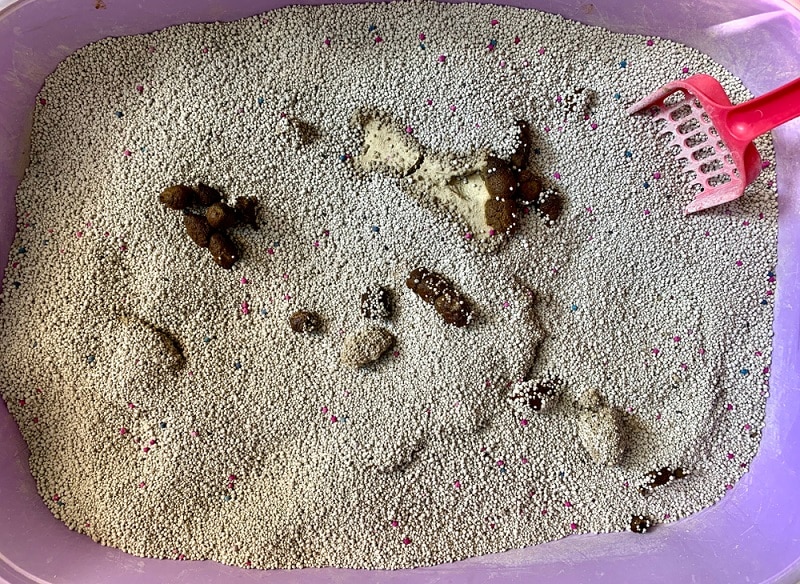
While it may not sound very appealing to look closely at your cat’s poop when scooping the litter box, you can learn a lot about your kitty’s health by doing so. For example, is the poop hard, soft, or just right? What color is it, and is there anything that looks like it doesn’t belong, like blood? If you spot what looks like grains of rice in your cat’s poop, you could be dealing with a common kitty parasite: tapeworms. In this article, we’ll tell you all about the signs of tapeworms, how are they transmitted, and how to care for a cat with this condition.

What Are Tapeworms?
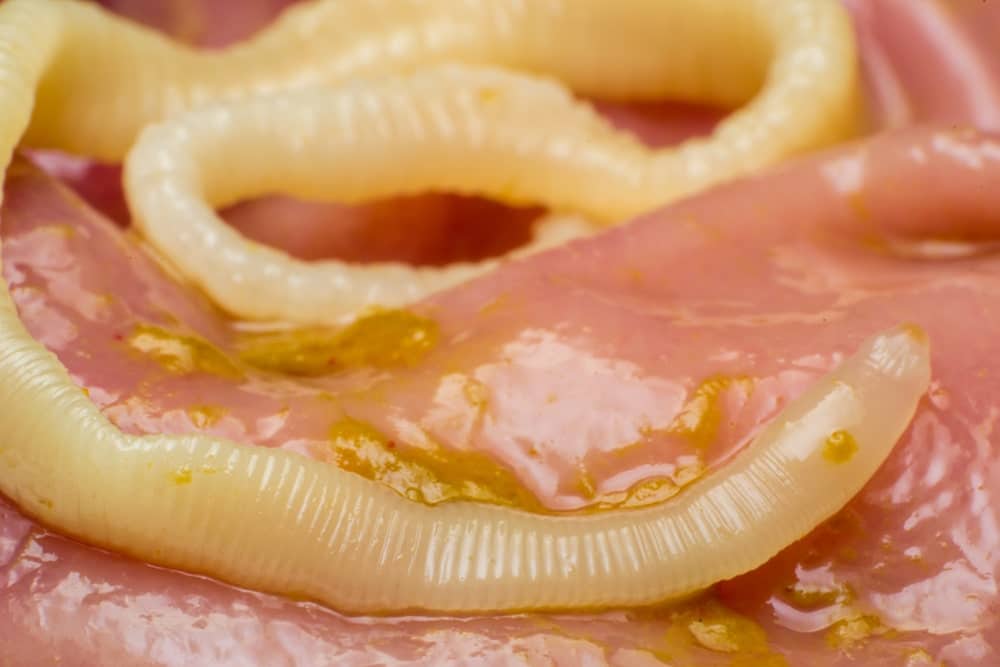
Tapeworms are flat, segmented worms that can infect and live in the small intestines of many animals, including dogs and cats. Cats are infected by swallowing tapeworm eggs, which then hatch in their small intestines. The immature tapeworms attach to the walls of the intestines and begin feeding.
Adult tapeworms can grow to nearly a foot in length within the cat’s intestines. Once they reach maturity, segments of the tapeworm’s body break off and are passed in the cat’s poop. These segments contain the worm’s eggs.
As the segments dry out, they burst open and release the tapeworm eggs into the environment. This process begins a new life cycle for the tapeworm. Tapeworm eggs must pass through a secondary host, which varies by species, before infecting a cat.
We’ll dive deeper and give you more specifics on this process and the different secondary hosts in a later section of this article.

What Are the Signs of Tapeworms?
Unlike other types of internal parasites, tapeworms don’t usually cause many physical effects. Because of this, the cat may not show any signs of infection. The most common sign is the one we already mentioned: the presence of segments in the cat’s poop.
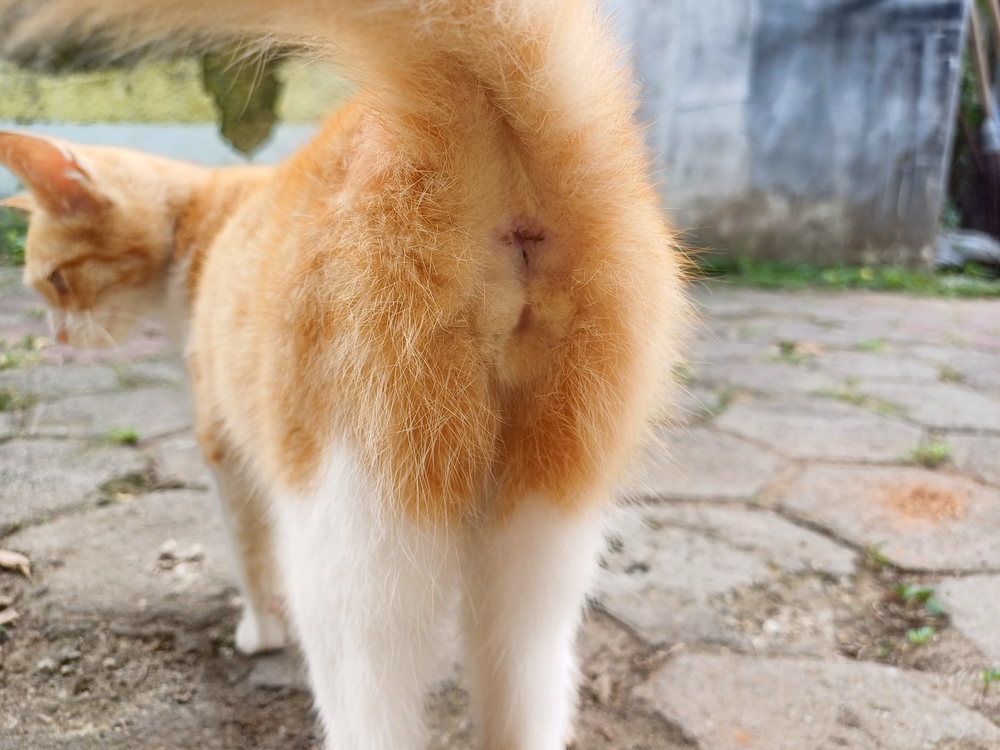
If you spot the tapeworm segments right after your cat poops, they may still be moving. Dried-out segments will look more golden in color but still strongly resemble grains of rice. Sometimes, you can also see segments in the fur around your cat’s anal area.
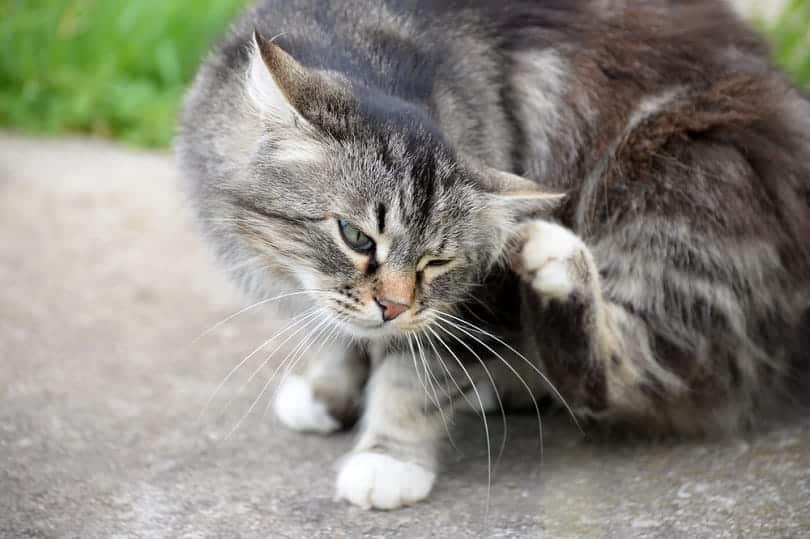
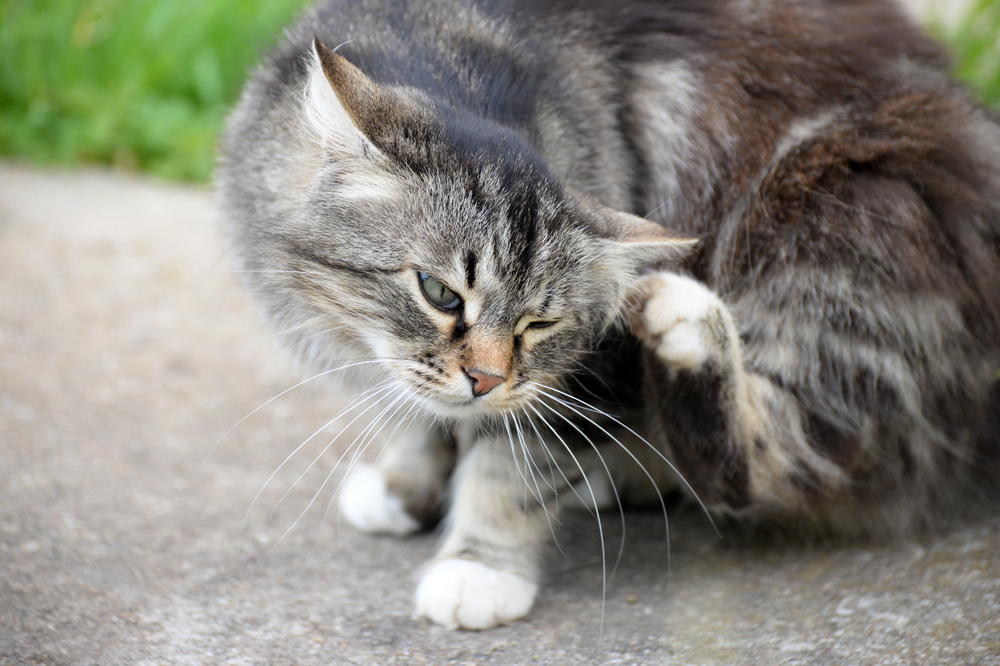
Another sign of a tapeworm infection is the cat scooting their rear end on the ground due to itching and irritation caused by the stuck segments. This sign is more common in dogs with tapeworms but may still be noted in cats.
Sometimes, cats with tapeworms will lose weight, but only if they have a very heavy infestation. Very rarely, the cat may vomit up a whole adult tapeworm, but this is only possible if the tapeworm detaches from the intestines and migrates to the stomach.
What Are the Causes of Tapeworms?
As we mentioned earlier, tapeworms infect cats through a secondary host. With other parasites, like roundworms, the cat is infected by swallowing the worm’s eggs directly. With tapeworms, another host is infected with the egg, and the cat eats that infected creature.
The most common tapeworm species that infect cats is carried by fleas. Flea larvae ingest tapeworm eggs, which remain in the insect as they mature into an adult fleas. Cats must be exposed to these infected fleas to catch tapeworms. Tapeworm eggs hatch into a larva inside the infested flea.
Typically, the cat swallows an infected flea during grooming. Tapeworm larvae are released into the intestines when the flea is digested, where they hatch and attach.
Other species of tapeworms use prey animals like rabbits, rodents, and birds as their secondary hosts. Outdoor cats that hunt may be infected by eating these hosts or by scavenging. Once they infect a cat, these other tapeworm species go through the same life cycle as those found in fleas, including passing segments in the poop.

How Do I Care for a Cat With Tapeworms?
As we mentioned, your cat may not show signs of a tapeworm infection until you start spotting “grains of rice” in their poop. These parasites can also be hard to spot during routine fecal examinations and rarely lead to weight loss or diarrhea like other worms. Your cat could have tapeworms for a while before you realize that you need to take care of them!
Once you spot your cat scooting or see tapeworm segments in your cat’s poop, you’ll need to consult your veterinarian to determine the best course of treatment. Try to bring a poop sample so the vet can identify which tapeworm species your cat is infected with. This could impact which medication they use to kill the tapeworms.
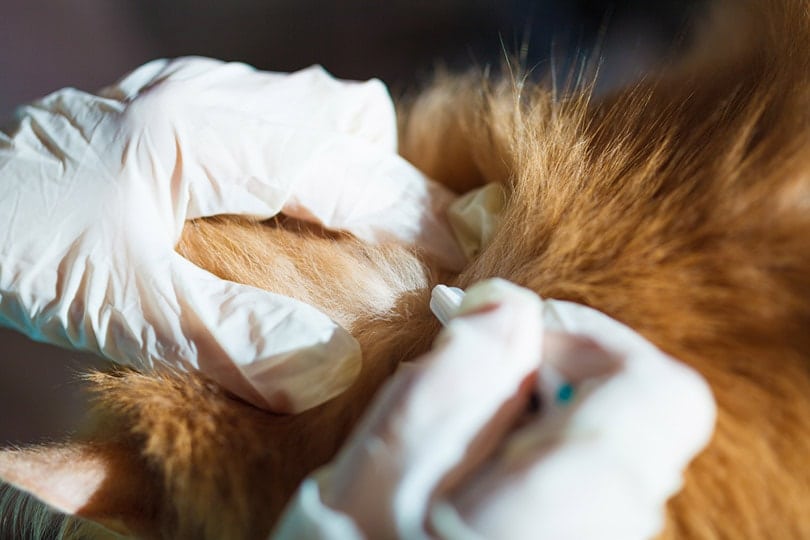
Several effective dewormers are used to treat tapeworms. While you may be able to buy dewormers from other sources, your vet is likely to have the most effective options available.
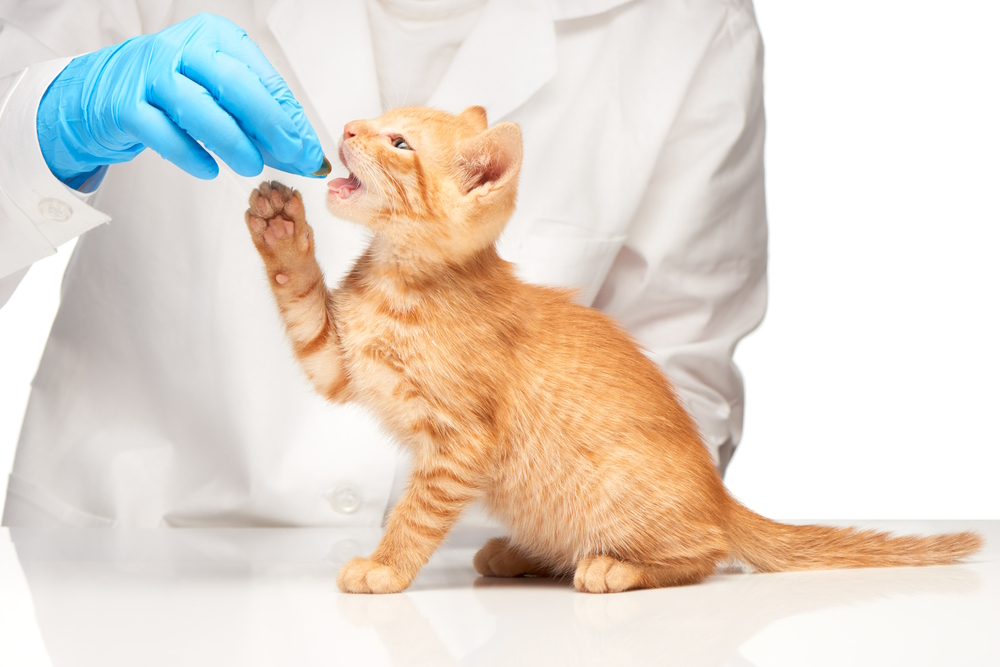
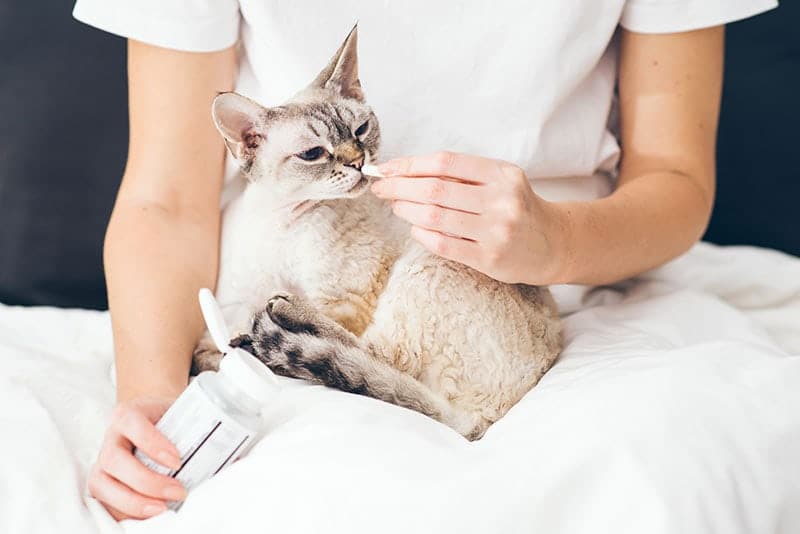
Tapeworm treatments are usually available as either a pill or a shot. If your cat lives, hunts, and poops primarily outside, it may be easiest to treat them for tapeworms regularly because you’re unlikely to spot any signs of infection. Occasionally, tapeworm treatments can upset your cat’s stomach, but these side effects are rare.
After treatment, dead tapeworms typically dissolve in your cat’s intestines, and you may not see them passed in the kitty’s poop. Give the entire dose of medication as prescribed by your veterinarian to ensure the cat completely clears the infestation.
Since fleas, rodents, birds, and rabbits are part of some tapeworm species cycles, flea control and the prevention of prey ingestion are very important parts of a successful tapeworm treatment.

Frequently Asked Questions (FAQs)
Can Humans Catch Tapeworms From a Cat?
Because cat tapeworms are only passed through a secondary host, humans can’t technically catch tapeworms from a cat. Cat tapeworm infections in humans can occur, but the person would have to swallow an infected flea just as the cat does. Because of this, they are pretty rare and mainly occur in children.
However, several other species of tapeworms can infest humans, mostly through the consumption of raw or undercooked meat.

How Can I Prevent Tapeworms in My Cat?
Because fleas spread most tapeworms in cats, regular flea control also helps prevent tapeworm infections. Even indoor cats can catch fleas, especially if they live in a house with dogs, and all cats should be on preventative medication. Many safe and effective options are available, so talk to your veterinarian about which is best for your cat.
If your cat becomes infested with fleas, you’ll need to treat your house and yard in addition to your kitty to resolve the issue entirely. Your vet can likely recommend products for this, or you can speak with a pest control specialist.
To prevent other types of tapeworms, don’t let your cat outdoors to hunt and prevent or remove any mice in the house before your kitty can get to them. As we mentioned in earlier sections, outdoor cats may need to be treated for tapeworms regularly because it’s impossible to fully prevent infections if they’re hunters.

Conclusion
Unlike many types of internal parasites your cat can catch, tapeworms rarely cause serious health issues and can live inside your pet for a long time. Good flea and rodent control can prevent most tapeworm infections as well. Tapeworms rarely infect humans, although some species can cause severe disease in people if they become infected. If your cat catches tapeworms, your only clue may be found in their poop, so pay attention when you scoop the box. Treating tapeworms in a cat is usually simple and effective without requiring much extra care on your part.
Sources
Featured Image Credit: Veera, Shutterstock

Expert cat care, straight to your inbox
Vet-reviewed advice, behavior tips, and the best of Catster. Free, and you can unsubscribe anytime.
By signing up, you agree to our Terms & Conditions and Privacy & Cookies Policy.
Elizabeth Gray is a lifelong lover of all creatures great and small. She got her first cat at 5 years old and at 14, she started working for her local veterinarian. Elizabeth spent more than 20 years working as a veterinary nurse before stepping away to become a stay-at-home mom to her daughter. Now, she is excited to share her hard-earned knowledge (literally--she has scars) with our readers. Elizabeth lives in Iowa with her family, including her two fur kids, Linnard, a husky mix and Algernon, the worldʻs most patient cat. When not writing, she enjoys reading, watching all sports, and spending time outdoors with her family.
Join the conversation
Ask a question, share your story, or send private feedback.