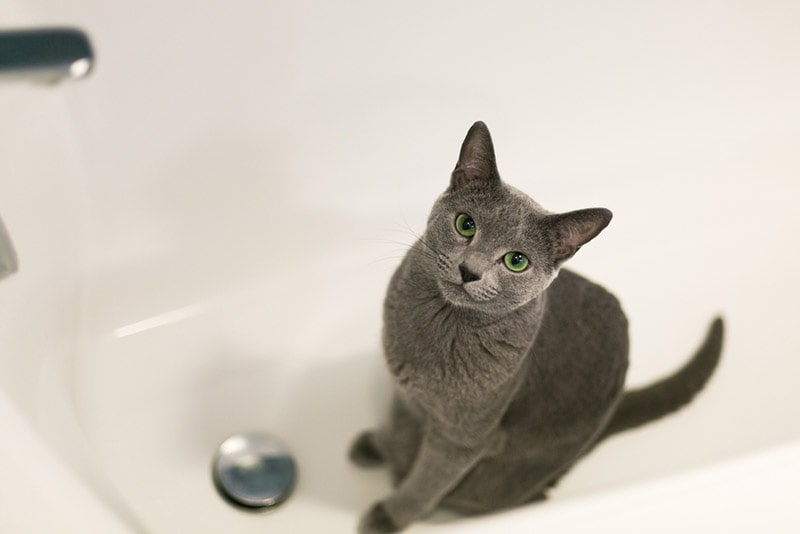
Why Do Cats Scoot? 5 Vet Reviewed Reasons & What to Do


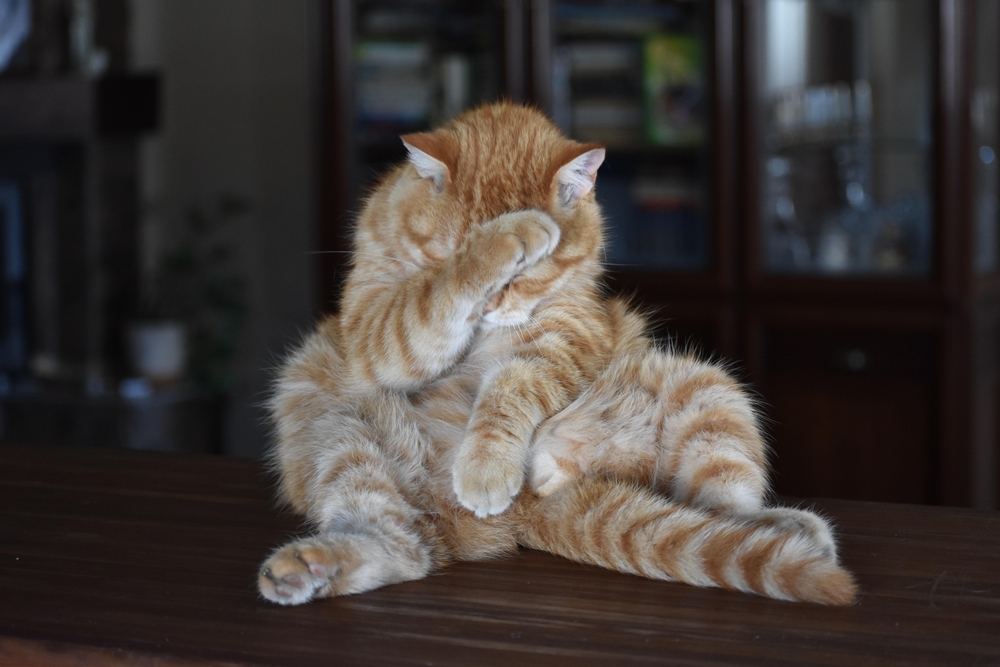
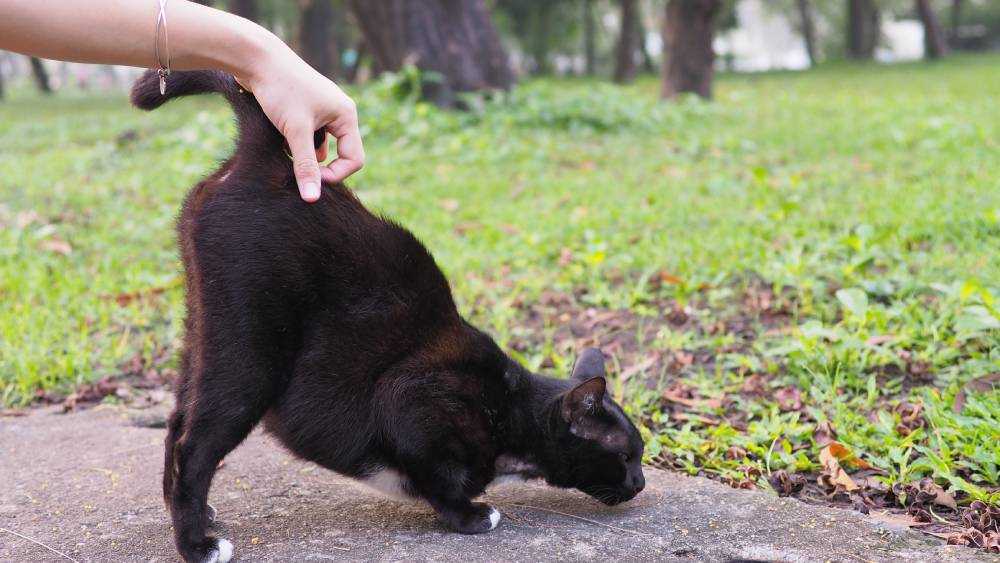
If you live with a feline, you may have seen your buddy engage in a few less than elegant activities, including the dreaded scoot—where your cat's dragging their butt on the floor leaving something stinky behind.
Cleaning up the results of cat scooting and hairballs are two of the least enjoyable activities associated with living with a cat. You might wonder precisely what motivates your cat to look right at you, assume the position, and drag their butt across your newly cleaned floor.
If your cat’s dragging its butt on the floor, there's no need to panic, particularly if it only happens occasionally. If the activity starts happening more regularly, take your buddy to the veterinarian if you see redness, a cut, or any signs of inflammation. Read on for details on some of the most common reasons that cats get up to this less-than-savory activity.

The 5 Reasons for Cat Scooting
1. Something Is Stuck
Cats often scoot when there's something stuck, and it could be a bit of litter or poop. Dragging their butt across the floor is actually a quite effective way of getting rid of little bits of debris. You'll usually be able to tell if your cat is scooting to help clean their bottom; they'll leave behind a trail of the offending substance.
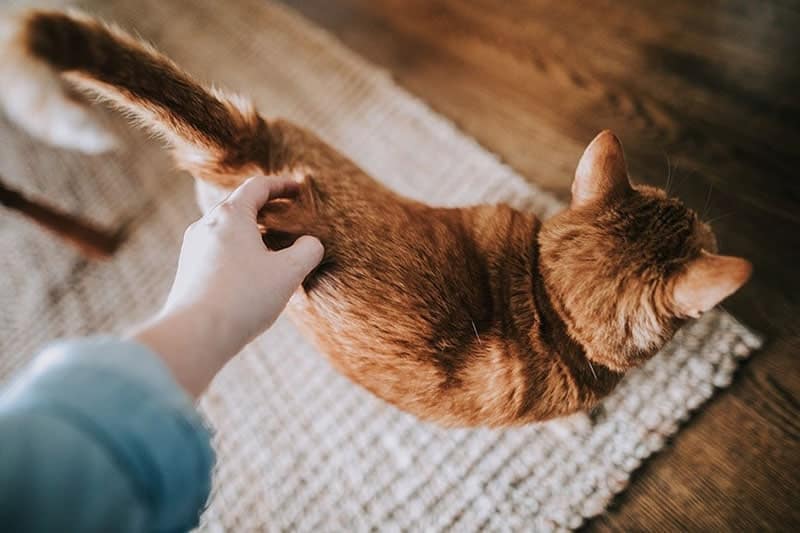
You can always help your cat out if you see it happening. Check under their tail to see if there's poop or something else that shouldn't be there. Grab a paper towel or soft rag, wet it with warm water, and give your cat’s butt a quick wipe down. Be gentle, and don't use anything other than water. Human soap and cat shampoo can be too astringent for the delicate skin around your cat's bottom.
For long-haired cats, consider trimming the hair around their bottom to reduce the likelihood of poop getting stuck on the hair.
2. Worms
Worms are often a cause for cats dragging their butt around! Scooting can signify that your cat is trying to relieve a deep annoying itch. It's surprisingly easy for cats to get worms. Even indoor cats can end up with parasites such as tapeworms. Tapeworms are particularly common in adult cats; they're transmitted when a cat eats flea larvae infected with the parasite, usually whilst grooming.
While some cats don't show symptoms when they have worms, others lose weight, vomit, become lethargic, and have intense anal itching. Most veterinarians recommend regularly treating all cats for fleas and other parasites. While finding flea medication and deworming products at the pet store is possible, it's best to consult your veterinarian for advice. They'll be able to prescribe medication targeted to the parasites most commonly found in your area.
3. Anal Gland Problems
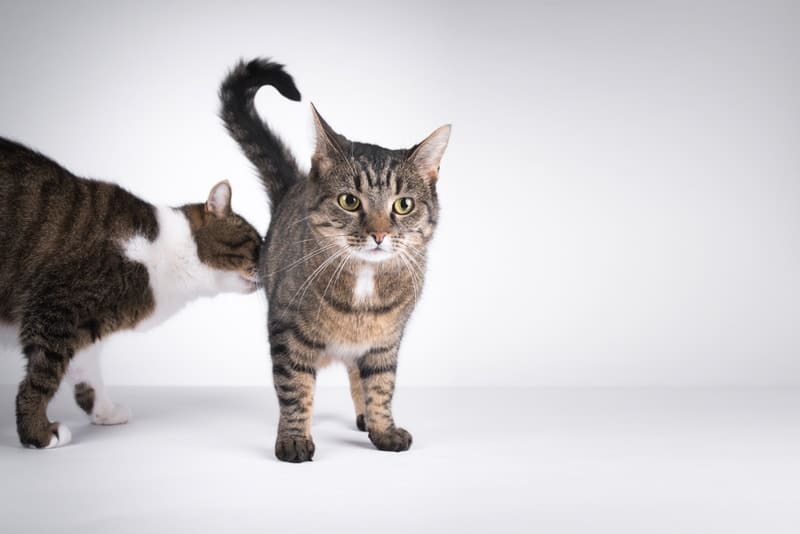
Dogs aren't the only creatures that can end up with anal gland irritation and inflammation. It's a relatively common problem in cats as well. Cats' anal glands produce a dark, smelly liquid that is left behind when marking. The glands are also expressed when cats defecate. Problems often ensue if a cat has diarrhea or has softer or smaller bowel movements for an extended period.
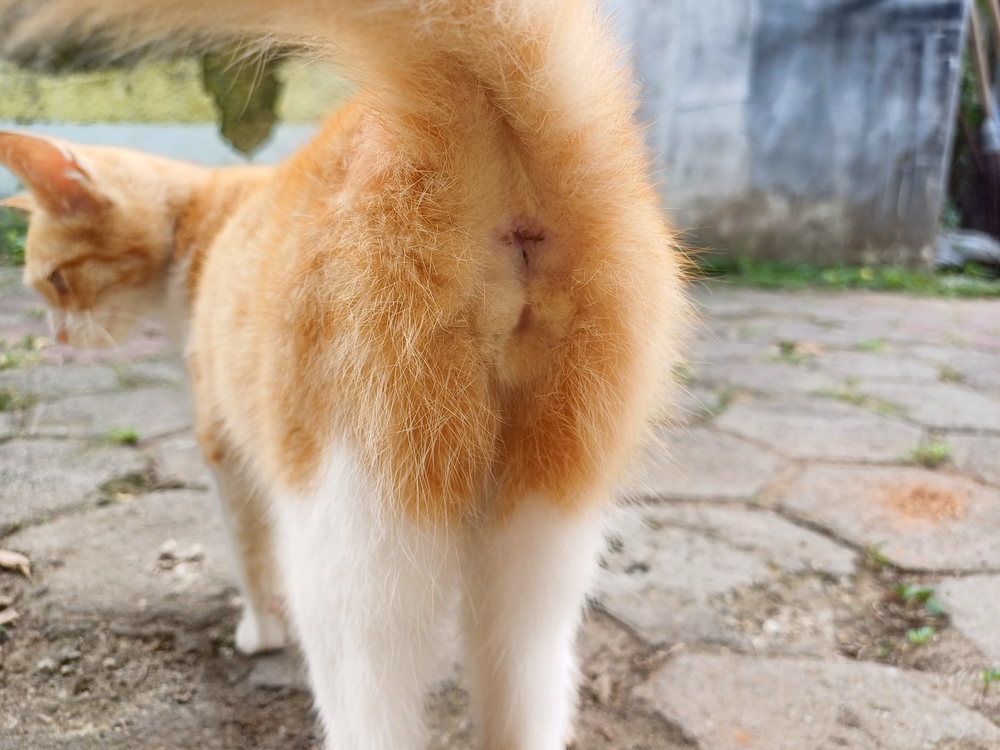
If a cat's anal glands become inflamed or irritated, most owners first notice a sharp fishy smell. Other telltale signs include excessive anal licking, anxiety, and general signs of discomfort. Some cats will even chase and bite their tails to get some relief. There may be evidence of swelling or even an open sore just next to the anus.
Anal gland issues need to be addressed by a veterinarian sooner rather than later. If the problem isn't dealt with in a timely fashion, your cat's anal glands can actually rupture, leading to a lot of discomfort and lengthy treatment.

4. Allergies
Cats with allergies often have itchy skin. Common allergens include various foods, fleas, and even plants. Cats, just like humans, can be allergic to substances like detergents and the materials a new cat bed or toy is made of. Symptoms such as hair loss, red and inflamed skin, small scabs, over grooming, vomiting, and sores can point to allergies.
Food allergies can be accompanied by vomiting, diarrhea, and itching that appears unrelated to seasonal changes. If your cat is scratching, miserable, and losing hair, take them to the vet for an evaluation.
Your veterinarian can prescribe medication to relieve the intense itching and make your cat more comfortable as you determine the cause of the allergic reaction. Figuring out what allergen is causing your cat's itchiness is essentially a process of elimination.
5. Growths and Other Irritations
Anal growths and tumors can cause intense sensitivity that can lead to cat scooting. Cats often scoot to get rid of the sensation of having something hanging from their bottom. A growth or skin tag is essentially a permanent annoyance your cat will attempt to get rid of by dragging their butt across the floor.
If you notice any strange growth on your cat's derriere, get it checked out by a veterinarian as soon as possible. It could be anything from a simple but annoying skin tag to something serious such as anal gland cancer. While anal gland cancer is extremely rare in cats, it tends to spread quickly, and it's important to have your cat evaluated as soon as possible.

Conclusion
Cat scooting is one of the gross behaviors that every cat parent has had the unfortunate privilege to witness. For some reason, cats seem inclined to drop and drag right in front of a new visitor!
While it's less than pleasant to watch, it's a natural activity that indicates something is bothering your cat. If you see your cat scooting, take it seriously, and if it happens more than occasionally, it's a good idea to take your pet to the veterinarian for a check-up.
Featured Image Credit: Ourikano, Shutterstock

Expert cat care, straight to your inbox
Vet-reviewed advice, behavior tips, and the best of Catster. Free, and you can unsubscribe anytime.
By signing up, you agree to our Terms & Conditions and Privacy & Cookies Policy.
Lorre Luther is a writer who is firmly convinced that cats are smarter than humans. She left her law career in the United States and moved to the Netherlands to follow her dream of becoming a writer. Lorre currently lives in Rotterdam, she enjoys traveling and greatly appreciates the beauty of nature. Lorre has a spot for animals and admires the intelligence of cats.
Join the conversation
Ask a question, share your story, or send private feedback.