Why Are Cats Afraid of Water? Vet-Reviewed Facts & Useful Tips

In this article
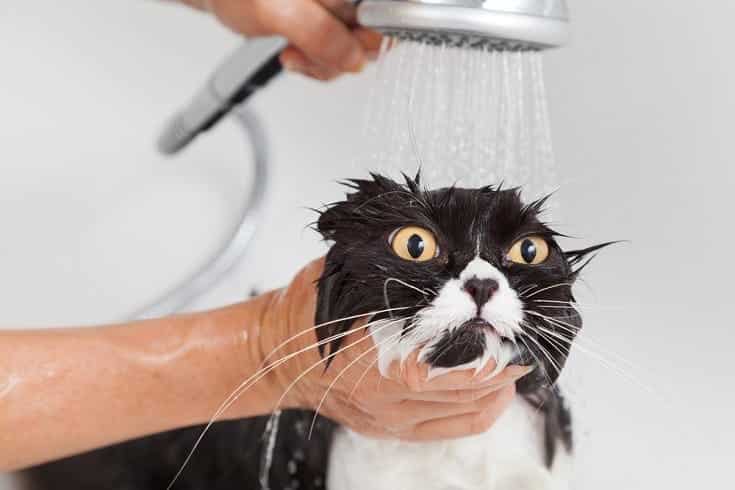
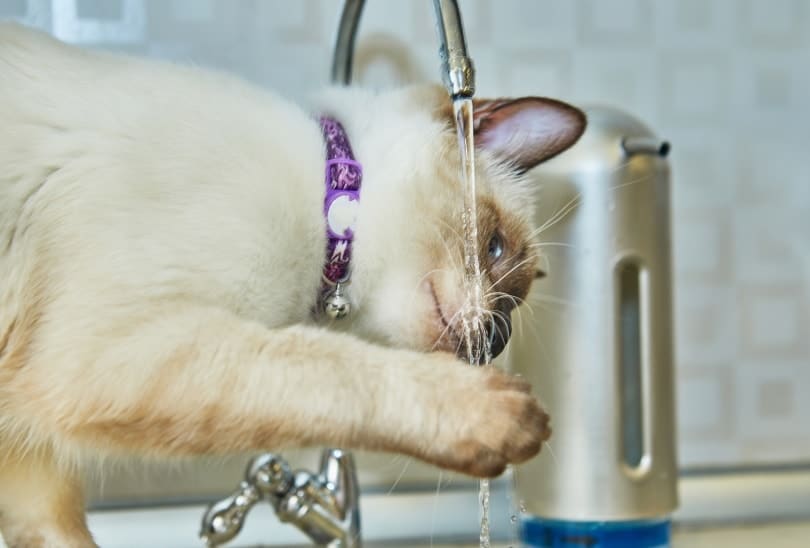
Many cat owners have witnessed the displeasure that some cats derive from getting wet or being doused in water. While some cats like and even love water, for most owners, we really only see whether a cat loves or loathes water when we have to bathe them or when they fall in a bath. In these cases, the cat will react negatively.
What’s more, since most cats are rarely exposed to water, they do not know how to react and have no idea what to do in the water. Their reason for disliking water can usually be chalked up to lack of exposure to it.
Interestingly enough, domestic cats have partially webbed feet. Some breeds, like the Turkish Van, will go out of their way to find and play in the water, and cats apparently have an inherent love of fish, so it is possible to desensitize a cat to water. Doing so may mean that your cat learns not to get stressed about it, and if you do it right, they might even learn to love it!

Minimal Exposure
The most likely cause of a cat’s fear of water is a lack of exposure. Cats are naturally clean animals. We do not need to bathe them, and in fact, we are discouraged from doing so in all but the most extreme circumstances, as too frequent bathing can destroy the natural protective oils in your cat’s coat. The exception to this rule is hairless cats, which do need regular baths to prevent oil buildup and the development of blocked pores.
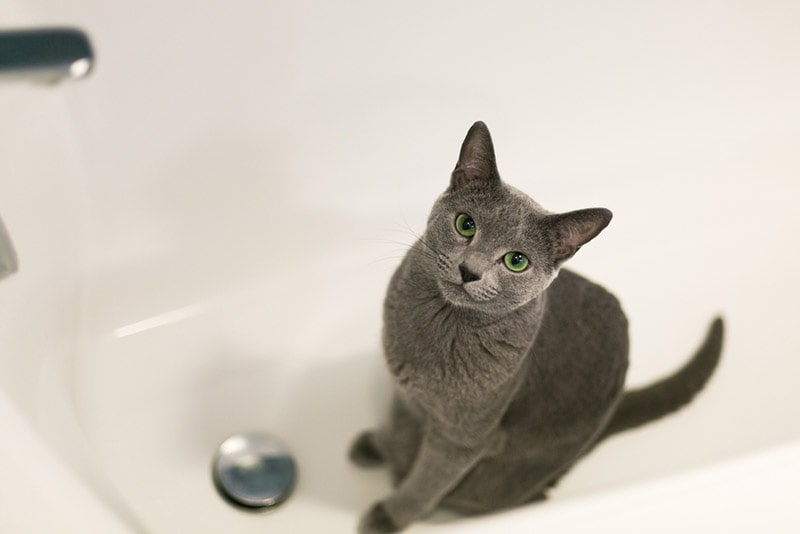
This means that most cats will rarely be exposed to pools of water, so they will have no idea what to do when they are confronted by a tub or even a sink full of water. With regular exposure, your cat may not react in the same way.

Bad Experience
A cat’s fear of water may be learned. They may have had one or more negative experiences with water in the past, and it could be you who has exacerbated the situation, even though you didn’t mean to. This could have happened if you bathed your cat.
Your cat will remember the experience, which means that they will have learned that water has negative connotations. Alternatively, they may have fallen in ponds, slid in baths, or suffered in water in some other way.
Why Do Cats Hate Water But Love Fish?
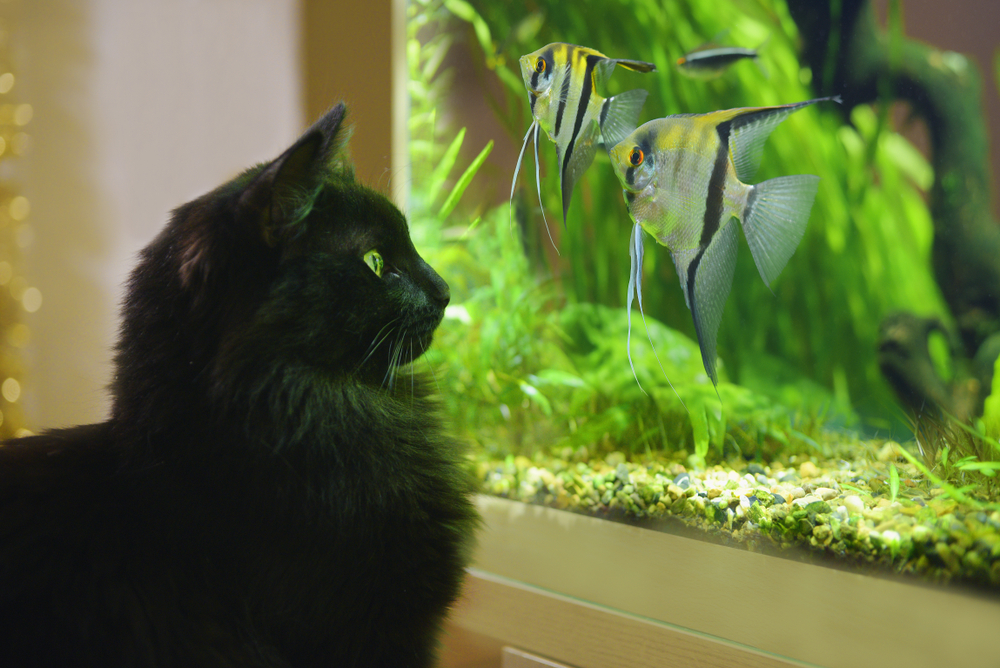
It is a common misconception that fish is a staple part of a cat’s natural diet. In the wild, most cats would rarely, if ever, eat fish. That said, fish is mostly protein, which cats do crave, and has an umami flavor that cats appreciate.1 Moreover, certain felines, such as tigers, do swim, and a few domestic cats, such as the Bengal and the Turkish Van, do like water, so not all felines hate water.
The 6 Cat Breeds That Love Water
Let's learn more about the breeds that not only put up with getting a bit wet but openly and genuinely seem to enjoy going for a dip.
1. Maine Coon

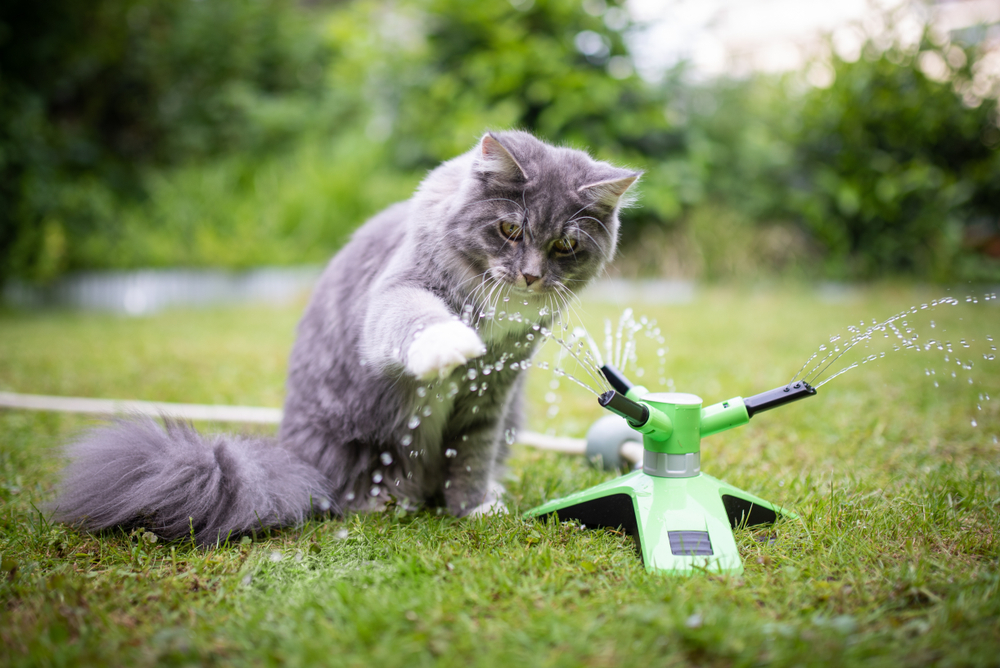
The Maine Coon is something of a beast of a cat breed and is widely accepted as being the largest domestic breed. Maine Coons typically weigh up to 20 pounds, with exceptional examples weighing more than 30 pounds. They are known as gentle giants because they are loving and friendly cats, despite their size. They also tend to be fascinated by water and will splash around in sinks and baths and even learn to swim in ponds and other water sources if given the opportunity.
2. Turkish Van
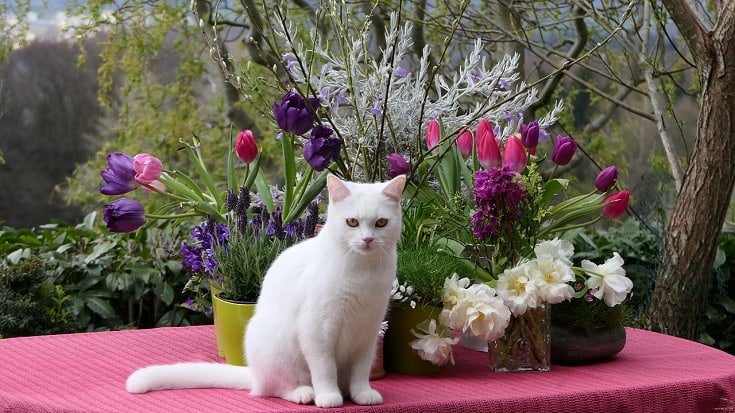
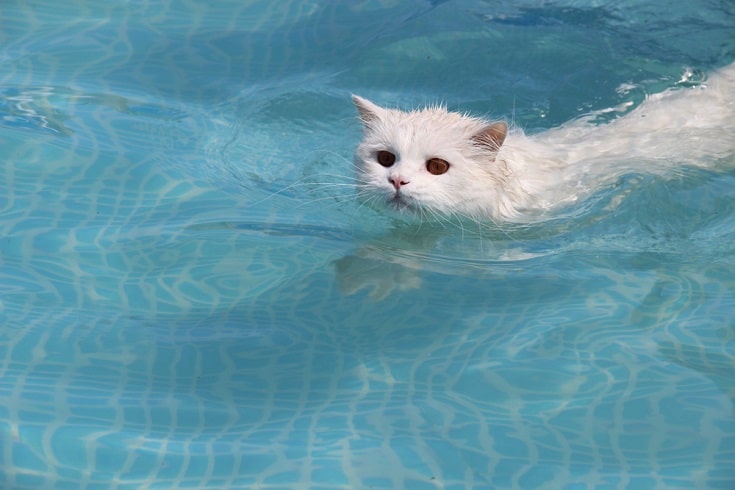
The Turkish Van is nicknamed the swimming cat because of their natural love of water. Legend has it that the Turkish Van swam ashore from Noah’s Ark.
Hailing from Turkey, this breed is not afraid to jump in the local lake or even swimming pool as a means of cooling down in the baking hot temperatures of the country. Their fur is water-repellent, which means that it is not as uncomfortable for the Turkish Van to get wet as it is for other breeds.
3. Turkish Angora

There’s something about Turkish breeds that means they are not only skilled but also happy in the water. The Turkish Angora is a long-coated cat that will get in the shower or bath with you if given the opportunity. If not given the opportunity, the Angora will make do with the toilet bowl, dirty pond, or sink.
This intelligent breed is loving and eager to please, too, so is considered one of the easier breeds to train.
4. Savannah

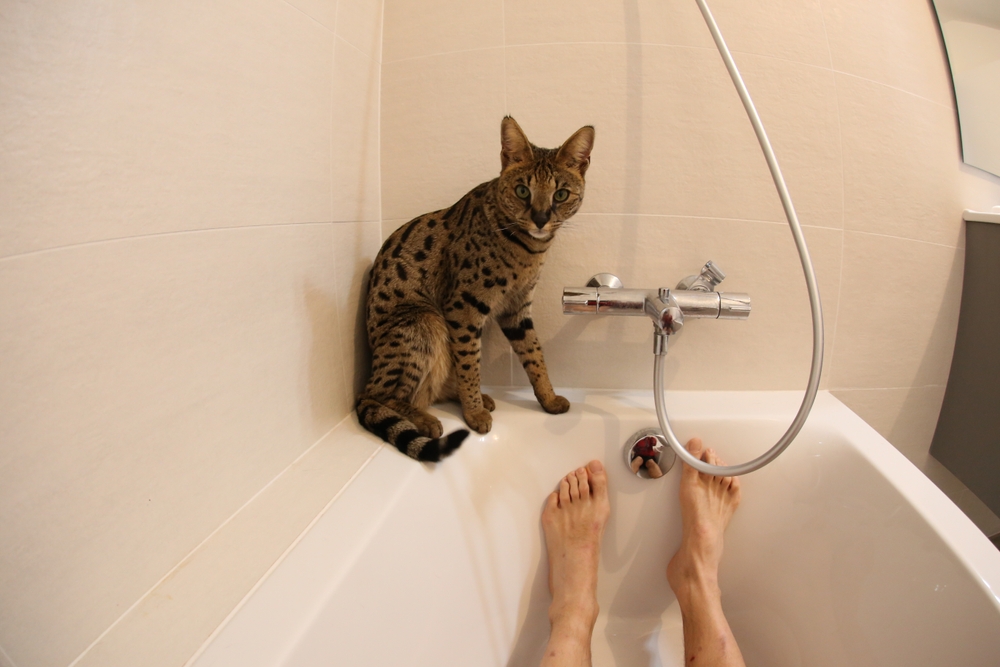
The Savannah is a large cat breed. They have big ears, a long neck, and long legs, which may make it easier for the breed to swim. The Savannah is another breed that will swim in pools and other clean water sources but will make do with dirty ponds and toilet bowls if necessary.
5. Bengal

The Bengal looks like a wild cat, and with good reason: They were first bred from an Asian Leopard Cat. While the modern domestic equivalent may be at least four or five generations away from their wild ancestors, they retain many of the habits and capabilities. This includes the Bengal’s love of water. This breed not only excels on the ground and in trees, but they also enjoy playing in and around the water.
6. Manx

There’s something about short-tailed breeds that makes them like water. Besides the Japanese Bobtail and the American Bobtail, the Manx is another breed that has no qualms about getting their fur wet. This breed is considered canine-like in their behavior. They can be taught to play fetch and perform a host of other tasks and actions, and they will happily play in the sea, lake, pond, or paddling pool.
How to Get Your Cat Used to Water
There may be some cases where you need to teach your own to at least tolerate water.
In these cases, follow these few steps:
Why Do Cats Hate Water?
Not all cats hate water. In fact, some love it and will come running when they hear the noise of the shower or the bath being run. If your cat is afraid of water, it is likely caused by a lack of exposure or by a previous bad experience that involved water. You can try to get your cat used to the water, but it will take time and persistence.
Featured Image Credit: rihaij, Pixabay

Expert cat care, straight to your inbox
Vet-reviewed advice, behavior tips, and the best of Catster. Free, and you can unsubscribe anytime.
By signing up, you agree to our Terms & Conditions and Privacy & Cookies Policy.
Christian started writing for a local newspaper as a teenager, and he's been involved in the publishing industry for most of his adult life. Combining his love of writing with a passion for animals, he is currently the Director of Editorial at Pangolia and the Editor-in-Chief at Catster.
Christian lives in the Philippines with his wife, son, and four rescue cats: Trixie, Chloe, Sparky, and Chopper.
Join the conversation
Ask a question, share your story, or send private feedback.