What to Do When a Cat Bites You: Vet-Reviewed Steps to Take & Risks



In this article
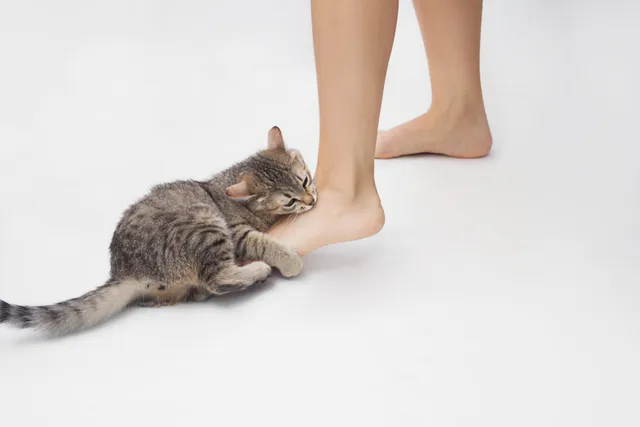
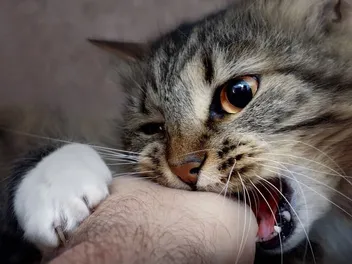
It may be hard to believe that your beloved kitty would ever bite you, but cat bites and scratches happen more often than you might think. Approximately 66,000 hospital emergency visits occur every year due to cat bites.
If you've been bitten or scratched, you may be tempted to leave the wound to heal on its own, and in a perfect world, that would happen. Unfortunately, many complications can arise after a cat bite, so it’s best to visit the doctor as soon as you can.
Keep reading to learn what you must do after being bitten by a cat. This article was fact-checked and reviewed by a veterinarian, not a doctor, so please consult with your GP and seek medical attention promptly in case of a bite or scratch inflicted by a cat.

What to Do After Getting Bit
So, you've been bitten by a cat—now what? Here are some things to consider after you wipe away your tears.
Do Wound Care
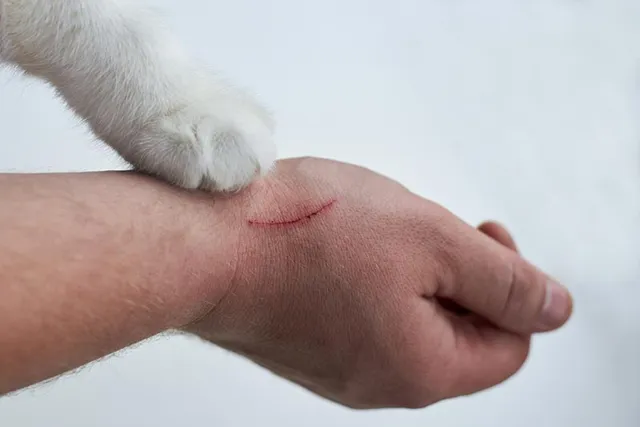
The first thing you need to do is wash the wound under running water for at least 5 minutes.1 Do not scrub the wound or use strong chemicals, which can do more harm than good. Instead, to clean the area, use mild soap and water next. Rinse for a few minutes after you've cleansed the site with your soap solution. If you're bleeding profusely, use a bandage to apply direct pressure to the wound.
Once the bleeding is under control, apply an over-the-counter antibiotic cream, if you have one available, and cover the wound with a bandage.2 Keep the wound site elevated above the level of your heart to prevent swelling, and see your doctor as soon as possible, no later than 8 hours after the bite or scratch.

Report the Bite
Physicians are required by law in some areas to report bite incidents to the local health department. According to the CDC, if you were bitten by a cat that appeared healthy at the time, the cat can be confined by their owner for 10 days and observed. No anti-rabies prophylaxis is needed, and no person in the United States has ever contracted rabies from a cat held in quarantine for 10 days.
If a cat appeared ill at the time they bit you or became ill during the 10-day quarantine, they should be evaluated by a veterinarian for signs of rabies, and you should seek medical advice about the need for anti-rabies prophylaxis.
If the offending cat is unknown or feral, it may be useful to try to get a photo of them if possible. You can then provide the health department or animal control with a photo, description, and location of the cat. Either way, it is crucial to speak to your doctor as soon as possible, as there may be specific individual treatments required depending on the extent of the bite, your medical history, previous vaccinations, and particular health risks.
When to Go to the Doctor

Depending on the severity of the bite and the cat that caused the wound, you may need to see the doctor immediately. It is best to speak to your doctor so they can decide whether you should seek urgent care or have a regular appointment within 12–24 hours.
If the bite is very shallow and came from a household cat fully immunized and in good health, according to Johns Hopkins, you can use the previous instructions to clean your wound and watch for signs of infection. But remember to be vigilant, as even if the cat seems fine, it does not mean they do not carry bacteria or viruses that will cause your wound to get infected.
Signs of infection include:
If the wound is deep or came from an unknown animal, follow the directions for cleaning the wound. Then, call your healthcare provider for help reporting the attack. They will also tell you if you need to come in for an examination or if you'll need additional treatment (e.g., antibiotics, rabies prophylaxis, or tetanus vaccine).
You should go to the hospital immediately if the following applies:
Why Do Cat Bites Get Infected Easily?

Cats are obligate carnivores, meaning that they need animal protein to survive. As a result, they have evolved to have super sharp canine teeth that can easily puncture the skin of their prey.
When a human gets bit by a cat, the puncture wounds that they leave in their wake will seal over rapidly, trapping any bacteria from the cat's mouth under the skin. This can easily become a breeding ground for bacteria.
Cat bites can be very dangerous to humans and other animals due to the number of bacteria they carry in their mouths. One of the most common pathogenic bacteria seen in cats (and dogs) is Pasteurella multocida. A cat infected with this bacterium will leave behind a red, swollen, and painful bite wound. The resulting infection could quickly spread to nearby tissues, causing cellulitis. The bacteria could even get carried through the blood to other body areas, causing blood poisoning, medically called septicemia or sepsis. These infections can sometimes be fatal, so it's not something you want to mess with.
What You Need to Know About Cat Scratch Disease
Cat scratch disease (CSD) is a bacterial infection spread by cats. Humans most often contract it after being scratched by a cat, hence the condition's name. However, it can also occur when an infected cat bites them. Cats often become infected with the bacteria behind CSD through flea bites, though they can sometimes contract it during fights with infected cats.
The bacteria can cause some cats to become sick, but most will simply carry it in their blood without showing any signs. According to the CDC, as many as one in three cats have the CSD-causing bacteria in their blood.
Though rare, CSD can cause serious consequences, as it can affect the brain, eyes, heart, and other internal organs. Some people may suffer from complications, though this is most often observed in children under 15 and those with compromised immune systems.
The symptoms of CSD include:
Final Thoughts
A cat bite is a serious wound that needs to be treated promptly. Depending on the bite’s severity and the cat's status, you may need to go to the hospital immediately for treatment. If the wound is shallow, you may be able to get away with keeping a close watch on it at home. However, if you notice any signs of infection, it's time to go to the doctor.
Sources
Featured Image Credit: Luis Echeverri Urrea, Shutterstock
Expert cat care, straight to your inbox
News, insights, and useful advice, delivered to you.

No spam — unsubscribe anytime.
By signing up, you agree to our Terms & Conditions and Privacy & Cookies Policy.
How useful was this post?
Click a star to rate. You can leave written feedback afterwards. (We read all feedback.)
For Chantelle, writing and animals are the two driving forces in her life. Growing up on the Canadian prairies surrounded by pets, she now shares her home with five cats, two guinea pigs, and a bearded dragon. Chantelle, her husband, and their child pride themselves on being dedicated pet parent, even spending a fortune on wall-mounted cat shelves to provide their cats with an indoor jungle gym. When she's not snuggling with her cats or photographing their humorous moments, Chantelle is exploring the Rocky Mountains, rewatching her favorite Netflix series, and reading up on various random subjects.