Get

In Your Inbox

Catster is reader-supported. When you buy via links on our site, we may earn an affiliate commission at no cost to you. Learn more.

How Common Is Cat Scratch Disease? Facts & Prevention Tips (Vet Answer)

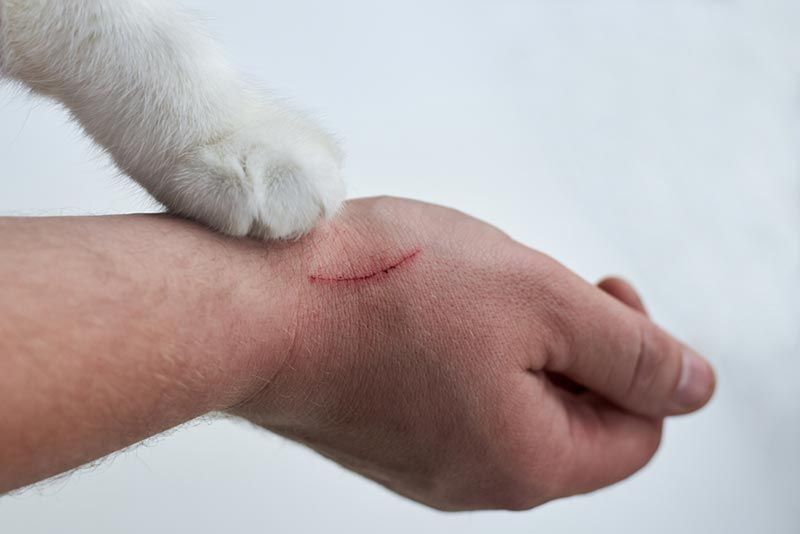
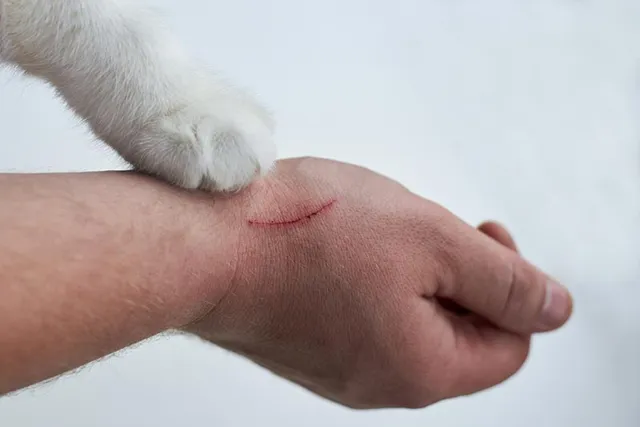
scratch on a man's hand made by a cat

Cat scratch disease is caused by a bacteria called Bartonella henselae and is, fortunately, rare in the United States. A retrospective study performed by the Centers for Disease Control and Prevention (CDC) looked at years of health insurance data (for the period of 2005–2013) for adults under 65 years of age1. As a result, the authors estimated that approximately 4.7 per 100,000 people (under 65 years of age) are diagnosed with cat scratch disease every year in the United States.2

divider 2 cats

What Causes Cat Scratch Disease?

Cat scratch disease is an infection caused by Bartonella henselae bacteria.

People are exposed to the bacteria through broken skin (e.g., a wound from a cat bite or scratch). This may occur via:

  • Contact with blood from an infected cat (rare, except in people who work with cats in veterinary clinics, for example)
  • Direct spread of bacteria from the cat’s nails or mouth
  • Contamination of the wound with infected flea dirt (feces)
fresh wound and blood from a bite cat
Image Credit: mydegage, Shutterstock

How Do Cats Become Carriers of Bartonella Henselae?

Cats typically contract the bacteria after being bitten by infected fleas.

The bacteria usually remain in the cat’s bloodstream for around 5–8 months, sometimes longer. Cats can be reinfected with different strains of Bartonella henselae throughout their life.

Cats do not typically spread the bacteria directly to each other, but cats in the same home may all become infected if fleas are present.

Do All Cats Carry the Bacteria That Causes Cat Scratch Disease?

It has been reported that up to 40% of cats in the United States have Bartonella henselae in their blood, but this number may be higher or lower in certain geographic regions.

Most cats who carry bacteria do not show any signs of illness, so there is no easy way to identify infected cats. However, certain populations may be more likely to carry Bartonella henselae, such as:

  • Young kittens
  • Strays and shelter cats
  • Cats with outdoor access
stray cats lying on the ground
Image Credit: dimitrisvetsikas1969, Pixabay

I Was Scratched By a Cat, What Should I Do?

Clean the wound thoroughly with soap and water, and monitor the area closely. Remember that cat scratch disease is rare in healthy adults, but young children and individuals with compromised immune systems are at a higher risk.

Signs of cat scratch disease usually appear within 1–2 weeks of being scratched or bitten by a cat and may include:

  • Fever
  • Swollen, painful lymph nodes (especially near the wound)
  • Generally feeling unwell (e.g., headache, decreased appetite)

If you have any concerns, please contact a doctor.

Is Cat Scratch Disease Treatable?

People who are otherwise healthy are usually able to clear the infection on their own.

Individuals who become clinically ill or develop complications from the disease may require treatment with antibiotics. Serious complications are, fortunately, rare.

wound from cat bites and scratches with blood on it drying up
Image Credit by: RJ22, Shutterstock

How Can I Protect Myself Against Cat Scratch Disease?

Here are some tips for reducing your risk of cat scratch disease:
  • Discourage your kitten or cat from rough play, as this may increase the likelihood of a scratch or bite
  • Supervise children when they are handling or playing with cats
  • Always wash your hands after touching a cat
  • Clean any bite or scratch wounds thoroughly with soap and water
  • Keep your cat indoors

It is important to note that declawing cats is not recommended, and there is no evidence to show that it reduces the risk of cat scratch disease.

You can also ask your veterinarian to recommend a flea prevention protocol for your cat (avoid over-the-counter products, which can be toxic to cats).

If you need to speak with a vet but can't get to one, head over to PangoVet. It's an online service where you can talk to a vet online and get the advice you need for your pet — all at an affordable price!

PangoVet_Mention-in-Content for PangoVet2 save money

divider 2 cats

Conclusion

Cat scratch disease, caused by a bacteria called Bartonella henselae, is a rare disease that can affect both cats and humans. Cats typically contract the disease from flea bites by infected fleas.

Cats don’t typically spread the bacteria directly to each other, though cats in the same home may all become infected if fleas are present. Humans can contract the bacteria through broken skin, for example, from getting bitten or scratched by an infected cat. Fortunately, cat scratch disease is rare and easy to treat, with the infection often clearing on its own.


Featured Image Credit: mydegage, Shutterstock

Want content like this delivered to you?

Sign Up For Our Newsletter

News, insights, expert advice, and everything cat

* By submitting, you agree to our Terms & Conditions and Privacy & Cookies Policy.

How useful was this post?

Click on a star to rate (you can leave written feedback after clicking submit)

Help us improve Catster for pet parents!

Your feedback really matters.

What did you like about this post? Also how can we improve it?

Join the conversation

Leave a Reply

You’re very welcome to leave a comment or question. Please know that all comments must meet our community guidelines, and your email address will NOT be published. Let’s have a positive and constructive conversation.

Talk With A Vet Online

Peace of mind,
anywhere, anytime

Affordable vet advice

How Big Does an Abyssinian Get? Average Weight & Growth Chart

With a lean, elegant look, the Abyssinian cat strongly resembles the cat statues of Ancient Egypt. They’re a striking breed with exotic gold...

Happy Mew Year’s Eve From Catster! Keeping Your Kitty Safe During the Fireworks

Firstly, thank you for reading and being along for the journey in 2025. We can’t wait to share more feline adventures, news, care...

Can Cats Eat Lobster? Vet-Approved Diet Facts & FAQ

Not only is lobster nutritious, but it’s also something we humans look forward to spoiling ourselves with, especially in certain parts of the...

Is It True That All Cats Have Henry’s Pocket? Vet-Verified Facts & FAQ

It’s not where we would choose to have a pocket, but Henry’s Pocket isn’t there for cats to keep their keys and change...

More related

Why Are Cats Weird About Water? 5 Reasons Why Their Behavior Is Strange

Cats seem to have a complicated relationship with water. They may hate getting baths, but they’ll still have fun playing with water running...

In the Jail Cats Program, Prisoners Socialize Shelter Kittens

When my editor first emailed me about something called the Jail Cats project, I assumed it was a spoof website — maybe something...

Can Cats Eat Donuts? Vet-Reviewed Nutritional Facts & FAQ

Many cats are clingy and are interested in everything their owner does, especially eating. So, if you are snacking on a delicious doughnut,...

History of Black Cats: A Look at Their Past

Black cats are bewitching creatures with dark fur and mesmerizing eyes that seem to glow in the dark. While black cats are often...

Keep reading

Can Cats Eat Ham? Vet-Approved Health Benefits & FAQ

Since felines are obligate carnivores, their diet primarily consists of meat. They require certain essential nutrients that can only be found in animal products. And one of those products is ham. If you’re wondering whether it’s safe for your cat...

Can Cats Eat Ham

Play Aggression in Cats: Vet-Approved Signs, Causes & Solution

It’s all fun and games with your kitty until the claws are out or they are causing mischief! All too often, we can be having a cuddle or fun time with our cat when our forearm is suddenly gripped by...

Aggressive cat growling

7 Best Kitten Foods in Canada of 2026 – Reviews & Top Picks

Canada is not only a country known for its awe-inspiring landscapes and welcoming people, but it’s also a great place to find some of the best brands of cat and kitten food in the world! Indeed, Canadian brands are renowned...

cat eating chicken dinner

Cat Water Fountains: Vet-Reviewed Pros & Cons

Cat water fountains are unique tools that can help cats stay hydrated. Cat water fountains are known to draw your cat’s attention, as they are specifically made to appeal to our feline companions. Since cats instinctively search for moving water,...

Cat with water dispenser

How to Tell if a Cat Is Hungry: Vet-Approved Facts & Nutrition Guide

We’ve all been there. You’re relaxing on the couch or at your desk. Suddenly, you hear the meows. You try to ignore them because, according to the clock, it’s not quite dinner time. So, you go back to doing whatever...

Grey domestic cat being given food in a bowl

Are Scented Candles Safe for Cats? Vet-Verified Facts & Info

Cats like to investigate everything, especially if movement catches their eye or they experience new sounds or smells. Sometimes, this curiosity can get them in trouble, and this can be the case with scented candles. Scented candles pose an obvious...

Catster_Are Scented Candles Safe for Cats

How to Speak Cat: Vet-Verified Ways of Communicating with your Kitty

Think your cat can’t talk to you and you can’t talk back? Learn how to speak cat by paying attention to your cat’s body language and vocalizations....
young cat owner playing with her pet at home

Why Is My Cat Losing Hair on Their Tail? 8 Vet-Verified Reasons

Aside from their adorable meows and beautiful eyes, cats’ fur makes them cute and lovable. The only species of a hairless cat is the Sphynx cat, which is less popular than other cat species. But did you know that cats...

Cat losing a fur in its tail