How Far Do Cats Roam? Vet-Verified Facts & Safety Tips



In this article
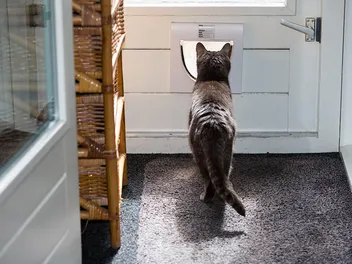
Our indoor cats love to explore their wild roots sometimes. They will sit longingly by the window, dreaming of what it might be like to clasp that little tufted titmouse in their fangs. When you open the door, they are ready to scoot out to explore the great unknown.
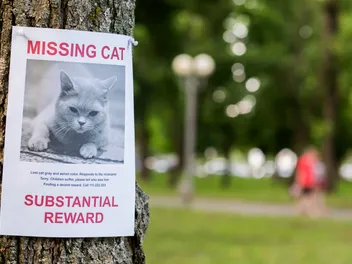
If you allow your cat the luxury of outdoor exploration, you might wonder how far they really go. Most domesticated cats will stay within 50 meters (approximately 164 feet) of their home. Let’s see how far cats can roam, how you can track them or stop them from roaming, and some of the dangers of cats roaming.

Cats Can Roam Pretty Far!
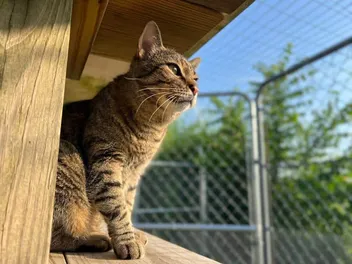
It is hard to know just how far a cat can really roam. This distance will change, based on the feline and their desire to travel. Some of them will be motivated by mating and others by potential prey.
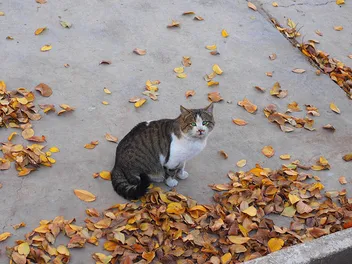
Your kitty likely doesn't go far if you have a spoiled house cat. On average, they will go roughly 130 to 650 feet (approximately 40 to 200 meters) around their home1. A study using GPS trackers concluded that most cats will spend 79% of their outdoor time within 50 meters of their home2.
However, these distances can increase if a cat is motivated by hormones. Breeding can make cats do crazy things. If a cat is in heat, a tom cat can smell her up to a mile away and come searching! So, different factors influence actual distance.
Most jaunts around the yard are pretty unremarkable, with cats generally staying local.

Dangers of Cats Roaming
Cats being left to roam can be pretty dangerous for them! Every time you let them out, you are taking a risk.
There is a chance they will not come back, as they could encounter a number of potential hazards along the way. So, most professionals would advise against letting your cat go outside unless they're in a controlled space.
Ultimately, it is completely up to you as you are the pet parent, and you know best. But here are some dangers of cats roaming that you might want to consider, both for the safety of your cat and the local wildlife.
1. Cats Reproduce Quickly
One single mother cat can give birth to one or more litters throughout a year. Each litter generally contains between 6 and 10 kittens. Males travel great distances to find female mating partners. If cats are left to their own devices, they multiply quickly, which can be extremely problematic for homeless animal numbers.

2. Cats Kill Wildlife
Cats are responsible for killing wildlife. While many people want cats in a barn to keep the rodent population under control, it is often not that simple. Cats, especially those who are left to their own devices, will kill wildlife that should be protected, like birds, reptiles, and other important members of the ecosystem.
In fact, cats are the number one predator of birds and have a devastating impact on their overall population. We can't get mad at cats for simply doing what they do best. But it is a fact that letting your cat outside unattended contributes to unnecessary problems.
3. Cats Are Killed
Even though cats are predators and attack wildlife, they aren't safe outside either. They could fall victim to a number of incidents, anything from poisoning, getting hit by a car, being attacked by a dog, or shot by a human. There are many dangers no matter where you live.
4. Cats Spread Disease
If there are feral or stray cats around your home, they can still impact yours, even if you keep up with vaccinations. Your cat can catch diseases such as feline immunodeficiency virus, feline infectious peritonitis, or parasites by sharing outside food bowls, getting into proximity with infected saliva or feces, or even fighting with outdoor cats.
Top 3 Tips to Track Your Cat
If you are curious, you may want to track your cat or encourage them to stay nearby. Here are a few ideas on how to protect your cat while they are exploring.
1. GPS Collars
If you haven’t heard of them yet, let us introduce you to the idea of GPS trackers for your cat. That’s right! This little device sits right on the collar, allowing you to see your pet’s whereabouts no matter where they’ve roamed off to.
These GPS systems typically have a very broad range, covering the distance most cats would go in a day. However, there are limitations. No two GPS companies are made the same. You should research products and see the reviews of what customers have to say about the product before purchasing.
Be sure to keep an eye on your little pal while they are outside, and if they seem to be getting out of range or you can’t see them anymore, it might be time to use the GPS to track them down.

2. AirTags
AirTags can be great for luggage, keychains for teens, and all sorts of things! What you might not have considered is getting an AirTag for your cat. You can easily put an AirTag right on their collar along with their identification. There are even collars available for purchase that hold AirTags.
This way, you can see where they are in real-time and intervene if necessary. However, you should keep in mind that Airtags need to have a nearby Bluetooth signal for cell phone users to be traceable. If you are in a very secluded area and your cat roams into the wilderness, you might not be able to track them down with this technology.
3. Microchipping
Microchipping cats is a very common practice. While not every kitty has one, it is something elective you can get from your vet. Many shelter animals already come microchipped, but you still have to register them with your information.
Microchipping is a way for vets or other professionals to scan the chip and obtain information about the owner. This is a way to make sure that lost pets can get home safely. Please note that microchipping doesn’t allow you to track your cat, but if your cat roams too far and is picked up by someone, they can have the microchipped scanned to find the owner provided that the contact information is up to date.

Make It a Point to Spay and Neuter Your Cat
If you find your cat is wanting to roam more and more, you have to ask yourself one question. Are they fixed? If not, it's time to get them in as soon as possible. Your vet will be able to perform a spay-neuter surgery to curb the desire to roam and find a mate to reproduce with.
Because these desires are curbed, they won’t feel the need to wonder or explore as much. The fact of the matter is, there really aren’t very many downsides, with a rare exception of surgical accidents, including bad reactions to anesthesia, although this risk is very low.
For females, it will end their heat cycles, which will eliminate many behavioral problems. It will also prevent them from getting pregnant. This can lead to a longer lifespan, better reproductive health, and avoiding issues like cancer and disease of the reproductive system.
Males can also exhibit many problematic behaviors, but they differ greatly from females. Males tend to start prowling, fighting, and urine marking when they are hormonal. These behaviors can be extremely difficult to break, even after getting a cat fixed.
For the preservation of your home and the health benefits to your cat, it is best to get them fixed as early as you can. Most vets recommend getting cats fixed around the age of 4 months.

Conclusion
Now you understand a little bit more about the distances normal house cats roam when they are outside. If you allow your cat outside, make sure that you are keeping them safe by putting measures in place to know their whereabouts.
Featured Image Credit: Nils Jacobi, Shutterstock
Expert cat care, straight to your inbox
News, insights, and useful advice, delivered to you.

No spam — unsubscribe anytime.
By signing up, you agree to our Terms & Conditions and Privacy & Cookies Policy.
How useful was this post?
Click a star to rate. You can leave written feedback afterwards. (We read all feedback.)
As a freelance dog writer and passionate pet enthusiast, Ashley Bates is pursuing studies in animal therapy. A mother to four human children and 23 animal companions, Ashley is dedicated to volunteering at shelters, advocating for animal rights, and rescuing animals in need. Her goal is to spread awareness, provide education, and offer entertainment about pets to reduce homelessness. Ashley's specialties include dogs and cats.