Can Cats Find Their Way Home If Lost? When to Worry

In this article
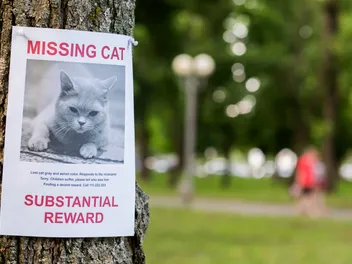
Sometimes, cats can find their way back home if they get lost. However, if your cat is lost, that probably means they have already failed to find their way back home.
Cats have different senses from humans. They smell and hear better than we do. However, getting lost is not so much different from a cat than it is a person. People can generally get around their own neighborhood and town pretty easily. If you travel a lot or commute, you probably have those areas memorized, too.
A cat's view of their world is similar. They will have the areas they frequent memorized and will be able to get back to their home from there. However, if they wander outside of this area, they'll likely become lost.

How Big of an Area Can Cats Roam?
A cat that spends their time solely inside might not know the area directly around their home. If they run out the door, they may not remember the way back to the door in their dash for freedom. However, a cat that spends time outside will know the area around their home and maybe even a little beyond that.
In some cases, your cat may be able to smell their way back home. However, smells don't always travel as simply as humans tend to think. A cat might not know what the outside of their home smells like, either.
Simply put, it depends. Sometimes, a cat will wander across something familiar and be able to let that guide them back home. Other times, they may not.
With that said, cats have been known to wander home for weeks or even months after going missing. Why this is we can't say for certain, but some cats do seem to have the remarkable ability of finding their way back home.

Do Lost Cats Know Their Way Back Home?
Cats have many clues to go off of to find their way back home. For instance, felines can notice their surroundings and figure out where they are, similar to a person. Cats may also be able to pick up their scent and follow their trail back home. Other times, cats may notice the scents of home, especially if their owners place their litter box outside.
However, all of this is probably a bit more confusing than humans may first consider. For one, a rushed or scared cat isn't paying much attention to their surroundings. They may not remember how they got where they are, eliminating the chance of them simply turning around and going back home.
Plus, their scent can get mixed with other scents, and the weather can make their trail dissipate. Cats also aren't bred to track things in the same ways dogs are. Cats may also not understand that their trail would lead to home. While this may seem obvious to a person, figuring this out requires a high level of problem-solving.
Plus, cats aren't typically in the best state of mind when lost. Most cats will be scared, hungry, and tired. They may be more likely to hunker down than try to wander back home. They may be drawn to places with food, especially if they aren't used to being outside. Even very friendly cats may become decidedly less friendly when lost and scared.
How to Attract a Lost Cat Back Home
If your cat gets lost, there are many steps you can take to attract them back home. If your cat was purely inside, then they likely don't know what their home looks like. However, they know what you look, smell, and sound like. Therefore, your best bet is to spend as much time outside as possible. This may help your feline find their way back.
You should also place familiar scents outside. For instance, put your cat's litter box and bedding outside. The idea is that these objects will smell familiar to your cat and guide them back, even if they don't know what exactly your home looks like from the outside. Cats have an amazing sense of smell, so these can work as serious guideposts.
You can also open up a can of wet food and leave food on your porch. Your cat will likely get hungry relatively quickly and may be attracted to the smell of food. Shake any treat bags your cat is used to and don't forget about the power of your voice!
If your cat spends time outside and hasn't come back for some time, they've probably wandered past their usual range. Therefore, you may want to place scented items closer to the edge of their range instead of very close to your house. You want to lure them back to their familiar surroundings, and placing the items further away will increase their area of effectiveness.

How Long Should My Cat Be Missing Before I Get Worried?
It depends largely on the cat. If your cat stays indoors and escapes through a door, you should begin looking and luring them back immediately. In these cases, your cat won't be used to the outdoors and is much more likely to become scared and run off.
On the other hand, if your cat spends time outside, things are a bit more complicated. If your cat usually comes around every couple of hours, then you should start to worry after they've been gone for much of the day or overnight. Unless your cat regularly spends nights outside, you should become worried if they don't show up when the sun sets.
Cats that miss mealtime may also be in trouble. Most cats are not going to miss a meal, especially if their feeding schedule is regular.
Outside cats that haven't come home at their usual time may simply be hiding nearby. In this case, you can often lure them back by calling for them or waving a treat bag around. If your initial attempts to call your cat home don't work, you should start to take other steps.
Conclusion
Cats have a much stronger sense of smell than humans do. They can sometimes leverage that sense of smell to find their way back home when lost. However, it's still completely possible for cats to become lost.
Your feline may have simply wandered away a bit too far and does not remember the way back. Or, they could have been scared or chased out of their usual roaming area. Cats that have spent much of their lives inside may be fearful of the scents and sounds of the great outdoors, making it more likely that they'll start running in one direction.
Either way, there is a lot you can do to attract your feline back home. Placing items that smell strongly of them, like the litter box, may help them catch the scent of their home. You can also try placing food outside, especially smelly wet food.
Featured Image Credit: StockMediaSeller, Shutterstock
Expert cat care, straight to your inbox
News, insights, and useful advice, delivered to you.

No spam — unsubscribe anytime.
By signing up, you agree to our Terms & Conditions and Privacy & Cookies Policy.
How useful was this post?
Click a star to rate. You can leave written feedback afterwards. (We read all feedback.)

Kristin is passionate about helping pet parents create a fulfilling life with their pets by informing them on the latest scientific research and helping them choose the best products for their pets. She currently resides in Tennessee with four dogs, three cats, two fish, and a lizard, though she has dreams of owning chickens one-day!