Get

In Your Inbox

Catster is reader-supported. When you buy via links on our site, we may earn an affiliate commission at no cost to you. Learn more.

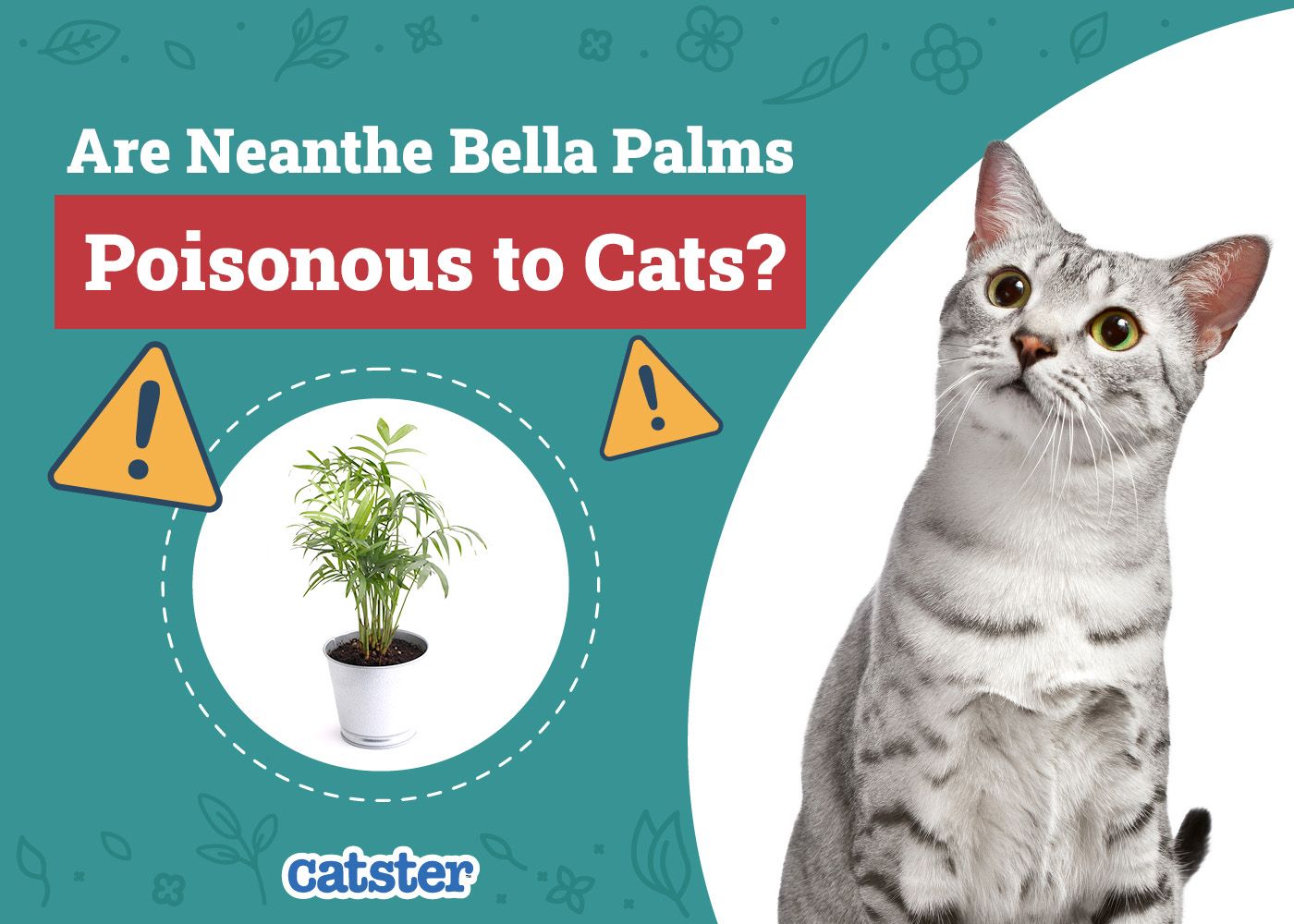
Are Neanthe Bella Palms Poisonous to Cats? The Facts & FAQ

Share

Catster_Are Neanthe Bella Palms Poisonous to Cats

Many people adore having house plants because they improve the appearance of the environment and can help clean the air in the home. Unfortunately, our precious cats can also greatly limit the plants most people can keep. This is because a considerable number of houseplants are toxic to cats, ranging from causing oral discomfort to death.

It’s extremely important to thoroughly assess any plants for pet safety before bringing them home. It’s not unusual for cats to snack on houseplants, so knowing if plants are toxic is necessary to keep your cat safe and healthy. Palms are popular houseplants that bring a specific type of beauty to the home, but many palms are not safe for cats. Neanthe Bella palms are one of the popular types of palms, but are they safe for cats? It is at least safe to say, they are non-toxic.

divider single cat paw oct 2024

Are Neanthe Bella Palms Safe for Cats?

Neanthe bella a1
Neanthe bella a1 (Image Credit: Jerzy Opioła, Wikimedia Commons CC SA 4.0 International)

Luckily, Neanthe Bella palms (Chamaedorea elegans) are non-toxic to cats and dogs according to the ASPCA. It’s still best to keep your cat from snacking on the plant since overeating plants can lead to digestive upset and discomfort for kitties. The good news is that you don’t have to panic and run to the vet if your cat snacks on your Neanthe Bella palm plant.

Are Neanthe Bella Palms Easy to Care For?

To make Neanthe Bella palms even more appealing, they are relatively easy to care for and can thrive in low-light environments. They do best in environments with moderate to high humidity, like bathrooms and rooms with humidifiers. In low humidity, Neanthe Bella palms usually develop brown tips to their fronds.

While they like thorough watering, Neanthe Bella palms, like most palms, don’t like “wet feet”, so good drainage is necessary to keep your palm happy and free of root rot. Lower leaves are likely to brown over time, even if the plant is healthy and thriving, so they should be removed to prevent wasted energy from the plant.

Additional Information About Palm Plants

It’s absolutely essential to ensure you are correctly identifying your palm plant before bringing it home. While a handful of palms are safe for cats, including Neanthe Bella palms, Parlor palms (Chamaedorea elegans), and Majesty palms (Ravenea rivularis), there are many palms that are not safe for cats.

Sago palms (Cycas and Zamia species) are deadly for cats and dogs, as well as being dangerous even for humans when ingested. Dracaenas (Dracaena species) and Yuccas (Yucca species) are also types of palms that are toxic to cats due to their content in saponins, although they’re potentially less dangerous than the deadly Sago palm. Still, you should not risk your cat’s health with these palms. They can both cause drooling, vomiting, weakness, lack of appetite, incoordination, and dilated pupils in cats. 

If you have any concerns or curiosities about your cat or their health, we recommend you contact your vet directly.

If you need to speak with a vet but can't get to one, head over to PangoVet. It's an online service where you can talk to a vet online and get the advice you need for your pet — all at an affordable price!

PangoVet_Mention-in-Content for PangoVet2 save money

divider cats oct 2024

In Conclusion

The Neanthe Bella palm is not only a beautiful and low-maintenance houseplant, but it’s also safe for your beloved furry friend. It’s still not ideal to let your cat snack on the plant, but this is primarily due to possible digestive upset from eating plant material and the health of the plant. Make sure you correctly identify your palm plant, and don’t be afraid to ask employees at the greenhouse for verification. The scientific name is Chamaedorea elegans, which can be helpful considering that some plants are called by different names. Bringing home the wrong type of palm plant can be dangerous and even deadly for your cat, so ensure you are truly picking up a cat-safe palm to bring to your house.


Featured Image Credit By: iluphoto, Shutterstock

Want content like this delivered to you?

Sign Up For Our Newsletter

News, insights, expert advice, and everything cat

* By submitting, you agree to our Terms & Conditions and Privacy & Cookies Policy.


How useful was this post?

Click on a star to rate (you can leave written feedback after clicking submit)

Help us improve Catster for pet parents!

Your feedback really matters.

What did you like about this post? Also how can we improve it?

Join the conversation

Leave a Reply

You’re very welcome to leave a comment or question. Please know that all comments must meet our community guidelines, and your email address will NOT be published. Let’s have a positive and constructive conversation.


Talk With A Vet Online

Peace of mind,
anywhere, anytime

Affordable vet advice

Why Chicken Bones Are More Dangerous for Cats Than Most Parents Realize

Chicken bones seem harmless enough, but for cats, they can cause serious damage quickly. Whether your cat swiped a piece off the counter...

Fantastic Pet Pantries and Where to Find Them

Let’s face it: times are really tough right now, and those of us in the 99% are struggling with the cost of just...

Ask Dr. Paola – Help! My Cat Refuses to Drink Water! (April 13, 2026)

Welcome to our “Ask Dr. Paola” series, where every Monday we bring expert advice straight from Dr. Paola Cuevas (MVZ) to help our...

Why Healthy Cats Still Vomit Sometimes (And How to Respond)

A cat that just vomited needs a specific kind of care, and the feeding decisions you make in the next few hours actually...

More related

Toxoplasmosis Symptoms in Cats: Our Vet Explains the Causes, Signs & Treatments

Toxoplasmosis is a disease impacting cats that can be picked up from the environment. Toxoplasmosis is commonly discussed in households due to the...

Siberian Cat vs. Ragdoll Cat: Main Differences (With Pictures)

With so many incredible cat breeds to choose from, which feline would make the best pet for you? Two of our favorites are...

Kitten Development: First 12 Weeks (Vet-Reviewed Guide)

Bringing a new kitten home is a joyous and exciting occasion for all soon-to-be cat parents. This usually occurs when a kitten is...

8 DIY Christmas Sweaters for Cats To Make Today (With Pictures)

Christmas is a time for festive decorations and thoughtful giving amongst friends and family, perhaps even to those you don’t know through charitable...

Keep reading

The Real Reasons Kittens Suckle! Warning: High Level of Cuteness Follows

If you’ve welcomed a new kitten into your home, you already know they come with a whole toolbox of adorable quirks. But there’s one behavior many pet parents don’t expect: suckling. Whether it’s a blanket, a finger, or their own...

sphynx kitten, webbed feet, sucking a blanket

Can Cats Eat Cottage Cheese? Vet-Verified Nutrition Facts

We know that cats can be picky eaters, but cheese seems to be one treat that is universally loved. So, can cats eat cottage cheese? Yes, you can feed cottage cheese to your cat, but only in moderation. Some vets...

Can Cats Eat Cottage Cheese

Can Cats Eat Cheese? Vet-Approved Facts & FAQ

Cheese is a food long associated with being a feline favorite, and while cheese isn’t toxic to cats, various ingredients within it, primarily the dairy content, are not good or healthy for cats and may instigate problems. A small piece,...

Can Cats Eat Cheese

Can Cats Eat Nutella? Vet-Reviewed Health Risks & Safe Alternatives

The world loves Nutella, whether it’s served on bread or eaten right out of the jar. It’s soft, creamy, tasty, and wonderfully portioned with 30% chocolate and 70% hazelnut. It’s so popular that there is even a World Nutella Day,...

Can Cats Eat Nutella

Can Cats Have Pepto Bismol? Vet-Approved Safety Tips & FAQ Explained

Pepto Bismol is a medication used to treat an array of digestive symptoms in humans—as the jingle goes, “when you’ve got nausea, heartburn, indigestion, upset stomach, diarrhea…” Pepto Bismol seems like a wonder drug for these unpleasant issues, and cat...

Can Cats Have Pepto Bismol

Can Cats Eat Turmeric? Vet-Approved Benefits & Advice

Cats may be carnivores, but they sometimes like to munch on plant foods like carrots and bananas. They might snatch our almost-finished muffin from the table when we are not looking. They might even scrounge around in the garbage to...

Can Cats Eat Turmeric

How to Introduce a Cat to a New Home: 6 Tips & Tricks

If you’re bringing a new cat into your home and you already have one or more other pets, it can take some time for them to adjust. Your new cat may be nervous about entering a new environment, and your...

Balinese cat lying on sofa at home

Why Do Cats Follow Strangers? 7 Possible Vet-Reviewed Reasons

Cats are mysterious creatures, and sometimes their behavior is hard to understand. One behavior that often baffles pedestrians is being followed. However, it makes more sense if you look at the reasons why a cat would follow you and decide...

Cat following a person walking

Love Cats? So Do We! Join the Catster Community

Stay informed with expert pet care insights delivered straight to your inbox! Discover professional guidance on animal behavior, feeding tips, trusted product picks, and much more.


Sign up for the Catster Email Newsletter

Stay informed with expert pet care insights delivered straight to your inbox! Discover professional guidance on animal behavior, feeding tips, trusted product picks, and much more.