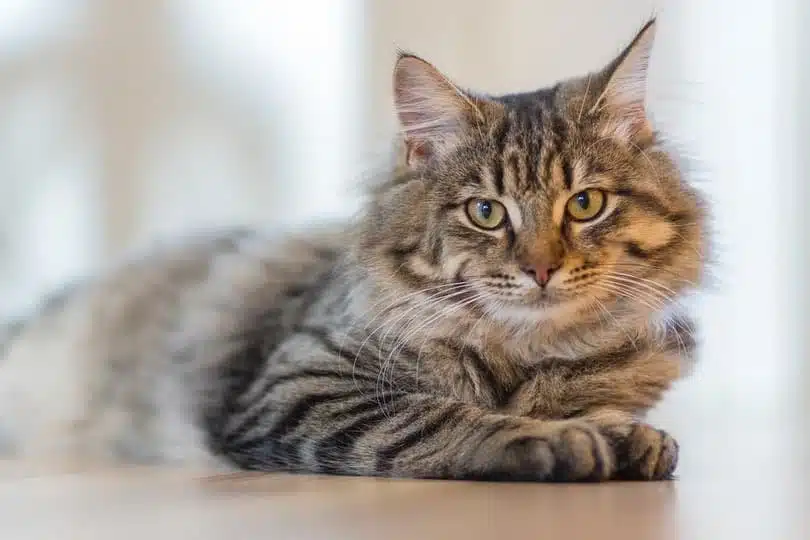
Palms are common plants that are easy to care for and pleasing to the eye. They are distinguished by their large leaves, known as fronds, that give off a tropical vibe. Palm plants are used to decorate home and office spaces to create a comfortable, relaxed atmosphere. These plants are widely commercially available and easy to acquire. For all these reasons, palms are popular choices for indoor and outdoor spaces.
When you have cats, however, it’s important to make sure that the plants in your home aren’t dangerous to them. Many houseplants are toxic to pets. The ASPCA has a list of toxic and non-toxic plants that should always be checked first if you’re not sure the plant that you want to bring home is safe.
Most palm plants are perfectly safe for cats, but there are a few exceptions, like the sago palm, the Australian ivy palm, the cardboard palm, and the palm lily, that are toxic. Here, we look at these plants in closer detail to find out more about them.

Are Palm Leaves Healthy for Cats?
Palm leaves don’t provide any nutritional value for a cat that they can’t get from their daily diet. Cats are obligate carnivores, meaning they require animal protein in their diet in order to survive. This is their number one dietary need. If you feed your cat a balanced and complete, high-protein diet, they will not need anything else to be healthy.
Non-toxic palm leaves, while not necessarily unhealthy for your cat, don’t provide any real benefits. Even if your cat likes to chew on the leaves, they should not be a regular part of your cat’s diet.

The Sago Palm
The sago palm is not a palm at all, despite the name. It’s a cycad, and it’s poisonous to both humans and pets. Since many palms aren’t toxic to cats, it can be easy to assume that this one isn’t either. The sago palm is also called the coontie palm, cardboard palm, Japanese cycad, or zamia. The toxins in a sago palm are considered extremely poisonous if consumed.
The Sago Palm produces fruit and seeds. Every part of this plant is toxic to humans and animals. A sago palm contains cycasin, a carcinogenic that is present throughout the plant but is mostly concentrated in the seeds.
Signs of Sago Palm Poisoning
Signs of sago palm poisoning can be seen in as little as 15 minutes after consumption but may not appear for several hours. If you see your cat eating any part of sago palm or you notice any of these signs, don’t hesitate to take your cat in for treatment immediately.
- Drooling
- Depression
- Vomiting
- Diarrhea
- Black stools
- Weakness
- Wobbly gait
- Yellowing of eyes or skin
- Dark urine
- Increased drinking
- Enlarged abdomen
- Tremors
- Seizures
If sago palm poisoning is left untreated, liver damage and failure can quickly set in. Even with treatment, it can still be fatal. Seek treatment right away if you suspect that your cat may have eaten part of a sago palm. The best way to keep your cat safe is to not put any sago palm plants in your home or outside the house where cats can access them.

Other Palm Lookalikes
Dracaenas are popular plants that look like small palms. They are considered toxic to cats because they contain saponins. These are compounds with a bitter taste that protects the plants from animals and insects. In foods such as oatmeal and spinach, saponins exist in non-toxic amounts for both people and animals.

In plants, however, if your cat should consume leaves containing saponins, contact your vet immediately. Signs of saponin poisoning include:
- Drooling
- Vomiting
- Diarrhea
- Loss of appetite
- Loss of coordination
- Drooping
- Dilated pupils
- Blood in vomit and stool
With quick, supportive treatment and care, cats can usually recover within a few days. This depends on how quickly you can detect and treat the problem, and how much of the plant was consumed by your cat.
Yucca plants belong to the same family as Dracaena and also resemble palms. They are also toxic to cats because of saponins. If you want to bring any palm into your home with a cat, make sure it’s a non-toxic palm plant and not a dracaena or yucca plant.
If you need to speak with a vet but can't get to one, head over to PangoVet. It's an online service where you can talk to a vet online and get the advice you need for your pet — all at an affordable price!

Why Do Cats Chew Plant Leaves?
Cats are curious creatures that like to chew on houseplants. The reasons for this are not exactly known, but there are several theories.
Some people believe that cats chew leaves because they’re dealing with some sort of stomach pain. Whether it’s from food allergies or a gastrointestinal illness, in some cases, grass may induce vomiting to immediately make the cat feel better if they need to empty their stomachs.
Another theory is that cats eat grass and leaves to gain fiber for gastrointestinal health. If they feel that they need assistance digesting their food, eating leaves can give them immediate fiber. The leaves can also provide certain vitamins and minerals that are beneficial to the cats.
Some cats may chew leaves simply because they like to do it. They enjoy the feeling of it. Other cats may have anxiety and chew leaves and grass as a way to naturally calm themselves and self-soothe.

Redirecting the Behavior
If your cat nibbles your palms or any other houseplants very occasionally and they’re safe for cats, there should be nothing to worry about. However, you may wish to get them to stop doing this. You can try giving them their plants to chew on, like cat grass and catnip.
You may consider relocating the plants to areas of the house that your cat can’t easily access.

Final Thoughts
Most palm leaves aren’t toxic to cats, but some, like the sago palm, are extremely toxic to them. Not being toxic doesn’t mean that they are healthy treats for them, either. Cats get their nutritional requirements met by their daily diets. If you notice your cat eating palm leaves consistently, try to discourage the behavior by spraying deterrents, relocating the plants, or giving your cat their plants to chew.
Certain plants, like the sago palm and yucca plant, resemble palms and are toxic. Be sure to check a plant’s toxicity to cats before bringing it home. Palms are non-toxic to cats, but it’s easy to make a mistake and bring home a toxic plant instead. It’s best to try to keep your cat away from all plants, but if this isn’t possible, keep them safe by only getting plants that are not dangerous.
Featured Image Credit: Couleur, Pixabay
 Are Palm Leaves Healthy for Cats?