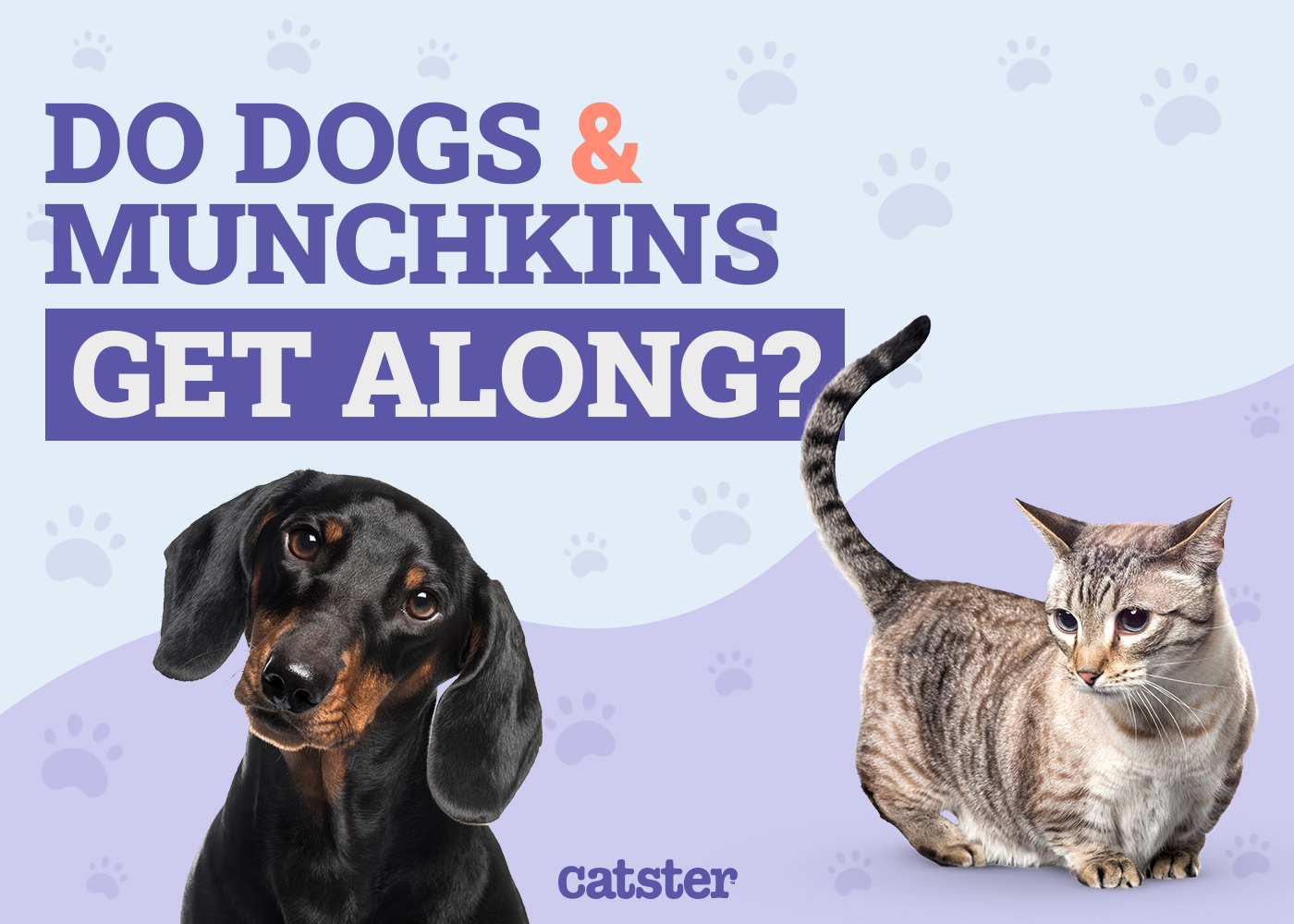
Do Munchkin Cats Get Along With Dogs? Vet-Reviewed Answer & Explanation

In this article
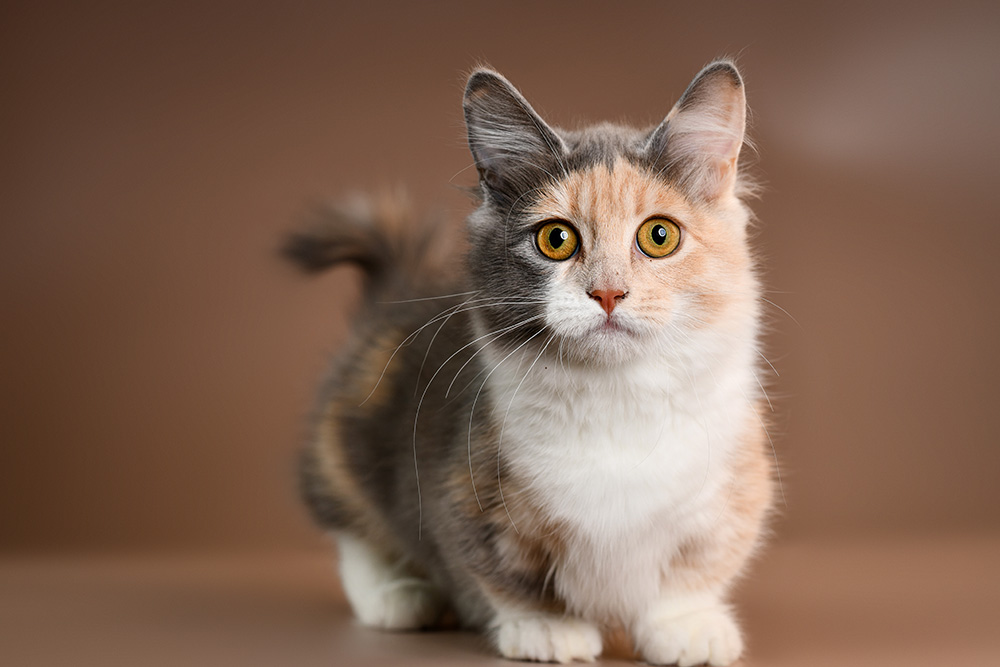
Affectionately known as the Dachshund of the feline world, the diminutive Munchkin Cat is pure, fur-covered cuteness! Their loveable looks are mirrored by equally loveable personalities and they are known for being amiable felines that fit in comfortably with most households.
In general, Munchkin cats are tolerant to other pets, including dogs, with some anecdotal sources even noting them as one of the best choices for cat and dog-shared spaces.1 As with most inter-species relationships, there are always a few points to bear in mind for harmonious integration. It’s important to remember that every cat (and dog) is unique, and belonging to a particular breed doesn’t guarantee specific traits. The key factor is how introductions are managed—with patience and respect for each pet’s comfort zone.

Munchkin Characteristics and Temperament
The most striking feature of the Munchkin is its short legs (the front legs often being slightly shorter), resulting in it being classed as a dwarf breed. Interestingly, their legs are the only part of them that is dwarfed—the rest of their body is comparable in stature to a regular-sized cat. They come in all coat types, patterns, and colors, often the only identifying characteristic being their short legs. This is perhaps what gives them their uniquely adorable look that, on any other species, might look comical!
Not only are Munchins affectionate and sociable, but they are also active, playful, and curious felines that may retain an almost kitten-like attitude well into adulthood. They are confident and assertive, yet very laid-back.
Despite their short legs, they enjoy physical play just as much as any other cat. They are surprisingly fast and may tear around the house at break-neck speed. Perhaps less surprising to learn—Munchkins are not able to jump as high as kitties with normal-length legs.
Origins of the Munchkin

The Munchkin’s short legs are due to a genetic mutation affecting bone growth, which results in a condition known as chondrodysplasia or achondroplasia. In this kind of chondrodysplasia, the long bones of the front and back legs are affected, causing stunted development. Following selective breeding programs to intentionally reproduce the short leg mutation, this fairly modern breed of cat was first recognized in the 1990s.
All modern Munchkins are descended from a domestic shorthair named Blackberry, who was born in the 1980s and exhibited the mutation. She was bred to one of her male offspring and produced a litter of kittens, half of which had short legs.
Unfortunately, inbreeding in this manner often results in a prevalence of certain genetic diseases. Chondrodysplasia itself is a condition that can result in difficult and sometimes painful symptoms. For this reason, the breeding of Munchkins is shrouded in ethical controversy in certain regions, with some official organizations continuing to refuse association.
Do Munchkins Get Along with Other Pets and Children?
Munchkins are usually very social and make wonderful companions to other pets and children in the home who are equally outgoing. They genuinely enjoy—rather than simply tolerate—all kinds of company, and their bold, assertive attitudes make them particularly suitable for families that include dogs. They tend not to be naturally intimidated by dogs, even those larger than them!
They are particularly playful kitties, making them a great choice for homes with other young pets and children. As a breed, they prefer busy environments with plenty of opportunities to satisfy their many curiosities. Their easygoing attitude makes them very tolerant of excessive (and perhaps undesired) attention, and aggression is a very rare trait in them.
Tips for Introducing Your New Munchkin to Your Dog

Even if both kitty and hound are sweet-tempered and easy-going, it is always advisable to follow certain steps when introducing them. This is important to prevent any traumatic associations and to ensure a cohesive integration.
It is easier to introduce kittens and puppies to one another, but in reality, this is not always the case. Let us say that you already have a canine companion. Regardless of your new Munchkin’s age, here are some tips and considerations for their initial meeting, first few weeks of cohabitation, and continued mutual happy existence:
Special Considerations for Munchkins Living with Dogs
Particularly with Munchkins, it’s important to have a space that is a dog-free zone to which the kitty can escape, if necessary. This is because this breed might not be able to jump onto high levels to escape when threatened due to their short legs.
For this same reason, they fare better as indoor cats, so careful consideration needs to be given to the indoor space that they will share with canines. Ensure that they cannot become cornered or trapped anywhere by a dog.
If any of the household dogs are particularly aggressive, it is wise to keep them away from your beloved Munchkin entirely. The same applies to any other aggressive pets in the home, as well as over-boisterous children, as Munchkins are simply not as successful escape artists as most other cat breeds.
Their disproportionately long backs mean that this part of their body is at higher risk of injury. Though your Munchkin may relish every minute of play with the children, make sure that the kids understand how to handle their fur baby correctly to avoid hurting him or her.
Conclusion
Munchkins are playful and sociable cats that can fit well into many families, including those with dogs. While their friendly nature often makes them more likely to get along with canine companions, not every Munchkin will automatically become friends with a dog. Careful, gradual introductions and respect for each pet’s boundaries are essential to building a positive relationship.
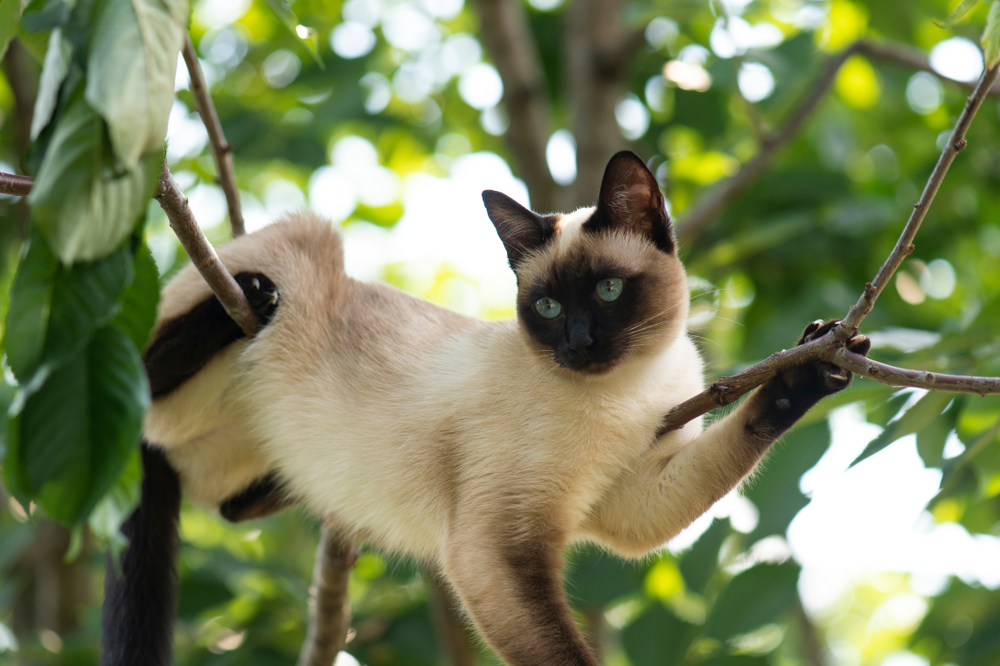
Featured Image Credit: Varvara_Gi, Shutterstock

Expert cat care, straight to your inbox
Vet-reviewed advice, behavior tips, and the best of Catster. Free, and you can unsubscribe anytime.
By signing up, you agree to our Terms & Conditions and Privacy & Cookies Policy.
Eleanor is a freelance writer, science, and math high school teacher. She lives in South Africa's picturesque KwaZulu Natal Midlands with her six-year-old son, cat, horse, and three chickens. She is happy to be able to convert her enthusiasm for animals, science, and life-long learning into valuable and interesting writings. Eleanor and her son enjoy exploring their wonderful nation in their spare time. Road trips to exotic camping places are a cherished pastime. They particularly like unwinding near the sea, in the mountains, or among African animals.
Join the conversation
Ask a question, share your story, or send private feedback.