12 Cat Breeds That Shed the Least (With Info & Pictures)
Cat hair is always a concern when welcoming a new kitty into your home, and some people with allergies might require a low-shedding breed to avoid unpleasant sneezing fits and hives. If you’d rather avoid cat hair on every article of clothing you own and stray furballs between the couch cushions, we have all the lowest-shedding cat breeds you could ever want to know about. Check out the breeds and pick out your favorite today!

The 12 Cat Breeds That Shed the Least
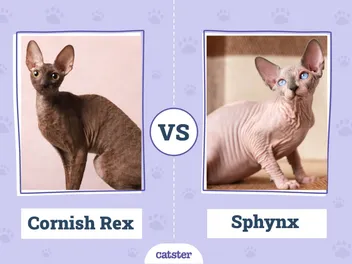
1. Cornish Rex

| Weight: | 6–10 pounds |
| Coat length: | Short |
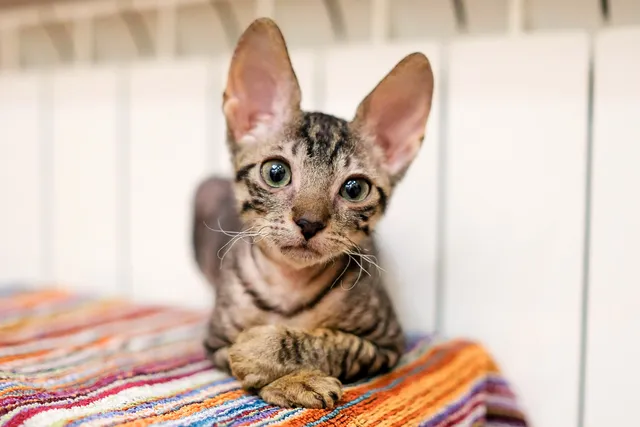
Unlike most other cat breeds, the Cornish Rex only has a single coat of short, dense down fur and no guard hairs or middle coat to speak of. While they typically require much less grooming, we recommend keeping an eye out for unexpected fur loss. Sometimes, their coat may become patchy or bald due to dermatological conditions or poor diet. Also, they do poorly in low temperatures because of their limited single coat, so keep them nice and toasty.
2. LaPerm

| Weight: | 8–10 pounds |
| Coat length: | Short or long |
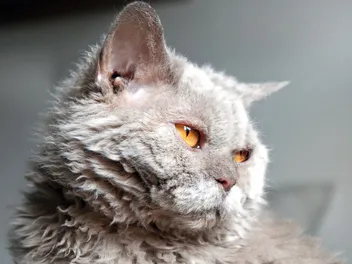
The curly-haired LaPerm is sometimes erroneously called a hypoallergenic cat, but no cat is truly hypoallergenic. They come pretty close, though, especially the short-haired LaPerms. Their fur is generally wavy and sometimes curly, producing fewer allergens than the average cat breed. At most, they need to be brushed every week or two to remove dead hair.
3. Russian Blue

| Weight: | 7–15 pounds |
| Coat length: | Short |
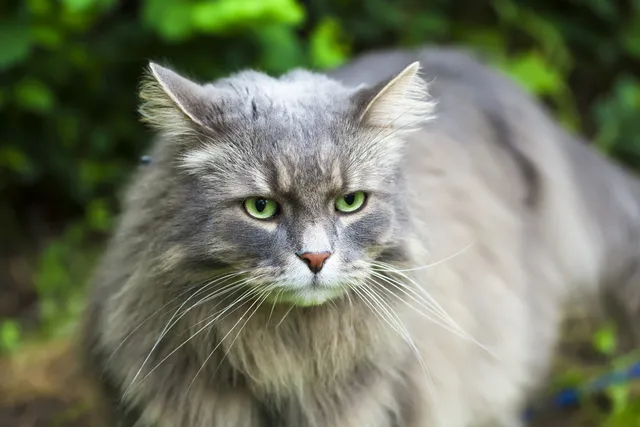
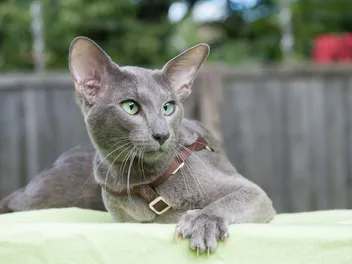
Russian Blues are long-lived cats with entrancing green-amber eyes and a short, plush blue-gray fur coat that sheds very minimally throughout the year. However, they shed a ton during the spring and fall seasons, so be prepared with a good vacuum and brush for those spells. These friendly and inquisitive kitties don’t leave fur all over the place most of the time and only need occasional brushing outside of the shedding seasons.
4. Singapura

| Weight: | 6–10 pounds |
| Coat length: | Short |
The Singapura cat is well-known as the smallest cat breed in the world, with huge eyes and short, ticked sepia fur coats. Sometimes considered hypoallergenic, this breed actually sheds very lightly throughout the year. You don’t need to frequently brush them, but we recommend at least checking their ears weekly because they’re prone to infections.
5. Burmese

| Weight: | 8–12 pounds |
| Coat length: | Short |
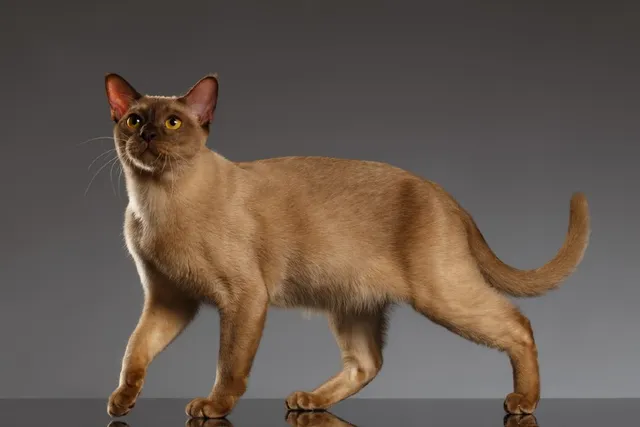
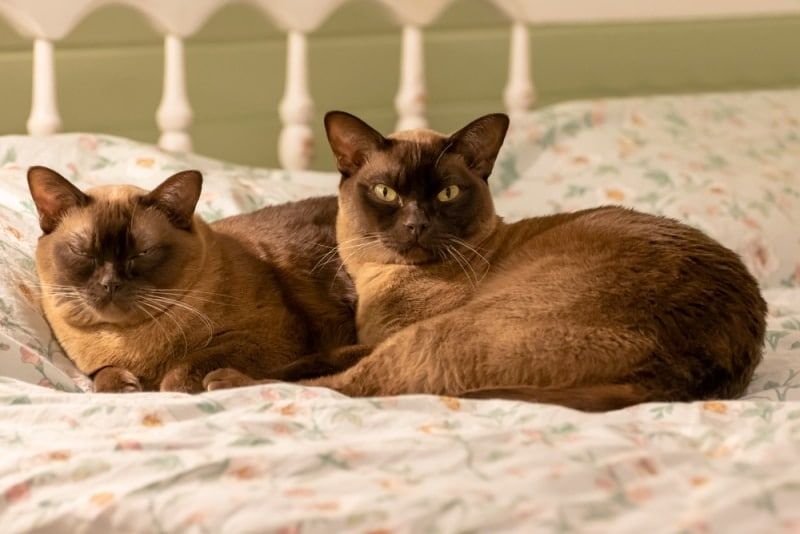
All Burmese are related to a single female named Wong Mau and are often bred with Siamese due to their similar features. This cat breed has a short, silky coat that sheds very little year-round, and generally, they take good care of themselves. The most you’ll need to do is brush them with a soft brush once in a while when they’re looking dull to redistribute their skin oils and restore that glossy sheen.
6. Sphynx

| Weight: | 6–12 pounds |
| Coat length: | Very short |
The unique, nearly hairless Sphynx has a short coat more like peach fuzz than true fur. They don’t need to be brushed very much at all but do need weekly baths. Their coat doesn’t distribute oils as well as a typical cat’s coat, which can lead to acne and skin conditions like urticaria pigmentosa or cutaneous mastocytosis. So, when it’s all said and done, Sphynx almost never shed but still require regular grooming care, making them a decidedly not low-maintenance cat.
7. American Wirehair

| Weight: | 8–12 pounds |
| Coat length: | Medium |
Not to be confused with the American Shorthair, the American Wirehair is an offshoot breed that’s known for a densely curled coat, not unlike a lamb’s wool coat. Despite looking very high maintenance, they actually shed less than the average cat. They have an easygoing attitude, and their coarse, medium coat is just as relaxed, shedding just once a year during the spring. Expect weekly grooming sessions during that season, but for the rest of the year, they don’t need much in the way of regular grooming.
You Might Also Like: 4 Curly-Haired Cat Breeds (With Pictures)
8. Devon Rex

| Weight: | 6–9 pounds |
| Coat length: | Short |
The Devon Rex has a very short coat that translates to less hair around your house, just like their relative the Cornish Rex. They’re not necessarily light shedders, shedding heavily in the spring and fall, but the hair you do see will be very thin and short compared to longer-coated kitties. At most, you should use a nice de-shedding comb every couple of weeks to remove dead hair and restore skin oils to their delicate coat.
9. Siamese

| Weight: | 6–10 pounds |
| Coat length: | Short |
The Siamese has an unmistakable appearance with their signature color point patterns, a zany personality, and an easy-to-manage fur coat. It doesn’t shed any less than most cats, but Siamese fur is shorter and not so overwhelming to clean up on a regular basis. As a warning, Siamese also shed heavily during spring and fall to prepare for their respective upcoming seasons.
10. Javanese

| Weight: | 5–10 pounds |
| Coat length: | Medium |
One of the rarer breeds, the exceptionally vocal Javanese has a longer coat than the Siamese, but you won’t need to fuss over it. Javanese are famous for almost never developing problematic mats in their fur, and you’ll hardly ever need to touch their coat with a brush except to help remove dead hair and restore fur shine.
11. Balinese

| Weight: | 6–10 pounds |
| Coat length: | Medium-long |
If you’ve always wanted a fluffy, long-haired cat but hate the shedding mess, a Balinese could be the perfect breed for you. Their longish silky coat lacks an undercoat, which makes their fur less prone to matting and sheds as little as any of the other cats on this list. That said, Balinese do shed more fur during the spring and fall.
12. Bengal

| Weight: | 6–10 pounds |
| Coat length: | Short |
While Bengals are known as heavy shedders in their youth, that’s a one-time deal that doesn’t recur. At maturity, Bengals are light shedders that don’t require regular brushing to stay sleek and clean. However, you should go over their coat once a month or so to help keep the coat shining. As far as dander, Bengals aren’t nearly as heavy as other breeds but do produce potentially allergenic dander.
Conclusion
You should always expect hair when you get a new cat, but you can mitigate the worst of it by choosing a low-shedding breed. From the exotic Bengal to the fuzzy Sphynx, you have a lot of options to explore and choose from.
Next on Your Reading List:
Featured Image Credit: Sergey Neanderthalec, Shutterstock
Expert cat care, straight to your inbox
News, insights, and useful advice, delivered to you.

No spam — unsubscribe anytime.
By signing up, you agree to our Terms & Conditions and Privacy & Cookies Policy.
How useful was this post?
Click a star to rate. You can leave written feedback afterwards. (We read all feedback.)

Codee Chessher is a freelance writer with extensive knowledge on a variety of subjects that include travel, DIY, pets, and more. He has a colorful past but the written word was always his first love. He believes there's nothing a well-worded sentence can't accomplish!
When not writing, Codee enjoys reading fantasy novels, tackling DIY projects around the house, and memorizing useless pop culture trivia. He has lived in many places around the US, and most recently resides in northern Mexico.